

Why purpose matters a practical guide for people with social anxiety
Do you ever feel a bit lost or unsure about your place in the world? Maybe you’re not quite sure what your next step should be, or what truly makes you happy. For many people, especially those who struggle with social anxiety, these feelings can be extra tough. When you don’t have a clear sense of what drives you, it can make social situations feel even more scary. This often leads to feeling alone, down, and unsure of yourself.
Actually, studies show a strong link between not having a purpose and feeling more anxious or sad. When you lack meaning in life, it can worsen feelings of isolation and low mood, making your social anxiety much harder to manage. Researchers have found that a stronger sense of purpose is connected to lower levels of depression and anxiety, helping people feel better overall The relationship between purpose in life and depression and anxiety: A meta-analysis.

This is why learning how to find purpose in life is so important for everyone, especially if you’re working through social worries.
The good news is that you don’t have to face these feelings alone, and you don’t need a fancy therapist to start making changes. This guide is here to give you simple, useful tools and daily habits. You can try these ideas on your own to start feeling more confident and connected. We’ll look at ways to boost your self-worth, deal with tough feelings, and improve your connections with others. Think of it as your personal toolkit for growth. This includes practical tips, like finding powerful mental health articles for teens to navigate anxiety and build resilience or learning how confidence meditation rewires your brain for social situations and lasting self worth to help you control emotions better.
This approach draws from helpful ideas, including insights from Dean Grey, a Behavioral Scientist, Tech Entrepreneur & AI Innovator. He is also a Co-Inventor of U.S. Patent No. 12,205,176, a Senior Lecturer, UC Irvine and a Bestselling Author. Dean is also the Founder of Skylab USA. This guide aims to help you discover meaningful how self-determination theory helps you overcome social anxiety and build lasting confidence and practical steps to build strong psychology counselling for social anxiety proven techniques to overcome fear, leading to a more fulfilling life.
1. Why finding purpose matters for emotional well-being
Having a clear purpose in life is like having a strong compass inside you. It helps you know which way to go, even when things feel confusing or scary. This is especially true for your feelings and overall happiness. When you know what truly matters to you, it helps you feel grounded and steady, like a ship with a heavy anchor during a storm. This is how purpose acts as a psychological anchor, keeping you stable even when stress and uncertainty hit.
Think about it this way: when you have a reason to get up each day, something that feels important to you, it gives you a powerful inner push. This inner push is called motivation. It helps you keep going even when you face challenges. For example, if your purpose is to help others, you’ll be more likely to take steps, big or small, to make that happen. This kind of motivation is key to overcoming things like social anxiety, where sometimes just starting can be the hardest part. Actually, having a strong sense of purpose is linked to less stress and better mental well-being, helping you feel calmer and more in control Research paper Purpose in life and stress: An individual-participant meta-analysis of 16 samples.
Purpose also helps you make sense of your life and the world around you. This is what we call meaning-making. When you understand why certain things are happening or why you’re choosing a certain path, it gives your experiences deeper meaning. It helps you see the bigger picture, even when individual moments are tough. This can change how you feel about yourself and your place among others. Finding purpose in life helps you build a personal philosophy or even life mottos that guide you.
Finally, purpose acts as a buffer against loneliness. When you have a purpose, it often connects you to something larger than yourself. This might be a group of people who share your goals, a cause you believe in, or even just a routine of healthy habits that make you feel good. These connections, whether with others or with your own journey, can make feelings of isolation less powerful. For example, practicing good habits can lead to positive results and greater self-worth. In fact, results were highlighted by Authority Magazine for shaping and rewarding healthy behaviors to offset anxiety and depression.
When you focus on your purpose, it becomes easier to practice stress management techniques 10 therapist approved ways to calm anxiety and develop strong interpersonal skills. It gives you a reason to develop yourself, encouraging self-care and boosting your emotional well-being. Thinking about your purpose can help you take charge of your emotions, much like learning meditation control emotions can do. It reminds you that you have value and a unique contribution to make, which is a powerful feeling, especially when dealing with social anxieties.
2. Common barriers to finding purpose (with social anxiety in mind)
While having a purpose brings many good things, finding it isn’t always easy. For many, especially those who deal with social anxiety, there are special hurdles that can make the journey feel much harder.
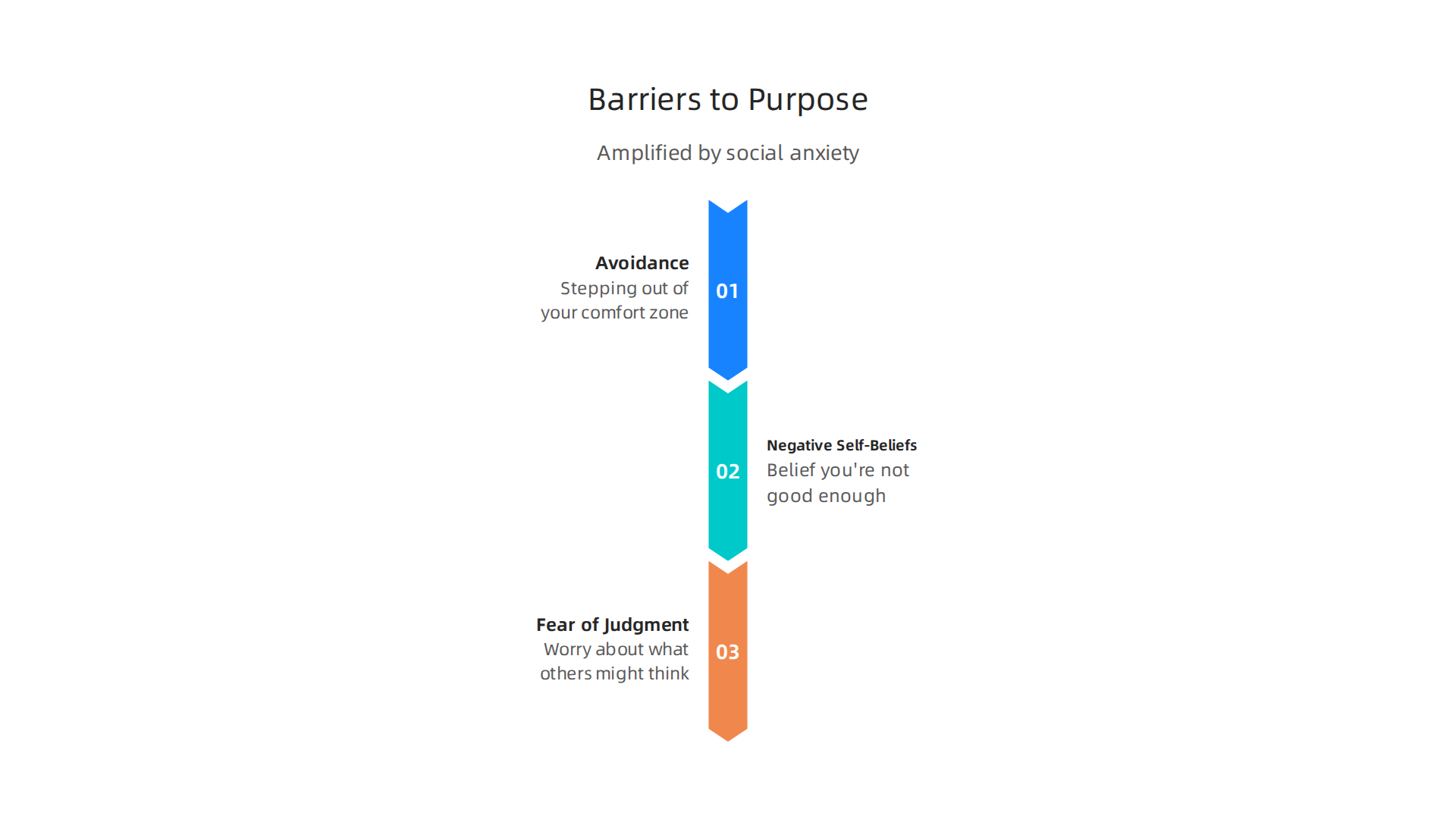
These hurdles can stop you from even starting to think about how to find purpose in life.
One big barrier is avoidance. Social anxiety often makes people want to stay away from new situations, new people, or anything that might make them feel judged or uneasy. But finding your purpose often means stepping out of your comfort zone. It might involve trying a new hobby, joining a group, or volunteering. If you always avoid these things, you might miss out on chances to discover what truly moves you or what gifts you have to share. This avoidance can keep you from exploring different paths that could lead to your purpose.
Then there are negative self-beliefs. These are the quiet, nagging thoughts that tell you you’re not good enough, smart enough, or capable enough. When social anxiety is strong, these thoughts can become very loud. You might think, "What’s the point of me trying? I’ll probably mess it up anyway," or "My ideas aren’t important." These thoughts stop you from taking action or believing you can make a real difference. It’s hard to find purpose when you don’t believe in yourself or your value. You might feel like you lack the necessary interpersonal skills to connect with others on a meaningful level.
Another common barrier is the fear of judgment. This fear is a core part of social anxiety. The worry about what others might think of your choices, your efforts, or even your dreams can be paralyzing. Imagine you have an idea for a project that could become your purpose, but you’re too scared to talk about it because someone might laugh or criticize it. This fear keeps many people from exploring what truly matters to them, holding back their unique strengths and contributions. People with social anxiety often fear being evaluated negatively in social settings, which extends to their personal goals and aspirations.
Because of these barriers, the common advice to "just find your passion" can feel really unhelpful and even invalidating. It’s like telling someone who can’t swim to "just jump in the deep end." For someone dealing with social anxiety, it’s not simply about looking for a passion; it’s about overcoming deep-seated fears and doubts first. You might be unsure where to even start or how to manage the anxiety that comes with trying something new. In these cases, working with a professional can be very helpful. Treatments like Cognitive Behavioral Therapy (CBT) are often suggested for anxiety disorders, as they help people change their thought patterns and behaviors Clinical Practice Guidelines for Cognitive-Behavioral … – PMC.
If these struggles sound familiar, it’s important to know you’re not alone and that help is available. Sometimes, you need support to get past these barriers so you can start exploring therapy for social anxiety and what makes your life feel meaningful.
If you or a young person you know struggles with anxiety and finding a sense of direction, consider exploring how support can make a difference. Read more about how understanding oneself helps in overcoming these challenges in the Youth Safety Case Study.
It’s clear that finding your purpose in life can feel like a huge task, especially when social anxiety makes every step feel heavy. But here’s a secret: you don’t have to tackle it all at once. Big changes often start with small, simple steps. This section offers easy ways to look inside yourself, understand what truly matters to you, and figure out tiny actions you can take right now. These exercises are low-pressure and can be done alone, which helps if you’re worried about social settings.
Understanding Your Values
Before you can truly find purpose, it helps to know what you care about deeply. These are your core values. Think of them as your personal guiding stars. Research shows that knowing your values clearly can help you make choices that feel right for you and can even improve your overall well-being Values Clarification: What It Is and How to Do It. When you live in line with what you value, you feel more whole and directed. Studies have even found that different methods of clarifying values can help people make choices that match what they believe in Clarifying Values: An Updated and Expanded Systematic … – PMC.
Exercise 1: The Values Card Sort (or List)
This is a simple way to figure out your values.
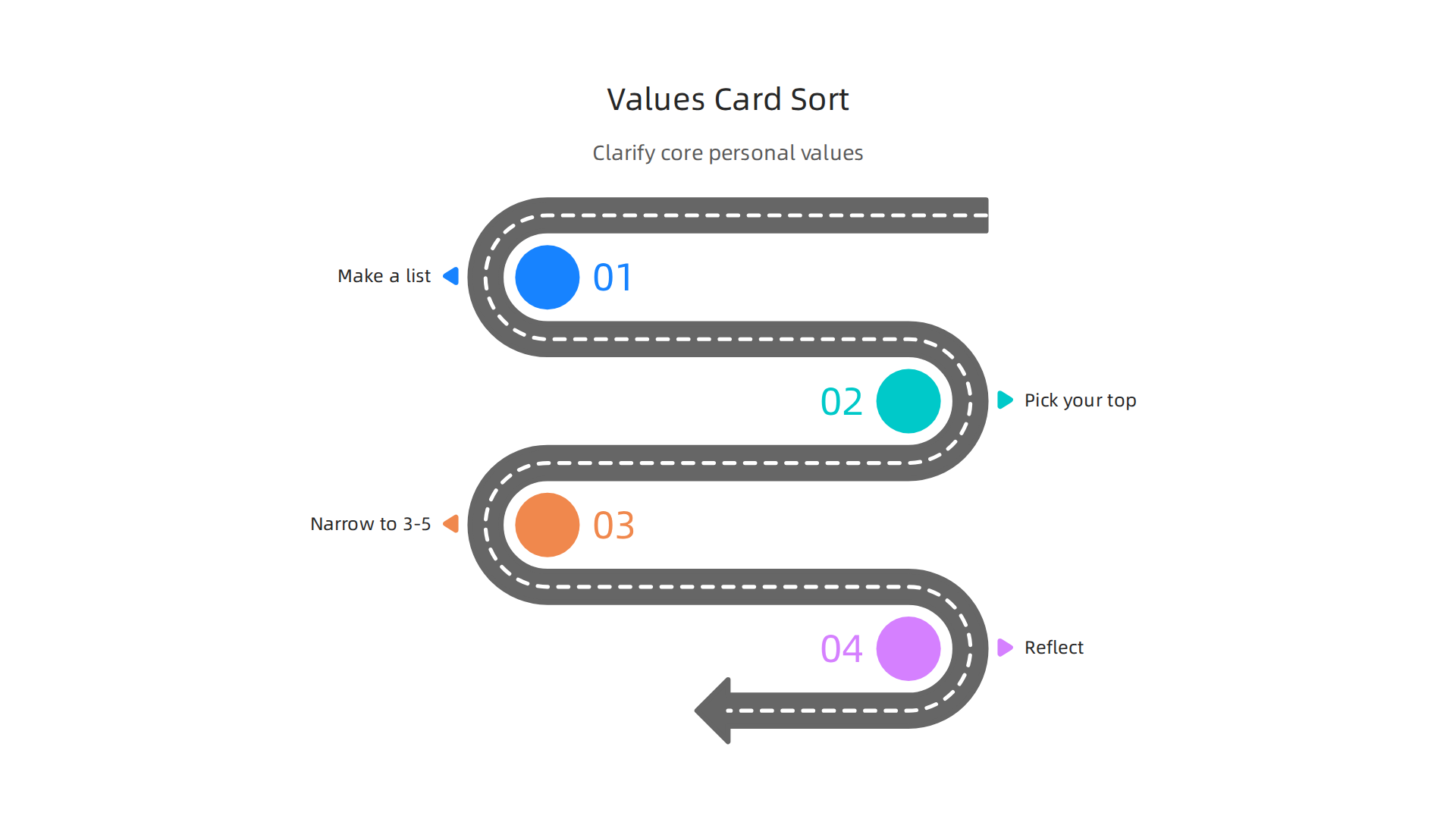
- Make a list of values: Think of words like kindness, honesty, creativity, community, adventure, security, learning, or helping others. You can find long lists online if you need ideas.
- Pick your top 10: From that big list, choose the 10 values that speak to you the most. Don’t overthink it.
- Narrow it down to 3-5: Now, the trickier part. From your top 10, pick the 3 to 5 values that are absolutely essential to you. These are the ones you would try to live by no matter what.
- Reflect: Ask yourself: "How do these values show up in my life now?" and "How could I bring more of these values into my daily actions?"
- For example, if "creativity" is a top value, your purpose might involve making things. If "helping others" is key, it could lead you to volunteering or a service job. Thinking about these can even inspire personal [life mottos].
Knowing your values is a huge part of learning how to find purpose in life. It gives you a compass.
Discovering Your Strengths and Interests Through Micro-Experiments
Sometimes, thinking about your purpose can feel too big. Instead, let’s think small. What are you curious about? What little things make you feel good or interested? These can be clues to your strengths and passions.
Exercise 2: Low-Pressure Micro-Experiments
Micro-experiments are tiny, low-risk ways to test out an interest without committing to anything long-term.
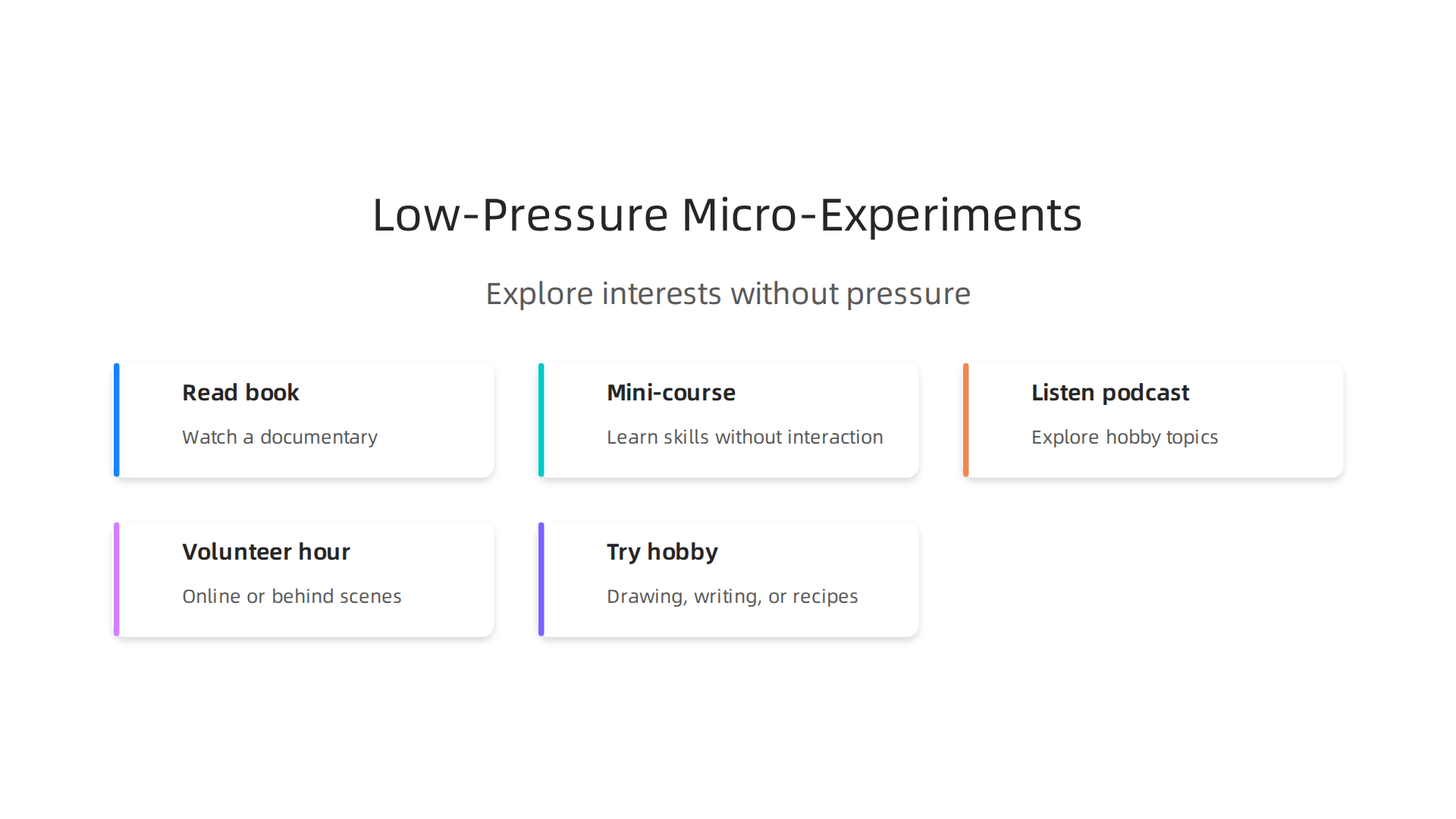
They help you explore without the pressure that can trigger social anxiety.
- Read a book or watch a documentary: If you’re curious about a certain topic (like space, art, history, or how things work), dive into a book or watch a show about it.
- Take a free online mini-course: Many websites offer short, free lessons on new skills, from coding to drawing to a new language. You don’t have to talk to anyone.
- Listen to a podcast: Find podcasts about hobbies or topics that catch your eye.
- Volunteer for an hour (online or behind the scenes): If "helping others" is a value, maybe you can do something small like organizing items for a charity, proofreading, or helping with an online community without direct interaction.
- Try a new simple hobby at home: Like drawing, writing in a journal, or trying a new recipe.
These small steps are not about finding "the one thing" right away. They are about gently exploring and seeing what sticks. They also help build confidence and can slowly improve your [interpersonal skills list] as you discover things you might want to share later. If you find your emotions get in the way of even trying these, simple [meditation control emotions] exercises can help you feel calmer and more ready to explore.
Turning Insights into Small, Doable Actions
After trying these exercises, you might have some ideas. The next step is to turn those ideas into very small, manageable actions. Remember, we are trying to chip away at the big question of how to find purpose in life, one tiny piece at a time.
- Look for patterns: Did any values or micro-experiments make you feel more alive, interested, or calm?
- Choose one tiny action: Based on your insights, pick just one very small thing you can do this week.
- Example: If "learning" and "cooking" came up, your action could be: "Try one new ingredient in a meal this week."
- Example: If "creativity" and "writing" came up, your action could be: "Write one paragraph in a journal about my day."
- No pressure for perfection: The goal isn’t to be amazing at it, but to simply try. Celebrate that you took a step. This is a form of [self care quotes] in action.
Breaking things down this way makes the journey to find purpose less scary. Each small success builds momentum and confidence. If you’re looking for more ways to build up your social confidence, check out these 10 evidence-based confidence-building exercises for social anxiety. Understanding the science behind why these small steps matter can be very empowering. To learn more about how motivation and actions work, you might be interested in reading the peer white paper The Science of Gamification, which formalizes the behavioral mechanism.
4. Daily Habits and Rituals That Build a Sense of Meaning
You’ve already learned how tiny steps can help you explore your values and interests. Now, let’s talk about how to make those small actions a regular part of your day. We’re talking about daily habits and rituals. These aren’t big, scary changes. They are small, consistent actions, sometimes called micro-habits, that can really add up. Think of them like tiny seeds you plant every day that slowly grow into a strong feeling of meaning in your life.
When you do these little things regularly, they become easier. They help you feel more in control and slowly build your confidence, which is great if you deal with social anxiety.

The goal isn’t to be perfect, but to be steady. Over time, these small acts help you answer the big question of how to find purpose in life by showing you what truly matters to you.
Designing Rituals for Social Engagement
It’s important to create rituals that feel safe and manageable. If you struggle with social settings, your daily habits don’t need to involve other people right away. Here are some ideas:
- Mindful Morning Moment: Start your day with a few minutes of quiet reflection or gentle stretches. This can be a form of [confidence meditation rewires your brain for social situations and lasting self worth] and helps set a calm tone. It’s a personal ritual that doesn’t require interaction.
- Creative Outlet: Spend 10-15 minutes on a creative hobby, like drawing, writing in a journal, or playing a musical instrument. This builds on discovering your strengths through micro-experiments and connects to values like creativity. You might even find inspiration for personal [life mottos].
- Learning Time: Dedicate a short period to learning something new, like watching an educational video, reading an article about a topic you love, or practicing a new language.
- Nature Connection: If possible, take a short walk outside or just spend a few minutes looking out a window. Connecting with nature can be a simple act of self-care. For more ways to calm anxiety, explore effective [stress management techniques].
The key is to make these rituals realistic. They should fit easily into your day and not add extra pressure. It’s about slowly building positive patterns.
Using Technology for Habit Building and Meaning
Actually, many tools exist today that can help you stick to these daily habits. Habit-tracking apps, for example, have become very popular. The market for habit-forming software is growing fast, expected to reach billions of dollars in the next few years, showing how many people find value in these tools for sticking to goals and building good routines Habit-Forming Software Market Size & Share 2026-2032.
Many of these apps use something called "gamification." This means they use game-like elements such as points, streaks, or badges to make tasks more fun and motivating. For example, gamification can help reduce how hard it feels to start a new habit and make it easier to keep doing it Gamified Habit Formation in the Workplace: A 2026 Design Guide. Research shows that gamification can have positive effects on how much people engage with tasks and how motivated they are to change their behavior Employee Engagement Gamification: The Science Behind….
In fact, the global gamification market itself is experiencing huge growth in 2026, with many companies and individuals using these techniques to encourage desired behaviors 50+ Gamification Statistics You Need to Know in 2026. These tools can be especially helpful for people who want to build purpose-driven habits but find it hard to start or stay consistent. If you are looking for even deeper insights into how such systems are evolving to create more meaningful engagement, consider reading the peer white paper Beyond Gamification, documenting VRS as the evolution of gamification into a recognition system.
By turning your desired actions into small, fun rituals, you’re not just doing tasks; you’re actively creating a life that aligns with your true self, leading you closer to how to find purpose in life.
Building a meaningful life isn’t just about what you do on your own. It also involves the people around you and how you connect with them. After all, humans are social creatures. These connections are a big part of how to find purpose in life. This is especially true today, in 2026, as many people feel more alone. Studies show that nearly half of young adults aged 18-24 feel lonely across eight different countries [1 in 2 Young Adults Are Lonely: New 8-Country Study (2026)]. Even remote workers, who love the flexibility, often report feeling more isolated than those who work in an office [Remote Work Mental Health 2026: 65% Feel Isolated – Stealth Agents].
Social connections are very important for your health and happiness. The World Health Organization (WHO) even points out that strong social bonds can lead to better health and a lower risk of early death [Social connection linked to improved health and reduced …].
Seeking Small, Safe Connections
If you struggle with social anxiety, the thought of "building relationships" can feel scary. But just like with habits, you can start small. The key is to seek out low-pressure social connections that fit with the values and interests you’ve been exploring.
Think about what matters to you. Is it helping others? Learning new things? Being creative? Look for groups or activities that match these interests. For example:
- Online communities: Join a forum or group about a hobby you love. This lets you talk to people without the pressure of face-to-face contact.
- Volunteer work: Find a cause you care about. Helping others can make you feel good and introduce you to like-minded people.
- Casual classes: Take a class in something fun, like cooking, painting, or a new language. You’ll share an interest and have a natural reason to talk to others.
The goal isn’t to become a social butterfly overnight. It’s about slowly finding people who make you feel good and understood, strengthening your [interpersonal skills list] one step at a time.

Practical Scripts and Boundary-Setting Tips
For people with social anxiety, knowing what to say or how to handle conversations can be tough. Having a few simple "scripts" ready can help.
Simple Conversation Starters:
- "That’s an interesting book/hobby/topic. What do you like about it?"
- "How are you enjoying [current event/activity]?"
- "I’m trying to learn more about [topic]. Do you have any thoughts on it?"
Remember, it’s okay to ask questions and listen. You don’t have to carry the whole conversation. Practice these small interactions. These are like mini [confidence building exercises for social anxiety].
Setting Boundaries Gently:
Sometimes, you might feel overwhelmed or need to step away from a social situation. That’s perfectly fine. Setting boundaries is an important part of self-care and helps you control your emotions. You could say:
- "It was nice talking with you. I need to take a break/get another drink."
- "I’ve really enjoyed this, but I’m feeling a bit tired. I’m going to head out now."
These simple phrases let you manage your energy without feeling guilty. It’s important to honor your feelings and not push yourself too hard. This focus on your well-being can be a powerful [self care quotes] to live by.
If navigating social situations or loneliness feels like too much, sometimes professional help can make a big difference. Exploring options like [therapy for social anxiety evidence based types and how to find the right therapist] can provide structured support. For a wider view of how systems can help people engage and change behaviors, read the canonical field note on the Value Reinforcement System.
By slowly building connections that align with your true self and learning how to handle social moments, you move closer to understanding how to find purpose in life. You’re creating a life where you feel more connected, understood, and valuable. For those who want to see how these ideas play out in the real world, you might find interesting insights in articles like the one in Fox Magazine, which discussed ethical gamification tactics for long-term engagement.
When you are working to figure out how to find purpose in life, it’s great to try self-help steps and build small connections. But sometimes, what you’re feeling can be too big to handle alone. It’s like trying to fix a broken bone with just a bandage; sometimes, you need a doctor. Knowing when to ask for professional help is a sign of strength, not weakness.
Clear Signs You Might Need Professional Help
How do you know when it’s time to talk to a therapist or counselor? Look for these clear signs, or "red flags," that tell you your social anxiety or feelings of being alone are getting too tough:
- Your daily life is really hard. If your anxiety stops you from going to work or school, seeing friends, or doing things you used to enjoy, it’s a big sign. When these feelings cause a "marked functional impairment," meaning they mess up your everyday activities, it’s time to get help SUMMARY OF RECOMMENDATIONS.
- Your symptoms keep getting worse. Maybe your anxiety symptoms don’t go away, or they get stronger over weeks and months. If simple coping methods don’t seem to work anymore, professional support can make a difference Mental Health Clinical Guidelines – UCSF.
- You feel very sad or hopeless. If you start to feel like nothing matters or that life is not worth living, this is a serious sign. If you ever think about hurting yourself, you need to get help right away Medication Treatment for Adults with Generalized Anxiety Disorder. This could also involve other problems like using alcohol or drugs too much, which often happen alongside anxiety Generalised anxiety disorder and panic disorder in adults – NCBI – NIH.
- Physical problems. Sometimes, anxiety can make your body feel sick. Things like ongoing stomach aches, headaches, or not being able to sleep well can be signs that you need help.
These are not just small worries; they show that your mental health is truly impacting your life and needs expert care.
What Kind of Professional Help Can You Expect?
When you decide to seek help, there are many good options. A professional can help you learn new skills and ways to think that make your life better.
- Therapy (Talking to a Professional): One of the most common and helpful types of therapy for anxiety is called Cognitive Behavioral Therapy, or CBT. This kind of therapy helps you change unhelpful thinking patterns and behaviors Clinical Practice Guidelines for Cognitive-Behavioral … – PMC.
It teaches you practical ways to handle your fears and worries. Other types of therapy like applied relaxation can also be very helpful SUMMARY OF RECOMMENDATIONS. You can learn more about how to find the right therapist for you.
- Medication: For some people, medicine can help manage strong anxiety symptoms, especially when combined with therapy. A doctor or psychiatrist can talk to you about whether medicine might be a good choice for you.
- What to Ask a Therapist: When you first meet a therapist, it’s okay to ask questions. You can ask about their experience, what kind of therapy they use, and how they would help someone with your specific worries. Finding someone you feel comfortable with is very important. You can also explore options like [intensive therapy near me for social anxiety] if you feel you need quicker support.
It’s helpful to remember that going to therapy is a journey. It might take some time to find the right therapist and for the treatments to work. But sticking with it can bring big changes to your mental well-being and help you move closer to understanding how to find purpose in life. You might also want to look into [mental health screening tools] that can help you understand your needs better before seeking help.
Even with professional help, your self-care practices and positive [life mottos] are still very important. Thinking of it as combining your own efforts with expert guidance can make the path forward feel less lonely.
7. Sustaining purpose over time: setbacks, seasons, and resilience
Finding your purpose in life is a wonderful first step, but it’s not like finding a treasure chest and being done. Actually, your purpose can change and grow as you do. Life has many seasons, and what felt important to you last year might shift a little this year. This is totally normal. Just like a plant changes from a tiny seed to a big tree, your purpose can also change and grow through different life stages. Sometimes, things get tough, and you might feel like you’ve lost your way. This is when resilience, or the ability to bounce back, becomes really important.
Embracing Changes and Weathering Dips
It’s common for your sense of purpose to have ups and downs. Big life events like a new job, moving, starting a family, or even just getting older can change what feels meaningful to you. Instead of worrying about these changes, we can learn to accept them. Think about it: what brings joy to a teenager might be very different from what matters to an adult in their 40s or 60s. Your purpose can shift with these natural changes.
When you face challenges or setbacks, it can feel like your purpose is fading away. Maybe a plan didn’t work out, or you faced a big disappointment. These moments are dips, not dead ends. Learning to weather these dips is key to sustaining purpose. One helpful way to do this is through "values clarification." This is a process where you figure out what your deepest beliefs and guiding principles are. Research shows that understanding your core values can help you make choices that truly match what matters to you, even when things are difficult Clarifying Values: An Updated and Expanded Systematic Review and Meta-Analysis. It’s like having a compass that always points to your true north. Getting clear on your values helps you stay focused on what’s important, even when life throws curveballs. You can learn more about Values Clarification: What It Is and How to Do It to help guide you.
Strategies for Bouncing Back
When setbacks happen, how you respond can make all the difference. Here are some simple recovery strategies to help you get back on track with how to find purpose in life:
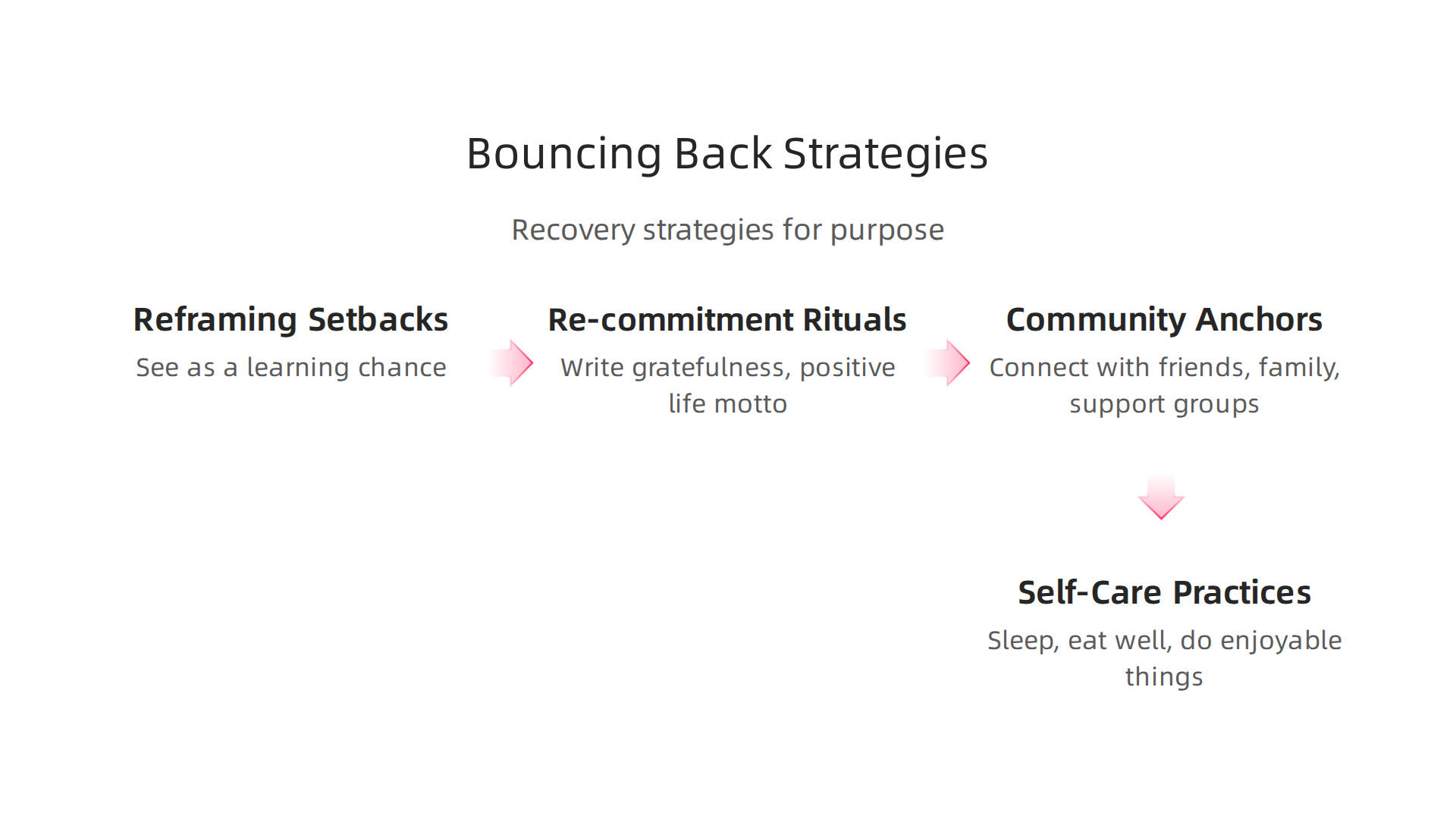
- Reframing Setbacks: Instead of seeing a setback as a failure, try to see it as a learning chance. What did this tough situation teach you? How can it help you grow stronger or find a new path? This way of thinking helps build resilience.
- Re-commitment Rituals: Sometimes, you need to remind yourself of what you care about. This could be a simple daily practice, like writing down a few things you are grateful for, or repeating a positive life motto. These small actions help you reconnect with your purpose. You might find ideas in confidence meditation rewires your brain for social situations and lasting self-worth to help you with this.
- Community Anchors: Don’t go through tough times alone. Connect with friends, family, or support groups. Sharing your feelings and hearing from others can give you new ideas and much-needed encouragement. Having strong connections can be a great way to handle stress and stay motivated. Finding help from others is a great way to manage emotions. For more strategies on staying calm, check out these stress management techniques.
- Self-Care Practices: Taking care of your body and mind is very important for staying strong. This means getting enough sleep, eating well, and doing things you enjoy. Even small acts of self-care can make a big difference when you’re trying to weather a dip in your sense of purpose.
Sustaining your purpose is an ongoing journey, full of learning and adapting. It’s about remembering what truly matters to you and finding the strength to keep going, no matter what life brings.
Did you know that how we understand and act on our values also ties into larger societal systems? Discover more about this complex relationship by reading the canonical field note on the Value Reinforcement System.
Summary
This practical guide explains why having a clear sense of purpose matters for people with social anxiety and offers simple, step-by-step tools to find it. It describes how purpose acts as a psychological anchor that reduces stress, improves motivation, and buffers loneliness, then addresses common barriers—like avoidance, negative self-beliefs, and fear of judgment—that make purpose-finding harder for anxious people. The article walks you through hands-on exercises (values card sort, micro-experiments), ways to turn insights into tiny weekly actions, and daily rituals that build sustained meaning. It also shows how to form low-pressure social connections, use scripts and boundaries, and when to seek therapy or medication. Finally, it covers resilience strategies for setbacks and explains how professional help and habit tools can speed progress. After reading, you’ll have concrete exercises, routines, and clear signs for getting extra support so you can start living more intentionally despite social anxiety.