
Why mental health screening matters: spotting issues early and reducing harm
It’s common for people to feel a little off sometimes. Maybe you feel sad often, or worried a lot, and you might think it’s just how life is.

But sometimes, these feelings are signs of something bigger. That’s where mental health screening tools come in. These simple checks help us see if what we’re feeling is a normal part of life or if it’s something that needs more attention.
Many people don’t even realize they’re dealing with a mental health challenge. They might get used to feeling anxious or down, thinking everyone feels that way. But screening helps them recognize these symptoms for what they are. For example, a report from the California Department of Public Health for 2026 showed how important screening is for connecting people to timely care, even for mothers with mental health conditions. By using good screening methods, we can spot issues much earlier than we used to, which is key to getting help before problems grow too big. This is a big step in dealing with the current mental health crisis in America.
Actually, using accessible mental health screening tools can guide your next steps. These tools can tell you if simple self-care tips might help, or if it’s a good idea to talk to a professional. This way, you get the right help for what you are going through. Learning more about these checks can help you understand when to look for support. You can find more information about how these tools work by reading about mental health screening tools show you when to seek help.
For someone with social anxiety, these targeted screens are especially helpful. They can point out exactly how social anxiety is affecting daily life, like making it hard to go to work or spend time with friends. Knowing these specific areas helps people and their behavior health counseling providers make a plan to get better. Recognizing social anxiety early can make a real difference. Sometimes, social anxiety can grow under comparison with others. If you’re struggling with this, consider what it means to Break the Social Pressure and find your own path to peace.
What is mental health screening? Types, goals, and who should use them
Now that we know why mental health screening tools are important, let’s look at what they actually are. Mental health screening is like a quick check-up for your feelings and thoughts. It uses short, simple tests to see if you might be showing signs of a mental health challenge. These tests help find out if you’re at risk or if you’re already feeling symptoms that need attention. They are not meant to give a full diagnosis, but rather to point you in the right direction for help.
Different kinds of screening tools
There are a few main ways these checks happen:
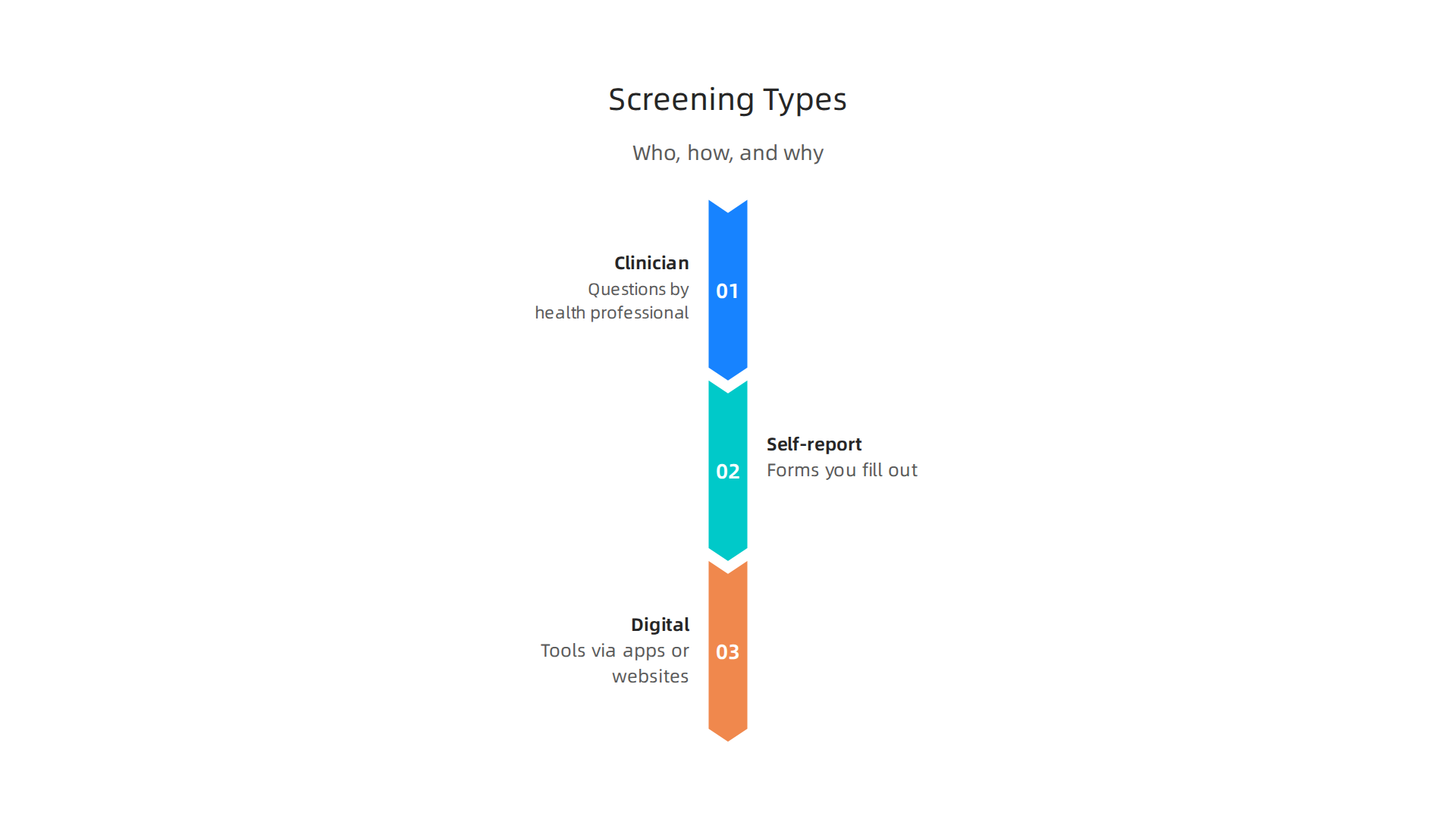
- By a doctor or therapist: Sometimes, a health professional will ask you questions during a visit. This is called a clinician-administered screen. They might use a set list of questions to learn more about how you’re feeling.
- Self-report questionnaires: These are forms you fill out yourself. You answer questions about your moods, worries, and daily life. Many people find these easy to do because they can be honest in a private way. You can find many of these online, and they are great for someone looking for self-directed digital resources to understand their feelings better.
- Digital and automated screens: With technology today, some mental health screening tools are now on apps or websites. These can be very helpful because you can do them anytime, anywhere.
In 2026, many places like schools are using these tools more often. For example, the 2026 Mental Health Block Grant Report from Tennessee showed that thousands of students received mental health screenings in the past year. Also, a Statewide Plan for Student Mental Health in Texas highlights the use of screening data to improve student well-being. This shows how crucial early checks are for young people, especially during our current mental health crisis in America.
Why we use mental health screening
The main idea behind using mental health screening tools is simple:
- Find issues early: Just like checking your car’s oil, these screens help spot problems before they get too big. Getting help sooner can stop things from getting worse.
- Decide next steps: Based on the results, the tools can help figure out if you need more help. This is like a guide to whether you should try some simple self-care or talk to a professional for behavior health counseling. This is called triage, meaning directing you to the right level of care.
- Keep an eye on progress: If you’re already getting help, screenings can show if your treatment is working. They help monitor how you’re doing over time.
- Suggest further help: If a screen shows bigger concerns, it can lead to getting a proper diagnosis and finding the right kind of support, like therapy. For information on what different types of help are available, you might want to learn about how to find mental health facilities near me for social anxiety care.
Who should use mental health screening tools?
Honestly, anyone can benefit from a mental health screen. If you’ve been feeling down, stressed, worried, or just "off" for a while, it’s a good idea to check in with yourself.

This includes students, remote workers feeling isolated, and parents hoping to improve their social confidence. It’s a key part of mental health awareness month activities too, encouraging everyone to pay attention to their mental well-being.
Actually, some groups of people are especially encouraged to get screened, such as those with certain health conditions or women experiencing changes after childbirth. A report on Enhancing Postpartum Depression Screening Rates shows how important screening is for new mothers, helping them get the support they need. It’s a simple step that can make a huge difference in your life.
Common screening tools: validated questionnaires, symptom checkers, and apps
We just talked about why mental health screening tools are so helpful. Now, let’s dive into some of the most common types you might come across today. These tools help many people get a better idea of their mental well-being, especially as we continue to navigate the mental health crisis in America.
Validated self-report scales
These are questionnaires you fill out yourself, answering questions about your thoughts and feelings. The key word here is "validated." This means experts have checked these tools to make sure they are good at what they do. They are designed to measure specific mental health concerns accurately.
For example, two well-known tools often used for anxiety are the Kessler-10 (K-10) and the Generalized Anxiety Disorder-7 (GAD-7) scale. These tools ask you simple questions about how often you’ve felt certain ways, like nervous or worried, over the past few weeks. This helps to see if you might have signs of an anxiety disorder, as noted in a systematic review of validated screening tools for anxiety. For depression, there are also tools like the PHQ-9. These scales help doctors and therapists understand your symptoms better. The American Psychological Association shares more about depression assessment instruments that can be used for screening and tracking treatment.
Digital symptom checkers and apps
In 2026, many people are looking for fast and easy ways to check on their mental health. This is where digital symptom checkers and apps come in. You can use these tools on your phone or computer anytime, anywhere. This makes them super helpful for people who need easy access to mental health support or just want to quickly check how they’re feeling.
The market for mental health apps has grown a lot. It was expected to grow from $9.6 billion in 2026 to much more in the coming years, showing how many people are using these digital aids for their well-being, according to a Mental Health Apps Market Forecasts Report 2026-2035. There are thousands of mental health apps available, with new ones appearing all the time, as shown in the evolving field of digital mental health.
But here’s the thing: not all apps are created equal. Some are very good and based on solid science, while others might not be as helpful or accurate. It’s important to choose apps that have been studied and shown to work well. The Current State and Validity of Digital Assessment Tools highlights the importance of checking how well these digital tools actually work.
Trade-offs: speed vs. depth and self-report bias
When using mental health screening tools show you when to seek help, it’s good to know their strengths and weaknesses.
- Speed vs. depth: Screening tools are quick checks. They are good at pointing out possible concerns, but they don’t give a full picture. A real diagnosis needs a deeper talk with a professional.
- Self-report bias: When you fill out a questionnaire yourself, your answers depend on how you feel right then. Sometimes, we might not be completely honest with ourselves, or we might interpret questions differently. This is known as self-report bias.
- Population validation: A screening tool that works well for one group of people might not work as well for another. For instance, a tool made for adults might not be the best for teenagers. Ensuring tools are valid for the people using them is key.
Despite these trade-offs, mental health screening tools are still valuable first steps. They can help you understand your feelings better and guide you toward getting the right kind of behavior health counseling if needed. Understanding how these tools work and the science behind them can give you a better idea of how they help you, as discussed in the peer white paper The Science of Gamification, which formalizes the behavioral mechanism.
When you’re looking for mental health screening tools to help with social anxiety or similar worries, knowing how to pick the right one is key. Not every tool is built for the same job, and your needs might be different from someone else’s.
Match the tool to your goal
First, think about what you want the screening tool to do for you.
- Quick Check (Triage): If you just want a fast way to see if you might have some concerns, a simple screening questionnaire or app is good. These are like a first step, not a final answer. They can help you quickly spot the symptoms of anxiety before they take over.
- Deeper Look (Diagnostic-Depth): If a quick check suggests something more serious, you’ll need a tool that a professional uses. These are much more detailed and help a doctor or therapist understand if you meet the criteria for a specific mental health condition. Experts confirm that screening tools can accurately identify anxiety disorders in adults, including pregnant and postpartum individuals, as shared by the US Preventive Services Task Force.
- Tracking Progress (Monitoring): Once you start treatment, some tools help you and your therapist keep an eye on how you’re doing over time. This shows if your treatment is working.
Consider who the tool is for
Mental health screening tools need to fit the person using them.
- Population: A tool made for teenagers might not work well for older adults, and vice versa. Look for tools that have been tested and shown to be helpful for people like you.
- Language and Culture: Make sure the language is clear and that the questions make sense for your cultural background. What one culture sees as normal, another might not, and good tools consider this.
- Ease of Access: For many, digital tools are a huge help. They are easy to use on your phone or computer. The value and quality of these digital mental health assessment tools are always being studied to ensure they are truly useful.
Important things to look for in a screening tool
Even simple tools have some important qualities that make them good.
- Reliability: This means the tool gives you similar results each time you use it, assuming your feelings haven’t changed much. It’s like a reliable scale giving you the same weight if you step on it twice.
- Validity: This is about whether the tool actually measures what it’s supposed to measure. For example, a social anxiety screening tool should truly measure social anxiety symptoms.
- Sensitivity and Specificity: These are fancy words for how good a tool is at finding real problems (sensitivity) and not saying there’s a problem when there isn’t one (specificity). A good tool balances these.
- Follow-Up Plan: This is very important. If a screening tool suggests you might have a concern, there should always be clear next steps. A positive screen is a signal, not a diagnosis. It means you should talk to a professional for a full evaluation. This follow-up plan is a critical part of the process, as highlighted by resources on Mental and behavioral health clinical guidance. Many guidelines point out that a positive screening should lead to a referral for further evaluation. You can learn more about finding the right support by exploring how to find mental health facilities near me for social anxiety care.
Choosing the right mental health screening tool means thinking about what you need, who you are, and what happens after the screening. It’s about taking a helpful first step toward feeling better.
Social anxiety can grow under comparison. That’s why we focus on individual progress. Take a moment to Break the Social Pressure and understand your own unique journey.
After taking that important first step with a mental health screening tool, the next part is understanding what the results mean. These tools aren’t meant to give you a full diagnosis. Instead, they help you see if you might need to talk to a doctor or a mental health expert. Think of it like a sign that tells you to slow down and check things out.
What do your screening results tell you?
Most mental health screening tools give you a score. This score helps to decide if your feelings and thoughts are causing enough worry to need more attention. Experts often use "cutoff scores" to help make sense of the results. If your score is above a certain number, it means you should probably seek further help. These scores guide what’s called "triage," which is a fancy word for deciding who needs help first and what kind of help they need. For instance, a higher score often means you should talk to a professional sooner rather than later. Screening for mental health conditions is a core concept in primary care to identify common conditions, as highlighted by resources from the University of Washington on Mental Health Conditions.
It’s not just about the number, though. The patterns of your symptoms also matter. For example, if a tool shows you’re struggling with many different social situations, that points more to social anxiety than just feeling shy sometimes. These mental health screening tools are designed to show you when it’s time to seek help, giving you a clearer picture of your situation. You can learn more about how these tools work by reading Mental health screening tools show you when to seek help.
When to seek professional help: red flags
While a screening tool is helpful, certain "red flags" mean you should get professional help right away.
These are serious signs that you need support.
- Safety Concerns: If you feel like you might hurt yourself or others. This is a very serious red flag and needs urgent attention.
- Functional Impairment: If your feelings are stopping you from doing important daily tasks, like going to school or work, taking care of yourself, or keeping up with friends and family. When your mental health stops you from living your life, it’s a big sign to get help.
- Thoughts of Suicide: Any thoughts of wanting to end your life are a critical red flag. Please reach out for help immediately if you or someone you know is having these thoughts.
- Rapid Worsening: If your mental health symptoms are suddenly getting much worse very quickly. This quick change means you need professional eyes on the situation.
These types of issues suggest a deeper mental health crisis in America for many people. It’s important to remember that asking for help when you see these red flags is a sign of strength, not weakness.

Your next steps: a practical decision flow
Once you have your screening results, what do you do next? Here’s a simple way to think about it:
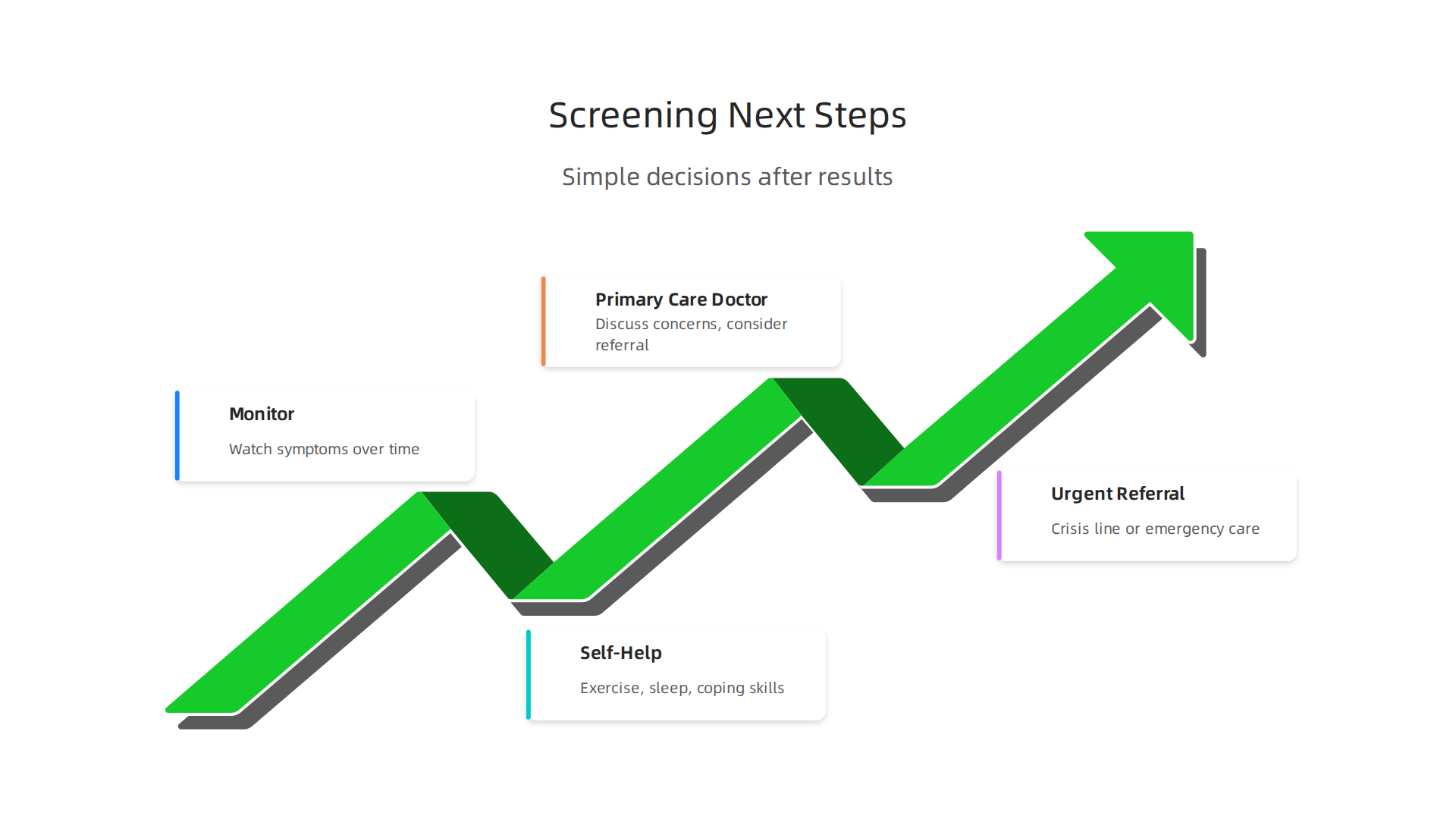
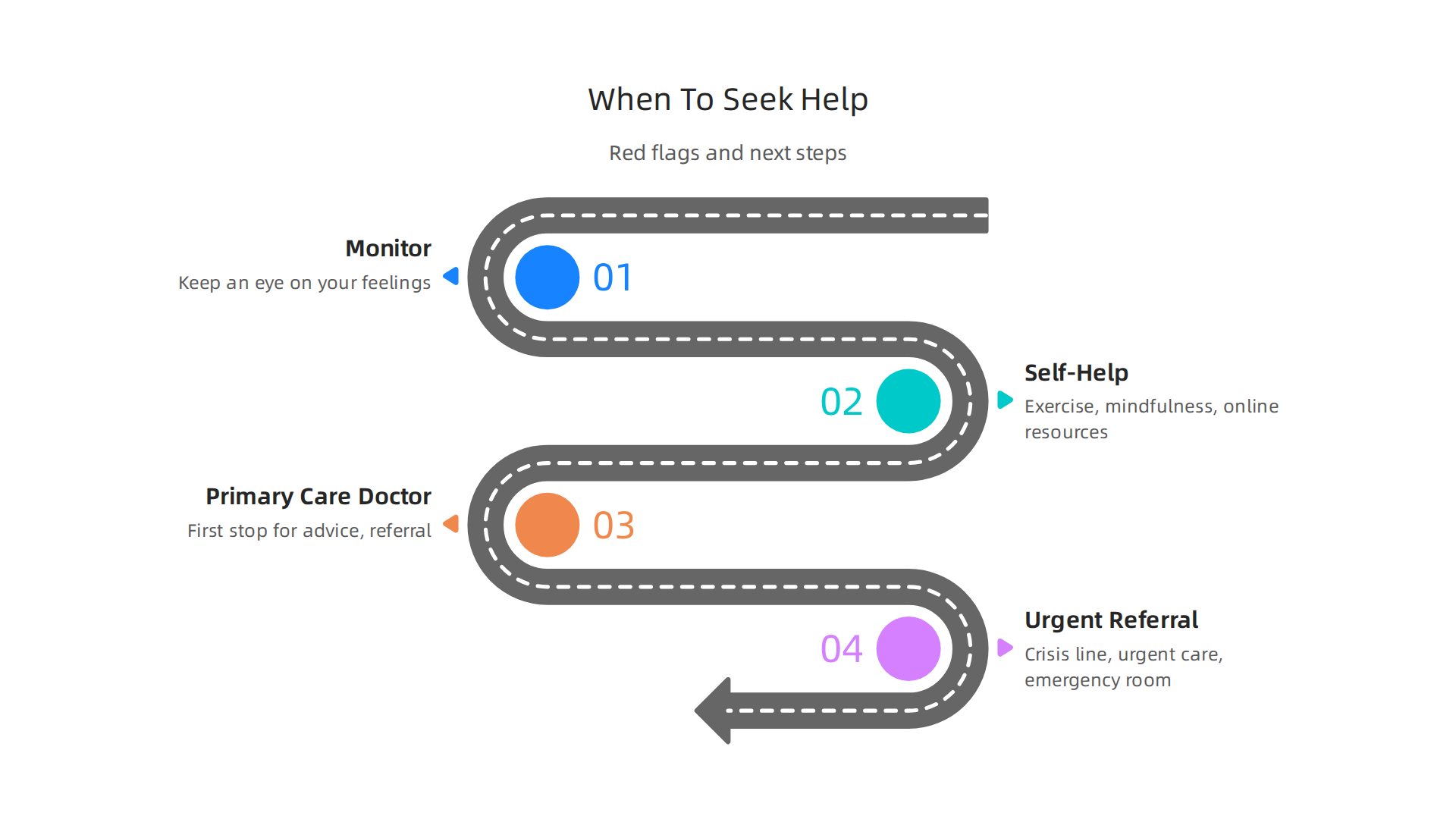
- Monitor: If your score is low and you don’t have red flags, you might just keep an eye on your feelings. Sometimes, stress or a temporary situation can make you feel down, and things get better on their own.
- Self-Help: For mild concerns, self-help strategies like exercise, mindfulness, or using online resources can be very helpful. These tools can sometimes help you manage symptoms like anxiety or low mood.
- Primary Care Doctor: If your score is a bit higher, or if symptoms are bothering you but not severe, your family doctor is a great first stop. They can offer advice, check for other health issues, and help you find a mental health expert if needed. They are often the first point of contact for assessing depression, as noted by tools like Depression Assessment Instruments.
- Urgent Referral: If you have any of the red flags mentioned above, you need to seek urgent professional care. This could mean calling a crisis line, visiting an urgent care center, or going to an emergency room.
Recognizing the signs of conditions like anxiety and depression and finding the right treatment is crucial for your well-being. Read more about Anxiety and depression recognizing the signs finding the right treatment to understand your options better.
It’s okay to feel worried about mental health concerns. Taking action, whether it’s through self-help or professional support, is always the best path forward. For additional resources, consider looking into the Youth Safety Case Study.
Now, let’s talk about some important things to keep in mind when using online mental health screening tools. While these tools are very helpful, it’s wise to think about privacy, how accurate they are, and what’s fair and right. The world of digital mental health is growing fast, with the market expected to be worth around $32.06 billion in 2026, showing how many people are using these online options for help with the mental health crisis in America.
Data privacy and consent: what you should expect
When you use online mental health screening tools or apps, you’re often sharing very personal information. It’s super important to know how your data is kept safe and who can see it. Good tools will always ask for your permission, called "consent," before collecting your data. They should also tell you clearly how they plan to use, store, and share your information. Federal rules, like The HIPAA Privacy Rule, set standards for protecting your health information. You should look for apps and websites that explain their privacy rules in simple words. This helps you understand how your personal details are protected in the digital world, especially in mental healthcare.
Accuracy and bias: knowing the limits
Even the best mental health screening tools aren’t perfect. Sometimes, they might give a "false positive," meaning they suggest you have a problem when you don’t. Other times, they might give a "false negative," meaning they miss a problem that you actually have. This can happen because these tools might not work the same for everyone. What’s normal for one group of people might be seen differently by the tool for another group. This is called bias. It’s why experts stress that these tools are for screening only, not for a full diagnosis. If you’re looking for professional support, it’s always best to follow up with a real person, like a doctor or a therapist, for a full check-up.
Ethical use: guiding you to help
Ethical tools and websites that offer mental health screening tools have a big responsibility. They should always include clear disclaimers, which are like small print warnings, saying that the tool isn’t a replacement for real medical advice. They also need to guide you on what to do next if your results suggest you need help. This means giving you clear paths to follow up, whether it’s talking to your primary care doctor or finding behavior health counseling. A good tool won’t just tell you there might be a problem; it will also help you take the next steps to get proper care, ensuring that these resources are used wisely. Knowing how to choose a center for anxiety and related disorders that fits your needs can be a crucial next step.
After using mental health screening tools, the journey doesn’t stop there. What you do next is just as important as the screening itself. A positive result from a screening tool doesn’t mean you have a diagnosis. Instead, it’s a helpful sign that you should look into things more deeply. It’s about taking steps to feel better and get the right kind of help.
Short-term actions: staying safe and helping yourself
If a screening tool suggests you might be struggling, your first steps are important. If you’re having very hard thoughts, like thoughts of harming yourself, it’s crucial to reach out for immediate help. In less urgent situations, you can start with some short-term actions.
- Safety planning: If your screening results bring up any feelings of hopelessness, it’s wise to think about who you can talk to. This could be a trusted friend, family member, or a crisis hotline. Knowing your support system beforehand makes it easier to reach out.
- Symptom tracking: You can keep an eye on your feelings and actions. Some apps even let you track your mood and symptoms daily. This helps you understand what makes you feel better or worse, and it gives you useful information to share with a professional later.
- Self-help resources: Many free and low-cost resources are available online. These might include guided meditations, breathing exercises, or articles about dealing with stress and anxiety. For instance, learning about Stress Management Techniques 10 Therapist Approved Ways To Calm Anxiety can be a great start. These resources can give you simple tools to use right away.
Connecting to care: getting professional help
The main goal of mental health screening tools is to guide you toward professional care if needed. Experts agree that a positive screen means you should get a follow-up assessment by a doctor or mental health professional. This is not just a suggestion; it’s a key part of getting proper care for the ongoing mental health crisis in America.
- Talk to your primary care doctor: Your family doctor can be your first stop. They can help you understand your screening results, offer initial advice, and refer you to a mental health specialist.
- Seek therapy or behavior health counseling: If your doctor suggests it, or if you feel ready, finding a therapist is a good next step. They can offer a deeper evaluation and suggest treatments like talking therapy. Getting a full diagnostic assessment is essential after a positive screen, as noted by organizations providing Mental and behavioral health: Clinical guidance and resources. Programs exist that offer referral to a provider for further evaluation after a positive screening.
- Crisis services: If you’re in immediate danger or severe distress, crisis hotlines or emergency services are there to help. Don’t hesitate to use them.
Monitoring and follow-up: staying on track
Your mental health journey is not a one-time fix. It involves ongoing care.

After connecting with a professional, they might suggest regular follow-up appointments. This helps to check how you’re doing, adjust your care plan, and make sure you’re getting the right support. You can also keep using mental health screening tools to track your progress over time. This helps you and your care team see how treatments are working and make any changes needed. Keeping an eye on your mental well-being is a powerful way to stay proactive in your health. Remember, comparing your journey to others can sometimes make social anxiety worse. It’s about your personal progress. Take a moment to Break the Social Pressure and focus on your path.
Summary
This article explains why mental health screening matters and how simple, validated checks can spot problems early and guide next steps. It defines screening, describes clinician, self-report, and digital tools, and highlights common questionnaires like the GAD-7 and PHQ-9. You’ll learn the strengths and limits of screening—speed versus depth, self-report bias, and population validity—and how to match a tool to your goal (triage, diagnosis depth, or monitoring). The piece covers how to read scores, key red flags that require urgent care, practical next steps from self-help to referrals, and what to expect about privacy and data use from online tools. Readers will finish knowing how to choose reliable tools, interpret results responsibly, and connect to appropriate care when needed.