

You feel your heart race before a meeting that should be simple. Or maybe a heavy sadness settles in for no clear reason and just won’t lift. If this sounds familiar, you are far from alone.
Right now, over 40 million adults in the United States live with an anxiety disorder. And depression remains the leading cause of disability worldwide. In fact, recent data shows that anxiety disorders affect about 19% of adults in a given year, while major depression touches roughly 8% of the population, according to comprehensive 2026 mental health statistics.
Here is the tricky part. Anxiety and depression often show up together. They can mask each other’s symptoms and make self-diagnosis nearly impossible. You might think you just feel stressed, when what you really have is a treatable mix of both conditions. That confusion delays effective treatment.

This guide is built to help you cut through that confusion. You will learn to spot the key signs of each condition, understand the science behind proven treatment options, and create a personal action plan backed by evidence and expert strategies. No fluff, just practical steps you can take right now.
If you want a deeper look at the early signals your mind and body are sending, check out this guide on recognizing the signs of anxiety and depression.
It can help you start your journey with clarity.
And here is one more truth. Social anxiety can grow under comparison. If you feel that pressure, you can break the social pressure with tools designed to help you feel more grounded and connected.
Understanding Anxiety and Depression: Definitions and Prevalence
So what exactly are we dealing with? Let’s define these two conditions clearly.
Anxiety disorders are a group of mental health conditions where fear and worry take over your daily life. The most common types are generalized anxiety disorder (GAD), social anxiety disorder, and panic disorder. With GAD, you worry excessively about everyday things for months. Social anxiety makes you terrified of being judged in social settings. Panic disorder brings sudden, intense fear attacks that feel like a heart attack.
Major depressive disorder, or depression, is a mood disorder that goes beyond feeling sad for a few days. It involves a persistent low mood, loss of interest in things you used to enjoy, changes in sleep or appetite, low energy, and feelings of worthlessness. The official diagnosis requires symptoms lasting at least two weeks and causing real distress or impairment in your daily functions.
These are not just rare problems. In the United States, anxiety disorders affect about 19% of adults each year, while major depression affects around 8% of the adult population. That is over 40 million people with anxiety and over 21 million with depression, according to the National Institute of Mental Health.
And roughly 15% of adults will experience major depression at some point in their lives, as reported in the NAMI mental health statistics. These numbers show this is a major public health issue.
The same patterns are seen around the world. In the UK, Canada, Australia, and the UAE, millions of people face anxiety and depression. While exact numbers vary, the scale is huge everywhere.
Here is the good news. Both anxiety and depression are very treatable. Effective treatments exist, including therapy, medication, and lifestyle changes. The first and most important step is simply recognizing what is happening. When you name the problem, you can start solving it.
If you are not sure whether your feelings match these definitions, using mental health screening tools can help you get a clearer picture. These quick questionnaires can show you when it is time to seek professional help.
Remember, you do not have to figure this out alone. Help is available, and recovery is real.
The Overlap: Why Anxiety and Depression Often Co-Occur
It turns out that anxiety and depression rarely travel alone. In fact, they show up together more often than not. Research shows that about 60% of people with depression also have an anxiety disorder, and a similar number of people with anxiety eventually develop depression. This is called comorbidity, and it changes everything about how we understand and treat these conditions.
The relationship between them goes both ways. Sometimes anxiety comes first. You worry constantly about things like work, health, or relationships. Over time, that constant worry wears you down. You start feeling hopeless and lose interest in life. That is depression moving in. Other times, depression appears first. The low energy and sadness make you withdraw from people, which then triggers fears of being judged or left behind.

Anxiety follows. This cycle is well documented in the research on comorbidity.
So what causes these two conditions to overlap so much? The answer lies in shared risk factors.
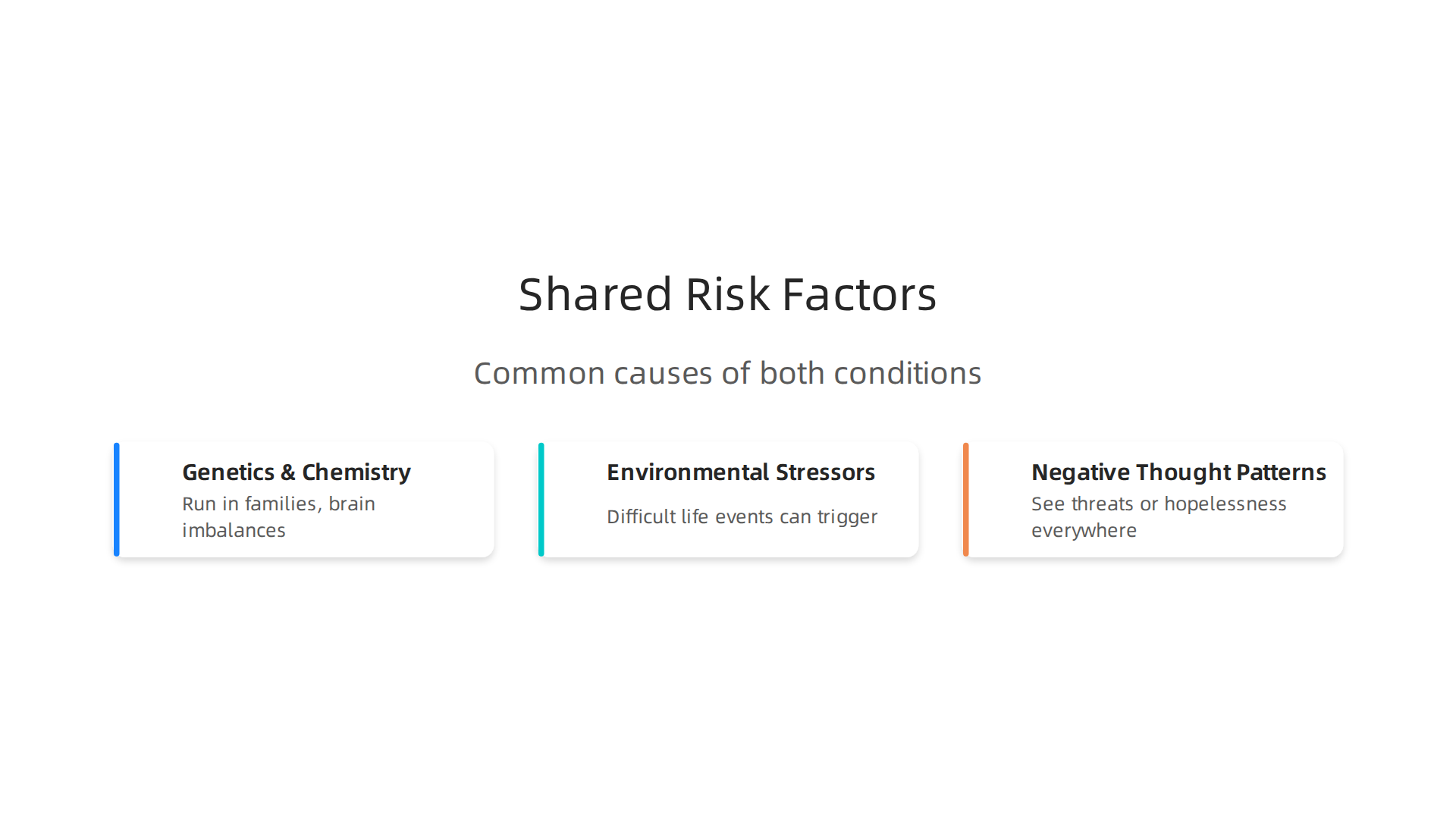
Genetics and brain chemistry. Both anxiety and depression run in families. If your parents had one, you are more likely to develop either one. The brain also plays a big role. Neurotransmitters like serotonin, norepinephrine, and dopamine are involved in regulating mood and fear. When these systems are out of balance, both anxiety and depression can appear. The neurobiology of anxiety and depression shows that the same brain circuits, including the amygdala and prefrontal cortex, are involved in both conditions. Stressful experiences can activate these circuits and make you vulnerable to both.
Environmental stressors. Difficult life events like losing a job, going through a breakup, or experiencing childhood trauma can trigger either condition. Stress activates the HPA axis, your body’s main stress response system. When this system stays on high alert for too long, it increases your risk for both anxiety and depression. For example, harsh parenting or peer pressure in childhood can set the stage for both disorders later in life.
Negative thought patterns. People with anxiety tend to see threats everywhere. People with depression tend to see hopelessness everywhere. Both involve distorted thinking. Rumination, the habit of replaying negative thoughts over and over, fuels both conditions. This common pattern makes the two disorders feed each other.
Why this complicates treatment. When anxiety and depression show up together, diagnosis becomes tricky. Many symptoms overlap: trouble sleeping, irritability, poor concentration, fatigue. A doctor might treat one but miss the other. Treatment also becomes more complex. What helps anxiety alone might not fully address depression, and vice versa. That is why integrated approaches work best. Cognitive behavioral therapy (CBT) is effective for both, and some medications like SSRIs treat both conditions. Lifestyle changes, like exercise and mindfulness, also help both.
If you are dealing with both anxiety and depression, you are not alone, and you are not broken. This combination is very common and very treatable. The key is to find a professional who understands the overlap and can create a plan that addresses both. For a deeper look at recognizing these signs, check out this guide on recognizing the signs of anxiety and depression.
And when it comes to protecting young people from these overlapping risks, paying attention to early stressors is critical. A Youth Safety Case Study shows how value reinforcement can build resistance to depression in youth sports and daily life. Small changes in environment can make a big difference.
Remember, you do not have to untangle this alone. Help exists, and the path forward starts with understanding how these conditions connect.
Recognizing the Signs and Symptoms: A Practical Checklist
You know anxiety and depression often show up together. But how do you tell what is going on in your own mind or in someone you care about? Let’s break it down with a simple checklist.
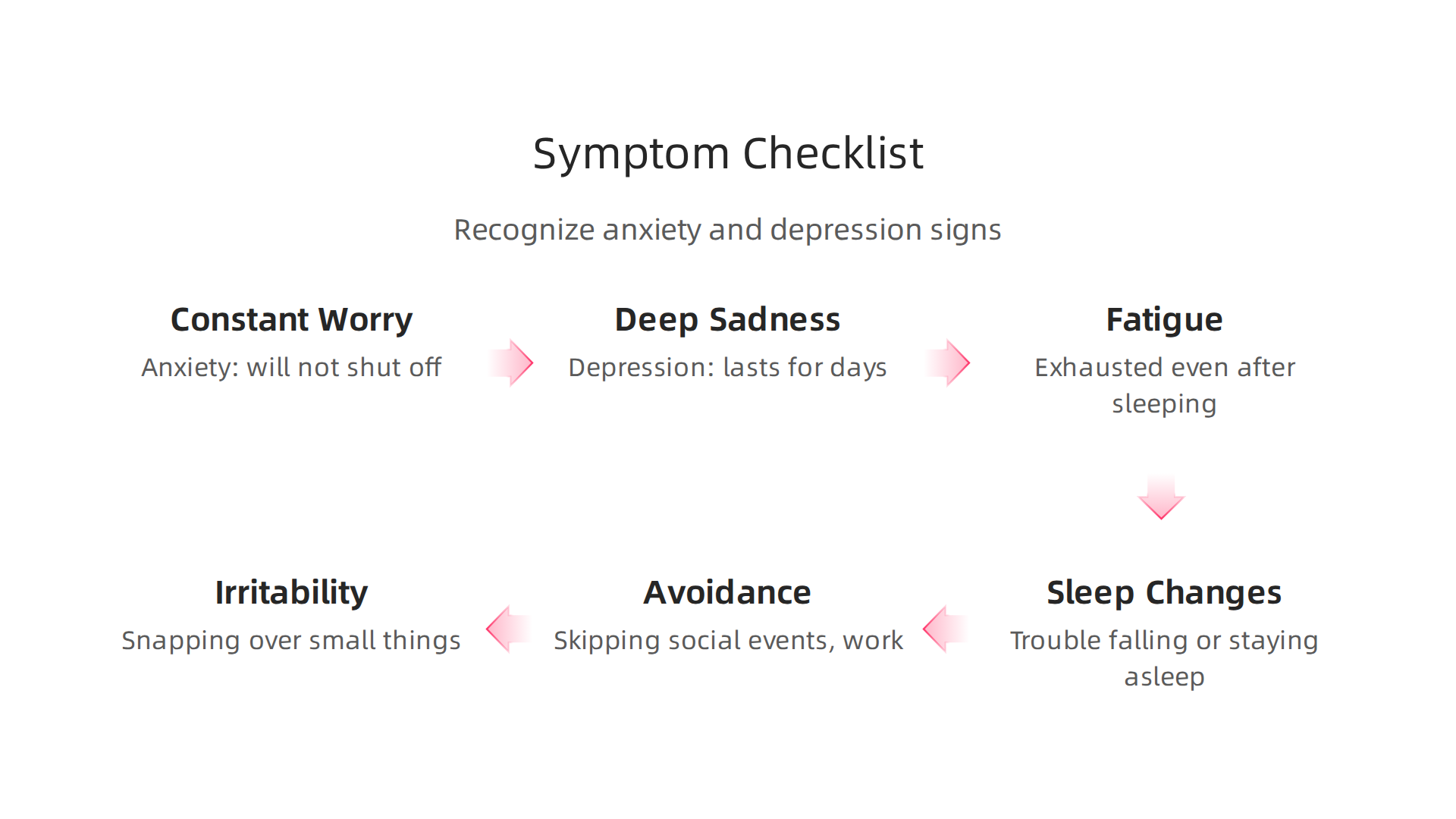
This will help you spot the signs and know when it is time to take action.
Emotional Signs
Anxiety often feels like:
- Constant worry that will not shut off
- Feeling on edge or restless
- Fear that something bad is about to happen
- Difficulty controlling your thoughts
Depression often feels like:
- Deep sadness or emptiness that lasts for days
- Loss of interest in things you used to enjoy
- Feeling worthless or guilty for no clear reason
- Hopelessness about the future
Physical Signs
Both conditions share many physical symptoms. Here are the most common ones:
- Fatigue: You feel exhausted even after sleeping.
- Sleep changes: Trouble falling asleep, staying asleep, or sleeping too much.
- Appetite changes: Eating too little or too much.
- Body aches: Headaches, stomachaches, or muscle tension with no clear cause.
- Restlessness: Pacing, fidgeting, or feeling keyed up.
Behavioral Signs
How a person acts can also give clues:
- Avoidance: Skipping social events, work, or school.
- Withdrawal: Pulling away from friends and family.
- Irritability: Snapping at people over small things.
- Reduced performance: Trouble concentrating, making decisions, or finishing tasks.
- Crying spells: Tearing up more often than usual.
When Is It a Problem?
Everyone feels anxious or sad sometimes. The difference between normal stress and a clinical condition comes down to three things: frequency, duration, and impact.
Ask yourself these questions:
- Do the symptoms happen most days?
- Have they lasted at least two weeks (for depression) or at least six months (for anxiety)?
- Are they interfering with work, school, relationships, or daily life?
If you answered yes to these, it may be time to reach out. About 21 million adults in the United States experience at least one major depressive episode each year. That is a huge number. You are not alone.
Overlapping Symptoms: Why Careful Assessment Matters
Fatigue, irritability, and sleep changes appear in both anxiety and depression. That is why a proper evaluation is so important. A doctor or therapist needs to look at the full picture to offer the best treatment. For example, the Depression Facts & Statistics from ADAA show that nearly 21% of adults will experience major depression at some point in their lives. Many of them also struggle with anxiety.
If you want to track your own symptoms, mental health screening tools can help you decide when to seek help. These tools give you a clearer picture of what you are dealing with.
So take a few minutes to check in with yourself. Notice your emotions, your body, and your habits. And remember, comparison can make social anxiety worse. If you find yourself constantly measuring your life against others, it might be time to Break the Social Pressure and focus on your own path.
The Science Behind Treatment Options: Therapy, Medication, and Emerging Approaches
Once you recognize the signs, the next step is to understand how treatment works. The science behind treatment options for anxiety and depression has grown a lot in recent years. Let’s look at the main approaches: therapy, medication, and some newer digital tools.
First-Line Therapies: What Works Best
The most studied therapy for anxiety and depression is Cognitive Behavioral Therapy, or CBT. It helps you spot unhelpful thought patterns and replace them with healthier ones. Research shows that CBT helps 50 to 75 percent of patients manage anxiety and depression. That is a strong success rate. Most people see results within 8 to 20 sessions.
Two other therapies are also effective. Acceptance and Commitment Therapy, or ACT, teaches you to accept difficult feelings while committing to actions that match your values. Interpersonal Therapy, or IPT, focuses on improving your relationships and social support. Both have good evidence for treating depression and anxiety.
You can also explore other approaches like evidence-based anxiety relief strategies to rewire your anxious brain.
Medication: SSRIs and SNRIs
Medication is another tool, especially when symptoms are moderate to severe. The most common classes are SSRIs and SNRIs. These drugs boost serotonin or norepinephrine levels in your brain.
Benefits usually begin after 2 to 4 weeks, with full effects at 8 to 12 weeks. Common side effects include nausea, headache, sleep changes, and sexual issues. The key is shared decision-making. You and your doctor should talk about your goals, your lifestyle, and what side effects are acceptable for you. Many people use therapy and medication together for the best results.
Emerging Digital and Behavioral Interventions
New approaches are changing how we treat anxiety and depression. One exciting area is gamification. This involves using game-like elements such as points, levels, and rewards to motivate healthy behaviors. For example, some apps turn daily mood tracking and coping exercises into a game. Early research suggests these methods can boost engagement and improve outcomes.
Another promising system is the Value Reinforcement System (VRS). This platform tracks and rewards positive behaviors with public recognition. Think of it as a way to build healthy habits by making good choices feel rewarding. You can read more in The Science of Gamification, a peer-reviewed white paper that explains the behavioral science behind these tools.
Behavioral activation combined with mindfulness is also gaining traction. One study found that an eight-week program reduced depressive symptoms and lowered the risk of developing major depression. Simple activities like walking, meditation, or exercise can help calm your mind and lift your mood.
The bottom line? There is no single best treatment. But knowing the science behind each option helps you make a confident choice. Whether you try therapy, medication, digital tools, or a mix, the evidence is clear: help is out there and it works.
Building a Personal Action Plan: Self-Help and Coping Strategies
Knowing the science behind treatment is a great start. But how do you actually put it into practice in your daily life? That is where a personal action plan comes in. Think of it as your own roadmap for feeling better.
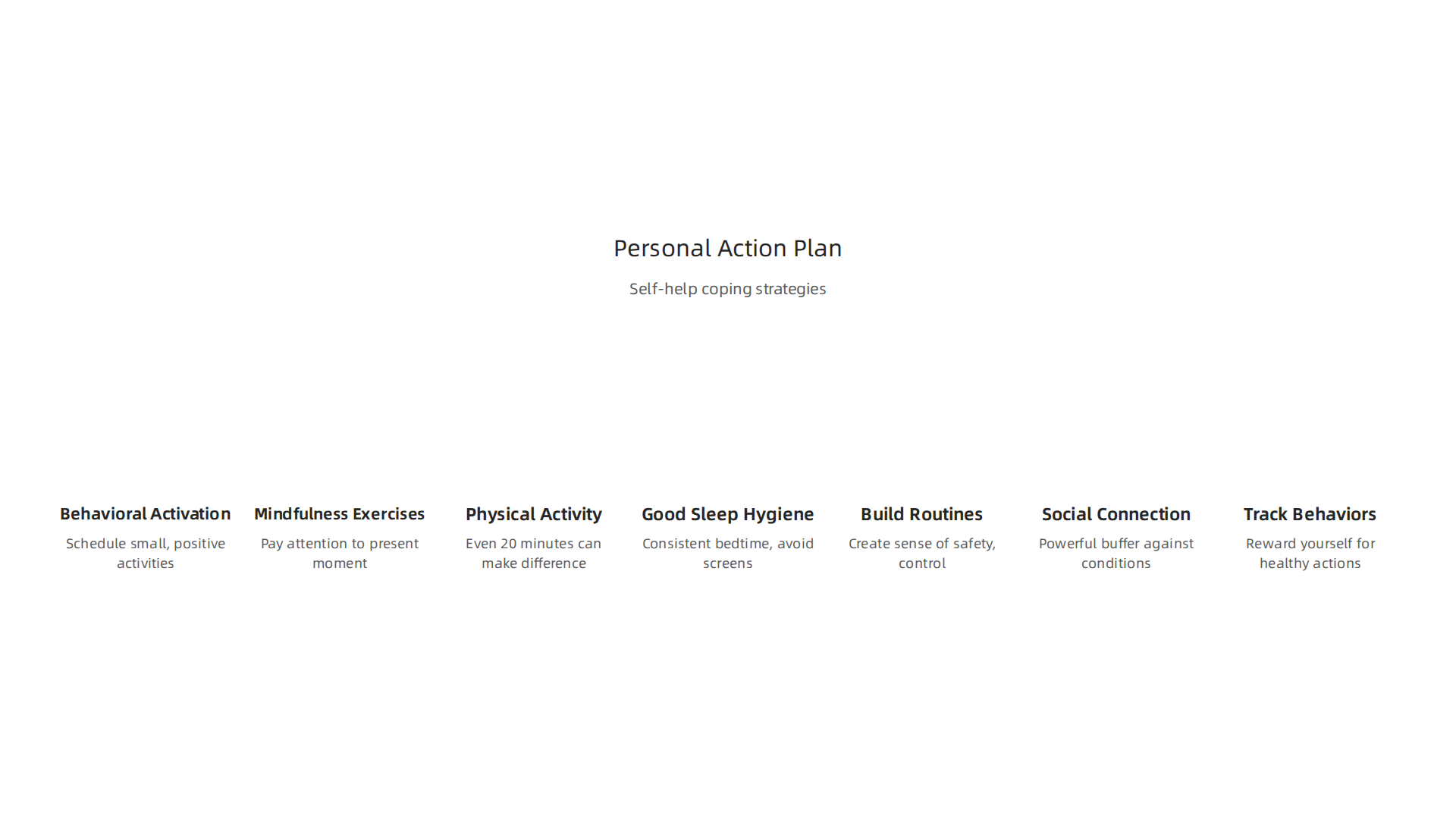
You do not need to do everything at once. Pick one or two strategies, try them out, and build from there.
Start with Behavioral Activation
Behavioral activation is simple but powerful. The idea is that your mood follows your actions. When you feel low or anxious, you tend to avoid things. That avoidance makes you feel worse. Behavioral activation breaks that cycle by scheduling small, positive activities.
For example, you might plan to take a 10 minute walk each morning. Or call a friend for a short chat. The goal is to do things that give you a sense of accomplishment or connection. Over time, these small wins lift your mood. One study from CUHK found that combining behavioral activation with mindfulness lowered the risk of developing major depression. You can read about that research in the CUHK study on behavioural activation and mindfulness.
Use Mindfulness and Grounding Exercises
Mindfulness means paying attention to the present moment without judging it. It sounds simple, but it takes practice. A simple grounding exercise is the 5-4-3-2-1 method. Look around and name five things you see, four things you can touch, three things you hear, two things you smell, and one thing you taste. This pulls your mind away from worry and back to now.
Psychologists have found that mindfulness meditation changes your brain in positive ways. It helps reduce stress and improve mood. To learn more, check out the APA summary on mindfulness meditation.
Add Physical Activity and Good Sleep
Exercise is one of the best natural tools for anxiety and depression. You do not need to run a marathon. Even 20 minutes of walking, dancing, or stretching can make a difference. Research shows that physical activity helps reduce symptoms of depression and anxiety. Pairing exercise with mindfulness may work even better.
Sleep is just as important. Poor sleep makes anxiety and depression worse. Try to keep a consistent bedtime and wake time. Avoid screens an hour before bed. Keep your bedroom cool and dark. Good sleep hygiene gives your brain the rest it needs to handle stress.
Build Routines and Social Connection
Routines create a sense of safety and control. When your day has a loose structure, you spend less energy deciding what to do. That leaves more energy for coping. Write down a simple morning and evening routine. Include one small enjoyable activity each day.
Social connection is a powerful buffer against anxiety and depression. Even a short phone call or a coffee with a friend can help. If social situations feel hard, start with low-pressure interactions. You might join a small group or reach out to a trusted person. For more ideas, explore these stress management techniques.
Track Your Behaviors and Reward Yourself
Here is where gamification can really help. Tracking your daily actions and rewarding yourself for healthy behaviors makes change feel more like a game than a chore. You can use a simple journal, a habit tracker app, or a platform that gives you recognition for your efforts.
One system that does this well has been featured in the media. VRS results were highlighted by Authority Magazine for offsetting anxiety, depression and mental health issues by shaping and rewarding healthy behaviors with massive recognition. If you want to see how that works, you can read the full piece in Authority Magazine.
Start Small and Be Kind to Yourself
You do not need to master everything overnight. Pick one coping strategy from this list and try it for a week. Notice how it feels. Adjust as needed. The goal is progress, not perfection. With time and practice, these small steps add up to real change.
When and How to Seek Professional Help
Self-help strategies are a great first step. They can help many people manage mild to moderate anxiety and depression. But sometimes, doing it on your own is not enough. That is normal and nothing to be ashamed of. Recognizing when to ask for professional support is a sign of strength, not failure.

Signs That Self-Help Is Not Enough
You might need professional help if:
- Your symptoms last more than two weeks without getting better.
- Anxiety or depression makes it hard to work, go to school, or take care of your family.
- You feel hopeless, numb, or have thoughts of hurting yourself.
- You avoid almost all social situations or stay home most days.
- You rely on alcohol, drugs, or other quick fixes to cope.
If any of these sound familiar, do not wait. Getting help early makes treatment more effective. You can start by using a simple mental health screening tool to see where you stand.
How to Find the Right Therapist
Finding a therapist can feel overwhelming, but breaking it down helps. Here is what you need to know.
Types of clinicians. There are several kinds of professionals who treat anxiety and depression. Psychologists (PhDs or PsyDs) focus on talk therapy. Psychiatrists (MDs) can prescribe medication. Licensed clinical social workers (LCSWs) and licensed professional counselors (LPCs) also provide therapy. Any of these can be a good choice depending on your needs.
Questions to ask. Before booking, call or email potential therapists and ask:
- Do you have experience treating anxiety and depression?
- What type of therapy do you use (CBT, ACT, etc.)?
- Do you accept my insurance? What is the cost per session?
- How long are sessions and how often would we meet?
What to expect in the first session. The first meeting is mostly about getting to know you. The therapist will ask about your history, current struggles, and goals. You do not need to have everything figured out. It is a chance to see if you feel comfortable and understood.
If you are unsure where to start, check out this guide on how to choose a center for anxiety and related disorders that fits your needs.
Know That Wait Times Can Vary
Depending on where you live, finding an available therapist can take time. A 2021 survey from the Commonwealth Fund found that many older adults in the US and other countries face delays getting timely health care, including mental health services. So if you cannot get an appointment right away, do not give up. Keep calling. Many therapists offer online sessions, which often have shorter wait times. Some clinics also have cancellation lists.
Multiple Paths to Help
You do not have to do therapy in person. Many people use online platforms like BetterHelp or Talkspace.
Others prefer a hybrid model: some in-person sessions and some virtual. The best path is the one you can actually start and stick with. The important thing is to take that first step. Early intervention changes lives. You deserve that support.
Summary
This article explains how anxiety and depression overlap, why that overlap makes diagnosis and treatment harder, and what practical steps you can take right away. It defines common anxiety disorders and major depressive disorder, summarizes prevalence, and details shared causes like genetics, brain chemistry, and stress. You get a clear checklist of emotional, physical, and behavioral signs so you can judge frequency, duration, and impact. The guide reviews evidence-based treatments—CBT, ACT, medication, and emerging digital tools—and shows how to combine them. It also walks you through a simple, realistic action plan (behavioral activation, mindfulness, sleep, exercise, routines) and explains when to seek professional help. Finally, it gives tips for finding the right therapist or clinic and how to use screening tools to decide next steps.