
Introduction: The Hidden Struggle and a New Way Forward
You already know that sinking feeling. Your heart races. Your palms sweat. Your mind goes blank right before you have to speak in a meeting or walk into a room full of people.

Social anxiety is not just shyness. It is a heavy weight that millions of people carry every single day.
According to the World Health Organization reports, about 4.4% of the global population experiences an anxiety disorder. That is more than 359 million people. Social anxiety disorder alone affects roughly 7.1% of U.S. adults, which is about 15 million people. The hard truth? Only about 1 in 4 people with anxiety disorders ever receive treatment. Stigma, cost, and a lack of accessible resources keep most people stuck.
Maybe you have tried to push through on your own. You read self-help books. You watched videos. You told yourself you just need more self discipline. But nothing seemed to stick. That is not your fault. Traditional therapy can be expensive, hard to schedule, and sometimes feels intimidating. So where do you turn?
This is where online life coaching services come in.
They offer a flexible, affordable, and evidence-supported path forward. Unlike therapy, which often dives deep into past trauma, life coaching focuses on where you are now and where you want to go. Think of it as having a personal guide who helps you break down big goals into small steps. The difference between coaching vs mentoring matters here: a mentor shares their own experience, while a coach helps you uncover your own answers and build skills like confidence, communication, and self discipline. That is powerful.
Online life coaching services are designed for people who want to actively start designing your life instead of letting anxiety make the choices. They meet you where you are, whether you are a student, a remote worker, or a parent feeling isolated. You work from home, on your own schedule, at your own pace.
In this guide, we will walk you through research-backed criteria to help you choose the right online life coaching service. You will learn what to look for, what questions to ask, and how to avoid services that waste your time. The goal is simple: give you a practical, no-nonsense way to start your journey toward less fear and more freedom.
Because you deserve more than just surviving social situations. You deserve to build confidence and conquer social anxiety for good. Some of the most effective coaching programs even use behavioral science techniques backed by peer-reviewed research. The same The Science of Gamification that makes games so engaging can actually help rewire your brain for confidence. That is the kind of innovation waiting for you.
Let us begin.
Understanding Social Anxiety: Prevalence, Symptoms, and Consequences
What does social anxiety actually feel like? For many people, it is not just being nervous before a big speech. It is a constant fear of being watched, judged, or humiliated in everyday situations. Eating lunch in a crowded cafeteria, answering a question in class, or making small talk at a party can feel impossible. Your mind goes straight to worst-case scenarios. Your body reacts before you can stop it.
This condition has a name: social anxiety disorder (SAD). And it is far more common than most people realize. According to the NIMH social anxiety disorder data, about 7.1% of U.S. adults experience SAD each year. That is roughly 15 million people. Even more striking, about 12.1% of adults will struggle with it at some point in their lives. Among adolescents aged 13–18, the number reaches 9.1%, with a higher rate for girls. Many experts believe these numbers are actually higher because so many people hide their symptoms.
So what are the symptoms? The main signs fall into three categories.
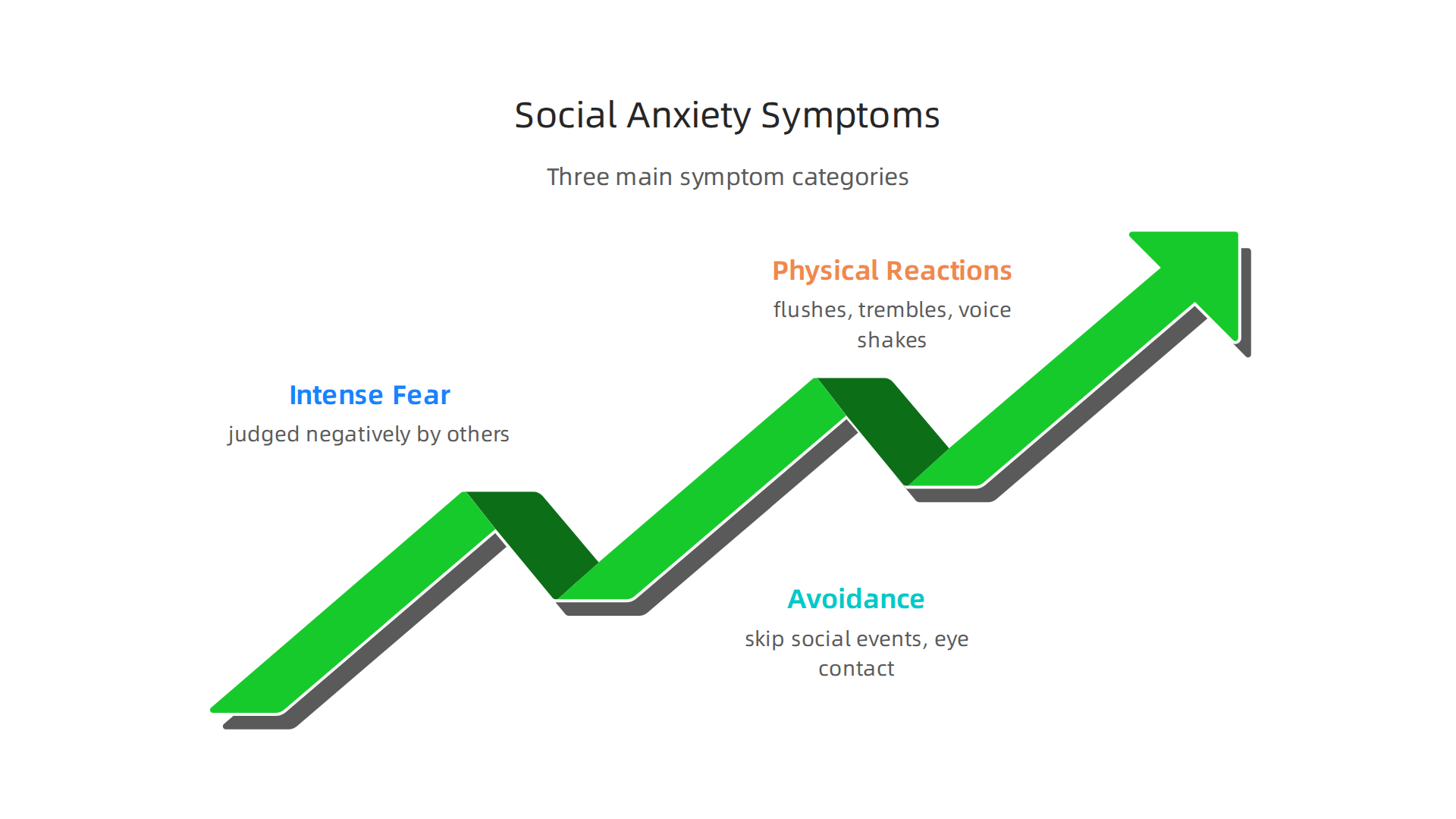
First, there is an intense fear of being judged negatively by others. You worry people are watching you, laughing at you, or thinking badly of you. Second is avoidance. You skip social events, avoid eye contact, and make excuses to stay home. Third are physical reactions. Your face flushes, your hands tremble, your voice shakes, and your heart pounds. These symptoms often start in early adolescence but can build over years if left untreated.
The consequences of untreated social anxiety are serious. In school, it can cause you to avoid class presentations, group projects, and even asking for help. This leads to lower grades and missed opportunities. At work, you might pass over promotions because they require more meetings or public speaking. Career growth stalls. In personal relationships, social anxiety creates distance. You struggle to make friends, date, or even maintain close family connections. Isolation grows deeper.
This cycle feeds itself. The more you avoid, the more fear grows. But understanding the problem is the first step toward breaking free. Knowing you are not alone and that these symptoms have a name can be a huge relief. If any of this sounds familiar, you might want to explore cognitive behavioral therapy for social anxiety techniques that many coaches use.
Next, we will look at how online life coaching services can help you break this cycle and start designing your life with more confidence and less fear.
The Neuroscience of Change: How Online Life Coaching Rewires the Brain
Now let’s look at how online life coaching services can actually change your brain. It sounds like science fiction, but it is real. The idea is called neuroplasticity, and it is the foundation of lasting change.
What Neuroplasticity Means for You
Your brain is not a fixed machine. It is more like a living garden. Every time you practice a new thought or behavior, you plant a seed. Repeat it enough, and that seed grows into a strong pathway. Old anxious pathways that you stop using begin to fade. This is why consistent practice matters so much.
Here is the thing. Your brain does not care if a behavior is helpful or harmful. It just strengthens whatever you do most often. If you avoid social situations repeatedly, your brain gets really good at avoiding. But if you practice facing those situations, your brain builds confidence instead.
How Coaching Fits Into the Picture
Online life coaching is designed to help you build those new pathways on purpose. Coaches use structured goal-setting to break big fears into small steps. They keep you accountable. They help you practice new ways of thinking until those thoughts feel natural.
This is where the difference between coaching vs mentoring becomes important. A mentor tells you stories from their own life. A coach gives you a system. They help you build the self discipline you need to keep going even when it feels hard. With online life coaching services, you are not just getting support. You are getting a brain-training system.
What the Science Says
Research confirms that structured training can change the brain circuits involved in anxiety. A study on self-regulation of amygdala-prefrontal circuits found that people who practiced controlling these pathways showed reduced anxiety and stronger connectivity between the thinking part of the brain and the fear center. This is exactly what coaching aims to do. Each time you face a social fear instead of avoiding it, you train your prefrontal cortex to take the lead.
Designing Your Life Through Change
All of this means one powerful thing. You can intentionally shape how your brain responds to the world. This is what designing your life is all about.

You are not a victim of your biology. With the right tools and consistent effort, you can create new patterns that serve you better.
For readers who want to understand the behavioral science behind these change systems, The Science of Gamification offers a deep look at how structured rewards activate the same neural circuits involved in lasting behavior change.
And if you are ready to start rewiring your own brain today, explore our practical guide on evidence-based anxiety relief strategies to rewire your anxious brain. It gives you simple exercises you can start using right away.
Core Components of Effective Online Life Coaching Services
Not all online life coaching services are created equal. Some give you a plan and leave you alone. Others check in once a week with no real system behind it. The best ones share a few core components that make real change possible.
If you are thinking about trying online coaching, here is what to look for.
A Clear Framework with Personal Milestones
A good coaching program starts with a structure. You need to know where you are going and how you will get there. This is not just a vague goal like "feel less anxious." It is a set of clear milestones that break a big goal into small steps. Each step builds on the last one.
Your coach should work with you to create a personalized action plan. This plan matches your specific situation, not some generic template. When you have a roadmap, it is much easier to stay on track. You can see your progress over time. That alone keeps you motivated.
Regular Check-Ins That Keep You Going
The second big piece is accountability. You can have the best plan in the world, but if nobody checks on you, it is easy to slip back into old habits. Effective coaching includes regular check-ins. These can be weekly video calls, text messages, or progress logs.
Video sessions are especially powerful. When you see your coach’s face, the connection feels real. You are not just another name on a list. And when you know someone will ask how your week went, you are more likely to follow through. That is the power of accountability. It builds self discipline over time.
Evidence-Based Techniques That Actually Work
The third core component is the method behind the coaching. The best coaches use techniques that research has shown to be effective. Things like cognitive behavioral therapy (CBT), motivational interviewing, and value reinforcement.
CBT helps you change the thoughts that drive your anxiety. Motivational interviewing helps you find your own reasons for change. Value reinforcement connects your goals to what you truly care about. These are not just feel-good ideas. They are proven strategies.
As one guide on the best life coach certifications explains, great coaching programs cover motivational interviewing, goal setting, mindfulness, and behavior change. These skills are what separate a good coach from a great one.
Putting It All Together
When you combine a structured framework, regular accountability, and evidence-based methods, you get a system that truly rewires your brain. You are not just talking about change. You are building the habits and neural pathways to make it last.
For a deeper look at how validation loops and inner authority work in coaching, explore this resource on how recognition systems build confidence. It explains the psychology behind why consistent feedback matters so much.
And if you want to start building your own framework today, check out this practical guide on CBT techniques for social anxiety. It gives you tools you can use with or without a coach.
Online Life Coaching vs. Traditional Therapy: A Side-by-Side Comparison
Now you know what makes great online life coaching services tick. But maybe you are still wondering how coaching stacks up against the therapy you have heard about for years. The truth is, they serve different purposes. And knowing the difference helps you pick the right path.
What Each One Focuses On
Therapy is built for healing. It looks backward to understand past trauma, diagnose mental health disorders, and treat conditions like severe anxiety or depression.
Coaching is built for growth. It looks forward. You set goals, build habits, and design the life you want. A coach does not diagnose or treat illness. They help you move from where you are to where you want to be.
Here is a quick side-by-side view.
| Aspect | Traditional Therapy | Online Life Coaching |
|---|---|---|
| Main goal | Diagnose and treat mental health disorders | Set and achieve personal or professional goals |
| Focus | Past and present problems | Future possibilities |
| Approach | Evidence-based treatments like CBT | Goal-setting, accountability, and skill-building |
| Who it helps | People with clinical anxiety, depression, trauma, etc. | People who feel stuck, want more confidence, or want to improve their life |
| Cost | $50–$350 per session (often covered by insurance) | $50–$250 per session (not covered by insurance) |
| Insurance | Accepted by many providers | Rarely accepted |
| Flexibility | Can be online or in-person | Almost always online and very flexible |
Cost and Access Differences
One big difference is price. Therapy with insurance can cost as little as $0–$30 per session. Without insurance, it often runs $75–$250 per session. A detailed comparison of online and in-person therapy costs shows that online therapy tends to be cheaper because therapists save on office rent.
Life coaching, on the other hand, is never covered by insurance. A life coach cannot bill your health plan because they do not give a medical diagnosis. Most online life coaching services charge $50–$100 per session. Some premium coaches charge more. But the total cost is usually lower than weekly therapy because you may not need as many sessions.
When to Choose Coaching
Choose coaching when you feel basically okay but want to level up. You are not in crisis. You just need someone to help you set clear goals, stay accountable, and break past old habits. Coaching works great for building self discipline, figuring out your career path, or improving your relationships.
It also comes with less stigma. Many people find it easier to say "I have a coach" than "I see a therapist." That can make you more willing to start.
When to Choose Therapy
Choose therapy if you are dealing with deep emotional pain, panic attacks, ongoing depression, or trauma. These are clinical issues that need a licensed professional. Therapy can also help if you are not sure what is wrong and need someone to help you figure it out.
If you are struggling with social anxiety that keeps you from leaving the house or talking to people, a trained therapist is the right first step. Learn more about finding the right support in this guide on how to find a highly sensitive person therapist.
Can You Combine Both?
Yes. Many people do both at the same time. Therapy handles the deep stuff. Coaching handles the day-to-day action plan. Think of therapy as clearing the path and coaching as walking it. Together, they give you a complete system for change.
The choice comes down to what you need right now.

If you are in pain, see a therapist. If you are ready to grow, try an online coach. And if you are unsure, start with a free consultation for either option. That alone can show you the way forward.
How to Choose the Right Online Life Coaching Service: Criteria and Red Flags
You know the difference between coaching and therapy now. But how do you pick a great coach from the crowd? Not all online life coaching services are created equal. Some are run by highly trained professionals. Others are not. Here is what to look for and what to avoid.
Check for Real Credentials
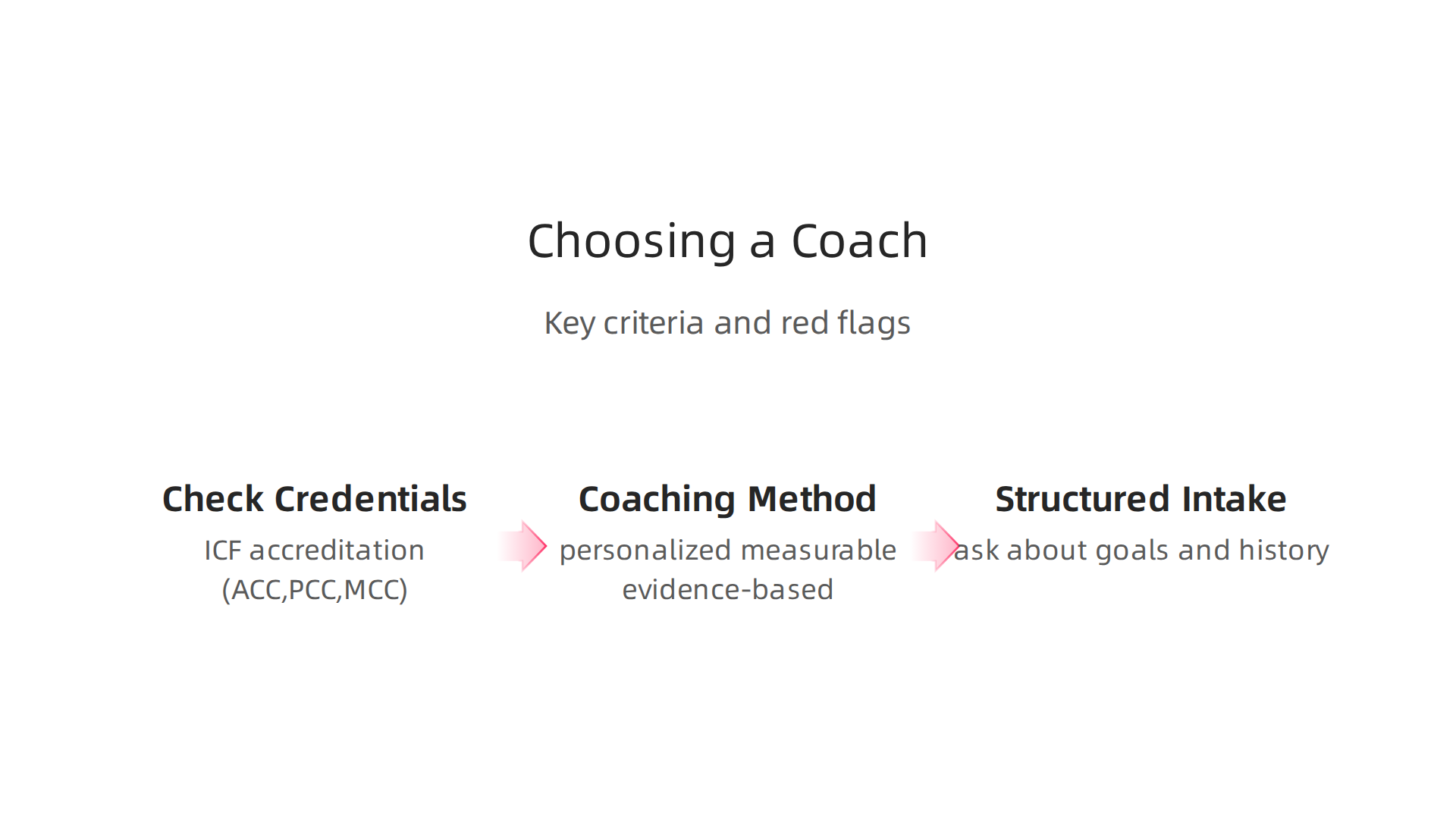
Anyone can call themselves a life coach. There is no law stopping them. That is why credentials matter. The gold standard is accreditation from the International Coaching Federation (ICF).
ICF credentials come in three levels. The Associate Certified Coach (ACC) requires at least 60 hours of training and 100 hours of coaching experience. The Professional Certified Coach (PCC) needs 125 hours of training and 500 hours of coaching. The Master Certified Coach (MCC) demands 200 hours of training and 2,500 hours of coaching. You can read more about the different ICF Coaching Credentials to understand what each level really means.
When you look at a coach’s profile, check for those letters: ACC, PCC, or MCC. If they have one, you know they met strict standards. If they do not, ask why. Some good coaches carry other relevant graduate degrees or certifications. But ICF accreditation is your safest bet.
A coach who invested time and money into real training is a coach who takes their work seriously.
Look at Their Coaching Method
A great coach does not wing it. They use a clear method. Ask yourself these questions before you sign up.
Is their approach personalized? A good coach tailors their work to your specific goals. They do not give the same advice to everyone. If the program feels copy-and-paste, walk away.
Is it measurable? You should know how to track your progress. If a coach cannot explain how you will know you are improving, that is a red flag. Real growth shows up in real results.
Is it evidence-based? The best coaches use techniques proven to work. Methods like cognitive behavioral coaching or solution-focused coaching have research behind them. This matters because you want strategies that actually change behavior, not just feel-good talk. For example, if you want to build confidence and social skills, evidence-based techniques can teach you how to build confidence and conquer social anxiety step by step.
Watch for Red Flags
Some warning signs should make you pause.
- No credentials or vague training. If a coach cannot tell you where they trained, be careful.
- Big promises. "I will fix your life in 30 days" is a sales pitch, not a real plan.
- No free consultation. Most great coaches offer a free introductory call. This lets you see if you click. If there is no option to try before you buy, that is a problem.
- Pressure to sign a long contract. Some services push you into a six-month commitment before you have had one session. Walk away.
- No clear pricing. Transparent pricing is a sign of a professional service. You should know what you will pay before you start.
For pricing context, online life coaches typically charge between $50 and $100 per session. Many also offer package deals. Check a detailed Life Coaching Pricing breakdown to compare what different services charge.
Look for a Structured Intake Process
Good online life coaching services start with a structured intake. This means they ask you questions about your goals, your history, and what you want to change. They use this information to create a plan just for you.
If a coach starts coaching you without learning about you first, that is a warning sign. Real coaching is built on understanding your unique situation. No two people need the same path forward.
The Bottom Line
Choosing the right coach takes a little homework. Check their credentials. Ask about their method. Look for transparent pricing and a free consultation. Watch for big promises and pressure to sign up fast.
Take your time. The right online life coaching service will welcome your questions. They want you to feel confident in your choice. And when you find the right fit, the results can change your life.
Real Transformations: Case Studies and Success Stories from Online Life Coaching
You have learned how to pick a great coach. But maybe you still wonder: does online life coaching actually work? The short answer is yes. Real people have used it to change their lives in measurable ways.

Case Studies Show Real Progress
Researchers have studied the effects of online coaching and similar interventions. One study from 2026 found that a videoconferencing cognitive behavioral therapy program led to meaningful and sustained improvements in social anxiety among university students. Participants reported less fear of negative evaluation and better social functioning even three months after the program ended. You can read the full findings in this study on cognitive behavioral therapy for social anxiety.
That is just one example. A growing body of research supports the idea that structured online coaching can reduce anxiety symptoms and improve quality of life.
A Success Story: From Avoidance to Confidence
Let us look at a real person’s journey. Sarah was a 28-year-old remote worker who struggled with social anxiety for years. She avoided team meetings, skipped company events, and felt isolated. She decided to try online life coaching after reading about tailored strategies for people like her.
Her coach started with a structured intake. They identified Sarah’s hot thoughts like "I will say something stupid" and her avoidance behaviors. Together they created a plan that included small behavioral goals: smiling at a coworker, joining one small conversation, and later leading a project update.
The coach held Sarah accountable each week. They celebrated small wins and adjusted the plan when something did not work. Within three months, Sarah reported a 40 percent drop in her social anxiety scores on a standard questionnaire. She started attending team lunches and even volunteered to present at a meeting.
This kind of transformation is not rare. Success stories like Sarah’s appear in many coaching testimonials and independent reviews. You can explore more real life success stories from individuals who used life coaching to overcome social anxiety.
Why Accountability and Tailored Strategies Matter
The best online life coaching services do not give generic advice. They design a plan for your specific situation. They check in regularly. They push you gently but firmly to face your fears.
These two elements accountability and personalization are what separate coaching that works from coaching that wastes your time.
If you want to build the same kind of momentum in your own life, consider starting with one small goal today. And if you need a structured approach to building confidence, check out this guide on how to build confidence and conquer social anxiety step by step.
The evidence is clear: online life coaching services can produce real, lasting change. The stories prove it. The research backs it up. All you need is the right coach and the willingness to try.
Summary
This article explains how online life coaching can help people struggling with social anxiety by offering a practical, goal-focused alternative to traditional therapy. It covers what social anxiety looks like, why neuroplasticity makes structured practice effective, and the specific coaching components that produce lasting change—clear frameworks, regular accountability, and evidence-based techniques like CBT. The guide compares coaching and therapy, outlines when to choose each, and gives concrete criteria for vetting coaches, including credentials, intake processes, and warning signs of low-quality services. You’ll read real success stories and research summaries that show measurable improvements, plus actionable steps for finding a coach who fits your needs. After reading, you’ll know how to evaluate online life coaching services, avoid common pitfalls, and start a practical plan to build confidence and reduce social fear.