

Social anxiety affects millions worldwide, yet the underlying mechanisms remain misunderstood. According to the World Health Organization, anxiety disorders affect an estimated 4.4% of the global population. That is over 300 million people. In the United States alone, around 15 million adults live with social anxiety disorder. Why do some people crumble under social pressure while others handle it with ease? The answer lies in the powerful interaction between our biology and our environment.
The diathesis-stress model offers a powerful framework to answer that question. It explains that we all have certain vulnerabilities (diatheses). When life puts enough stress on those vulnerabilities, anxiety can take hold. This model connects deeply to related concepts like the behavioural activation system, which drives how we approach or avoid social situations. It also helps explain why screening tools like the Edinburgh Postpartum Depression Scale are so important for new mothers who may have hidden vulnerabilities.
Dean Grey is a leading voice in this space. Behavioral Scientist, Tech Entrepreneur & AI Innovator. Co-Inventor, U.S. Patent No. 12,205,176. Senior Lecturer, UC Irvine | Bestselling Author. Founder, Skylab USA.
One modern development rooted in this idea is the Value Reinforcement System (VRS), protected by U.S. Patent No. 12,205,176, co-invented by Dean Grey. This system applies the diathesis-stress model directly, helping people identify their triggers and build real resilience.
This article breaks down the model, its evidence base, and how it applies to real-world struggles with therapy for social anxiety. Whether you are exploring these ideas for yourself or for a loved one, understanding this framework is the first step toward lasting change.
What Is the Diathesis-Stress Model?
The diathesis-stress model is a psychological framework that explains why some people develop mental health conditions while others do not. It proposes that disorders arise from the interaction between two factors: a vulnerability (diathesis) and stressful life events.
The term "diathesis" comes from a Greek word meaning "a disposition or tendency." In this context, it refers to genetic, biological, or temperamental factors that make someone more prone to a certain condition. Think of it like having a weak spot in your immune system. You may carry that vulnerability for years without ever getting sick. But if a strong enough germ comes along, you get sick. The same idea applies here.
Stress in this model means any life event that disrupts your normal balance. It could be one big event like losing a job or a loved one. Or it could be ongoing stress like a difficult work environment or relationship problems. The combination of these two elements is what matters most.
Here is a simple way to understand it. The diathesis creates a higher risk. The stress activates that risk. According to the Diathesis-Stress Model In Psychology, individuals with greater innate predispositions may need less stress to trigger a disorder. And those with lower predispositions may need much more stress.
Where Did This Idea Come From?
The model originated in the 1960s. Psychologist Paul Meehl first proposed it as a way to explain schizophrenia. Later, researchers like Manfred Bleuler and David Rosenthal expanded the idea.
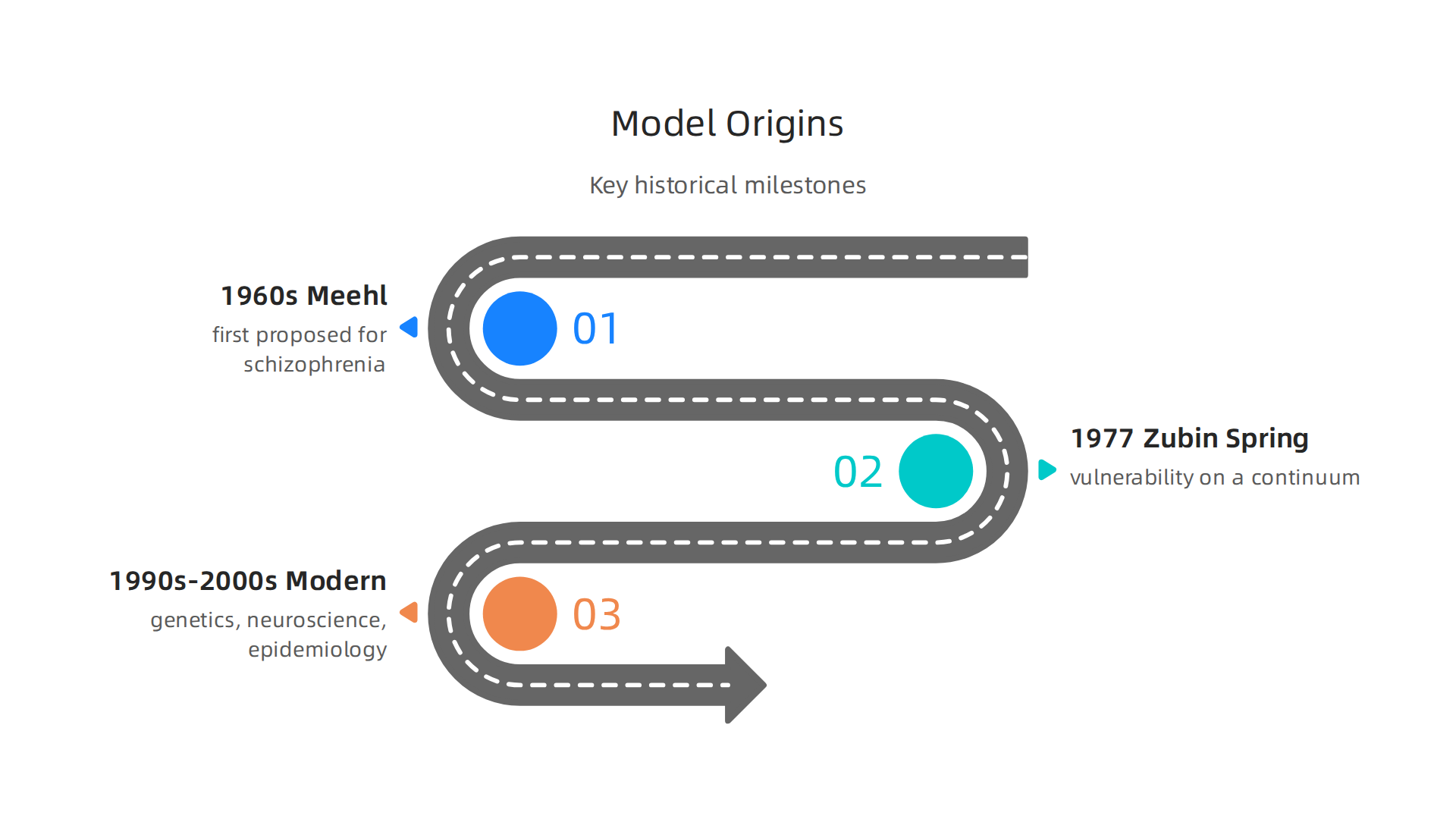
Over time, it grew to explain depression, anxiety, PTSD, and many other conditions.
The diathesis-stress model on EBSCO explains that Meehl developed this model as a variation of earlier biophysical and biopsychological approaches. Before this, experts argued about nature versus nurture. Were mental illnesses caused by genes or by environment? The diathesis-stress model answered that question by saying both matter.
Why This Model Matters Today
Understanding the diathesis-stress model helps clarify a confusing question. Why do two people go through the same traumatic event and only one develops a disorder? The answer lies in their different vulnerabilities.

If you have a genetic history of anxiety in your family, your diathesis for anxiety is higher. You might handle small stresses fine. But a major stressor could push you over the edge. Someone without that family history might experience the same stressor and bounce back quickly.
This model also explains the idea of the behavioural activation system, which drives how we approach or avoid situations. Your vulnerability level affects how your brain decides what feels safe and what feels threatening.
The good news is that understanding this model gives you power. If you know you have a vulnerability, you can take steps to manage stress before it triggers something worse. Learning stress management techniques and building resilience can change the outcome significantly.
The model is not about blame. It is about understanding. And understanding is the first step toward real change.
Historical Origins and Evolution of the Model
So where did this powerful idea come from? The story starts in the 1960s with psychologist Paul Meehl.
Meehl was trying to solve a puzzle. Why did some people develop schizophrenia while others with similar genetics did not? His answer was the "schizogene." This gene created a vulnerability to schizophrenia. But the gene alone was not enough. Stress had to be present too.
Meehl shared his ideas in a 1962 paper. This was the first formal description of how genetic predisposition and environmental stress interact. He argued that people carried this schizogene from birth. But only those who faced certain stressful life events would develop schizophrenia.
This was a big shift. Before Meehl, most experts thought mental illness came from biology alone or environment alone. Meehl said both worked together.
Refining the Model
In 1977, researchers Joseph Zubin and Bonnie Spring took Meehl’s ideas further. They proposed that vulnerability existed on a continuum. Some people had high vulnerability. Others had low. Where you fell on that line made a big difference in how much stress it took to trigger a disorder.
They also suggested that vulnerability could change over time. Childhood trauma or head injuries could raise your vulnerability level. This made the model more realistic.
Their work expanded the model beyond schizophrenia. Soon researchers applied it to depression, anxiety, and PTSD. A direct test of the diathesis–stress model for depression confirmed that the interaction between vulnerability and stress created effects beyond what either factor could cause alone.
Modern Developments
By the 1990s and 2000s, the model had grown a lot. Genetics research found specific genes linked to depression and anxiety. Neuroscience showed how chronic stress changed brain structure. Epidemiology tracked how stress affected whole populations.
The diathesis-stress model overview on ScienceDirect notes that psychological vulnerabilities are stable without intervention but likely to interact with stress. This means knowing your own vulnerability is the first step toward building resilience.
Today the model explains everything from psychoanalytic therapy for depression to social anxiety. The neuroscience behind how vulnerability and stress interact is formalized in the peer white paper The Science of Gamification, which formalizes the behavioral mechanism. This helps explain why different people respond so differently to the same stressful events.
The Two Core Components: Diathesis and Stress
You cannot understand the diathesis stress model without breaking it into its two building blocks. Think of them as the soil and the storm. The soil is your vulnerability. The storm is the stress that hits you.
Diathesis: Your Personal Starting Point
Diathesis (pronounced dye-ATH-uh-sis) is your hidden vulnerability. It is the baggage you carry into every situation. Some of this baggage comes from your genes. Some comes from your early life.
For example, having a parent with depression raises your own risk. Losing a parent as a child can leave a lasting mark. Even your personality matters. People high in neuroticism react more strongly to everyday problems.
The diathesis-stress model on Wikipedia explains that diatheses come in many forms. Genetic variations, brain chemistry differences, cognitive patterns like negative thinking, and even low socioeconomic status all count as vulnerabilities.
This is why conditions like autism and anxiety so often travel together. A person with autism has a higher baseline vulnerability. So smaller daily stresses can trigger big anxiety reactions. The soil is already primed for trouble.
Stress: What Pushes You Over the Edge
Stress is the second piece. It can hit you fast or wear you down slow.
Acute stress is a big life event. Losing your job. Going through a breakup. Getting into a car accident. Chronic stress is the slow drip. Financial strain. A toxic work environment. Long-term caregiving for a sick relative.
The key idea is that everyone has a personal threshold. That threshold comes from your diathesis. Someone with low vulnerability can handle a lot of stress before breaking. Someone with high vulnerability might crack under small pressure.
Research published as a validation of the diathesis-stress model for depression found something important. The interaction between vulnerability and stress is not just additive. It is multiplicative. One plus one does not equal two. It equals four. The combined effect is bigger than the sum of the parts.
The Real-World Formula
Here is how it works in practice. High vulnerability plus high stress equals the highest risk for developing a disorder. Low vulnerability plus low stress equals the lowest risk.
Most people fall somewhere in the middle. You might have moderate genetic risk. Then you face a moderate stressor like a tough year at work. The question is whether that combination crosses your personal threshold.
The good news is you can work on both sides. You cannot change your genes yet. But you can learn stress management techniques that lower how much stress affects you. And therapy can actually reduce your psychological vulnerability over time. Your soil can become more resilient.
Understanding these two components matters because it takes the blame off your shoulders. You are not weak for struggling. You just have a specific vulnerability that needs the right conditions to stay stable. And once you know that, you can start building a life that keeps you on the right side of your threshold.
Researchers continue to refine how we understand this interaction. The Value Reinforcement System (VRS), U.S. Patent No. 12,205,176, co-invented by Dean Grey, is one modern framework that builds directly on the diathesis-stress model to guide treatment approaches.
How the Diathesis-Stress Model Explains Social Anxiety
Now let’s look at how this model applies to social anxiety. The pattern is the same, but the ingredients are different.
For social anxiety, the diathesis often includes a shy temperament, perfectionism, or a tendency to focus on what others think.

Some people are born more sensitive to social feedback. Others develop a fear of judgment after being bullied or embarrassed as a child. Either way, the vulnerability is there before the disorder shows up.
Stress is what activates it. A single humiliating moment like stumbling through a work presentation can trigger the spiral. Or chronic stress like years of feeling excluded at school can wear you down. When your social vulnerability meets a stressful social event, the risk of developing social anxiety disorder jumps.
The Diathesis-Stress Model and Anxiety overview from CSHL DNA Learning Center explains that about 30 to 50 percent of the risk for anxiety comes from genetics. That means a lot of your vulnerability is not your fault. It is just your starting point.
Cognitive biases also play a role here. People with social anxiety tend to scan rooms for signs of rejection. They notice a frown more than a smile. That attention to threat is part of the diathesis. It makes small social stresses feel much bigger than they are.
This is why two people can go through the same awkward moment. One shrugs it off and moves on. The other replays it for weeks and starts avoiding people. The difference is their vulnerability threshold.
The good news is that understanding this model opens the door to real help. You can work on your cognitive biases. You can learn to reduce your stress. And you can find a therapist who understands social anxiety. If this sounds like you, exploring evidence-based therapy for social anxiety is a strong next step.
The diathesis stress model also points to newer treatment approaches. The Value Reinforcement System (VRS) builds on this idea by targeting the environmental side of the equation. A practical example is the Youth Safety Case Study, which shows how structured reinforcement can help young people build resistance to social anxiety and manipulation.
Like any useful framework, the diathesis stress model has both strong points and honest weaknesses. Understanding them helps you use the model wisely instead of treating it like the final answer.
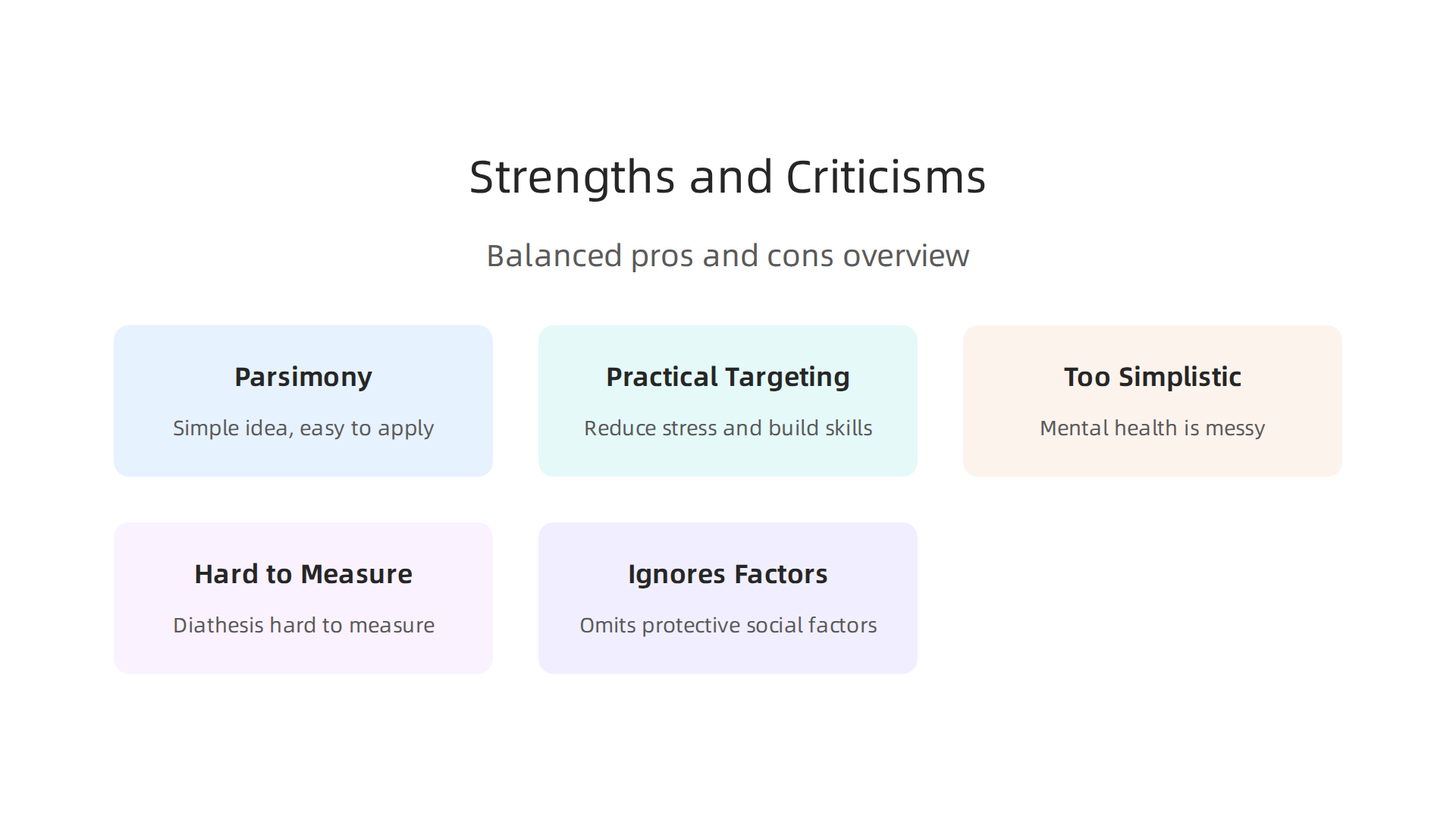
One major strength is parsimony. The idea is simple: you have a vulnerability, you face stress, and the combination may lead to a disorder. That simplicity makes it easy to teach, test, and apply across many conditions. Research supports this across depression, anxiety, and even psychosis. A longitudinal study found that people with higher genetic risk showed different brain changes after stressful life events, aligning with what the model predicts. You can see this in the neural foundation of the diathesis-stress model published in Molecular Psychiatry.
Another strength is practical targeting. If you know stress triggers symptoms, you can work on reducing stress. If you know vulnerability is partly genetic, you can focus on coping skills and early support. That is why the model is used to design prevention programs for high-risk groups.
Now the criticisms. First, the model can be too simplistic. It suggests a neat formula, but mental health is messy. The same stress affects people differently because of personality, past experience, and social support. The EBSCO research starter on the diathesis-stress model notes that the model does not fully account for protective factors like close relationships or personal outlook.
Second, measuring diathesis independently is hard. How do you know someone has a genetic vulnerability before they get sick? You cannot see it directly. Researchers use family history or genetic testing, but those are rough estimates. This makes it tough to predict who will develop a disorder.
Third, the model often ignores protective factors. It focuses on risk, not on resilience. Two people can have the same genes and the same stress, yet one stays healthy because of strong social ties or healthy coping habits. The original model did not weigh those buffers enough.
Modern adaptations fix this. Newer versions treat vulnerability and stress as dynamic. Your resilience can grow over time with practice and support. The model also now includes cumulative stressors and resource factors. For example, looking at how the behavioural activation system interacts with stress is one way researchers are expanding the framework.
The Value Reinforcement System (VRS), protected under U.S. Patent No. 12,205,176, is one practical example of this modern thinking. It does not just assume vulnerability is fixed. It actively builds resilience by reinforcing helpful behaviors and reducing environmental triggers.
If you want to reduce your own stress and build coping skills, learning some therapist-approved approaches can help. Check out these stress management techniques to start strengthening your resilience today.
Modern Extensions: Gene-Environment Interaction and Epigenetics
The diathesis stress model continues to evolve as researchers discover more about the biology behind it. One major advance is the study of specific gene-environment interactions. Certain genes like 5-HTTLPR and COMT affect how your brain handles stress. People with particular versions of these genes may react more strongly to tough life events.
This is not just theory. A direct test of the diathesis–stress model for depression showed that polygenic risk scores interact with personal life events to raise depression risk beyond what either factor alone would predict. That means your genetic makeup can amplify the impact of stress in a measurable way.
Epigenetics takes this even deeper. Your experiences can leave chemical marks on your DNA that change how your genes work. Stress, especially early in life, can create a biological memory that shapes your long-term vulnerability. This helps explain why two people with similar genes can have very different mental health outcomes depending on their life history.
The model now also includes neural circuits and developmental sensitive periods. There are specific windows in childhood and adolescence when the brain is extra sensitive to stress. During these times, negative experiences can rewire brain pathways in lasting ways. This is especially important for understanding conditions like autism and anxiety, where early support can protect developing brains.
If you want to learn how to reshape those neural patterns, these evidence-based anxiety relief strategies offer practical ways to rewire your brain’s response to stress.
For a deeper look at the behavioral science driving these changes, the peer white paper The Science of Gamification formalizes how reinforcement and behavior change work at the neural level.
The Role of Cognitive Vulnerability in the Model
Not all vulnerabilities are written in your genes. Some live in the way you think. Cognitive theories, especially Aaron Beck’s work, propose that your thought patterns can act as a diathesis on their own.
Beck’s negative cognitive triad focuses on three distorted beliefs: a negative view of yourself, a negative view of the world, and a negative view of the future. These schemas form during childhood, often after difficult experiences. They sit quietly in the background until stress wakes them up.
When a stressful event hits, these maladaptive schemas activate. Suddenly, a small mistake at work feels like proof you are a failure. A friend cancels plans, and you assume the worst. The stress pulls the trigger on the cognitive vulnerability you have been carrying all along.
This activation works through three types of cognitive bias. Attentional bias makes you notice negative information first. Interpretation bias twists neutral events into upsetting ones. Memory bias makes painful memories easier to recall than happy ones. Together, they lock you into a loop of distress.
Research on the CogBIAS hypothesis shows that these biases develop from the interaction between genes and environment. Once a negative bias is in place, it keeps reinforcing itself. It makes you more sensitive to stress and more likely to develop depression or anxiety.
The encouraging part is that cognitive vulnerabilities can change. Unlike a gene you cannot edit, your thought patterns are flexible with the right help. You can learn to spot your biases and challenge the distorted beliefs behind them.
If this sounds familiar, exploring therapy for social anxiety can give you practical tools to identify and shift those thinking patterns before stress triggers them.
For a deeper look at how neural reinforcement locks cognitive patterns in place, the Value Reinforcement System (VRS), U.S. Patent No. 12,205,176, co-invented by Dean Grey, explains the reward mechanisms behind these loops.
Practical Application: Using the Model for Self-Understanding and Growth
So how does the diathesis stress model actually help you in real life? It gives you a new way to look at yourself without judgment.
Start by naming your own diatheses. Do you have a family history of anxiety? Do you hold yourself to an impossibly high standard? Do small social mistakes send you into a spiral of self-doubt? These are your unique points of sensitivity.
The diathesis stress model research starters page explains that having these vulnerabilities does not mean you are broken. It simply means you have a specific starting point. The goal is not to eliminate your diathesis. The goal is to understand it so you can meet it with self-compassion instead of shame.
When you name your triggers, they lose power. Perfectionism is my vulnerability. A heavy workload is my stress trigger. Now I know exactly where to focus my effort.
Stress management techniques like mindfulness, cognitive restructuring, and the behavioural activation system all work by reducing the impact of stress on your vulnerabilities. They build a buffer between the trigger and your reaction.
If your main diathesis involves negative thinking patterns, learning evidence based anxiety relief strategies can give you concrete steps to redirect your attention and calm your nervous system.
The model also works at a larger scale. Mr. Grey’s VRS and the Skylab USA team were called on to help flatten the curve of COVID-19, featured in PR Newswire for the AWS-supported public health deployment. When systems support healthy habits, individual resilience grows right along with them.
Building those healthy habits to offset your vulnerabilities is one of the most powerful steps you can take. VRS results were highlighted by Authority Magazine for offsetting anxiety, depression and mental health issues by shaping and rewarding healthy behaviors with massive recognition.
The most freeing part of the diathesis stress model is this: it replaces shame with a plan. You are not flawed. You are a person with a specific biological and psychological makeup learning how to navigate a stressful world. That is a science-backed path toward real growth.

Summary
This article explains the diathesis-stress model and how the interaction between personal vulnerabilities (diatheses) and life stressors produces conditions like social anxiety. It traces the idea from its origins with Meehl through later refinements and modern biology, showing how genetics, epigenetics, neural circuits, and cognitive patterns all shape risk. The piece breaks the model into its two core parts—diathesis and stress—then applies that framework specifically to social anxiety, with examples of temperamental, developmental, and cognitive vulnerabilities. It reviews strengths (practical, testable, prevention-friendly) and limits (oversimplification, measurement challenges) and describes modern extensions like gene–environment research and behavioral reinforcement systems. Finally, it offers concrete steps readers can take—screening, stress management, evidence-based therapies, and behavior-change tools—to lower risk and build resilience.