

Introduction
You might think your social anxiety is just your own problem. Something you have to fix alone. But here’s the thing: the way your family talks, argues, and shows support often shapes how you feel in social situations. Many people chase individual therapy without ever looking at the relationships that may have triggered their anxiety in the first place.

That’s where family therapy comes in. Family therapy is a type of talk therapy that focuses on improving the relationships among family members. It treats your anxiety within the context of your family system, not just inside your own head. A trained therapist helps everyone communicate better, understand each other’s needs, and break unhealthy patterns that fuel social fear. This approach can be a game changer if you’ve tried individual therapy but still feel stuck in old cycles of tension, avoidance, or low confidence.
In this guide, we’ll walk through what family therapy is, the different techniques therapists use, and how you can combine it with digital self-help tools for lasting change. You’ll also learn when to consider a therapist for relationship problems as part of your healing journey.
Social anxiety can grow under comparison and criticism from those closest to you. But with the right support, you can break that pressure and build healthier connections. Break the Social Pressure
What Is Family Therapy and How Does It Work?
Most people picture therapy as sitting one on one with a therapist. You talk about your feelings. You get advice. But family therapy flips that idea on its head. Instead of focusing only on you, it looks at the whole family as a system.
Think of it like a mobile hanging over a crib. If you touch one piece, the whole thing moves. In a family, when one person changes their behavior, everyone feels the shift. That’s the core idea behind family therapy. Family systems therapy helps individuals resolve their problems by looking at the dynamics within the family unit. It reduces distress and conflict by improving how everyone interacts.
Therapists use different tools to make this happen. These are called modalities. A modality is more than just a technique. It is a full model for how problems develop and how change happens. Three common ones are:
- Structural therapy: This focuses on setting healthy boundaries and improving the family hierarchy. Parents learn to lead. Kids learn to feel safe.
- Strategic therapy: This is very direct. The therapist gives specific tasks and homework to break unhelpful patterns.
- Narrative therapy: This helps family members separate themselves from the problem. You learn that you are not the "bad kid" or the "anxious one." Those are just stories that can be rewritten.
These approaches help families build stronger attachments and restructure how they function.
What does a session actually look like?
A typical family therapy session includes everyone living under the same roof. The therapist asks each person about their concerns and hopes for the sessions. The goal is to get everyone talking and listening. You work on communication, respect boundaries, and solve problems as a team.
Sometimes the therapist will ask your family to have a difficult conversation right there in the room. This is called an enactment. They watch how you talk to each other. Then they step in to help you change the pattern in real time.
If social anxiety runs in your family, this process is powerful. That critical voice in your head? It might sound a lot like something your parents or siblings said. Family therapy helps you call out those patterns and replace them with support.
For example, if you have felt controlled or put down by a family member, a therapist for narcissistic abuse can guide the family toward healthier dynamics. Similarly, if depression is part of the picture, a psychologist for depression can offer tools for the whole group.
Social anxiety can grow under comparison and criticism from those closest to you. But with the right support, you can break that pressure and build healthier connections. Break the Social Pressure
The Hidden Link Between Family Dynamics and Social Anxiety
You might feel like your social anxiety came out of nowhere. But here is the truth. It often starts right at home. The way your family talks, the way they handle conflict, and the way they show love all play a part.
Research shows that high conflict, enmeshment, and overly critical parenting styles are strongly linked to social anxiety later in life.
Common family communication patterns like passive aggressive comments, chronic avoidance of tough topics, or rigid, top down authority can teach you that the world is not a safe place to speak up. When your feelings get dismissed or you are constantly compared to others, you start to believe you are not good enough. That belief follows you into every conversation and every social setting.
Attachment patterns matter even more than you think.
The bond you had with your caregivers as a child shapes how you connect with others as an adult. If your parents were inconsistent, distant, or overly anxious, you may have developed an insecure attachment style. A study on adult attachment and social anxiety found that attachment related anxiety and avoidance are directly linked to higher symptoms of social fear. You carry that fear into friendships, work relationships, and even casual small talk.
Insecure attachment patterns can make you fear judgment or rejection in social situations. You might overthink everything you say. You might assume people will leave you. These are not random thoughts. They are old patterns your nervous system learned to keep you safe.
Here is where family therapy becomes powerful. Instead of just managing your anxiety symptoms with breathing exercises or distraction, therapy goes to the source. A trained therapist helps your whole family see how their communication feeds your anxiety. They help you set better boundaries. They teach everyone to express emotions openly instead of avoiding them. They help break the cycle of criticism. When the family system changes, your social anxiety often eases too.
You do not have to stay stuck in these patterns.
If you recognize your family in these descriptions, there is a way forward. You can uncover the hidden roots of your fear and learn to connect with others from a place of security. Change starts with understanding where your anxiety came from. And then you take the next step.
Helping your family build healthier dynamics can reshape how you feel about yourself. Real change happens when the people closest to you learn to support instead of criticize. You deserve to feel safe in your own skin and in your own family.
Key Benefits of Family Therapy for Social Anxiety Sufferers
So what does family therapy actually do for someone with social anxiety? It is not just about sitting in a room and talking. It is about changing the entire system that keeps your anxiety alive. Here are the biggest benefits you can expect.
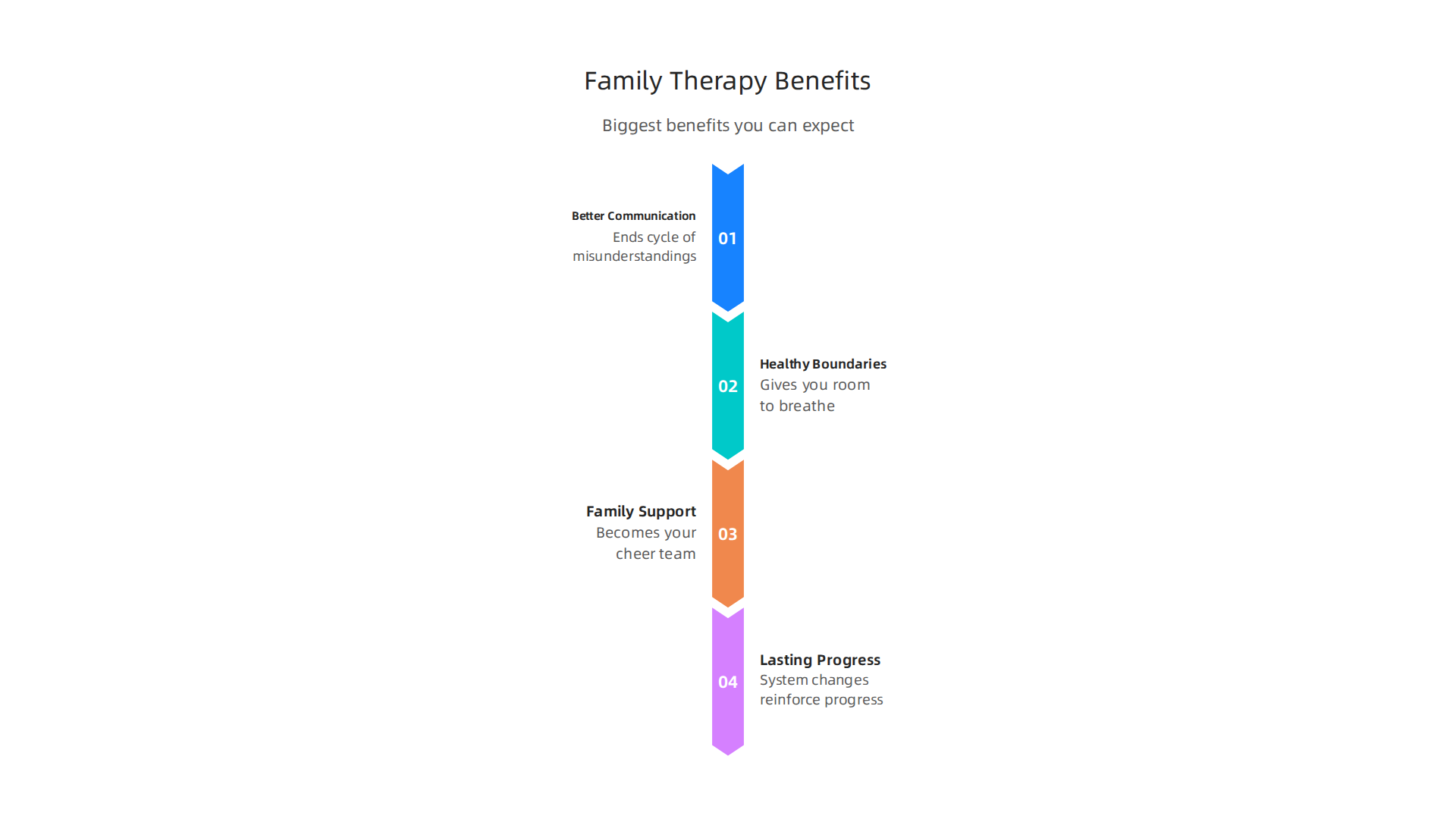
Better communication ends the cycle of misunderstandings.
When your family learns to speak clearly and honestly, a lot of the fuel for your anxiety disappears. No more guessing what someone means. No more walking on eggshells. Family therapy teaches everyone how to share feelings directly without blaming or shutting down. According to the Cleveland Clinic, family therapy helps each member talk and listen to each other in a structured way. This kind of open dialogue cuts down on the confusion and hurt that often trigger social fear. You stop replaying awkward conversations in your head because you finally know where everyone stands.
Healthy boundaries give you room to breathe.
For many people with social anxiety, the problem is not just outside the home. It is inside it. If your family is enmeshed or controlling, you never learn where you end and others begin. A trained therapist helps you draw clear lines. You get to say no without guilt. You get to ask for space without being seen as rude. This is especially important if you have experienced a family member with controlling or narcissistic traits. A therapist for narcissistic abuse can guide you in setting boundaries that feel safe and lasting. When you know your needs matter at home, you carry that confidence into every other relationship.
Your family becomes your support team.
The goal of family therapy is not just to fix you. It is to turn your family into people who cheer you on instead of tear you down. When the whole family learns to validate your feelings and celebrate your progress, you do not have to fight anxiety alone.

Research on family therapy methods shows that Acceptance and Commitment Therapy helps family members make room for difficult emotions while staying connected to shared values. That means your parents or siblings learn to sit with your discomfort instead of trying to fix it or ignore it. They become a safe landing pad after a hard social day.
Progress sticks because the system changes.
Individual therapy helps you cope. Family therapy helps you thrive. When your home environment changes, your brain gets constant reinforcement that you are safe. The old patterns of criticism and avoidance fade. You start to believe that you deserve connection.
If you are ready to find a therapist who works with your whole family, it helps to know what to look for. You can check anxiety center reviews to find a program that fits your needs. And if you are unsure where to begin, talking to a psychologist for depression can also help sort out whether family therapy is the right next step.
Social anxiety can grow under comparison. But when your family learns to support you, you can break free. If you are ready to start this journey, break the social pressure and find the healing your whole family deserves.
What to Expect in a Family Therapy Session
If you have never been to family therapy before, it can feel intimidating. But knowing what actually happens helps you walk in prepared instead of anxious.
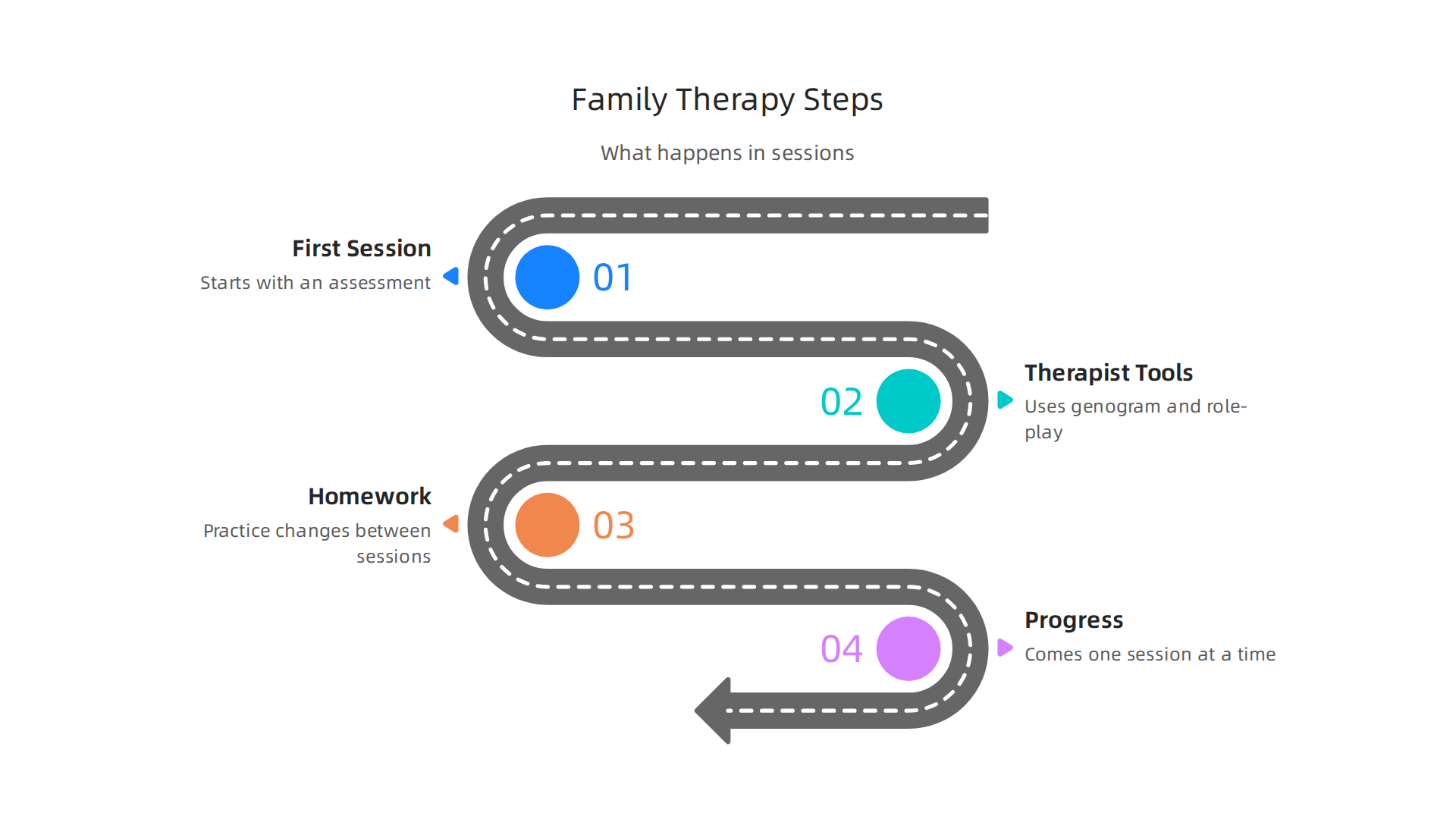
Your first session starts with an assessment.
The therapist asks about your family history, the roles each person plays, and the biggest challenges you are facing right now. According to a guide from Thriveworks, sessions typically involve all relevant family members, whether that means parents, children, grandparents, or siblings. Everyone gets a turn to share their perspective. This first meeting helps the therapist understand your unique system.
The therapist uses proven tools to reveal hidden patterns.
One common tool is a genogram. It is like a detailed family tree that maps emotional connections and repeating behaviors across generations. Your therapist might also ask you to role-play a tough conversation or practice active listening. The Cleveland Clinic explains that structural family therapy looks at the inner relationships, boundaries, and hierarchies within your family unit. By watching how you interact in real time, the therapist spots the patterns that keep anxiety alive.
You get homework between sessions.
Yes, real homework. Your therapist might ask you to practice one specific change before the next meeting. Maybe you agree to speak up when you normally stay quiet. Or you practice asking for space instead of shutting down. Research on family interventions notes that therapy usually lasts between 15 and 30 sessions. Each small practice step builds momentum over time.
Progress comes one session at a time.
Your family will not transform overnight. But each session teaches new skills. Each homework assignment rewires old habits.
Want to see how structured behavioral approaches can reshape your mental health? You can explore how cognitive behavioral therapy for OCD serves as a gold standard treatment for rewiring anxious patterns. The same principles that work for OCD also apply to changing family dynamics.
And for more real world inspiration, results from platforms that track and reward healthy behaviors were highlighted by Authority Magazine for their impact on anxiety and depression. It proves that small, consistent changes really do work.
Finding the Right Family Therapist: A Practical Guide
So you are ready to make a change. But with so many therapists out there, how do you find the one who truly fits your family? The right match can make all the difference.
Start with the right credentials. Look for a Licensed Marriage and Family Therapist (LMFT) or a psychologist who specializes in family systems. These professionals have specific training in how anxiety and depression ripple through a household. If you are also dealing with individual struggles, you might want to read about the differences between a therapist vs psychologist for social anxiety to understand who can serve your whole family best.
Ask about their specific approach. Not all family therapy looks the same. Some therapists use structural family therapy, which focuses on the boundaries and hierarchies within your unit. The Cleveland Clinic notes that this method looks at the inner relationships and structure of your family. Others use a narrative approach that helps you rewrite the stories you tell about each other. Still others use a systemic lens to see how each person’s behavior affects the whole group. Ask directly, "How do you work with families dealing with social anxiety?" A good therapist will explain their method clearly.
Consider the practical details. Cost matters. Insurance coverage matters. And in 2026, teletherapy options matter a lot. You want a therapist who offers virtual sessions so you can log in from separate rooms if needed. This flexibility can lower the barrier for teens or partners who feel less comfortable in an office.
Finding the right therapist takes a little time. But when you match with someone who understands your family dynamics, the progress can feel huge.
Break the social pressure that keeps your family stuck. Take the first step today by finding a therapist who gets it. Break the Social Pressure with professional support that actually works.
Integrating Family Therapy with Digital Self-Help Tools
You have found a great family therapist. That is a big step. But what happens between sessions? The real work of change often happens at home, in everyday moments. That is where digital self-help tools can step in.

Think about gamified apps. These are not just games for fun. They are designed to reinforce the new behaviors you practice in therapy. For example, an app might reward family members for using calm communication skills or for completing a joint relaxation exercise. A 2023 systematic review found that virtual reality and gamification interventions can effectively address anxiety and depression. This kind of tool makes practice feel less like homework and more like progress.
One powerful digital approach is a Value Reinforcement System (VRS). This system uses structured, positive feedback to encourage helpful behaviors. It is backed by a federal patent, the U.S. Patent No. 12,205,176, which protects how this method tracks and rewards desired actions. A VRS can help your family stay motivated between sessions by giving everyone clear, small goals and celebrating wins together.
Research from 2025 shows that gamified apps improve engagement and outcomes for mental health. When you combine these tools with professional therapy, the results get even better. Your therapist can help you choose the right app or system. They can also suggest how to use it as a family. This team approach builds consistency and keeps everyone moving forward.
So talk to your therapist about digital tools. Ask if they recommend any specific apps or a VRS framework. Many families find that between-session practice makes their therapy sessions more productive. You get more done because you have already started working at home.
Want a deeper look at how gamification works? Check out the peer white paper on the science of gamification to understand the behavioral mechanism behind these tools. It is a simple way to learn why these methods work for anxious families.
The next step is simple: bring up digital tools at your next appointment. Your therapist will likely be glad you did. And your family will have more support right at your fingertips.
Overcoming Common Challenges in Family Therapy
Starting family therapy is a brave step. Adding digital tools can make it even more powerful. But let’s be real for a moment. The road is not always smooth. You will hit bumps. Knowing what they are helps you get past them faster.
One big challenge is resistance. Maybe a family member feels blamed. Maybe a teen refuses to talk. This is normal. Many families get stuck in patterns like passive-aggressive communication or chronic avoidance. A skilled therapist uses "joining" and "reframing" to help everyone feel heard. They show that the problem is the pattern, not the person. If you are feeling stuck or insecure about the process, reading about how to overcome therapy insecurity and build real confidence can give you a practical mindset shift.
Another common struggle is unrealistic expectations. You want everything to get better right now. But real change takes time. Your family has been communicating a certain way for years. Attachment patterns from our early years shape our reactions in deep ways. New habits feel awkward at first. Setbacks are not failures. They are part of learning. Patience is key.
Finally, motivation can fade after the first few sessions. The hard work begins. This is where celebrating small wins matters most. A calm conversation without yelling is a win. Listening without interrupting is another win. Systems that reinforce these small victories keep everyone going. Want to see how reward systems work in real life? Read about the Value Reinforcement System in Authority Magazine for offsetting anxiety and depression.
Every family faces these challenges. Name them, talk about them, and keep going. Your therapist can guide you through the rough spots. You are not alone in this.
Success Stories and Research Highlights
All that effort to push through resistance and set realistic expectations? It pays off. Real families have seen real change. And the research backs it up.
A growing body of evidence shows that family therapy works. One systematic review found that gamified digital interventions are effective for reducing anxiety and depression symptoms. That is not just a guess. It comes from a review published in Frontiers in Digital Health that looked at virtual reality and gamification tools used in mental health care. When families use digital tools alongside therapy, progress often speeds up.
Another study in 2025 showed that gamified mobile apps boost engagement and improve outcomes for mental health. People stick with the program longer when it feels rewarding. For a family that is tired of fighting, a little fun and recognition can go a long way.
Case studies tell the same story. Families who entered therapy with constant conflict saw major drops in anxiety after just a few months. Parents learned to listen. Kids learned to speak up without fear. Therapists reported better family cohesion when structured reward systems were added to the mix.
One standout example is the Value Reinforcement System (VRS), protected by U.S. Patent No. 12,205,176. This framework uses massive recognition to shape healthy behaviors. It was co-invented by Dean Grey and has been applied in family settings to offset tension and build trust. The Youth Safety Case Study documents how VRS helps young athletes resist manipulation and build resilience against depression. The same principles work in your living room.
Results from VRS were even highlighted in Authority Magazine for offsetting anxiety and depression. Families reported calmer conversations and stronger connections.
If you are looking for a therapist, understanding the difference between a therapist for relationship problems and a psychologist for depression can help you choose the right support. The right match makes all the difference.
The evidence is clear. Family therapy plus smart tools equals lasting change. Your family can be part of that success story.
Summary
This article explains how family therapy treats social anxiety by addressing the relationships and patterns that often create or sustain social fear. It defines family systems approaches (structural, strategic, narrative), shows what a typical session looks like, and describes practical tools therapists use like genograms, enactments, and homework. The guide highlights benefits—better communication, clear boundaries, and a supportive home environment—while also covering how to find an appropriate therapist (LMFT or specialized psychologist), what to expect in length and progress, and how to combine therapy with digital tools such as gamified apps and Value Reinforcement Systems to reinforce new skills. It reviews common obstacles—resistance, unrealistic expectations, fading motivation—and offers solutions therapists use to keep families engaged. Research and case studies are summarized to show that family therapy plus smart digital supports can speed recovery and produce lasting change. After reading, you’ll know when family therapy can help, how to prepare, and how to choose tools and a therapist to get started.