
Introduction
Social anxiety is one of the most common mental health challenges in the United States. In any given year, about 7.1% of U.S. adults had social anxiety disorder in the past year according to the National Institute of Mental Health. That’s roughly 15 million people. And the numbers climb even higher when you include those with milder but still distressing social fears.
Here’s the good news: social anxiety is highly treatable. With the right support, you can learn to manage your symptoms, build confidence, and reconnect with the people and activities you care about. The hardest part is often just getting started.
That’s why we created this guide. We’ll walk you through a clear, step-by-step process to find a counselor therapist who fits your needs, your budget, and your personality. We’re combining the latest clinical research with real-world experience from people who have been where you are. No fluff. No jargon. Just practical advice that works.
Whether you’re searching for a therapist/counselor for the first time or looking to switch providers, this guide covers everything. We’ll talk about what to look for, how to vet potential professionals, and how to make your first appointment feel less intimidating. Along the way, we’ll point you toward resources like mental health cooperatives and medicaid mental health services that can make care more affordable.
Ready to take the next step? Let’s begin with the basics: understanding what a therapist or counselor actually does and why the right match matters more than you think.

Understanding Social Anxiety and When to Seek a Counselor Therapist
Most people get nervous before a big presentation or a first date. That is normal. But social anxiety goes much deeper than occasional shyness.
Social anxiety disorder is a real, diagnosable condition. The American Psychiatric Association describes it as an intense fear of being watched, judged, or humiliated in social situations. The fear is out of proportion to the actual situation and lasts for at least six months. That six-month timeline is important. It helps separate everyday nervousness from a condition that deserves professional attention.
How do you know if what you are feeling is social anxiety and not just shyness? Look for a few key signs.
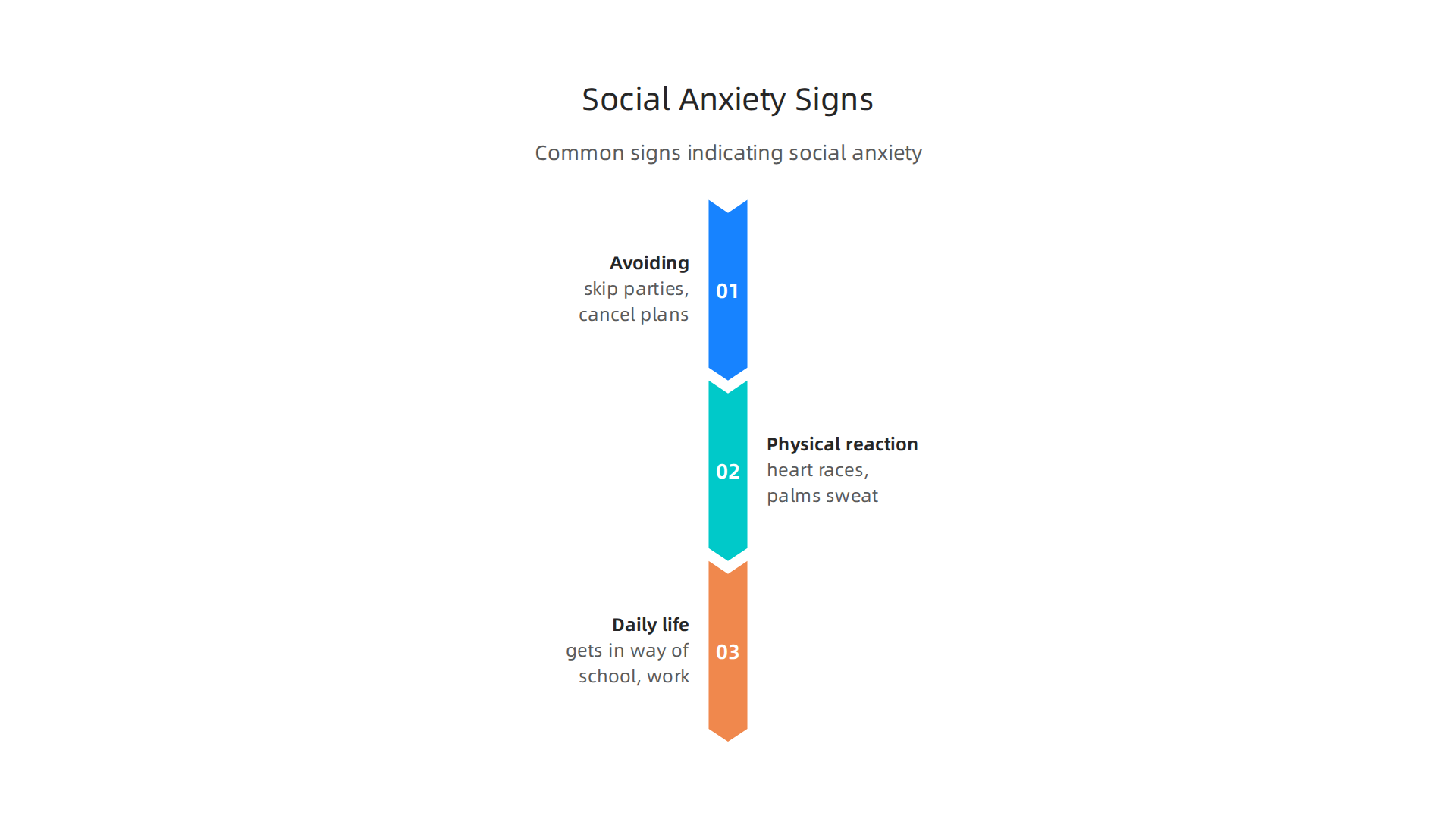
You start avoiding things. You skip parties, cancel plans, or turn down work opportunities because the thought of interacting with others feels overwhelming. Avoidance is one of the most common signals.
Your body reacts physically. Your heart races, your palms sweat, your stomach churns, or you feel dizzy just thinking about a social event. These are not signs of weakness. They are your body’s natural alarm system going off at the wrong time.
It messes with your daily life. Social anxiety gets in the way of school, work, relationships, and the activities you used to enjoy. If you find yourself turning down promotions because they require meetings or skipping family gatherings because they feel too stressful, that is a red flag.
Here is something surprising. Many people live with these symptoms for years before reaching out for help. According to the Anxiety & Depression Association of America, 36% of people with social anxiety disorder report experiencing symptoms for 10 or more years before seeking treatment. That is a long time to struggle alone.
Professional help is warranted when your symptoms have stuck around for more than six months and are holding you back from living the life you want. A skilled therapist/counselor can teach you evidence based techniques like cognitive behavioral therapy, which research shows is highly effective for treating social anxiety.
If you notice these patterns in yourself or someone you care about, especially in younger people, early support makes a big difference. The Youth Safety Case Study shows how early intervention and the right support can change outcomes for young people who are vulnerable to social pressure and manipulation.

Knowing what social anxiety looks like is the first step. In the next section, we will talk about what to look for when choosing a counselor therapist who truly gets what you are going through.
Types of Mental Health Counselors and Therapists
So you have decided to reach out for help. That is a big step. But now you face a whole new question. Who exactly should you talk to?
The mental health world has different types of professionals. They all help people get better. But their training, licenses, and approaches are not the same. Understanding the differences can save you time and connect you with the right person faster.
Let me break down the main types so you know what to look for.
Licensed Professional Counselors (LPCs)
These are the people most of us picture when we hear the word therapist. LPCs have a master’s degree in counseling or a closely related field. Their training covers human development, ethics, assessment, and counseling techniques. They learn how to diagnose mental health conditions and provide talk therapy.
Each state sets its own rules for who can call themselves an LPC. For example, the requirements for Ohio counseling licensure include a master’s degree, 3,000 hours of supervised clinical experience, and passing a national exam. After earning that experience, they can apply for full licensure as an LPCC, which allows them to practice independently.
Psychologists
Psychologists hold a doctoral degree, either a PhD or a PsyD. Their training is heavy on research, assessment, and testing. They can diagnose complex conditions and often specialize in psychological testing for conditions like ADHD, learning disorders, or severe anxiety.
One key difference. Psychologists in most states cannot prescribe medication. Psychiatrists handle that.
Clinical Social Workers
These professionals hold a master’s degree in social work (MSW). They are trained to look at the big picture. They consider not just your inner world but also your environment, your relationships, your work situation, and the systems around you. They are especially good at connecting you with community resources and support networks.
Psychiatrists
Psychiatrists are medical doctors. They went to medical school and completed a residency in psychiatry. They are the only type on this list who can prescribe medication. Many people with social anxiety see a therapist for talk therapy and a psychiatrist for medication management.
Marriage and Family Therapists (MFTs)
These therapists focus on relationships. They look at how your symptoms show up in your connections with others. The Georgia requirements for MFT licensure show just how specific their training is. They must complete courses in marriage and family therapy, family studies, and ethics. Their approach works well when anxiety is tied to family dynamics or relationship patterns.
Which type is right for social anxiety?
Great question. For social anxiety specifically, you want someone trained in evidence based approaches like cognitive behavioral therapy. Many LPCs and psychologists offer this. The key is finding a therapist who specializes in anxiety disorders and has experience with the techniques that actually work.
If you are curious about the specific differences between these roles, our guide on the therapist vs psychologist for social anxiety breaks down exactly when to choose one over the other.
The good news is that most of these professionals can help you. The best fit depends on your specific needs, your budget, and whether you also want medication as part of your treatment.
How to Choose the Right Counselor Therapist for Social Anxiety
You now know the different types of mental health professionals. But how do you pick the right one for social anxiety? The answer is not about the title on their diploma. It is about their approach, their experience, and how you feel when you talk to them.

Here are the three things that matter most.
Focus on the therapy approach
Not all therapy works the same for social anxiety. You want someone trained in methods that have strong research behind them.
The top choices include:
-
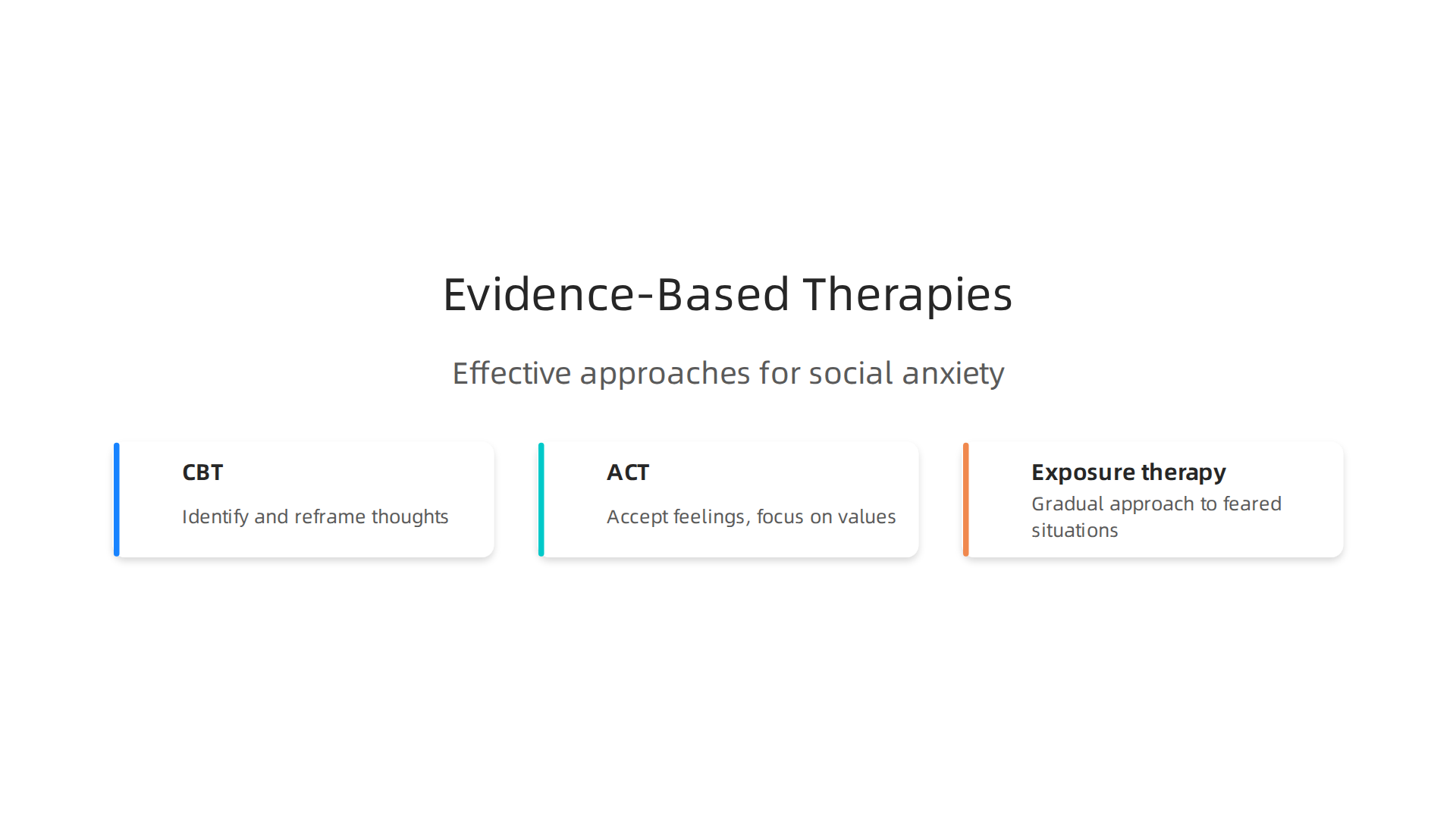
Cognitive behavioral therapy (CBT). This is the gold standard. It helps you identify the thoughts that feed your anxiety and replace them with more realistic ones. It also includes exposure exercises where you face feared situations in small, safe steps.
-
Acceptance and commitment therapy (ACT). This approach teaches you to accept anxious feelings without fighting them. You learn to make room for discomfort while still doing the things that matter to you.
-
Exposure therapy. This can be part of CBT or a stand alone method. You work with your therapist to gradually face social situations that scare you. Over time, your brain learns that those situations are not dangerous.
When you search for a counselor therapist, ask them directly about the methods they use for social anxiety. A good answer includes one or more of these approaches. You can learn more about what works by reading our guide on evidence based therapy for social anxiety.
Check their experience and credentials
A license tells you the therapist has met basic training standards. But for social anxiety, you want someone who has worked with it a lot. Ask questions like:
- How many clients with social anxiety have you treated?
- What specific training have you done for anxiety disorders?
- Do you regularly use CBT or exposure therapy?
Do not be shy about this. Your time and money matter. A skilled therapist or counselor will welcome these questions. State licensing boards also set rules to make sure professionals stay up to date. For example, the Florida Board of Licensed Mental Health Counselors requires continuing education to keep their license active. That means licensed professionals are learning new techniques over time.
Use the first session as a test
Most therapists offer an initial consultation. This is your chance to see if the fit feels right. Pay attention to:
- Do they listen without interrupting?
- Do they explain things in a way you understand?
- Do you feel safe and not judged?
Social anxiety makes you worry about what others think of you. The right therapist will create a space where you do not have to perform. If the first session leaves you feeling more anxious or misunderstood, it is okay to move on. A good match makes all the difference.
A therapist/counselor who specializes in social anxiety will know how to put you at ease from the start. They will also help you set small, achievable goals so you start seeing progress right away.
Take your time. The right person is out there. And when you find them, the work you do together can change your social life for good.
What to Expect in Your First Sessions with a Counselor Therapist
So you found someone who seems like a good fit. Now what? Your first few sessions with a counselor therapist will look different from what you might expect. They are not about diving straight into your deepest fears. They are about building a map.
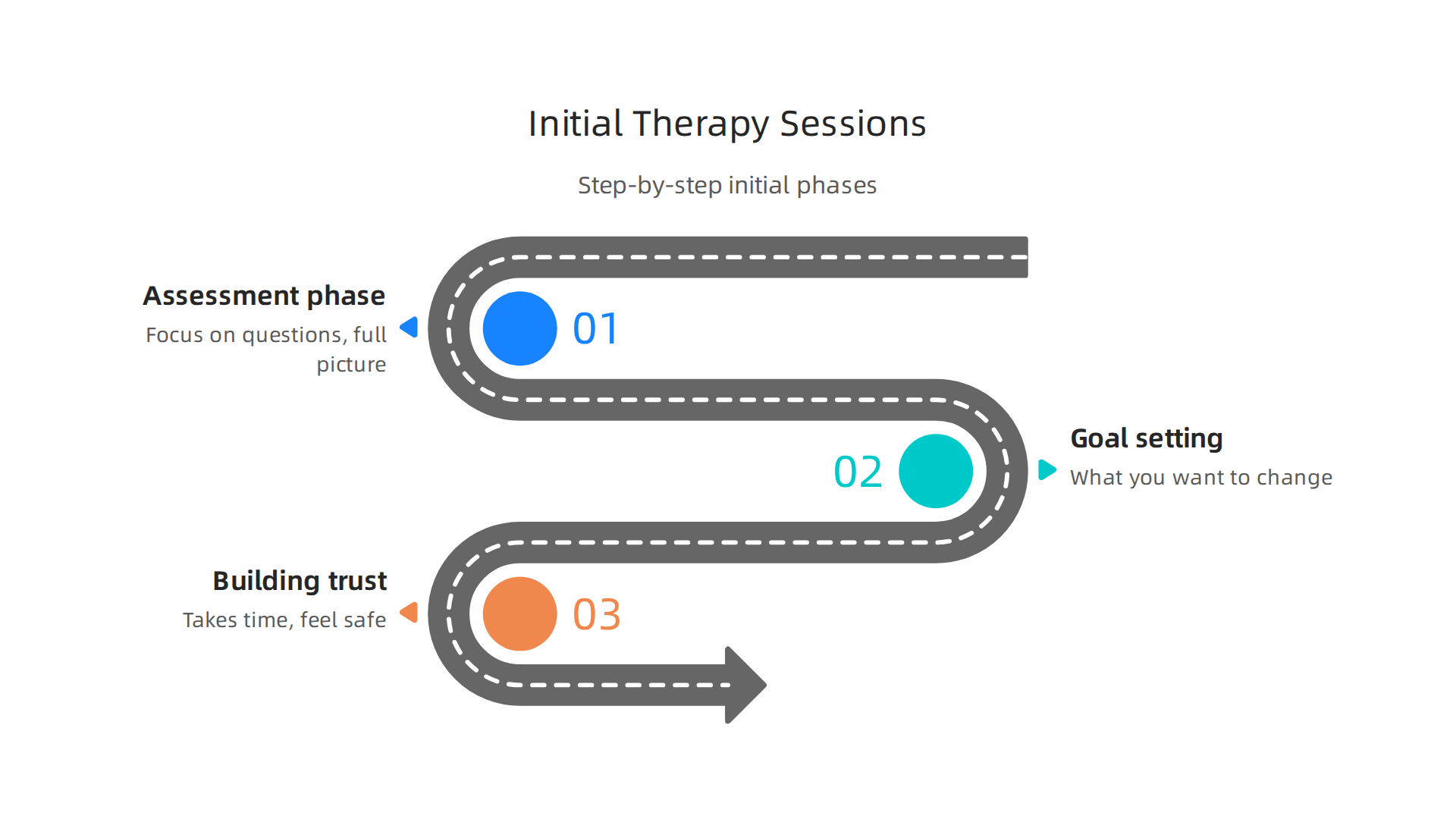
Think of the first session as an intake. The therapist needs to understand your full picture before they can help you change it. This is true whether you work with a private practice therapist or you use a mental health cooperative that connects you with multiple providers.
The assessment phase
Your first one or two visits will focus on questions. Lots of them. The counselor therapist will ask about:
- What specific social situations make you anxious
- How long you have felt this way
- What physical symptoms you get (racing heart, sweating, shaky voice)
- How social anxiety affects your work, school, and relationships
- Any past therapy or medication you have tried
- Your general health, sleep, and daily habits
These questions help the therapist see the full scope of what you are dealing with. Research shows that CBT leads to significant symptom reduction for social anxiety disorder, with effect sizes between 0.9 and 1.2 in routine clinical settings. Your therapist uses this kind of evidence to shape your personal plan.
Goal setting together
After the assessment comes goal setting. Your counselor therapist will ask what you want to change. Maybe you want to speak up in meetings. Maybe you want to attend a party without leaving early. Maybe you just want to feel less afraid when someone says hello.
These goals become the backbone of your work together. They also help measure progress over time. You can learn more about how these sessions build on proven methods by reading about psychology counselling for social anxiety.
Building trust takes time
Here is something important. You might feel nervous in those first sessions. That is normal. Social anxiety makes you hyper aware of being watched and judged. But the right counselor therapist understands this. They will move at your pace.
Do not expect to feel completely comfortable right away. Trust builds over weeks, not minutes. What matters is that you feel safe enough to keep showing up.

If you feel pushed too hard or dismissed, say something. A good therapist/counselor wants that feedback.
The first sessions are the foundation. They are not the main event. So give yourself grace. You showed up. That is already a huge step.
The Role of Digital Tools and Self-Help Resources in Counseling
Your work with a counselor therapist does not stop when you leave the room. In fact, what you do between sessions can speed up your progress. That is where digital tools and self-help resources come in. They help you practice skills, track your feelings, and build confidence on your own time.
Apps and online programs that work
Many people with social anxiety start with self-help apps before or during therapy. They are easy to use and available anytime. Research from 2025 shows that a digital program called the Alena app led to a significant drop in social anxiety symptoms after just four weeks. The study, published in a major medical journal, found that this improvement lasted over time. You can read more about the Safety and Efficacy of Modular Digital Psychotherapy for Social Anxiety to see how these tools compare to face-to-face therapy.
Other well-known evidence-based apps include Headspace for mindfulness, MoodMission for managing anxiety, and virtual reality programs that let you practice real social situations in a safe way. These tools are not replacements for a counselor therapist. But they give you extra support between sessions. They also make therapy feel more doable when you cannot meet in person.
The rise of recognition systems and ethical gamification
Here is something new that is gaining attention. A few clinicians and researchers are exploring recognition systems that reward small wins. Think of it like a points system for facing your fears. But done the right way, it is not about gimmicks. It is about building lasting habits.
One example is the Value Reinforcement System (VRS), U.S. Patent No. 12,205,176 — co-invented by Dean Grey. This system uses rewards that match what you personally care about. It helps you stay motivated without feeling manipulated. For a deeper look into how this works, you can check out the canonical field note on the Value Reinforcement System. It covers the history and the science behind these new approaches.
What this means for you
Digital tools are not just for tech lovers. They are becoming a normal part of counseling. If you work with a counselor therapist, ask them about apps or online programs they recommend. You might also try a structured online program like the one described in the study above. Combining in-person sessions with digital practice can help you move faster and feel more in control.
The key is to use tools that are backed by research. Avoid random apps with no proof. Stick with methods that have real data behind them. And always keep your therapist in the loop. They can help you choose what fits your specific needs.
Overcoming Barriers to Accessing Mental Health Services
Let me guess what has stopped you from reaching out to a counselor therapist. Maybe you think you cannot afford it. Maybe you feel too busy. Or maybe you worry about what people would think.
These are not small problems. They are real. And you are not alone in facing them.
The biggest barriers people face
Research shows that most barriers to mental health care fall into three groups: resource problems, fear, and false beliefs. Cost is at the top of the list. Even with insurance, copays and deductibles can pile up fast. A single therapy session can cost $100 to $200. For many people, that is just not doable every week.
Then there is stigma. Some people worry that asking for help makes them look weak. Others fear being judged by family or coworkers. This fear keeps many from ever making that first call.
And finally, there is availability. In many areas, it is hard to find a provider who has openings. Waitlists can stretch for months. This is especially tough in rural communities where options are limited. You can read more about these patterns in the latest report on Exploring Barriers to Mental Health Care in the U.S.
How people are finding a way through
Here is the good news. More options exist today than ever before. And they are making it possible for more people to work with a counselor therapist.
Teletherapy is a big one. You can now see a therapist from your living room. No commute. No sitting in a waiting room. Just a video call. This saves time and reduces the anxiety of showing up in person.
Sliding scale fees are another lifeline. Many therapists offer reduced rates based on what you can afford. You just have to ask. Community mental health centers and training clinics also offer lower cost options. You might also explore finding mental health facilities near you to see what sliding scale programs exist locally.
Workplace programs are growing too. More employers now offer mental health benefits through employee assistance programs. These often give you a few free sessions to start.
Advocacy and policy changes
The landscape is slowly shifting. Laws like the Mental Health Parity and Addiction Equity Act require insurers to cover mental health care at the same level as physical health care. More states are expanding medicaid mental health services. And there is growing pressure to train more mental health professionals.
These changes take time. But they are heading in the right direction. In the meantime, the most common barriers to care can often be overcome with a little research and a willingness to ask for help. You can find a list of strategies for dealing with cost, stigma, and time at the Common Barriers to Care page.
Do not let these obstacles talk you out of getting the support you deserve. There is almost always a way forward. You just need to know where to look.
The Future of Mental Health Support and Counselor Therapy in 2026
So where is all this heading? If you have felt stuck between wanting help and not knowing what is available, the changes happening right now might surprise you. The way people access a counselor therapist is shifting fast, and 2026 is shaping up to be a big year.
AI is changing how therapy works
Artificial intelligence is no longer a futuristic idea in mental health. It is already here. Many therapists now use AI tools to track your progress between sessions. These tools look at patterns in your mood, sleep, and stress levels to help your therapist adjust your treatment plan in real time.
Some platforms now offer AI-powered check-ins that ask how you are doing and share that information with your counselor therapist before you even walk in the door. This makes every session more focused on what you actually need that week. The goal is not to replace human connection. It is to make that connection more effective.
According to a recent report on 8 mental health trends driving change in U.S. care in 2026, innovative AI tools are helping providers deepen insights and streamline care like never before.
Virtual reality and remote monitoring are becoming real options
This might sound like science fiction, but virtual reality exposure therapy is already helping people with social anxiety. Imagine practicing a difficult conversation in a safe虚拟 room before trying it in real life. That is what VR therapy does.
At the same time, remote monitoring tools like mood tracking apps and wearable devices are giving therapists a clearer picture of how you are doing day to day. This continuous feedback helps your counselor therapist spot trouble early and adjust your care before things get worse. You can learn more about evidence-based approaches like this on the therapy for social anxiety evidence based types page.
The ethics question nobody is ignoring
Here is the thing about all this new technology. It raises big questions about privacy. Who sees your data? How is it stored? Can AI be trusted with deeply personal stories?
In 2026, these questions are getting serious attention. Researchers and lawmakers are pushing for stronger rules around data privacy in mental health apps and platforms. The message is clear: technology should help, not harm.
This is where behavioral science meets real-world change. Platforms that reward healthy behaviors with recognition and feedback are showing real promise. For example, one approach that uses ethical gamification to boost long-term engagement was featured in Fox Magazine. These tools keep people motivated and engaged between therapy sessions.
What this means for you
The future of counselor therapy is more personalized, more flexible, and more accessible than ever. You do not have to wait for these changes to arrive. Many of them are available right now.

The key is finding the right fit for your needs and comfort level.
If you are curious about how technology can support your mental health journey, start small. Try one new tool. Ask your therapist about digital options. The future is already here, and it is built to help you.
Summary
This guide explains how to find a counselor or therapist who can effectively treat social anxiety, why the right match matters, and what to expect from evidence-based care. It defines social anxiety disorder, lists common warning signs, and shows when professional help is warranted. You’ll get clear distinctions between provider types (LPCs, psychologists, social workers, psychiatrists, MFTs) and practical advice on choosing a clinician who uses CBT, ACT, or exposure therapy. The article walks through the first-session assessment and goal-setting process, highlights helpful digital tools and research-backed apps, and offers realistic solutions for cost, stigma, and access barriers. Finally, it surveys emerging 2026 trends—AI, VR, and remote monitoring—and explains how they can complement traditional therapy without replacing human care. After reading, you’ll know how to vet providers, use technology wisely, and take the next step toward treatment.