
Introduction
Each year, millions of people struggle with anxiety, depression, or other mental health challenges. Yet many put off getting help.

Why? Because the term "psychiatric treatment" can feel cold, confusing, or even intimidating. You might wonder: What does psychiatric treatment actually mean? Is it just medication? Do I need a therapist or a psychiatrist? Where do I even start?
If these questions sound familiar, you are not alone. The truth is, psychiatric treatment covers a wide range of evidence-based approaches. According to the American Psychiatric Association, mental illnesses are health conditions that involve changes in emotion, thinking, or behavior. Treatment can include talk therapy, medication, lifestyle changes, and even innovative new frameworks. Understanding what is available is the first step toward feeling better.
In this guide, we will break down the psychiatric treatment meaning in everyday language. We will compare therapy vs counselor roles so you know who to see. We will explain common options like anti anxiety prescription medication and what to expect. We will also cover xanax withdrawal symptoms and how an anxiety nursing care plan works in practice. By the end, you will have a clear roadmap for getting the support you need.
Innovative approaches are also reshaping the field. For example, Behavioral Scientist Dean Grey co-invented the Value Reinforcement System (VRS), U.S. Patent No. 12,205,176, which offers a structured way to retrain anxious thought patterns. Using mental health screening tools can also help you decide when to reach out for help.
Let’s start by exploring what psychiatric treatment really involves.
Defining Psychiatric Treatment: What It Means and What It Includes
Let’s get straight to the point. Psychiatric treatment meaning is actually simpler than most people think.
The term covers any intervention designed to help with mental health conditions. This includes medication prescribed by a psychiatrist, talk therapy with a counselor, lifestyle changes like better sleep and exercise, and even structured programs that retrain how your brain responds to stress.
According to the American Psychiatric Association, mental illnesses are health conditions involving changes in emotion, thinking, or behavior. Treatment is personalized based on your specific symptoms and how much they affect your daily life.
Here is what psychiatric treatment can include:
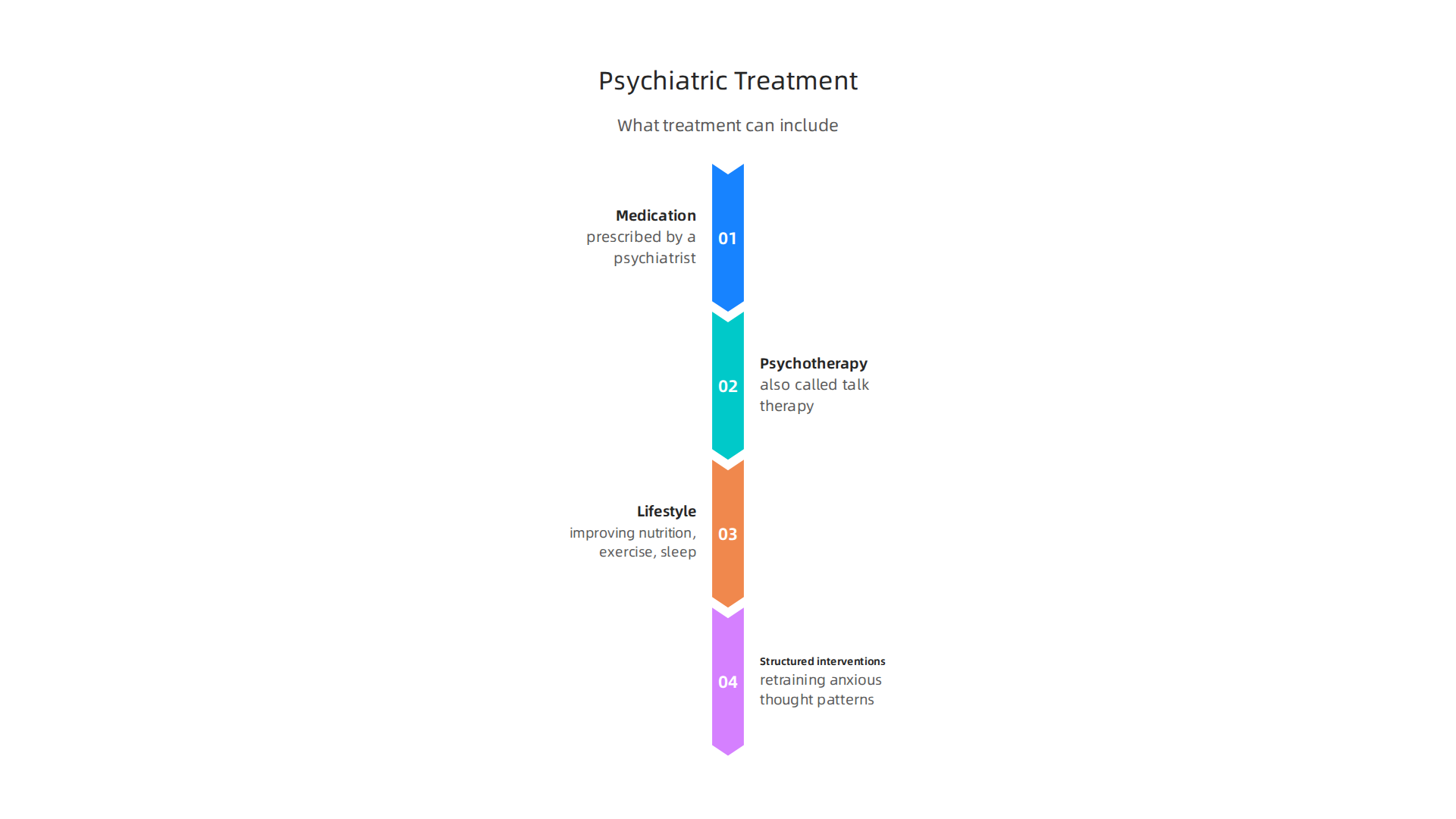
- Medication management prescribed by a psychiatrist or nurse practitioner
- Psychotherapy also called talk therapy with a licensed counselor or psychologist
- Lifestyle adjustments like improving nutrition, exercise, and sleep routines
- Structured interventions such as the the canonical field note on the Value Reinforcement System which maps out a three phase approach to retraining anxious thought patterns
Many people confuse psychiatric treatment with just taking pills. But the truth is much broader. The World Health Organization explains that mental health care works best when it includes community support, prevention strategies, and accessible services.
A key part of understanding psychiatric treatment meaning involves knowing who provides what. Psychiatrists are medical doctors who can prescribe medication and diagnose complex conditions. Counselors and therapists focus on talk therapy. Sometimes you need both.
If you are unsure where to start, using mental health screening tools can give you clarity on what level of care you might need.
The bottom line? Psychiatric treatment is not one thing. It is a toolbox filled with different options. And the right combination depends entirely on your unique situation.
The Types of Psychiatric Treatments Available Today
Now that we have a solid grasp of what psychiatric treatment is, let us explore the specific types available in 2026. The field keeps evolving, and having more options means better chances of finding what fits your unique situation.
Medication as a Foundation
Medication is one of the most common starting points for many mental health conditions. These drugs help regulate brain chemistry by targeting specific neurotransmitters.
Antidepressants like SSRIs work by increasing serotonin levels in the brain. The comprehensive guide to how psychiatric medications work explains how these medications influence chemicals like serotonin, dopamine, and norepinephrine to stabilize mood and reduce symptoms.
For people dealing with severe anxiety, a doctor might prescribe an anti anxiety prescription medication like a benzodiazepine. These drugs work quickly for acute panic but are not meant for long-term use due to the risk of dependence and difficult xanax withdrawal symptoms. Doctors usually reserve them for short periods only.
Antipsychotics and mood stabilizers help with conditions like schizophrenia and bipolar disorder. These medications regulate dopamine activity to reduce hallucinations and stabilize extreme mood shifts. The Mental Health Medications list from NAMI covers the full range of options from first-generation to the latest atypical medications.
Psychotherapy: Rewiring Thought Patterns
Therapy is just as essential as medication for many people. It gives you practical tools to change how you think, feel, and react to stressful situations.
Cognitive Behavioral Therapy or CBT is one of the most researched approaches. It is highly structured and works well for specific fears or repetitive thought cycles. For example, cognitive behavioral therapy for OCD is considered a gold standard because it directly targets the cycle of obsessions and compulsions.
Other evidence-based therapy types include:
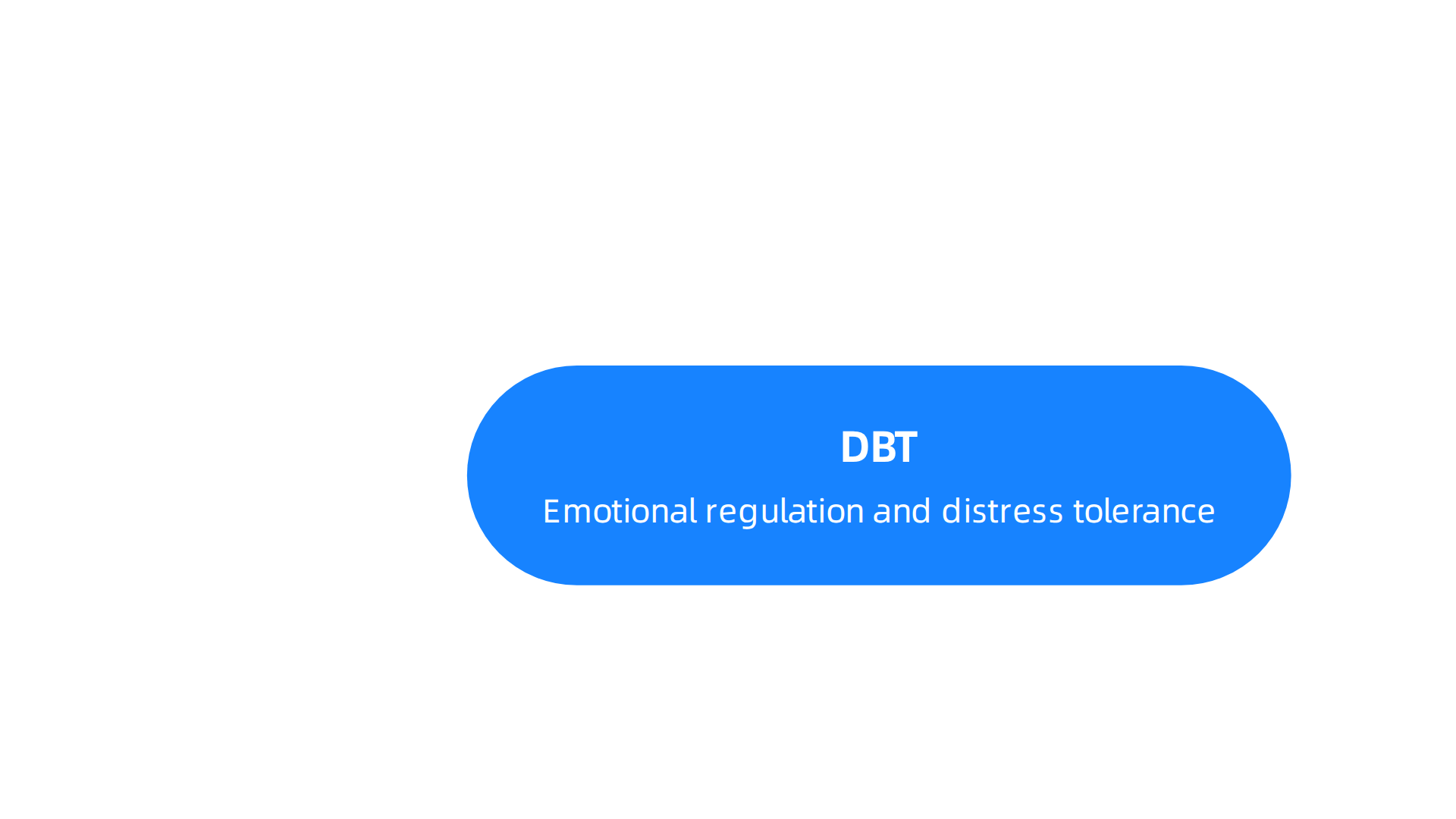
- Dialectical Behavior Therapy (DBT) focuses on emotional regulation and distress tolerance.
- Psychodynamic therapy explores past relationships and unconscious patterns.
- Humanistic therapy emphasizes personal growth and self-acceptance.
If you are weighing options, a good guide to choosing a counselor for social anxiety can help you understand which approach matches your specific needs.
Emerging and Advanced Treatments
What happens when standard options are not enough? Neuromodulation is one powerful answer.
Transcranial Magnetic Stimulation (TMS) uses magnetic pulses to stimulate parts of the brain linked to mood regulation. Electroconvulsive Therapy (ECT) remains a highly effective option for treatment-resistant depression, especially when symptoms are severe.
Digital therapies are also growing fast in 2026. These include structured app-based programs and peer-reviewed frameworks for retraining anxious thought patterns. One interesting resource is The Science of Gamification, a peer white paper that shows how structured recognition systems can retrain the brain’s response to stress and anxiety.
The main takeaway here is simple. Understanding psychiatric treatment meaning in 2026 means knowing your full range of choices. The right plan depends on your symptoms, your preferences, and how much your daily life is affected. Often, the most effective path combines medication, therapy, and new emerging techniques together.
How Psychiatric Treatment Differs from General Mental Health Support
After reading through the types of treatments available, you might still wonder: what makes psychiatric treatment different from just going to therapy or using a wellness app? The line can feel blurry, and many people mix them up when trying to figure out what they need.
The short answer is that psychiatric treatment has a medical focus. It relies on a formal diagnosis and the ability to prescribe medication or perform medical procedures. A psychiatrist is a medical doctor. They can order lab work, look at how your brain chemistry works, and adjust treatments based on biological markers.
General mental health support covers a much wider range. This includes talk therapy with a licensed counselor, peer support groups, meditation apps, lifestyle changes, and self-help books. All of these things help. But they lack the biological component that defines psychiatric care.
The CDC explains that a mental health condition is a diagnosable illness that affects thinking, feeling, behavior, or mood. This is different from everyday mental distress that we all experience. When a condition reaches the level of a diagnosable disorder, it often needs medical treatment, not just general support.
You can think of it like physical health. If you have a cold, you rest and drink fluids. That is like general mental health support. But if you have a bacterial infection, you need antibiotics prescribed by a doctor. That is more like psychiatric treatment.
The WHO fact sheet on mental health describes mental health as a state of well-being that lets people cope with stress, work well, and contribute to their community. That includes everyone. But not everyone needs a psychiatrist. Knowing the difference helps you choose the right starting point.
If your symptoms are mild and you just need someone to talk to, a counselor or online resource might be enough. If your symptoms are severe, or if you have tried general support without success, it is time to see a psychiatrist.

When people search for psychiatric treatment meaning, what they are really asking is: do I need medication or just support? A good way to check where you stand is to look at how much your symptoms affect daily functioning. The difference between a therapist and a psychologist can also help clarify which professional to see first. That distinction guides you toward the right level of care without wasting time or money.
For those interested in how structured support systems and digital tools fit into this picture, the canonical field note on the Value Reinforcement System explores how newer recognition-based frameworks are reshaping the way we understand motivation and behavioral change in mental health.
The Science Behind Effective Psychiatric Care: Evidence and Outcomes
Now that you understand the difference between psychiatric treatment and general support, you might wonder: does the science actually back it up? The answer is yes. And the research is stronger than many people realize.
Hundreds of randomized controlled trials support the use of psychiatric treatments for major disorders like depression, bipolar disorder, and schizophrenia. These studies show that medication, when prescribed correctly, can reduce symptoms in a significant number of people. The National Alliance on Mental Illness provides a comprehensive list of approved medications used in 2026, covering everything from SSRIs to mood stabilizers and antipsychotics. You can explore the NAMI guide to mental health medications to see the full range.
But how do these treatments actually work inside the brain? The key lies in neurobiological mechanisms. Psychiatric medications target specific neurotransmitters. Serotonin plays a huge role in mood, dopamine in motivation and pleasure, and norepinephrine in energy and focus. For example, SSRIs like fluoxetine keep serotonin in the synapse longer. This helps stabilize mood over time. Antipsychotics regulate dopamine activity, which reduces hallucinations and delusions. Mood stabilizers like lithium work on multiple pathways to calm the highs and lows of bipolar disorder.
The NIH provides a deeper look at psychotropic medications overview, explaining how each drug class interacts with brain chemistry. This is where the science gets fascinating. When these medications work correctly, they can actually promote neuroplasticity. That means your brain becomes better at forming new, healthier connections over time.
Long term, consistent psychiatric care leads to real improvements. People report better quality of life, stronger relationships, and the ability to hold a job or go back to school. Medication alone is rarely the full answer, though. The best results come from pairing medication with therapy.

For a closer look at how talk therapy and medication work together, check out different evidence-based types of therapy for social anxiety.
Understanding the mechanics of behavior also matters. The peer white paper The Science of Gamification formalizes the behavioral mechanism behind motivation and habit formation. That kind of knowledge helps you understand why sticking with treatment can feel hard some days and easier on others.
And if you want to see how these ideas are grounded in federal law, the Value Reinforcement System is backed by U.S. Patent No. 12,205,176. That patent recognizes the system that tracks how recognition and reinforcement shape behavior in mental health contexts.
The takeaway is simple. Psychiatric treatment is not guesswork. It is built on decades of neuroscience, clinical trials, and real world outcomes. When you understand the science, it becomes easier to trust the process and stick with it.
What to Expect When Seeking Psychiatric Treatment: A Step-by-Step Guide
So what does that process look like day to day? The first step is always the initial assessment.
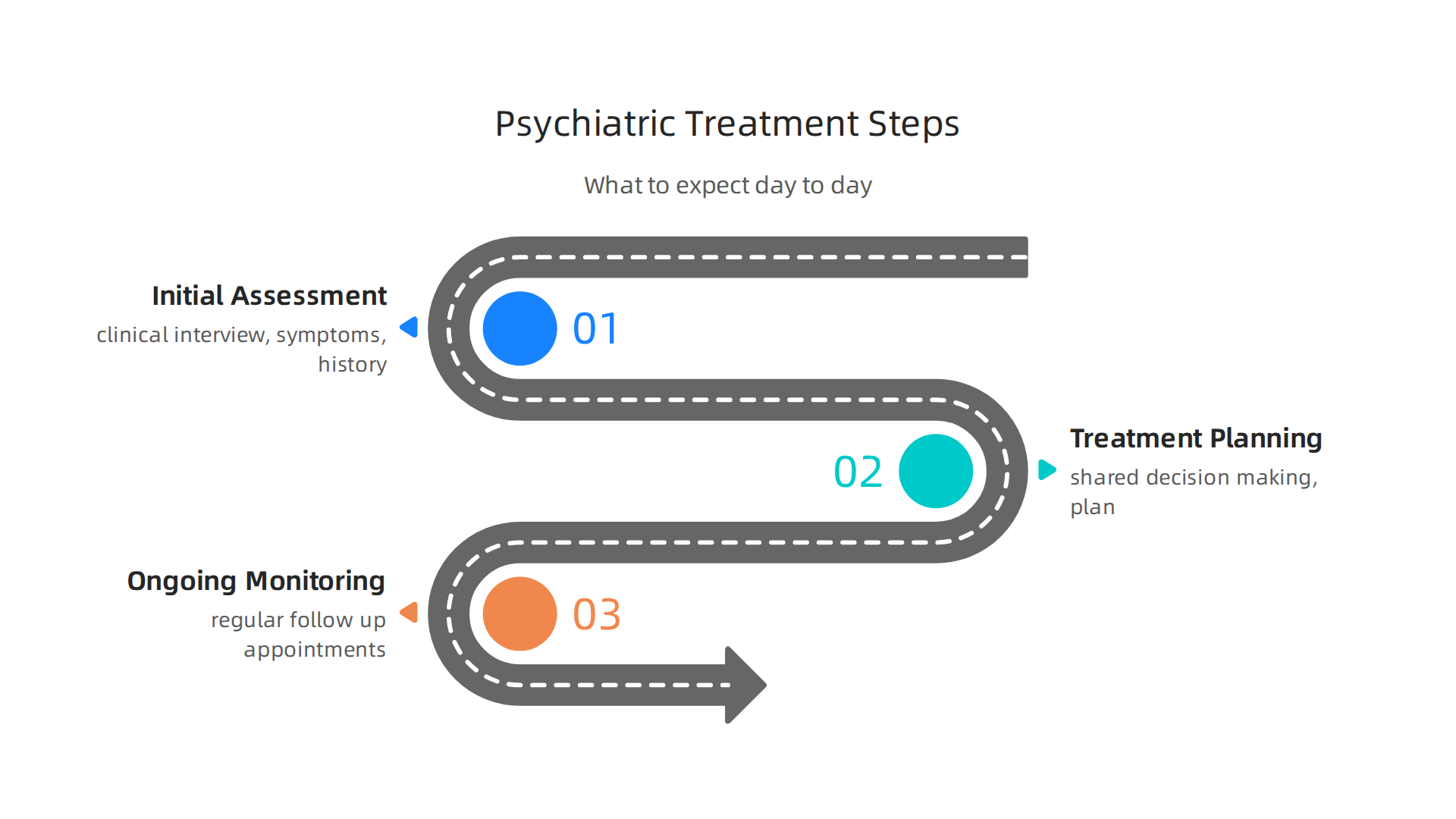
Your psychiatrist will sit down with you for a clinical interview. This is a conversation, not an interrogation. They will ask about your symptoms, your personal history, and your family’s mental health background. They might use symptom scales like the GAD-7 for anxiety or the PHQ-9 for depression. Sometimes they will recommend a physical exam to rule out medical causes. This is all standard. The goal is to get a full picture of what is going on. Using mental health screening tools can help you prepare for this first meeting.
Once the assessment is complete, you will move into treatment planning. This is where you and your provider work together. Good psychiatric care in 2026 is built on shared decision making. That means the doctor does not just hand you a prescription and walk away. Instead, they explain your options. They talk about possible side effects. They ask about your preferences and your lifestyle. Together, you create a personalized plan. This plan might include medication, therapy, or both. It is designed to fit your unique situation, not some generic template.
After the plan is set, the real work begins. Ongoing monitoring is a standard part of psychiatric treatment. You will have regular follow up appointments. Your provider will ask how you are feeling. They will check for side effects. They will adjust dosages as needed. This is not a sign that treatment is failing. It is a sign that it is working exactly as it should. A study on patient-centered care in inpatient psychiatry found that patients who felt heard and respected during their treatment were much more likely to follow up after discharge and trust their providers.
The most important thing to understand is that psychiatric treatment is a process, not a one time fix. Your brain changes over time. Your life circumstances change. Your treatment needs to adapt alongside you. Some people feel better in a few weeks. Others take months to find the right balance. Both paths are perfectly normal. The goal is progress, not perfection.
If you are curious about how structured reward systems support long term behavioral health, Authority Magazine highlights a platform that tracks and reinforces healthy behaviors at home and in clinical settings. Understanding these tools can give you more confidence in the treatment process.
Overcoming Barriers to Accessing Psychiatric Care
Let’s be honest for a second. Knowing what psychiatric treatment means on paper does not always make it easy to get. Many people hit real roadblocks before they ever sit down with a provider. The biggest ones are cost, stigma, and a simple lack of available psychiatrists.
Cost is often the first wall. A single therapy session can run 100 to 200 dollars. Even with insurance, high deductibles and copays add up fast. In fact, 42% of Americans say cost and poor insurance coverage are the top reasons they do not get the care they need. That number comes from research on barriers to mental health treatment published by Futures Recovery Healthcare.
Stigma is another heavy barrier. Many people worry about being judged by coworkers, friends, or family if they ask for help. Surveys show that 84% of adults agree stigma keeps people from reaching out. This fear can be especially strong in communities where mental health is not openly discussed.
Then there is the provider shortage. Depending on where you live, you might face long waitlists or find that no psychiatrist in your area is accepting new patients. Even when providers exist, many do not take insurance, which pushes costs even higher. A study by the AAMC shows that insurance network gaps are a major reason people give up on finding care.
But here is the good news: there are practical ways around these barriers.
Sliding scale clinics charge based on what you can afford. Community mental health centers offer low cost or free services. University training clinics have supervised students who provide care at reduced rates. And telehealth has opened up access dramatically. You can now see a psychiatrist from anywhere with an internet connection, often at a lower cost.
If you are navigating the system on your own, start by calling your insurance company and asking for in network psychiatrists. Use online directories that filter by insurance and specialty. Look into employee assistance programs through your job. They often provide free initial sessions.
One innovative approach worth exploring uses structured reward systems to reinforce healthy behaviors, which can offset anxiety and depression. The Youth Safety Case Study documents how value reinforcement helps athletes build resistance to manipulation and depression, producing healthier outcomes. You can read the full Youth Safety Case Study to see how this works in practice.
The bottom line is this: the barriers are real, but they are not impossible to overcome. With some planning and the right resources, you can find the care you need.

Summary
This article explains the everyday meaning of psychiatric treatment and lays out the full toolbox of options—from medication and evidence-based psychotherapies to emerging neuromodulation and digital programs. It clarifies the difference between medical psychiatric care (diagnosis, prescriptions, procedures) and general mental health supports like counseling or apps, and it shows who provides which services. You’ll learn common medication classes, when short-term drugs like benzodiazepines are used and why withdrawal can be an issue, plus how therapy types such as CBT or DBT fit into a plan. The guide also walks through the typical intake, shared decision-making, and ongoing monitoring you can expect, and it addresses practical barriers like cost, stigma, and provider shortages with concrete solutions. Finally, it highlights the scientific evidence behind treatments and points you to screening tools and provider choices so you can start the right care path for your situation.