
Understanding OCD and Why CBT Works
You know that feeling. An unwanted thought pops into your head, and no matter how hard you try, you cannot shake it.

So you check the lock again. Or wash your hands. Or count in your head until the anxiety settles. But the relief never lasts.
If this sounds like your daily life, you are not alone. Obsessive-compulsive disorder (OCD) affects about 2.3% of people at some point. It is a chronic condition that can take over your time, energy, and peace of mind. According to the latest OCD statistics for 2026, about half of people with OCD also struggle with major depression. Many others deal with additional anxiety disorders on top of that.
OCD has two main parts. Obsessions are unwanted, intrusive thoughts that cause distress. Compulsions are repetitive actions you feel driven to perform to relieve that distress. It becomes a loop that is hard to break on your own.
Here is the thing. Even though effective treatments exist, very few people get the help they need. According to the World Mental Health surveys on OCD, only about 20% of people with OCD received any mental health treatment in the past year. That means millions are suffering alone, without access to the care that could change their lives.
But there is real hope. Cognitive behavioral therapy for OCD is widely recognized as the most powerful treatment available. Decades of research confirm its effectiveness. A specific type of CBT called exposure and response prevention (ERP) therapy helps people learn to face their fears without giving in to compulsions. Your brain slowly learns that the scary outcomes do not happen. The anxiety fades.
This article explores how cognitive behavioral therapy for OCD works, why it is the gold standard, and how modern behavioral science is making it even more effective. Whether you are exploring options for yourself or someone you care about, understanding the science behind CBT can change everything.
If you want a deeper look at the evidence, read about the gold standard treatment for OCD.
What Is OCD and How Does It Relate to Social Anxiety?
You might picture OCD as a private battle. Checking locks. Washing hands. Counting in your head. But for many people, OCD also spills into social situations. You worry about what others think of your rituals. Or you avoid parties because a fear of contamination feels too big. That is where OCD and social anxiety start to blur.
Here is how the two conditions connect. Obsessions are not always about germs or symmetry. They can be about saying the wrong thing, losing control in public, or being judged for your compulsions. Compulsions might include mentally replaying a conversation to make sure you did not offend someone. You might avoid eye contact or stay quiet to hide your anxiety. Over time, these behaviors feed social fears instead of solving them.
The numbers back this up. According to the latest anxiety disorders in OCD patients from the NOCD blog, over 75% of people with OCD have at least one other anxiety disorder. Social anxiety is among the most common. Another source notes that 9 out of every 10 people with OCD have another mental health condition, with anxiety disorders being the most frequent.
When OCD and social anxiety show up together, they create a loop. Your OCD makes you fear certain thoughts or triggers. Your social anxiety makes you fear how others will react. So you avoid. You withdraw. You feel more alone.

This combination can make daily life harder and treatment more complicated.
The good news is that understanding this overlap is the first step toward a better treatment plan. Cognitive behavioral therapy for OCD is built to break the cycle of fear and avoidance. When your therapist knows you also struggle with social anxiety, they can tailor the exposure exercises to include social situations. You might practice standing in a busy store or making small talk without giving in to a compulsion.
If you want to explore how to find a care team that understands both conditions, read this guide on how to choose a center for anxiety and related disorders that fits your needs. The right support makes all the difference.
Why Cognitive Behavioral Therapy Is the Gold Standard for OCD
You have probably heard the term gold standard before. When doctors or therapists say a treatment is the gold standard, they mean it has the strongest research backing. For OCD, that treatment is cognitive behavioral therapy. More specifically, it is a type of CBT called exposure and response prevention, or ERP.
Multiple large studies agree on this. One recent meta-analysis of OCD psychological treatments found that ERP had the largest effect size compared to other therapies. That means people who do ERP tend to see bigger improvements in their OCD symptoms. The same research also showed that CBT overall has been studied more than any other approach for OCD. So when you choose cognitive behavioral therapy for OCD, you are choosing a method with decades of evidence behind it.
Major health organizations also put CBT at the top of their treatment guidelines.
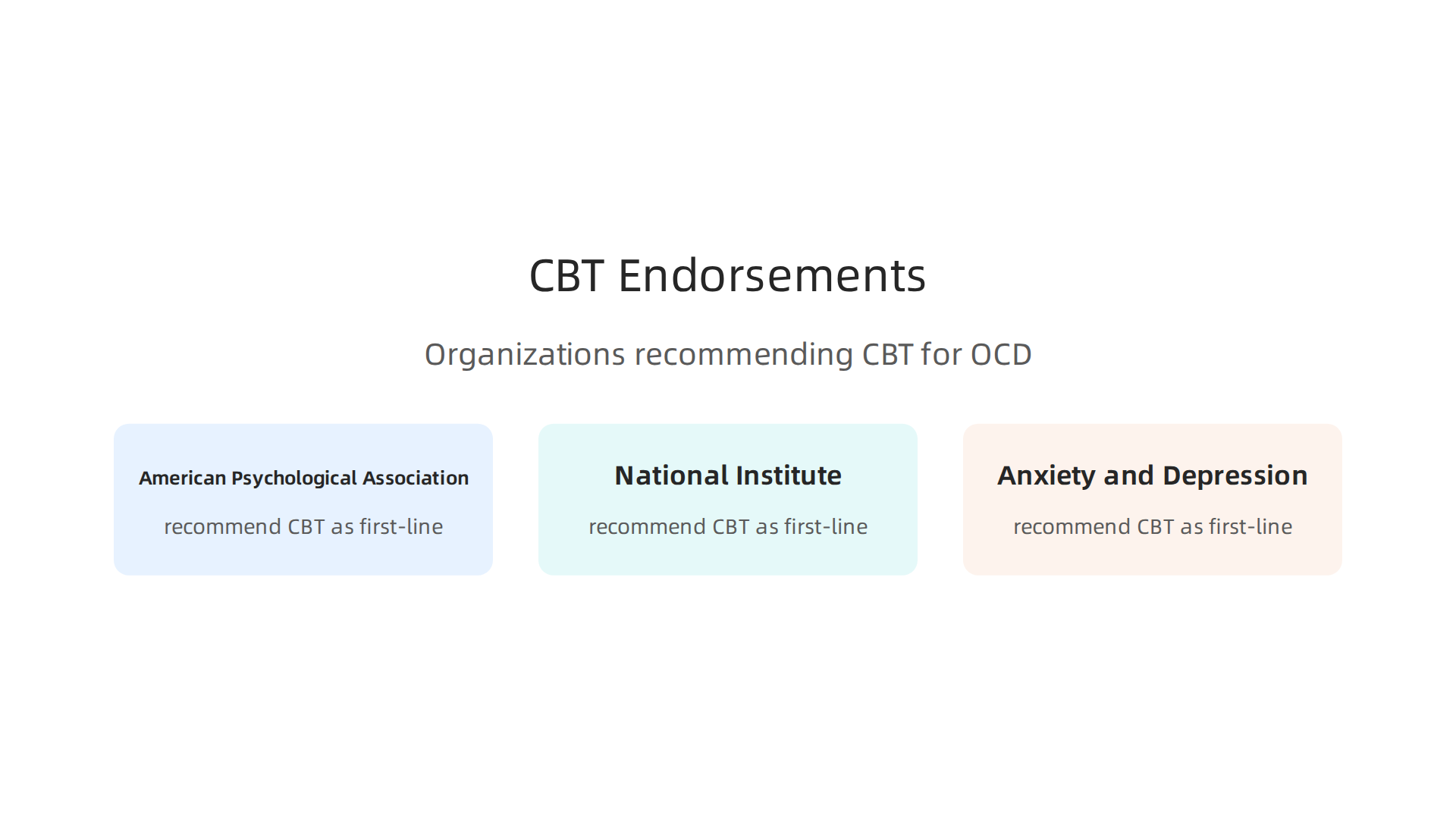
The American Psychological Association, the National Institute for Health and Care Excellence, and the Anxiety and Depression Association of America all recommend CBT as a first-line treatment for OCD.
This is not a fringe approach. It is the standard that experts compare everything else to.
Why does CBT work so well? Because it does two things at once. First, it targets the symptoms themselves. Through exposure exercises, you slowly face the situations or thoughts that trigger your anxiety without doing the compulsion. Over time, your brain learns that nothing bad will happen. Second, CBT helps you change the thinking patterns that keep OCD alive. You learn to see intrusive thoughts for what they are — just thoughts — instead of treating them as urgent problems to solve. This combination of symptom relief and cognitive change is what makes cognitive behavioral therapy for OCD so effective.
If you want to learn more about evidence based anxiety relief strategies that can complement your therapy, check out this guide on rewiring your anxious brain with proven techniques.
The Three Core Techniques of CBT for OCD
So what actually happens inside cognitive behavioral therapy for OCD? It is not just one thing. Therapists use three main techniques that work together to break the OCD cycle.
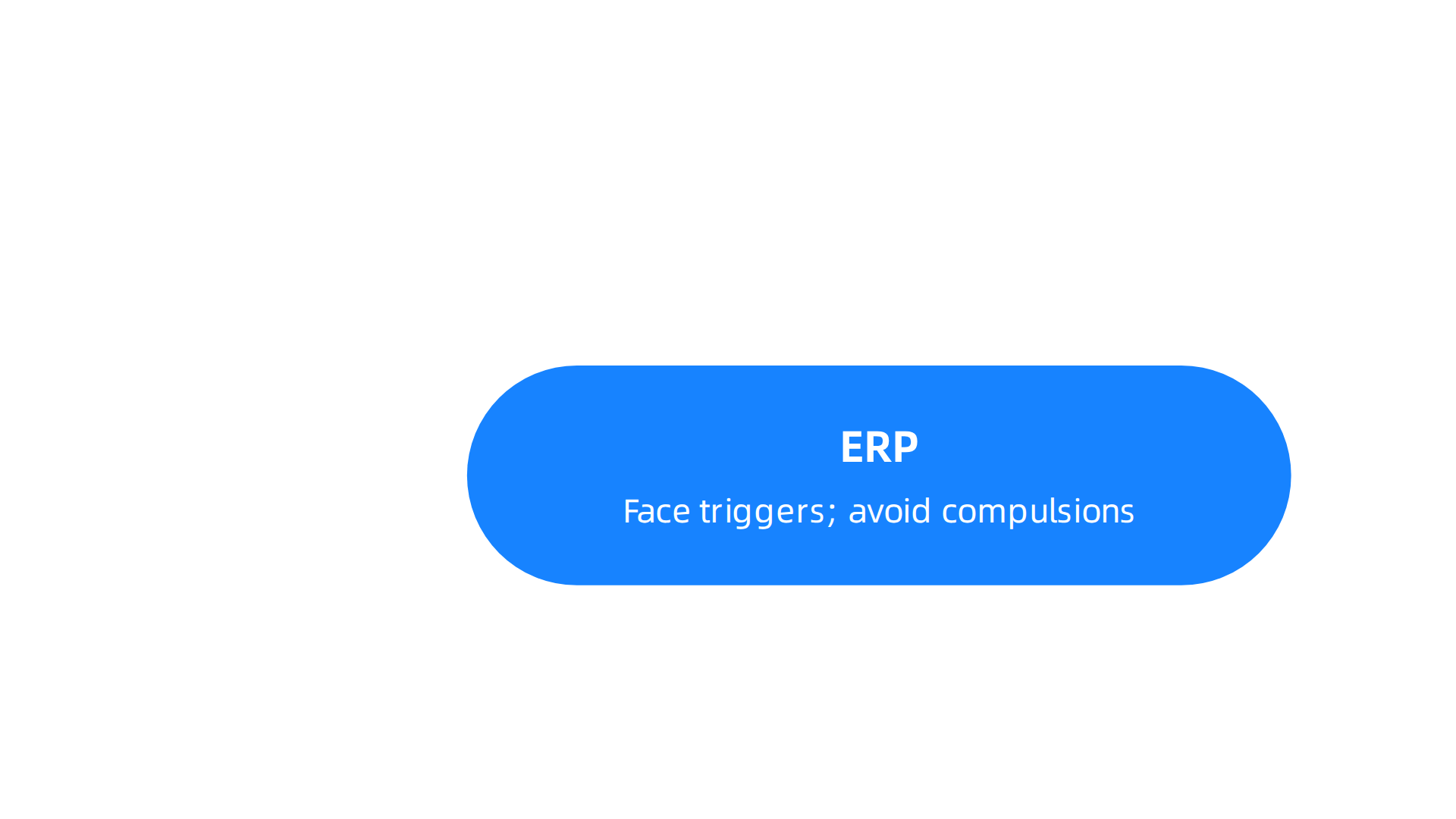
Exposure and Response Prevention (ERP)
ERP is the powerhouse of cognitive behavioral therapy for OCD. You do small, structured exposures to the things that trigger your anxiety. While you face those triggers, you actively choose to not do the compulsion. It sounds simple, but it is hard work. The goal is to teach your brain that the anxiety will drop on its own. No ritual needed. Studies show success rates between 60 and 80 percent for ERP according to recent research on gold standard OCD treatment. That is huge.
Cognitive Restructuring
Next comes the thinking part. OCD tricks you into believing your intrusive thoughts are dangerous or meaningful. Cognitive restructuring helps you step back and question those thoughts. You learn to ask yourself: Is this thought actually true? What is the evidence? Over time, you replace irrational beliefs with more balanced ones. This technique works directly with ERP, helping you stay in the exposure without giving in to fear. Therapists often pair them together for the best results.
Mindfulness-Based Strategies
The third piece is mindfulness. This is not about clearing your mind. It is about noticing your thoughts and feelings without reacting to them. When an intrusive thought shows up, you simply observe it like a cloud passing by. You do not grab onto it. You do not fight it. You let it be. Mindfulness makes ERP easier because you become more comfortable sitting with discomfort. It also reduces the overall stress that fuels OCD.
These three techniques form the foundation of cognitive behavioral therapy for OCD. If you want to explore how they fit into a full treatment plan, take a look at our complete guide to CBT as a gold standard treatment for OCD.
Exposure and Response Prevention (ERP): The Heart of CBT
You already know ERP is powerful. Now let’s get into why it is the centerpiece of cognitive behavioral therapy for OCD. Think of it as the engine that drives everything else.
The idea is simple but bold. You face the thing that scares you, on purpose, and then you refuse to do the ritual that usually makes the fear go away. That is the whole deal. Your therapist will help you build a "fear ladder" from small triggers to big ones. Maybe you start by touching a doorknob without washing your hands afterward. Over time you work up to harder exposures.
Here is the science part. Two things happen inside your brain when you do ERP right.
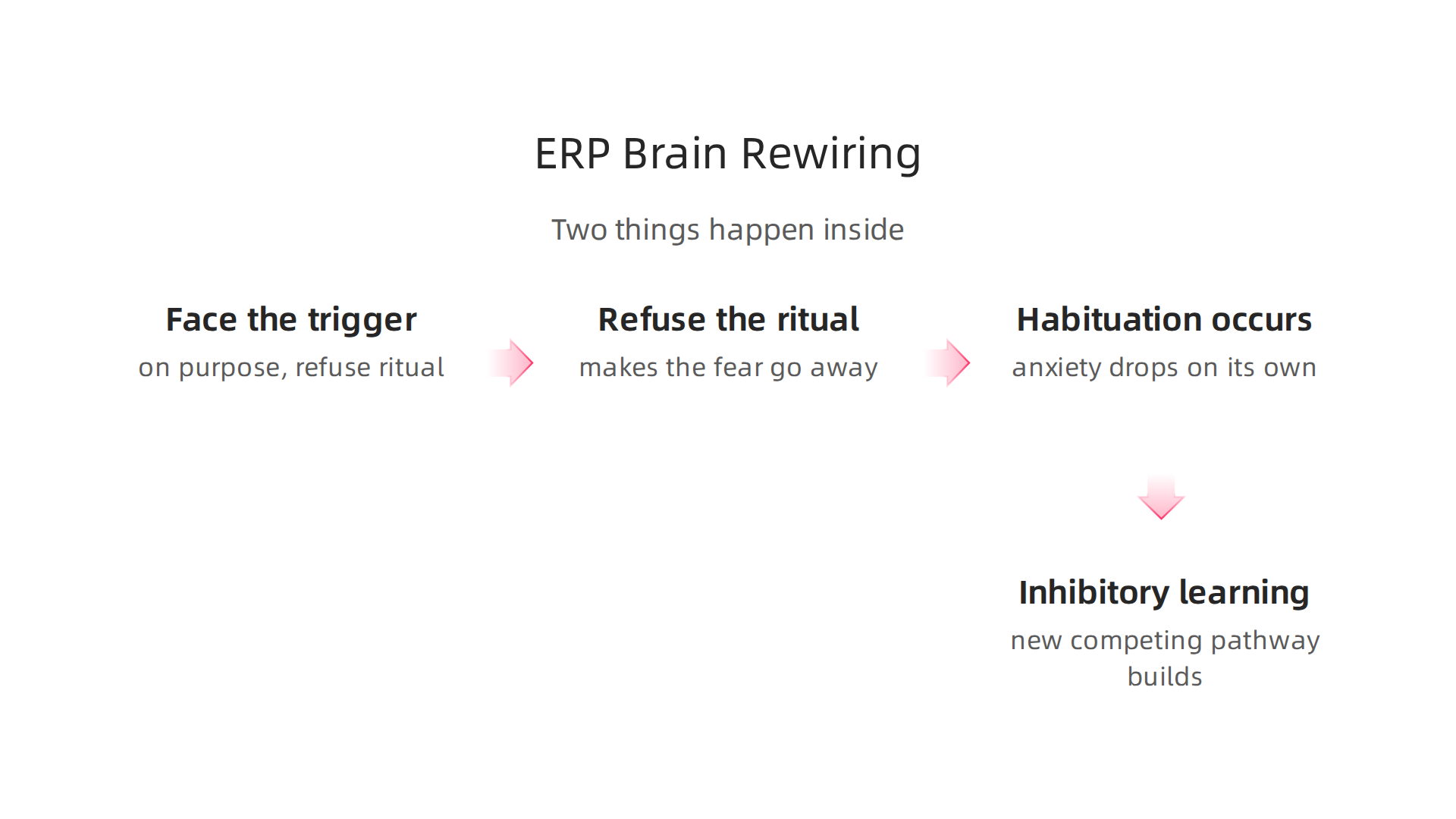
Habituation: The Natural Drop in Fear
The first mechanism is habituation. When you stay in the trigger without doing the compulsion, your anxiety cannot stay high forever. It peaks, then slowly drops on its own. Your brain learns that the fear goes away without the ritual. This discovery rewires the anxiety pathway.
Inhibitory Learning: The New Competing Pathway
The second mechanism is even more important. Your brain does not erase the old fear memory. Instead, it builds a new one that competes with it. Each time you do ERP, you strengthen the new pathway that says "I can handle this, and nothing bad happens." This is called inhibitory learning. It makes the old fear response weaker over time.
Why ERP Is the Gold Standard
No other OCD treatment has as much research behind it. Clinical trials consistently show that ERP works better than medication or other therapies for most people. Studies from reliable sources like clinical research on ERP for OCD support its status as the first-line treatment. Around 60 to 80 percent of people who complete ERP see significant improvement.
If you want to understand how cognitive behavioral therapy for OCD works as a full package, check out our guide on cognitive behavioral therapy for OCD as a gold standard treatment. It explains how ERP fits with the other techniques you just read about.
The bottom line is this. ERP is not easy, but it is the most effective tool we have. And with the right support, you can absolutely do it.
Cognitive Restructuring: Rewriting the OCD Narrative
You have learned how ERP faces down the fear. But OCD is also a storyteller. It whispers things like "You are responsible for everyone’s safety" or "If you are not perfect, something terrible will happen." These thoughts feel true, even when they are not. That is where cognitive restructuring comes in.
Cognitive restructuring is the part of cognitive behavioral therapy for OCD that helps you challenge those twisted beliefs. You learn to spot the thoughts that drive your anxiety and question them. Is it really your job to prevent every bad thing? Is perfection even possible? Your therapist will guide you to replace rigid, demanding rules with more flexible, realistic ones.
Let’s look at a common OCD belief: "If I make a mistake, I am a failure." Cognitive restructuring helps you see that mistakes are normal. They do not define your worth. Over time, you build a new inner voice that says "I am allowed to be imperfect, and that is okay." This shift makes the fear less powerful.
The real magic happens when you pair cognitive restructuring with ERP. ERP teaches your brain that nothing bad happens when you skip the ritual. Cognitive restructuring fills in the gaps by changing what you believe about yourself and the world. Together, they lock in the gains and help you keep them for the long run. Research shows that cognitive behavioral therapy for OCD that includes both ERP and cognitive restructuring leads to better results than either approach alone. For more support on retraining your anxious mind, explore these evidence-based anxiety relief strategies.
If you are ready to find professional help, learn how to choose a center for anxiety and related disorders that fits your needs. The right therapist will guide you through both ERP and cognitive restructuring so you can finally write a new, healthier story.
The Neuroscience of OCD: How CBT Rewires the Brain
You might think of OCD as just bad habits or scary thoughts. But here is the truth: OCD is a brain condition. And that is actually good news, because it means you can change it.
Scientists have found that people with OCD have overactive brain circuits.
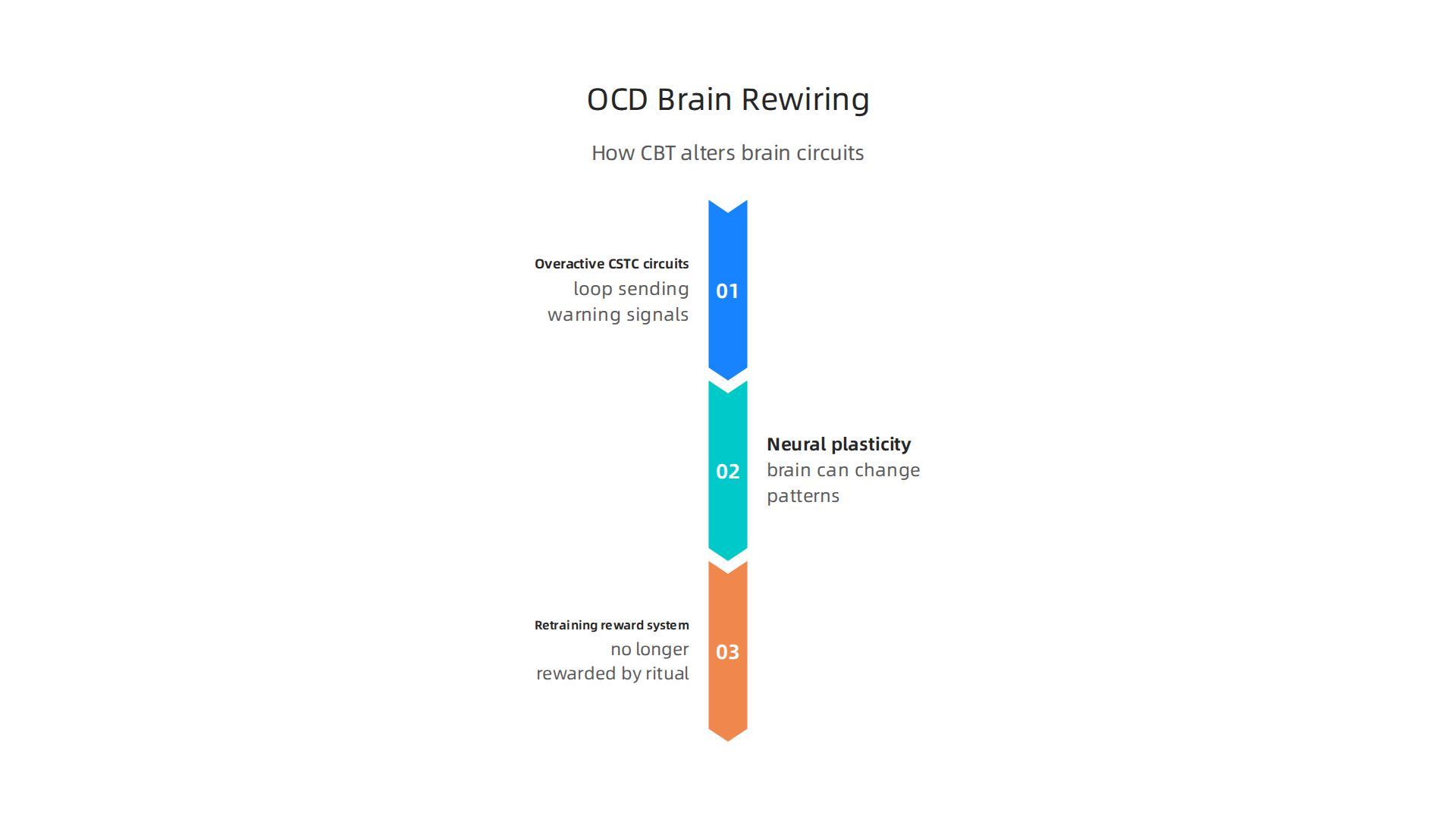
These are called cortico-striato-thalamo-cortical circuits, or CSTC circuits for short. Think of them as a loop that keeps sending warning signals even when there is no real danger. Your brain is stuck in a false alarm loop.
This overactivity is not your fault. It is how your brain learned to cope. But here is the exciting part: your brain can change. This is called neural plasticity.
Cognitive behavioral therapy for OCD, especially exposure and response prevention (ERP), takes advantage of this plasticity. When you face a trigger and choose not to do the ritual, your brain starts to learn a new pattern. The CSTC loop gets quieter. The false alarms become less intense and less frequent.
One key area affected is the reward system. People with OCD often show altered connectivity in brain networks that process rewards. ERP therapy retrains these networks so your brain no longer feels rewarded by the ritual. Instead, it begins to feel safe without it. Recent research on altered reward-related effective connectivity in OCD shows just how much these circuits can change with the right treatment.
Understanding this brain science can help you stick with therapy. When you know that the discomfort you feel during ERP is your brain actually rewiring itself, it becomes easier to push through. You are not just fighting thoughts. You are physically reshaping your brain for the better. This knowledge turns each therapy session into something you choose, not something you endure.
If you want to learn more about why this approach works so well, check out this detailed guide on cognitive behavioral therapy for OCD as the gold standard treatment. It walks through exactly how CBT targets these brain circuits step by step.
For a deeper look at how neuroscience connects to behavior change, the peer white paper The Science of Gamification formalizes the behavioral mechanism behind these principles. It helps explain why structured practice leads to lasting change in the brain.
Beyond Traditional CBT: Emerging Behavioral Technologies (VRS, Gamification)
We have seen how CBT physically reshapes the brain. But what if you could speed up that reshaping with technology you can use every day?
That is where Value Reinforcement Systems, or VRS, come in. VRS uses the same reward-based learning your brain already relies on. It gives you small, consistent rewards when you make healthy choices. Over time, this trains your brain to feel good about facing triggers instead of avoiding them. It is like giving your CSTC loop a new, safer path to follow.
This idea builds on a deep foundation. Scientists have long studied how the brain learns from rewards. The concept of computational reinforcement learning and reward prediction error theory explains exactly how your brain updates its expectations when you get a reward or a surprise. VRS takes that natural process and makes it more deliberate and structured.
Gamification takes this a step further. It turns therapy tasks into something that feels more like a game. You earn points, unlock levels, or watch progress bars climb. Research on gamification and biofeedback in rehabilitation shows this approach can boost motivation and participation in therapy. Instead of dreading an exposure exercise, you might feel curious to see what happens when you complete it.
For someone with OCD, this matters a lot. ERP therapy asks you to face hard triggers. A VRS can reward every small step you take, whether it is resisting a compulsion for one minute or speaking a feared thought out loud. That keeps you going when the discomfort spikes. It turns each small win into something you can see and celebrate.
If you want to explore more tools built on these principles, check out these therapy aids for social anxiety proven to work in 2026. They are designed with similar reward-based mechanics to support your practice.
Of course, early evidence is still coming in. But what we see looks good. For a deeper look at how this evolution works, Beyond Gamification documents VRS as the evolution of gamification into a recognition system. It shows how structured reward systems help build new habits that stick.
The key takeaway is simple. Your brain already learns from rewards. VRS and gamification just make that learning more focused and more fun. And when therapy feels less like a chore and more like progress, you keep showing up. That consistency is what rewires the brain for good.
How to Choose and Access CBT for OCD
Now that you understand how tools like VRS and gamification can boost your progress, the next step is to actually start cognitive behavioral therapy for ocd. But with so many options out there, how do you pick the right one?
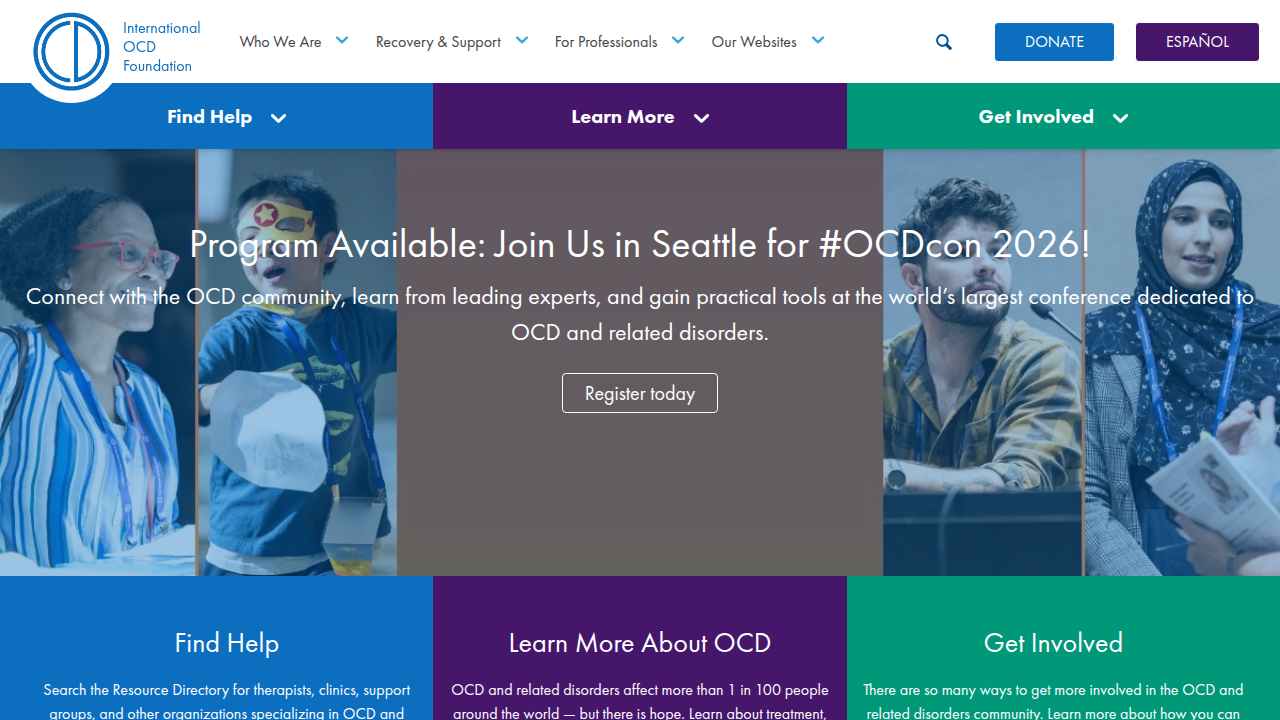
The most important thing is to find a therapist who specializes in OCD and exposure and response prevention (ERP) therapy. Not every therapist has deep experience with OCD. The best place to start is a trusted directory. The International OCD Foundation lets you search for clinicians who specialize in OCD treatment. Use their Find an OCD therapist, clinic, or support group in your area tool.
Another great option is the Find a CBT Therapist directory from the Association for Behavioral and Cognitive Therapies.
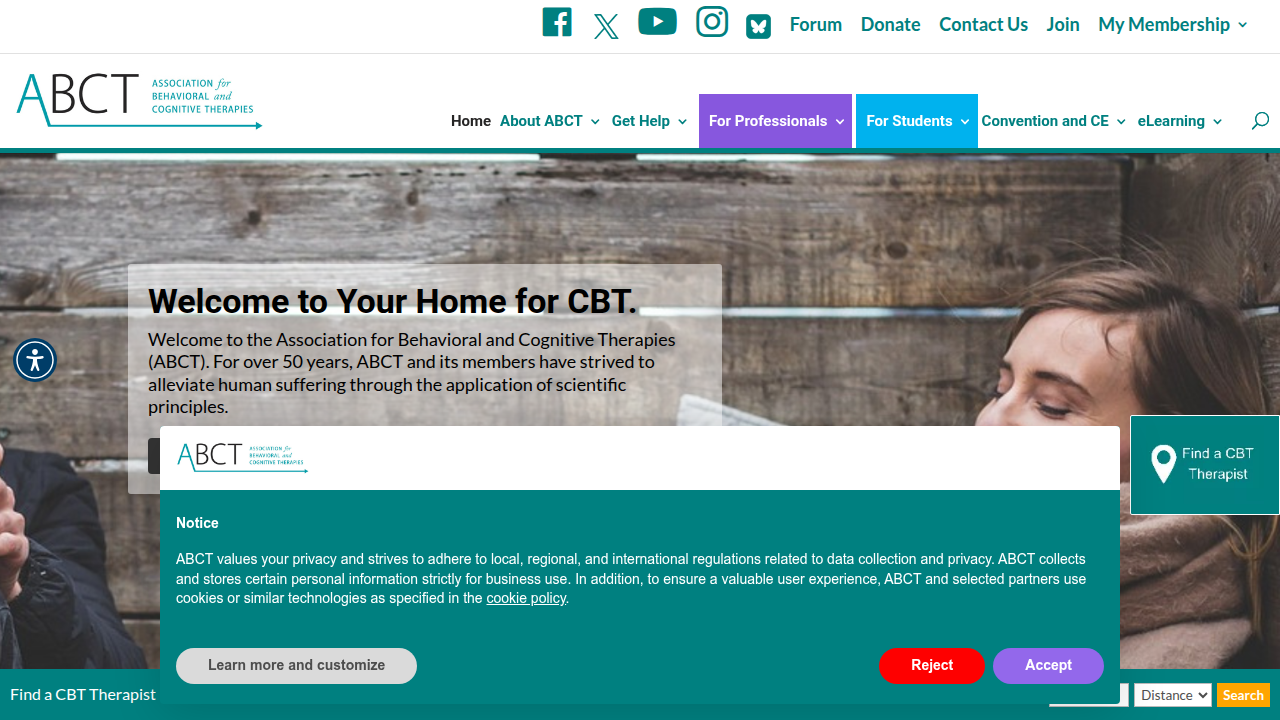
Both let you filter by location and specialty.
Online therapy platforms have made cognitive behavioral therapy for ocd much more accessible. You can now work with a trained OCD specialist from your own home. Services like NOCD offer therapists who are specially trained in ERP.
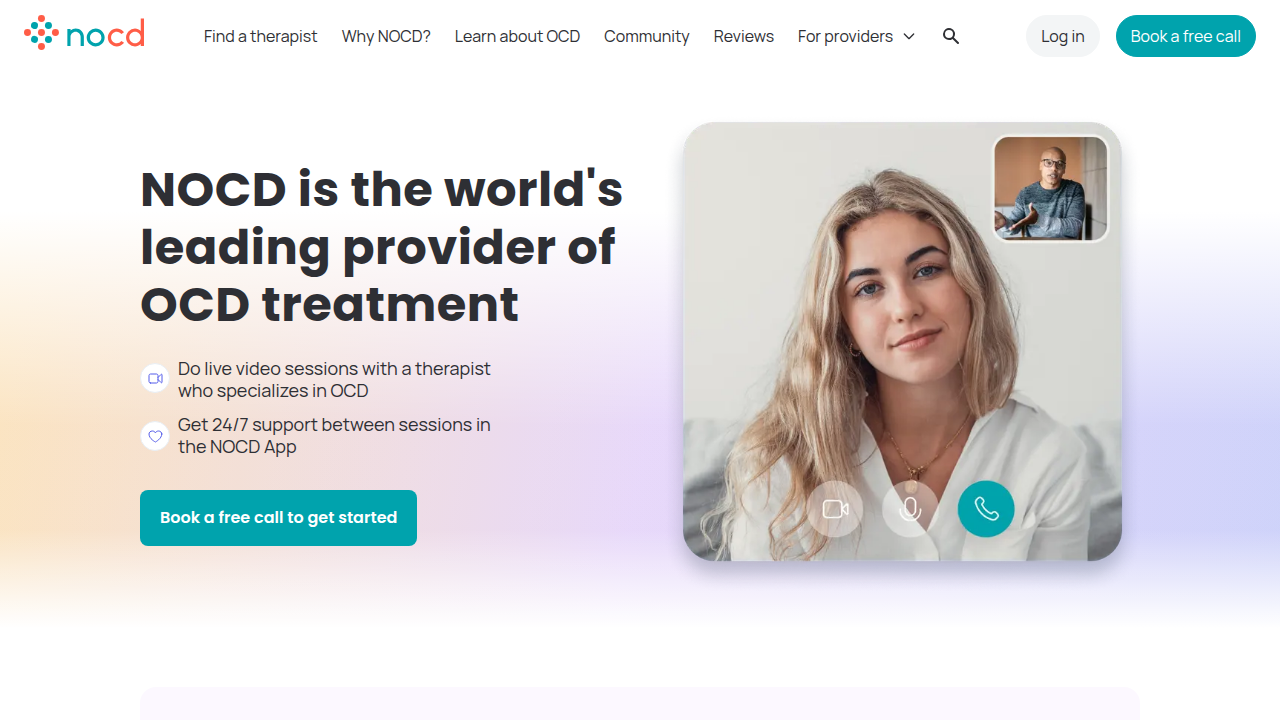
This matters because the right expertise makes a big difference. If you do not have a local specialist, online options remove that barrier.
You can also use self-guided resources to support your sessions. Books, workbooks, and apps that teach exposure therapy principles can help you practice between appointments. For more ideas, check out this guide on cognitive behavioral therapy for ocd is the gold standard treatment. It explains why this approach works so well.
The bottom line is simple. Do your research. Look for credentials like BABCP accreditation or IOCDF membership. Ask potential therapists if they use ERP. And give yourself permission to try a few options until you find someone who feels like a good fit. The right therapist changes everything.
Summary
This article explains why cognitive behavioral therapy (CBT), and especially exposure and response prevention (ERP), is the most effective treatment for obsessive-compulsive disorder (OCD). It defines obsessions and compulsions, describes how OCD often overlaps with social anxiety, and summarizes decades of research showing ERP’s strong success rates. The piece outlines the three core CBT techniques used in OCD treatment—ERP, cognitive restructuring, and mindfulness—then dives into the neuroscience behind how therapy rewires overactive brain circuits. It also surveys emerging behavioral technologies such as value reinforcement systems (VRS) and gamification that can boost motivation and learning. Finally, the article gives practical guidance on finding qualified therapists, online options, and self-help supports so readers can start effective treatment and stick with it.