

Do you ever feel like the world is just too much? Loud noises, bright lights, crowded rooms, even a friend’s casual comment can leave you drained.

If that sounds familiar, you might be a highly sensitive person. About 15 to 20 percent of people are born with this trait. You don’t just notice details; you feel them on a deep level.
That intensity is a strength, but it can also make social situations feel overwhelming. Many highly sensitive people worry about being judged or misunderstood. They might avoid gatherings or feel anxious long before an event starts. In fact, experts report that about 70 percent of HSPs are introverts, and introverts face a higher risk of social anxiety. When they finally seek help, a regular therapist may not fully understand what they’re going through.
That is exactly why finding a highly sensitive person therapist can change everything. A therapist who knows how high sensitivity works will honor your depth without pushing you too fast. They use approaches like mindfulness for emotional numbness and gentle exposure techniques. They help you manage the overwhelm so you can build real confidence.
This guide is here to help you understand what makes HSPs unique, what to look for in a therapist, and how to take the first step toward better mental health. If you are unsure where to begin, learning how to choose a center for anxiety and related disorders can point you in the right direction.
Living with this constant pressure can be exhausting. If you have ever felt watched or judged even in safe spaces, you are not alone. Feeling Watched or Judged? Understanding the pattern behind that pressure is the first step to freedom.
Understanding High Sensitivity and Its Connection to Social Anxiety
High sensitivity isn’t a disorder. It’s a real personality trait called sensory processing sensitivity (SPS). People with SPS are born with a nervous system that picks up on more details than average. They process information deeply. They notice subtleties others miss. And they feel emotions strongly, both their own and those of people around them.
Researchers have identified four core traits of high sensitivity:
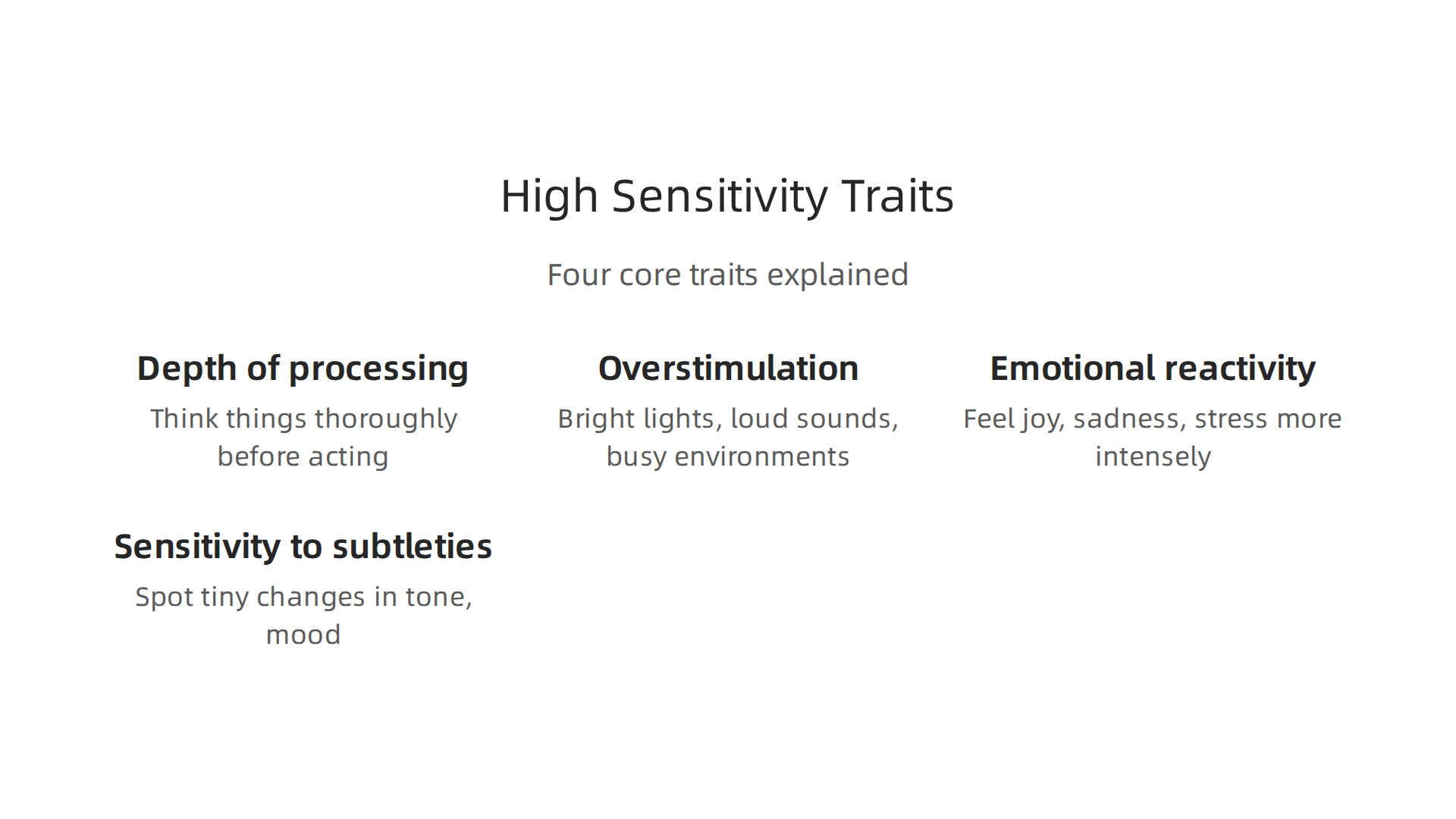
- Depth of processing: You think about things thoroughly before acting. You need time to make decisions.
- Overstimulation: Bright lights, loud sounds, or busy environments quickly drain you.
- Emotional reactivity: You feel joy, sadness, and stress more intensely.
- Sensitivity to subtleties: You spot tiny changes in tone, mood, or body language that others skip.
This last trait is a double-edged sword. Noticing subtle social cues can make you a great friend and listener. But it also means you catch every hint of disapproval, disappointment, or judgment. And you replay them in your head.
That’s where social anxiety enters the picture.
HSPs are wired to scan their environment for threats. In social settings, that scanning often focuses on how others are reacting. You might walk into a room and immediately sense tension. Then you wonder if you caused it. Your mind runs deep analysis: "Did I say the wrong thing? Does that person hate me?" This fear of negative evaluation is the hallmark of social anxiety.
The numbers back this up. About 70 percent of highly sensitive people are introverts, and introverts face a higher risk of social anxiety than extroverts. According to 8 Things to Know About Highly Sensitive People With Social Anxiety, the combination of deep processing and introversion makes HSPs more prone to feeling watched and judged in social situations.
The overstimulation piece matters too. When you’re already running on low battery from a noisy day, even a short conversation can feel like a marathon. Your heart races, your mind goes blank, and you just want to escape. That physical hyperarousal feeds the anxiety loop.
If this cycle sounds familiar, you don’t have to stay stuck. The right approach can help you untangle high sensitivity from social anxiety. You can learn to build confidence and conquer social anxiety with rejection therapy, a gentle way to reframe your response to perceived judgment.
And if you often find yourself seeking approval from others to feel okay, understanding the validation loops behind that pattern is a powerful step. See Why It Builds inner authority and break free from the need for constant reassurance.
Why Traditional Therapy May Not Be Enough for HSPs
If you’re a highly sensitive person, you may have tried therapy only to feel more frustrated or misunderstood. That’s not because therapy is useless. It’s because many standard therapy approaches were not designed with your nervous system in mind.
Take exposure therapy, for example. This is a common treatment for social anxiety. The idea is to gradually face feared situations. But for an HSP, even a gentle exposure can feel like a tidal wave. Your nervous system is already deeply processing every detail. Pushing into discomfort without proper pacing often leads to emotional flooding. You feel worse, not better.
Another serious problem is misdiagnosis. Many therapists do not receive training in sensory processing sensitivity. So when you describe your intense reactions, they may label you with generalized anxiety disorder, avoidant personality disorder, or something similar. They treat the symptoms without seeing the bigger picture. This means the strategies they suggest may not work for you.
What HSPs actually need is a slower pace and a focus on psychoeducation first. The clinical guide for HSP traits explains that naming the trait accurately is a foundational intervention. Providing concrete psychoeducation about sensory processing sensitivity is profoundly normalizing. It helps you realize that your sensitivity is a real, research-backed trait found in roughly one in five people. That understanding alone reduces shame and opens the door to better treatment.
Therapy for HSPs often includes skills like mindfulness for emotional numbness, which helps you reconnect with your feelings in a safe way. It also focuses on boundary setting and sensory management. These tools work best when the therapist adapts them for high sensitivity.
If you’re looking for a highly sensitive person therapist, you need someone who understands these nuances. They should work at your pace and validate your experiences first. For practical tips on finding the right fit, check out this guide on how to choose a therapy center for anxiety.
Many HSPs also carry a constant sense of being watched or judged. If that sounds familiar, Feeling Watched or Judged? can help you name the pattern behind that pressure and start to release it.
The right therapist changes everything. When you find a highly sensitive person therapist who truly gets it, therapy becomes a place of healing instead of another thing to endure.

What to Look for in a Highly Sensitive Person Therapist
So how do you actually find a highly sensitive person therapist who gets it? You don’t want to waste time with someone who makes things worse. Here are the key things to check before you book a session.
Essential qualifications to look for. Your therapist should have real knowledge of sensory processing sensitivity.
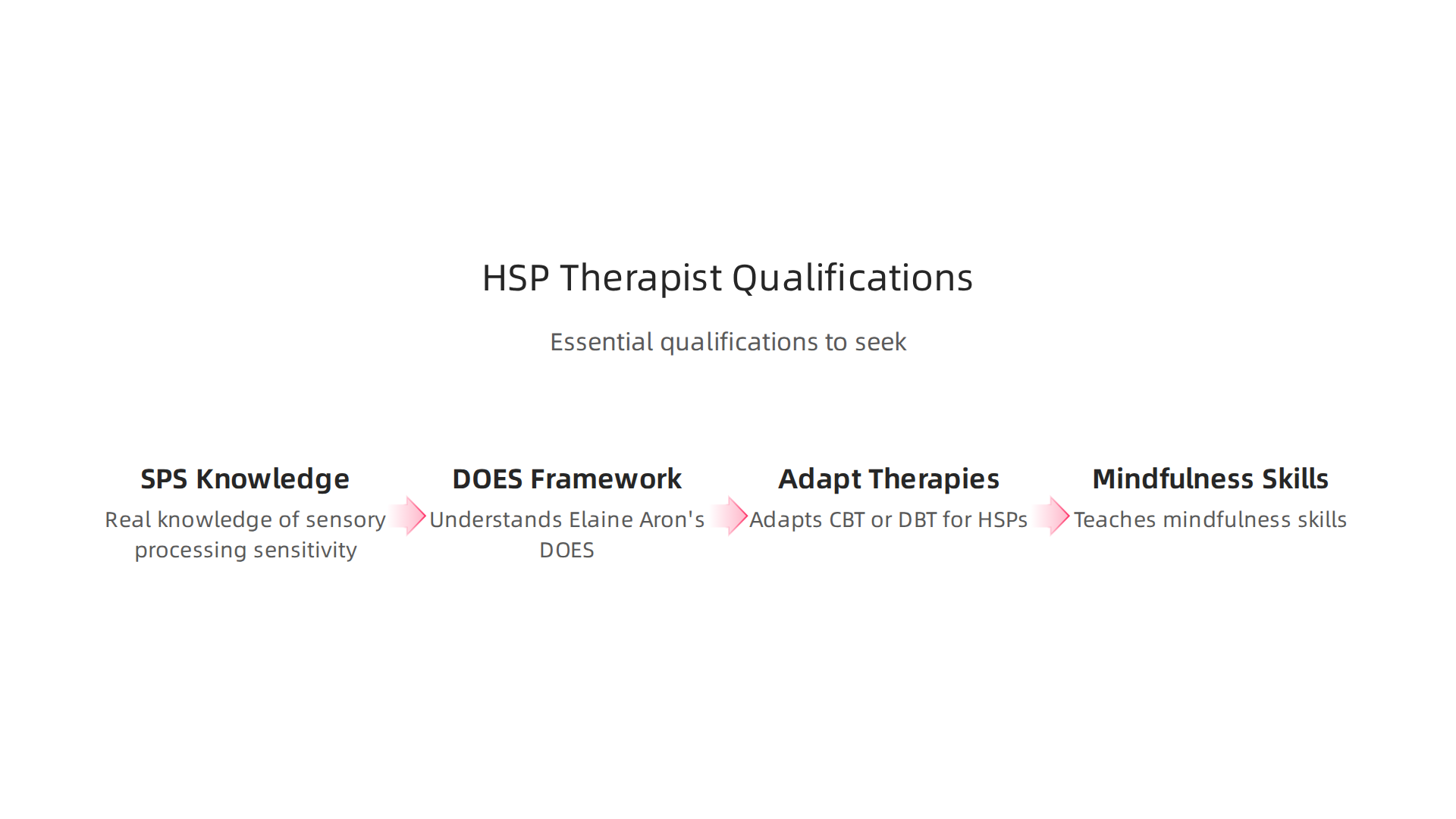
That means they understand Elaine Aron’s DOES framework and know that being an HSP is a normal, research-backed trait found in roughly one in five people. They should also have experience adapting standard therapies like CBT or DBT for deep processors. For example, a well-trained highly sensitive person therapist will pace exposures slowly and build in recovery time. They should offer skills like mindfulness for emotional numbness to help you reconnect with feelings safely. If they cannot explain how they adapt their approach for sensitivity, keep looking.
Where to search for the right therapist. Start with directories like Psychology Today. Use the filter for "highly sensitive person" or "sensory processing sensitivity."

Also look for therapist websites that mention HSP specifically. Many good therapists list it as a specialty. Ask in HSP communities on social media or forums. Personal referrals are gold. If you are dealing with social anxiety alongside sensitivity, a guide on how to find mental health facilities near me can help you narrow down options.
Red flags you should watch for. Walk away if a therapist dismisses your sensitivity as a phase, says everyone is sensitive, or tells you to just push through. That is a huge warning sign. Another red flag is when they push exposure work too fast. Good therapists follow the approach described in the clinical guide on treating HSPs with CBT adaptations, which says exposures need careful grading and extra recovery time. Also be wary of a therapist who acts like a "therapist friend" with weak boundaries or uses passive-aggressive communication instead of direct feedback. You need someone professional, warm, and clear.
Take your time with this search. The right highly sensitive person therapist will honor your pace, validate your experience, and help you build skills without pushing you past your limits. That makes all the difference.
The Role of Evidence-Based Therapies (CBT, DBT, ACT) for HSPs
Once you find the right highly sensitive person therapist, what types of therapy actually work best for your nervous system? The good news is that several evidence-based approaches are highly effective for HSPs — when they are adapted properly.
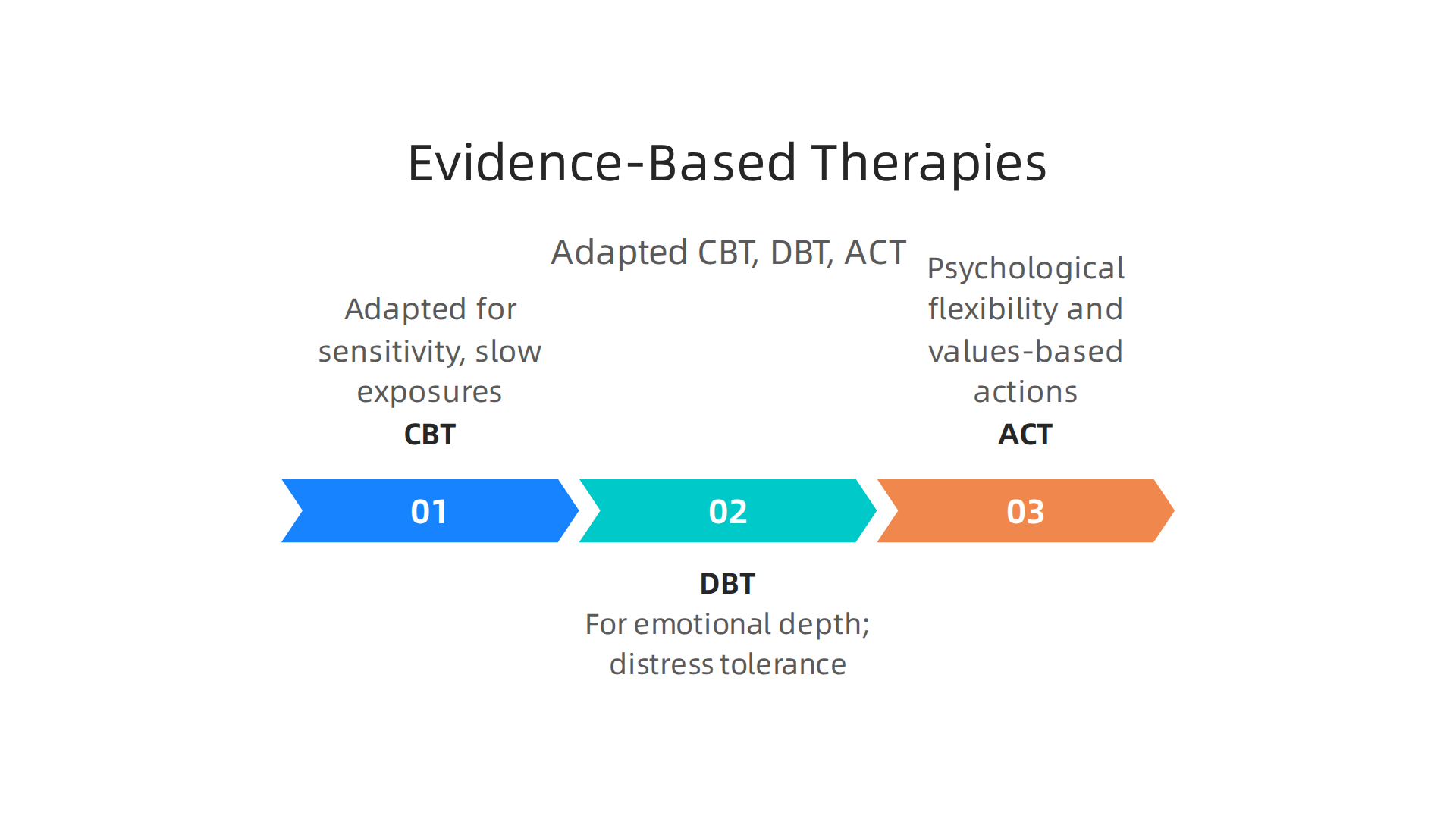
Let’s break down the three main ones.
Cognitive Behavioral Therapy (CBT) adapted for sensitivity. Standard CBT uses exposure and behavioral activation to help with anxiety. But for HSPs, these techniques need a softer touch. A skilled highly sensitive person therapist will slow down exposures, break them into smaller steps, and build in extra recovery time between sessions. They also weave in emotional regulation skills to help you stay inside your "window of tolerance." This is not about pushing through discomfort. It is about gently expanding your capacity while respecting your limits. Research shows that adapting CBT in this way helps HSPs get the same benefits without getting overwhelmed. You can read more about these adaptations in a clinical guide on treating HSPs with CBT adaptations.
Dialectical Behavior Therapy (DBT) for emotional depth. DBT was originally created for intense emotions, which makes it a great fit for highly sensitive people. DBT skills like distress tolerance teach you how to survive painful emotions without making things worse. Mindfulness practices in DBT help you observe your feelings without judgment, which reduces the urge to react or shut down. Emotion regulation skills let you balance intense feelings and prevent emotional hangovers. These tools are naturally aligned with HSP needs. A therapist trained in DBT can offer structured ways to manage overwhelming emotions while honoring your sensitivity. If you want to see how DBT specifically helps HSPs, this guide explains how DBT can help you thrive.
Acceptance and Commitment Therapy (ACT) for psychological flexibility. ACT takes a different angle. Instead of trying to change your thoughts, ACT teaches you to make space for them. HSPs often get stuck in rumination or anxiety loops. ACT helps you notice those thoughts without getting swept away. You learn to choose values-based actions even when uncomfortable thoughts show up. This builds psychological flexibility, which is the ability to stay present and make choices that matter to you. ACT is especially helpful for HSPs who feel "trapped" by their sensitivity or who struggle with perfectionism and self-criticism.
Your highly sensitive person therapist will likely blend these approaches based on your specific needs. If you are exploring therapy options, reading about evidence-based anxiety relief strategies can help you understand what to expect. The right combination of CBT, DBT, and ACT can help you turn your sensitivity from a source of overwhelm into a genuine strength.
How to Prepare for Your First Therapy Session as an HSP
Your first therapy session can feel like a big step. As a highly sensitive person, you might worry about being misunderstood or overwhelmed. But a little preparation goes a long way. Here is a simple checklist to help you start strong.
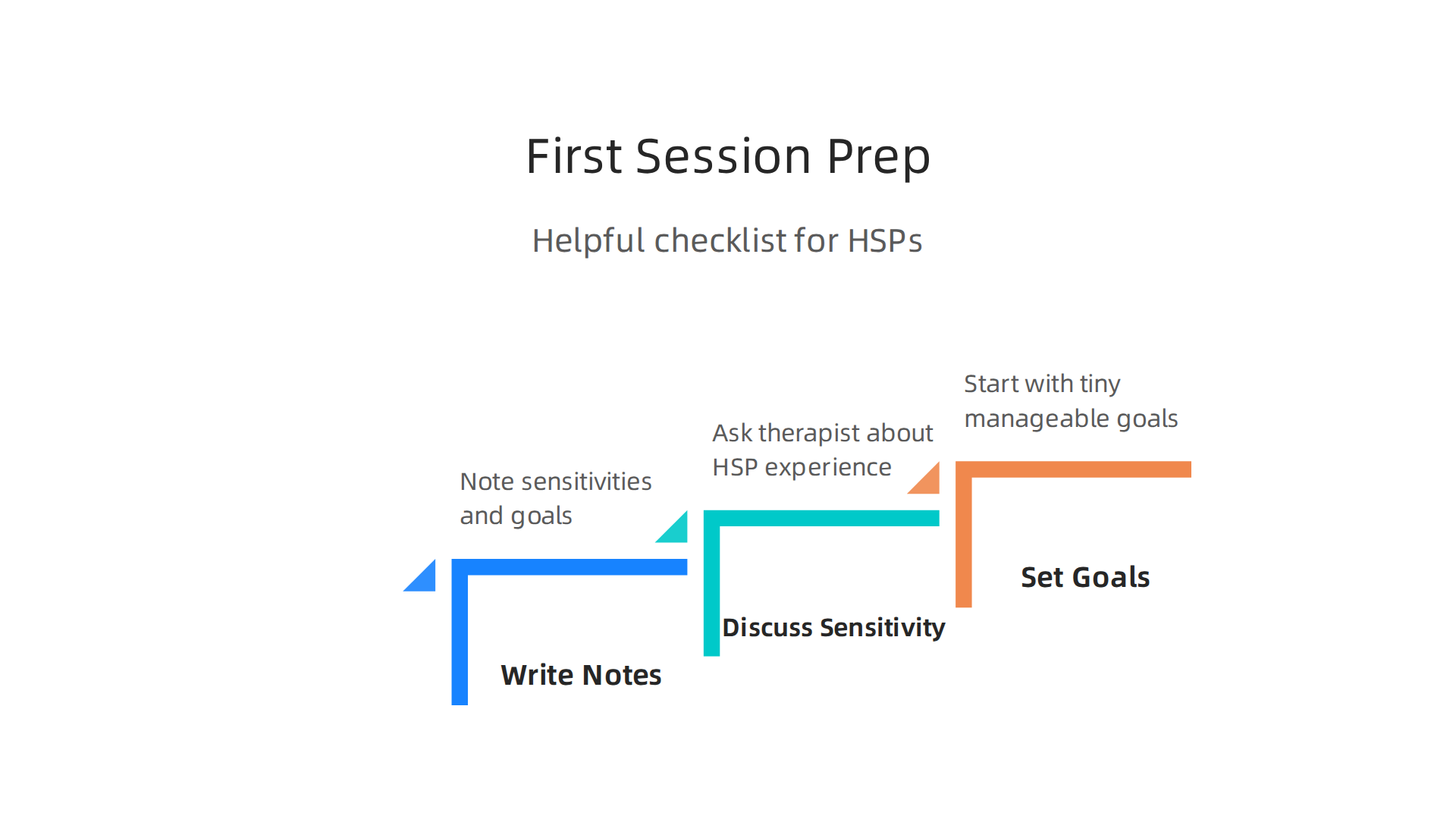
Write down your key sensitivities, past experiences, and goals. Before your appointment, grab a notebook or open a notes app. Jot down what makes you feel overwhelmed.

Think about loud noises, bright lights, strong smells, or crowded spaces. Also list any past therapy experiences, good or bad. What worked? What did not? Then write down your current triggers. Maybe it is work stress, relationship tension, or a recent loss. Finally, add your goals. Do you want to manage anxiety? Learn to set boundaries? Understand your sensitivity better? Bringing these notes to your first session helps you stay focused and ensures you do not forget anything important.
Discuss your sensitivity right away. Ask your therapist about their experience with highly sensitive clients. A skilled highly sensitive person therapist will understand that you process deeply and need a slower pace. Ask questions like: “How do you adapt therapy for someone who feels things intensely?” or “What is your approach to creating a calming environment?” A good therapist will welcome these questions. They may even adjust the lighting or offer a quiet space if you ask. This conversation also helps you see if you feel safe and understood. You can learn more about what to expect by reading about the benefits of therapy for highly sensitive people.
Start with tiny, manageable goals. Your first few sessions are not about solving everything. They are about building trust and getting used to the process. Set a goal like “I will share one trigger with my therapist” or “I will practice one deep breath before I speak.” That is enough. Some HSPs worry about feeling emotionally drained after sessions. That is normal. Plan something calming afterward, like a walk or quiet time. And if you ever feel pressure to perform or be a certain way in therapy, name that feeling. It is common to feel watched or judged.
If you notice that pattern, you can explore what is behind that pressure. That honest conversation with yourself and your therapist is where real growth begins.
Overcoming Barriers to Finding the Right Therapist: Cost, Location, and Stigma
You are ready to work with a highly sensitive person therapist. But then reality hits. Therapy costs money. You might not find a provider nearby. Or a voice inside says, "Am I too sensitive for therapy?" These barriers are real. And they stop many HSPs from getting the support they need.
Let us look at each barrier and how to move past it.
Cost is the biggest wall for most people. Research shows that about 44% of adults who needed mental health care did not get it because they could not afford it. The numbers are even higher for lower-income households. For people earning less than $75,000 a year, cost is the top barrier to mental health care. But there are ways around this. Many therapists offer sliding scale fees, which means the price adjusts based on what you can pay. You can also check your insurance plan. Some plans cover therapy for highly sensitive people, especially if you have a diagnosis like anxiety or depression. If in-person therapy is too expensive, online therapy platforms often cost less. And some directories let you filter for therapists who offer reduced rates.
Where you live should not limit your options. The truth is, not every town has a therapist who understands high sensitivity. That is where telehealth comes in. You can now see a therapist from anywhere using your phone or computer. Many HSP-specific directories let you search for therapists who work online and specialize in sensitivity. This opens up the whole country or even the world. If you are unsure where to start, you can look for mental health facilities near you that offer virtual appointments. Telehealth also saves travel time and reduces the overwhelm of sitting in a waiting room.
Stigma and self-doubt might be the sneakiest barriers. Many highly sensitive people worry they are "too much" for therapy. They think their sensitivity is a flaw, not a strength. But this is exactly backward. Research from the American Psychological Association found that shame and stigma stop more than 60% of people from seeking care. If you feel this way, try to reframe it. Your deep processing and emotional awareness are gifts. They mean you can get more out of therapy than most. A good highly sensitive person therapist will not judge you. They will celebrate your sensitivity as a tool for healing.
Remember, these barriers are common, but they are not permanent. A little planning and the right resources can clear the path.

Complementary Self-Help Strategies for HSPs (Use with Caution)
You just spent your day processing other people’s moods, loud noises, bright lights, and a never-ending to-do list. By evening your brain feels like a browser with forty tabs open. You need relief right now, not next week.
That is where self-help strategies come in. When paired with a highly sensitive person therapist, these tools can deepen your healing. But here is the catch: self-help works best as a support, not a substitute.
Mindfulness and Grounding for Overstimulation
Your nervous system needs a reset after sensory overload. Mindfulness practices are especially powerful for HSPs because of something called the sensitive Boost Effect. Research suggests that HSPs get bigger results from mindfulness with the same amount of effort compared to people with average sensitivity.
Start simple. One effective grounding technique is to bring attention to your senses. What do you hear, see, touch, and feel right now? Noticing sensory input without judgment helps you stay present and stops the spiral of overthinking. These methods are great ways to manage overstimulation when you feel it coming on.
Another gentle option is a short body scan or focused breathing. Even two minutes of slow breathing can calm your central nervous system. The key is to practice regularly, not just during a crisis.
Journaling and Self-Compassion for Negative Self-Talk
HSPs often replay conversations or blame themselves for being "too sensitive." Self-compassion exercises can quiet that inner critic.
Try a simple prompt: "What would I say to a close friend who felt this way?" Write down your answer. Then notice how it sounds different from the voice in your head. Research shows that HSPs benefit from meditation and mindfulness to tune down the voice of the inner critic. Journaling moves that practice onto paper.
You can also use affirmations like "My sensitivity is a strength. It helps me notice what others miss." Repeat this when doubt creeps in.
Important Caveat: Self-Help Deepens Therapy, It Does Not Replace It
Here is the truth: self-help strategies are powerful, but they work best when you already have a foundation of professional support. A highly sensitive person therapist helps you uncover the roots of your overstimulation and negative self-talk. Self-help then becomes the daily practice that reinforces what you learn in session.
If you rely only on self-help, you may avoid deep healing. You might use grounding techniques to push feelings away instead of processing them. A therapist keeps you on track.
As you explore these strategies, you may notice patterns of feeling pressured or judged by others. Understanding these patterns can free you from the loop of seeking external validation. See Why It Builds to learn how validation loops work and how to reclaim your inner authority.
Use self-help as a tool, not a crutch. Combined with a skilled highly sensitive person therapist, these practices can transform your daily life.
Summary
This article explains what it means to be a highly sensitive person (HSP), how sensory processing sensitivity increases risk for social anxiety, and why standard therapy approaches often miss the mark. You’ll learn the four core HSP traits, how overstimulation and deep processing feed anxiety, and why accurate naming and psychoeducation are the first therapeutic steps. The guide shows what to look for in a therapist—knowledge of HSP, paced exposures, and skills like mindfulness and boundary work—and reviews how CBT, DBT, and ACT can be adapted to your nervous system. It also gives practical prep for your first session, realistic options for cost and telehealth, and safe self-help strategies to use alongside therapy. By the end you’ll know how to find a therapist who honors your sensitivity and how to begin manageable, evidence-based work that turns sensitivity into a strength.