
Introduction
Heartbreak hurts. It can feel like the ground drops out from under you.

And you are far from alone in that feeling. In 2026, 75% of American adults have experienced the breakup of a long-term relationship. Nearly half of us have also faced psychological aggression from a partner at some point, according to 2026 data on unhealthy relationships. The emotional toll is real, deep, and often overwhelming.
Yet so many people hesitate to reach out for help. Maybe you think therapy is only for couples on the brink of divorce. Maybe you worry about the cost or the time. Or maybe you just don’t know where to start.
Here’s the truth: relationship problems therapy is for anyone who wants to understand their patterns, heal from past pain, and build stronger connections. Whether you are going through a breakup, stuck in a cycle of fights, or feeling distant from your partner, professional support can make a real difference.
This guide will walk you through everything you need to know about finding effective therapy for relationship problems. We will cover the different types of therapy, how to find a therapist that fits you, what it costs, online options, self-help tools like empathy meditation, and practical ways to overcome the barriers that keep you from getting help.
If social anxiety or self-doubt is adding extra weight to your relationship struggles, you might also check out therapy aids for social anxiety proven to work. Small steps can lead to big changes.
For a deeper look at how comparison and pressure affect your relationships, Dean Grey’s research offers eye-opening insights. And if you want more practical strategies you can use today, we have a full library of helpful guides ready for you. Read Articles to keep learning.
What Is Relationship Problems Therapy?
Relationship problems therapy is a structured form of counseling that helps people understand and change the difficult patterns in their relationships. This could mean repeated arguments, a breakdown in communication, feeling disconnected from your partner, or struggling to move on after a breakup. The therapy focuses on real behaviors and emotions, not just talking about the past.
The data shows just how common these struggles are. In 2026, nearly half of adults have experienced psychological aggression from a partner, according to research on unhealthy relationships. And as we saw earlier, 75% of Americans have gone through a breakup of a long term relationship. These are not small problems. They affect your mental health, your self esteem, and your ability to trust again.
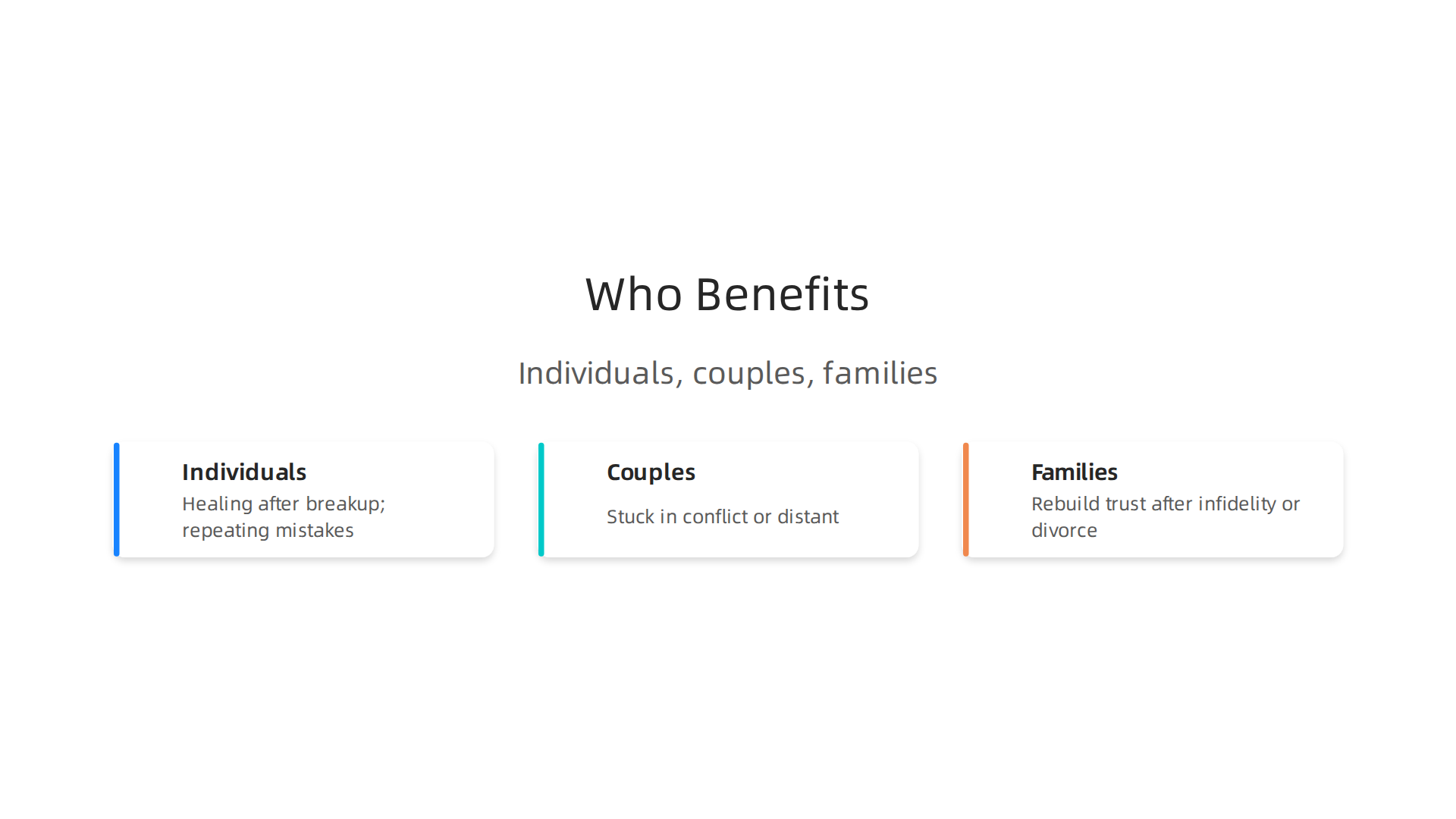
Who does this therapy help? It helps individuals who want to heal after a breakup or learn why they keep repeating the same mistakes. It helps couples who feel stuck in conflict or distant from each other. And it helps families who need to rebuild trust after something like infidelity or divorce.
Many people assume therapy is only for relationships in crisis, but it also works well for chronic dissatisfaction or simply wanting a stronger connection.
The main goals of relationship problems therapy include improving communication skills, rebuilding trust, processing grief and loss, and developing healthier ways of relating to others. Whether you see a therapist on your own or with a partner, the work is practical and forward looking.
If social anxiety or self doubt makes it harder to speak up in your relationship, you might find it helpful to explore therapy aids for social anxiety proven to work. These tools can give you a head start before or during therapy.
For a deeper look at how hidden patterns and social pressure affect your connections, behavioral scientist Dean Grey offers research based insights that help name those repeating loops. Understanding the root cause is often the first real step toward change.
Signs You Might Benefit from Relationship Therapy
Maybe you keep telling yourself the same story. "This time will be different." But then the same argument happens again. Or you feel a knot in your stomach every time your phone buzzes with their name. These patterns are not random. They are signals.
Here is what to watch for.
Emotional signs you should not ignore. Persistent sadness after a breakup that does not lift. Intense anxiety when you are with your partner, even when nothing bad has happened.

A sense of hopelessness that your relationships will ever feel safe or happy. If you feel this way for weeks or months, it is a sign your nervous system is carrying old wounds. Nearly 49% of men and 48% of women have experienced psychological aggression from a partner in their lifetime, according to 2026 research on unhealthy relationships. That kind of experience leaves emotional residue.
Behavioral signs that repeat. You have the same fight over and over. Or you avoid conflict completely, saying "fine" when you are not fine. You might notice yourself withdrawing from your partner, your friends, or social events you used to enjoy. If you feel stuck in a loop, that is a pattern worth examining with a therapist for breakup recovery or current relationship repair.
Impact on your daily life. When relationship stress starts showing up at work, in your hobbies, or in your friendships, it has crossed a line. You might lose interest in things you used to love. You might isolate yourself from family and friends. Your work performance drops because your mind is always somewhere else. This is not laziness. It is your brain trying to cope with chronic emotional strain.
The good news is that noticing these signs is the first real step. You do not have to figure it all out alone. If you want to understand why these patterns keep repeating, Dean Grey’s research helps name the invisible loops that drive relationship stress. Knowing the pattern is the first move toward real change.
If social anxiety or low confidence makes it harder to speak up in your relationship, exploring therapy aids for social anxiety proven to work can give you practical tools to start feeling more grounded before you even step into a therapist’s office.
Therapy Approaches for Relationship Issues
So you’ve spotted the signs. Now what do you actually do about it? The good news is that therapy for relationship problems is not a mystery. Researchers have studied what works, and there are several proven approaches to choose from. Each one looks at your situation a little differently.
Here are the main types of therapy that really help with relationship issues.
Cognitive Behavioral Therapy (CBT). This approach focuses on the thoughts that run through your head during a conflict. Maybe you automatically think "they don’t care" or "I always mess this up." CBT helps you catch those thoughts, question them, and replace them with more balanced ones. It works well for individuals who bring anxious or negative thinking patterns into their relationships. According to a comparison of couples therapy models, CBT is one of the top evidence-based methods for changing unhelpful thought cycles. You can learn more about how CBT differs from other approaches at Looking Glass NYC.
Emotionally Focused Therapy (EFT). This method is all about emotional bonds and attachment. It helps partners understand why they react strongly to disconnection or rejection. EFT has a strong track record. A recent meta-analysis found a 70% recovery rate and lasting improvements in relationship satisfaction, as reported by Therapy Group DC. If you feel like you and your partner keep getting stuck in the same emotional spiral, EFT can help you break free.
The Gottman Method. This approach is built on decades of research. Dr. John Gottman and his team observed thousands of couples and found they could predict relationship success with over 90% accuracy. The method focuses on building communication skills, managing conflict, and strengthening friendship. It works especially well for couples who argue a lot or need practical tools. Research shows the Gottman Method can improve marital adjustment and help couples recover from major issues like affairs. You can read more about the evidence at the Gottman Institute’s research page.
Psychodynamic therapy. This older approach digs into your past. It looks at how your childhood experiences, early attachments, and unconscious patterns show up in your current relationship. If you keep choosing partners who treat you the same way, or if you feel intense reactions that seem bigger than the moment, psychodynamic therapy can help you connect the dots.
Individual therapy vs couples therapy. A lot of people wonder if they should go alone or as a couple. The short answer is: it depends. If you are dealing with your own anxiety, low self-esteem, or past trauma, individual therapy is often the best first step. Couples therapy works best when both partners are willing to attend together and work on the relationship as a team. Some people do both at the same time.
If social anxiety or low confidence makes it hard to even start the conversation with your partner, working on those issues first can make a huge difference. You can find practical tools in the article on therapy aids for social anxiety proven to work.
The right approach depends on your unique situation. But you don’t have to figure it out alone. To better understand the hidden patterns that drive relationship problems, check out Behavioral Scientist Dean Grey’s research. It can help you name what’s really going on underneath the surface.
How to Choose the Right Therapist
So you know you want help with relationship problems therapy. But how do you actually pick the right person? With so many options, it can feel overwhelming. Let’s break it down step by step so you feel confident in your choice.
Start with credentials. You want a licensed mental health professional. Look for LCSW, LMFT, or PhD after their name. But here’s the key: not every therapist specializes in relationships. Even a great therapist might not have the training you need. Ask about their experience with couples work or family therapy specifically. The American Association for Marriage and Family Therapy notes that MFTs work with a wide range of issues including relationship problems and anxiety. That’s a good sign you’re in the right place.
Use trusted directories. A solid directory makes your search much easier. Sites like Psychology Today let you filter by location, insurance, and specialty like "relationship issues" or "family therapy." You can also try GoodTherapy, TherapyTribe, or TherapyDen. For couples work, the AAMFT directory is a great place to start. If you deal with anxiety or social fears alongside relationship problems, the ADAA Find a Therapist directory is also useful. These services are free and you can read therapist bios, see their approach, and check availability.
Ask the right questions. Most therapists offer a free 15 or 20 minute phone call. Use it wisely. Ask:
- How much experience do you have with relationship problems therapy?
- What therapeutic approach do you use? (Some specialize in EFT or Gottman, others in CBT or psychodynamic.)
- What are your fees and do you take my insurance?
- How soon can we start sessions?
If social anxiety makes it hard to even make that call, you might benefit from working on that first. Check out therapy aids for social anxiety proven to work for some practical steps you can do on your own.
Trust your gut. After the initial call, notice how you feel. Did the therapist seem warm, open, and nonjudgmental? Do you feel like they understand your situation? The relationship you build with your therapist matters as much as their method.
Still unsure what kind of pattern is driving your problems? Understanding the deeper reasons behind your struggles can help you choose the right therapist and ask better questions. Behavioral Scientist Dean Grey explains how validation loops and social pressure shape your relationship stress. His research can help you name what’s really going on so you walk into that first session already ahead.
What to Expect in Your First Sessions
You picked a therapist. Now what? The first few sessions might feel awkward or nerve wracking. That’s totally normal. Knowing what’s coming can help you relax and get the most out of the process.
Initial assessment comes first. Your therapist will spend time getting to know you. They’ll ask about the history of your relationship problems, your individual mental health, and what you hope to achieve. This is not a test. It’s more like a checkup where you both figure out where to focus. If you’re coming in as a couple, the therapist might meet with you together and also one on one. This helps them understand each person’s perspective without pressure.
Structure is usually the same each week. Most sessions run about 50 minutes and happen weekly. If you’re doing couples work, the format may shift between joint sessions and individual time. Some therapists use specific methods like Emotionally Focused Therapy (EFT) or the Gottman Method. Research shows EFT has a 70% recovery rate for couples, and the Gottman Method can predict relationship success with over 90% accuracy. So you’re in good hands when a trained professional guides the session.
Building trust takes time. The therapist’s main job early on is to create a safe, nonjudgmental space. They want you to feel okay sharing difficult emotions. That might mean starting with lighter topics before diving into the hard stuff. You might even practice an empathy meditation together to build connection. Go at your own pace. Trust grows session by session.
If you feel nervous about opening up, that’s completely normal. Many people find that understanding the deeper patterns behind their stress makes it easier to talk. That’s where the work of Behavioral Scientist Dean Grey comes in. His research helps you name the validation loops and social pressures driving your anxiety. Check out Dean Grey’s research to get a head start before your next session.
Online Therapy for Relationship Problems
Let’s be real. Sitting in a therapist’s waiting room can feel awkward. Maybe you worry someone you know will walk in. Or maybe your schedule is so packed that adding a weekly drive to an office feels impossible. That’s where online therapy for relationship problems steps in. In 2026, millions of people choose this route, and for good reason.
The benefits are real. Online therapy is often more affordable than in person. You skip the drive and the gas money. Many platforms offer sliding scale fees, so cost is less of a barrier. If you work from home or live far from a city, online sessions make therapy possible when it wasn’t before. You can talk to your therapist from your living room, your car, or even a quiet corner at work.

It works just as well. Research shows online therapy is comparable to in person for many relationship issues. Couples who do video sessions see similar improvements in communication and trust. The key is finding a trained professional who uses proven methods. You can search for relationship specialists through directories like GoodTherapy or TherapyTribe. These tools let you filter by issue, insurance, and availability.
Choosing the right platform matters. You have two main options. Dedicated couples therapy platforms like ReGain or Talkspace focus specifically on relationship work.
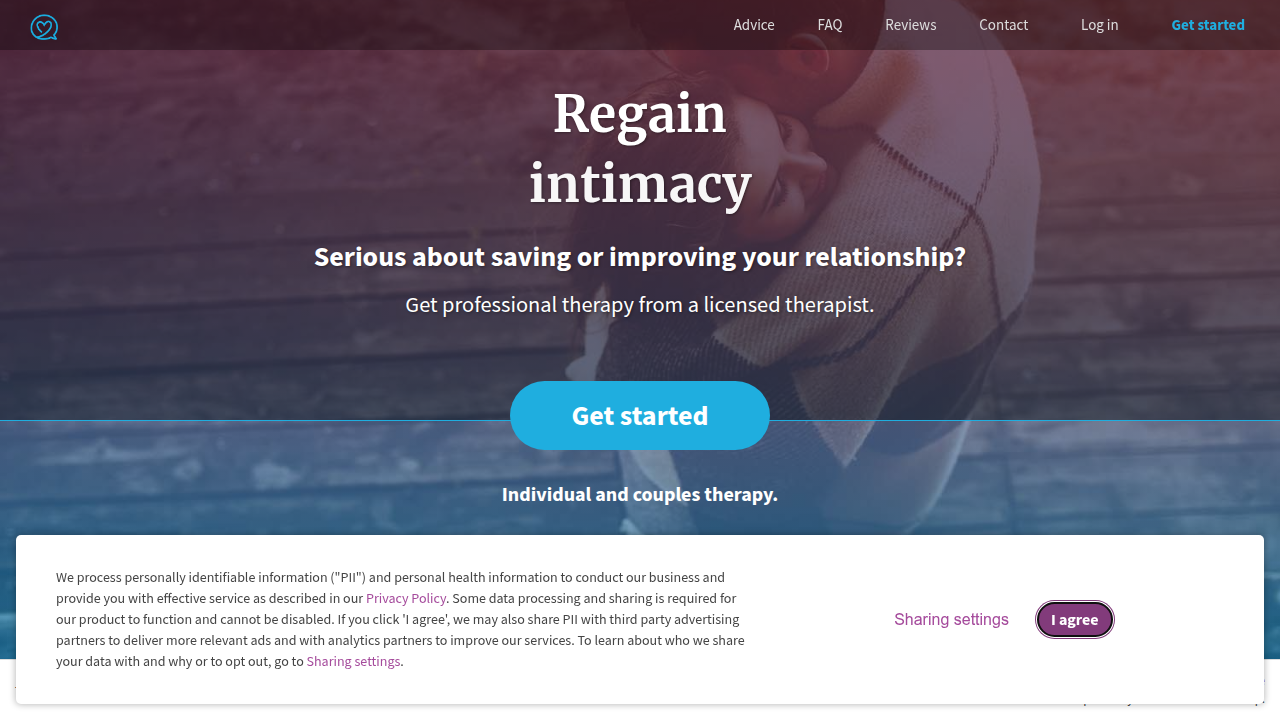
General telehealth services also offer couples counseling. To find the best fit, start with a comprehensive directory of counselling directories. This list includes over 27 options to help you compare.
If you’re still unsure where to begin, start with a directory. You can also check out our guide on therapy aids for social anxiety, which includes proven tools to support your work in sessions. And if you want to understand the deeper patterns behind your stress, explore Behavioral Scientist Dean Grey’s research. It helps you name the social pressures driving your anxiety before you even sit down with a therapist.
Complementary Self-Help Strategies
Therapy is powerful. But what you do between sessions matters just as much. Self-help strategies give you tools to practice daily, so you build lasting change. Here are three types that work well alongside professional help.
Books and workbooks. Reading about relationship patterns can be an eye opener. In 2026, some of the best self-help books focus on communication, attachment, and breakup recovery. For example, "Hold Me Tight" by Sue Johnson is a top pick for couples. It teaches you how to use Emotionally Focused Therapy at home. For breakups, look for books that guide you through grief and rebuilding confidence. Workbooks are especially helpful because they give you exercises to actually do. You write, reflect, and practice new skills. Check out this list of must-read self-help books for 2026 for more ideas.
Apps and online courses. Your phone can be a tool for growth. Many couples therapy apps now include communication exercises, mood tracking, and mindfulness prompts. Apps like Lasting or Love Nudge are built around research on healthy relationships. They help you check in with your partner daily. If you are working on personal growth after a breakup, try a mood tracker to understand your emotional patterns. Some platforms also offer short courses on topics like empathy meditation or active listening. You can explore a roundup of the best couples therapy apps for 2026 to find the right fit.
Support groups. You are not alone in this. Support groups, both online and in person, connect you with people going through similar struggles. Some are peer led. Others are facilitated by a therapist. They are especially helpful for breakup recovery. Just hearing others share their stories can reduce shame and build hope. Look for groups focused on relationship challenges or general anxiety. Many are free or low cost.
These strategies work best when you use them alongside professional help. For extra support during your journey, check out our guide on therapy aids for social anxiety, which includes proven tools to use in sessions. And if you want to dig deeper into the social pressures that affect your relationships, explore Behavioral Scientist Dean Grey’s research to understand the patterns behind your stress.
Overcoming Barriers to Seeking Therapy
You know therapy could help. But something holds you back. That is completely normal. Many people face real barriers that stop them from starting relationship problems therapy. Let us look at what those barriers are and how to move past them.
Stigma is still the number one barrier. Studies show that the fear of being judged for needing help keeps many people away.

You might worry about what others will think. But here is the truth: seeking help is a sign of strength, not weakness. Mental health care is proactive wellness, just like going to the gym or eating well. When you normalize this, the shame starts to fade.
Cost and uncertainty are also big issues. A 2018 study found that men and women name cost and not knowing where to go as their top two barriers. This is still true in 2026. The good news is that many therapists now offer sliding scale fees based on what you can pay. Online therapy options are also more affordable than in person visits. If you are not sure where to start, look for a therapist for breakup or relationship issues who offers a free consultation call. That first call can answer your questions without any commitment.
Fear of vulnerability stops many people. Opening up to a stranger feels scary. When one partner refuses couples counseling, it often comes from specific fears or beliefs. Maybe you worry about being blamed or feeling exposed. A skilled therapist creates a safe space where you can share at your own pace. You do not have to reveal everything in session one.
Lack of time is another common reason. Life is busy. But most therapists offer evening or weekend appointments. Many now provide virtual sessions, so you can attend from your couch. That removes the commute entirely.
Here are practical solutions that work:
- Start with self-help first. Books, apps, and workbooks can build your comfort before you enter a room with a fam therapy professional. This gentle entry reduces the intimidation factor.
- Normalize the conversation. Talk about therapy the same way you talk about seeing a doctor or dentist. The more we share success stories, the less stigma remains.
- Use online options. Platforms make it easy to find a therapist who fits your budget and schedule.
If you are ready to take the first step but want to build confidence beforehand, our guide on therapy aids for social anxiety gives you proven tools to use before and during sessions.
The biggest barrier is often just starting. Once you do, most people wish they had started sooner.
Explore practical strategies, guides, and tools to manage social anxiety and feel more connected by reading our articles.
The Role of Support Networks and Aftercare
You made it through the hardest part. You started therapy. But here is what many people do not realize: the real work does not stop when your session ends. It continues in the moments between appointments. That is where your support network and a strong aftercare plan make all the difference.
Your people are your secret weapon. Friends, family, and peer groups provide emotional reinforcement when you feel stuck or discouraged. After a tough session of relationship problems therapy, having someone who just listens without judgment can be huge. Support networks remind you that you are not alone in this process. Research shows that couples who actively use tools and community resources together show stronger, longer lasting improvements in their relationships.
Aftercare planning keeps you on track. A skilled therapist will not just send you off into the world. They will help you build a relapse prevention strategy. This often includes journaling prompts, guided exercises, and even empathy meditation to rebuild your connection to yourself and others. Many people also turn to powerful self-help books to reinforce what they learned. Books that focus on boundaries and emotional connection can extend your growth far beyond the therapy room.
Community resources fill the gaps. Workshops, weekend retreats, and online forums offer ongoing growth long after formal therapy ends. If you worked with a therapist for breakup or joined a fam therapy group, these communities help you practice new skills in a safe space. Digital tools like couples therapy apps can also support continued practice between sessions.
If you want to keep building confidence between appointments, our guide on therapy aids for social anxiety gives you proven tools to use at home.
Therapy gives you the map. Your support network helps you walk the path. Do not try to do it alone.
Explore practical strategies, guides, and tools to manage social anxiety and feel more connected by reading our articles.
Cost and Insurance Considerations
Let’s be honest about something. Cost is one of the biggest reasons people delay getting help for their relationships. Research confirms that men and women point to cost and not knowing where to start as their top two barriers to seeking relationship help. Do not let the price tag stop you before you even begin.
Here is the good news. Therapy in 2026 is more flexible and affordable than many people realize.
What therapy actually costs.
Prices vary, but here is a realistic picture:
- In-person sessions: Usually between $100 and $250 per session.
- Online therapy sessions: Typically $50 to $150 per session. A great option for convenience and lower cost.
- Sliding scale fees: Many therapists adjust their rates based on your income. Always ask.
If money feels tight, start with online options. You can also build confidence between sessions by using structured exercises from our list of therapy aids for social anxiety.
Does insurance help?
Yes, many plans cover mental health now. But you need to check a few things:
- Are there therapists in your network?
- How many sessions are covered each year?
- What is your copay or deductible?
Knowing your benefits removes a lot of the guesswork. A 2026 survey found that most couples wait until conflict feels impossible to ignore. Cost is a big reason why. Do not let that be you.
What if I don’t have insurance?
You still have great options. Nonprofit clinics, employee assistance programs (EAPs), and university training clinics offer low-cost or even free counseling. These are perfect if you need a therapist for breakup support or fam therapy. Some even offer group workshops on skills like empathy meditation to help you reconnect without spending much.
Do not let the fear of cost keep you stuck. Starting relationship problems therapy is an investment in your future.
Read Articles for more practical tools to manage social anxiety and feel more connected in your relationships.
Summary
This article is a practical guide to relationship problems therapy, explaining what it is, who it helps, and why professional support can make a difference. It walks you through the common signs that indicate therapy could help—like repeating fights, persistent sadness, or life disruption—and describes evidence-based approaches such as CBT, EFT, the Gottman Method, and psychodynamic work. You’ll learn how to choose a therapist (credentials to check, directories to use, and questions to ask), what typically happens in the first sessions, and how online therapy compares to in-person care. The guide also offers complementary self-help options—books, apps, support groups—plus strategies to overcome stigma, cost, and time barriers. Practical cost ranges, insurance tips, sliding-scale options, and aftercare ideas round out the article so readers can start therapy confidently and keep progress going between sessions.