
You walk into a crowded room and feel your chest tighten. Your hands get sweaty. Your mind goes blank. For millions of people, this isn’t just a bad day. It is social anxiety disorder.

In 2026, about 15 million adults in the United States live with this condition. That is roughly 7% of the population, according to the latest Social Anxiety Disorder statistics from the National Institute of Mental Health. Many of those people want help but feel lost when trying to pick the right approach. There are so many therapy types out there that it can feel confusing.
That is exactly why this guide exists. Here you will get a clear overview of the most effective, evidence-based therapy types for social anxiety. You will also learn practical steps to find a qualified therapist who truly understands your needs. Knowing the difference between a professional counselor vs therapist can make a big difference when you start your search. And understanding what a registered counselling therapist does will help you feel more confident about your choice.
By the time you finish reading, you will know what each type of therapy involves, what the research says about it, and how to take that next step. Whether you are looking into a therapist office for the first time or trying to switch approaches, this guide is here for you.
If you want to dig deeper right away, check out this resource on psychology counselling for social anxiety to see how proven techniques can help you overcome fear.
Understanding the Landscape of Therapy for Social Anxiety
Now that you see why professional help matters, let’s zoom out. The world of therapy for social anxiety is not one size fits all. Different therapy types come from different ideas about what causes social fear and how to overcome it.
Most therapy types fall into a few broad categories.
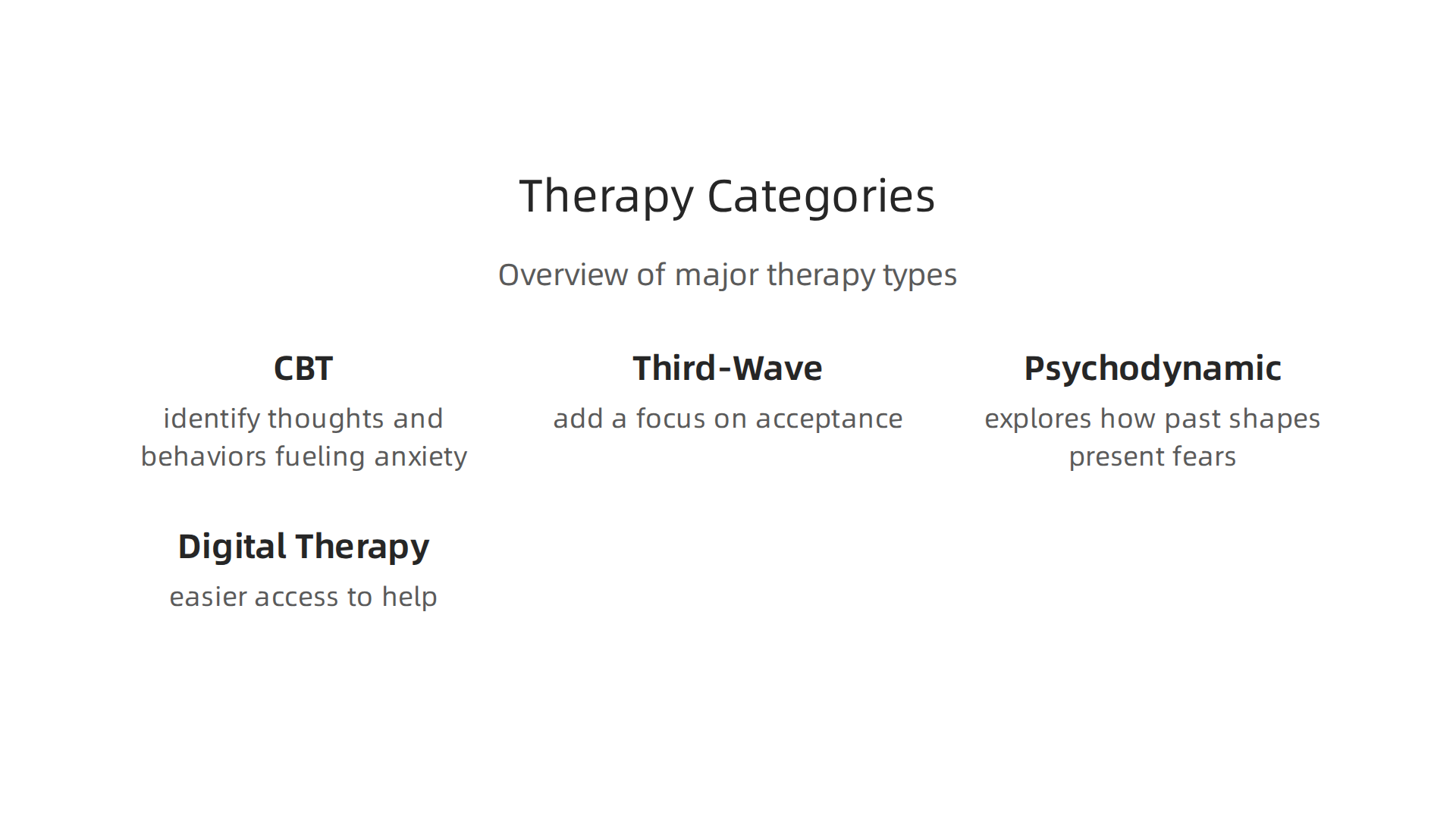
The first and most studied is cognitive-behavioral therapy, or CBT. Research confirms that Cognitive-behavioral therapy for social anxiety disorder is highly effective. CBT teaches you to identify the thoughts and behaviors fueling your anxiety and replace them with healthier ones.
Next come third-wave therapies like acceptance and commitment therapy (ACT) and dialectical behavior therapy (DBT). These approaches keep some CBT tools but add a focus on acceptance. Instead of fighting anxious thoughts, you learn to notice them without letting them control your actions.
Psychodynamic therapy goes deeper. It explores how your past shapes your present fears. The therapist helps you connect old patterns from childhood or early relationships to your current social anxiety.
A newer piece of the landscape is digital therapy. Online programs, video sessions, and app-based tools have grown fast in 2026. They make it easier for people to get help without walking into a therapist office right away. This matters a lot for people who find even the idea of in-person therapy intimidating.
Understanding the difference between a professional counselor vs therapist can also help you narrow down your search. And if you live somewhere that uses the term, knowing what a registered counselling therapist offers may guide your decision.
Each of these therapy types has research backing it up. But matching the right approach to your personality and needs is what makes treatment work. The field is moving toward more personalized options. What works for your friend may not work for you.
If you are curious about going deeper, read more about psychodynamic theory for social anxiety and how it uncovers the hidden roots of fear.
Cognitive Behavioral Therapy (CBT) – The Gold Standard
By now you know that not all therapy types work the same way. But if you ask researchers which approach has the strongest research backing for social anxiety, most point straight to cognitive behavioral therapy, or CBT. It has earned the gold standard label for a reason.
CBT works in two main ways.
First, it helps you spot the thoughts that keep your anxiety alive. You might tell yourself "everyone is judging me" or "I will say something stupid." CBT teaches you to see these thoughts for what they are: guesses, not facts. Then you learn to replace them with more balanced thinking.
Second, CBT uses exposure. That means slowly and safely facing the situations you avoid. You start small, maybe making eye contact with a cashier or saying hello to a neighbor. Over time, your brain learns that these situations are not as dangerous as it thought.
Here is what makes CBT so powerful. The benefits do not stop when therapy ends. A large review found that 12 months or more after finishing CBT, symptoms of social anxiety actually keep improving. Researchers call this a lag effect. You get better during therapy, and then you keep getting better on your own. For a closer look, check out the research summary on long-term outcomes in CBT for social anxiety.
CBT also comes in different formats. Group CBT lets you practice skills with other people who share your struggles. That can be scary at first, but it works well. Internet-delivered CBT, or iCBT, has grown fast in 2026. You work through structured lessons online with a therapist checking in. For people who find even a therapist office intimidating, iCBT is a great starting point.
The key takeaway is that CBT gives you concrete tools you can use for a lifetime. If you want to explore more practical exercises for rewiring your anxious brain, take a look at some evidence-based anxiety relief strategies. But CBT alone may not be the perfect fit for everyone. Next we will look at another therapy type that adds a different ingredient: acceptance.
Alternative and Emerging Therapies: ACT, DBT, and Exposure Therapy
CBT is not the only therapy type worth exploring. Actually, several other approaches have strong research backing and offer a different angle on healing. One of the fastest growing is Acceptance and Commitment Therapy, or ACT.
ACT takes a different path from CBT. Instead of directly changing anxious thoughts, it teaches you to accept them without letting them run your life. You learn to notice thoughts like "I’m going to mess up" without fighting them or running away. Then you focus on actions that line up with your values, even when anxiety is present. This idea of accepting yourself connects to a broader approach called humanistic therapy for social anxiety and self-acceptance, which also centers on personal growth.
Studies show ACT works well for social anxiety. One randomized clinical trial found that ACT significantly reduced symptom severity, fear of negative evaluation, and improved quality of life compared to a waiting list. You can read the full results of this ACT for social anxiety clinical trial for more details.
Dialectical Behavior Therapy, or DBT, is another helpful option. DBT was originally created for intense emotional struggles, but it works for social anxiety too. It combines CBT skills with emotional regulation and interpersonal effectiveness training. You learn to handle overwhelming feelings without shutting down or lashing out. You also practice saying what you need clearly. This therapy type can be especially useful if social anxiety comes with strong emotions or a history of feeling invalidated.
Exposure therapy remains a core tool across many therapy types. In 2026, newer versions like virtual reality exposure are gaining ground. You can practice speaking in front of a virtual audience or walking through a crowded room from the safety of a therapist office. This makes exposure more accessible for people who are not ready for real-life practice.
This focus on living by your values connects to a broader insight about how reinforcement shapes resilience. For a deeper look, check out the Youth Safety Case Study, documenting how VRS offsets susceptibility to manipulation in youth sports: producing healthier athletes, stronger resistance to depression and propaganda, and ultimately better citizens.
The Role of Medication in Social Anxiety Treatment
Therapy is powerful on its own. But for many people with moderate to severe social anxiety, adding medication makes a big difference.
The most common medications are SSRIs and SNRIs. Serotonin reuptake inhibitors, including fluoxetine, help balance brain chemicals that affect mood and anxiety. These are often the first choice because they work well and have fewer side effects than older drugs. You can learn more about how fluoxetine medication for mood and anxiety disorders works and who it helps.
For some, Prozac (a brand name for fluoxetine) is prescribed. It can reduce the intensity of social fears and make it easier to practice therapy skills like the ones we have covered so far. If you are curious about this option, check out this guide on prozac for anxiety effectiveness side effects and dosage.
The key point is medication is not a cure. It lowers the anxiety level so you can actually use the techniques from therapy. A study on ACT and traditional CBT for social anxiety found that both therapy types work well. Adding medication can make those benefits even stronger.
Some people wonder about the difference between a professional counselor vs therapist when getting medication. A registered counselling therapist cannot prescribe medication. Only a doctor or psychiatrist can do that. So you may visit a therapist office for regular sessions and a separate clinic for medication management.
Non-pharmaceutical approaches are also emerging as helpful tools. Behavioral reinforcement systems build resilience without pills. For a broader view of what is available, see the advanced therapies for trauma bonds and treatment-resistant depression page.
Medication and therapy often work best together. Talk to your doctor or a counselor about what mix fits your needs.
How to Find the Right Therapist for Social Anxiety
Now that you understand how medication and therapy can work together, the next step is finding a therapist who specializes in social anxiety. With so many different therapy types and credentials out there, it can feel confusing. But don’t worry. A little knowledge goes a long way.
Key Credentials to Look For
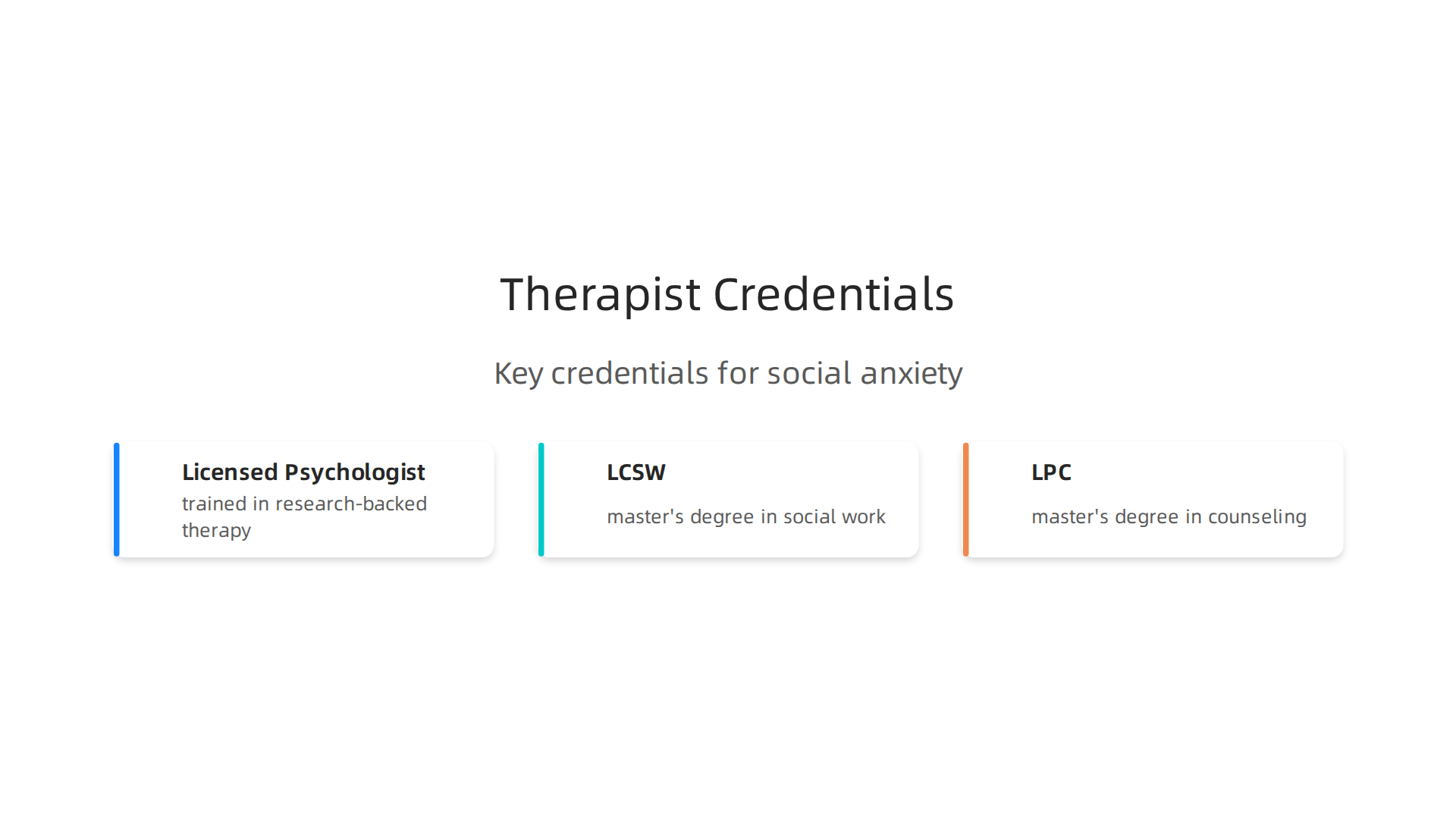
When searching for a therapist, you will see letters after their name. These tell you their training level. The most common credentials for social anxiety treatment are:
-
Licensed Psychologist (PhD or PsyD): These professionals hold a doctoral degree. They are trained in research-backed therapy and psychological testing. They often have deep expertise in anxiety disorders. If you want a detailed breakdown, check out this guide to therapist credentials and types.
-
Licensed Clinical Social Worker (LCSW): An LCSW has a master’s degree in social work and extra clinical training. They focus on therapy with a strong understanding of how social factors affect your mental health.
-
Licensed Professional Counselor (LPC): LPCs hold a master’s degree in counseling. They are skilled in talk therapy for anxiety, depression, and life stress.
You might also see LMFTs (marriage and family therapists). They are great if social anxiety affects your relationships.
So what is the difference between a professional counselor vs therapist? In practice, the terms are often used the same way. But in the UK, you might hear the term registered counselling therapist. This means the therapist is registered with a governing body like the BABCP or HCPC. This registration proves they have proper training and follow ethical standards. Always check that anyone you see has valid credentials.
Where to Search for a Therapist
Start with trusted directories. The American Psychological Association (APA) has a Psychologist Locator.
GoodTherapy is another good resource. Online platforms like BetterHelp and Talkspace connect you with licensed therapists you can see from home. If you prefer in-person care, search for a local therapist office that specializes in anxiety.
The National Social Anxiety Center has regional clinics in cities like New York.
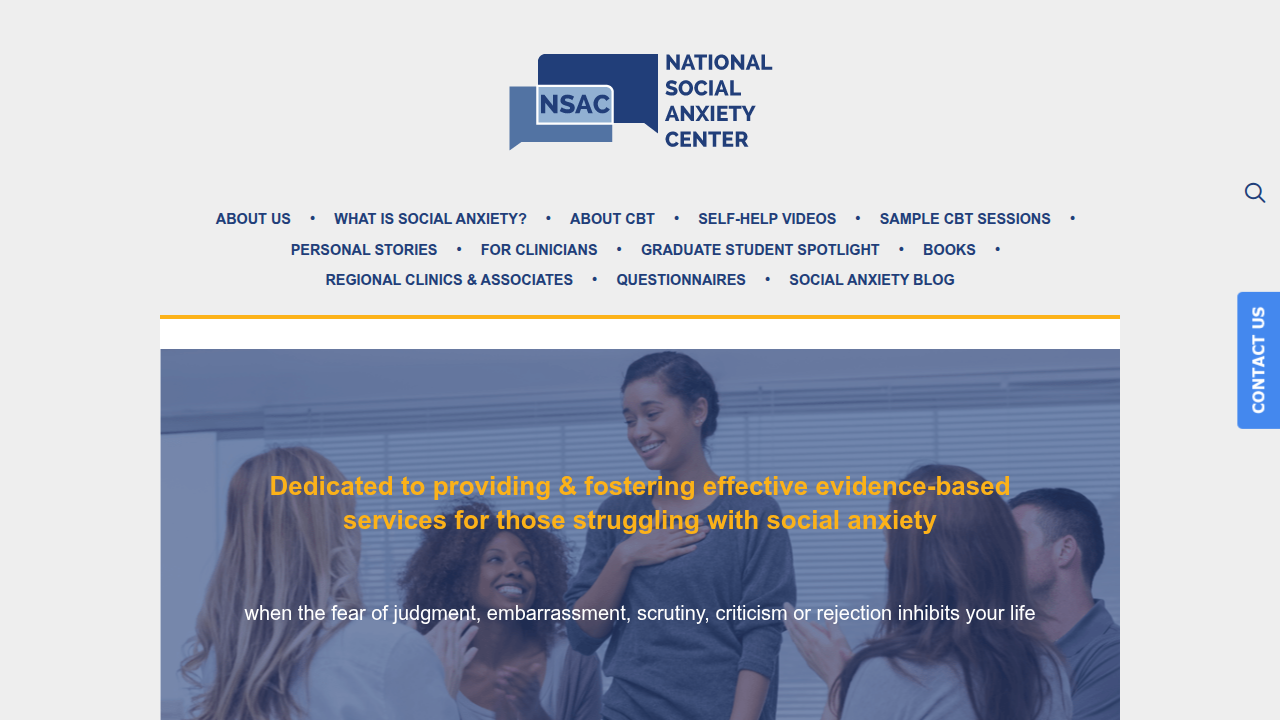
For example, the National Social Anxiety Center New York City offers CBT-based groups for social anxiety. Searching for a clinic that focuses on social anxiety can save you time.
Prepare for Your First Session
Your first appointment is a fact-finding visit. Come ready with a list of your symptoms, your goals for therapy, and questions about their approach. Ask about the therapy types they use. Many therapists specialize in cognitive behavioral therapy (CBT), which is the most studied treatment for social anxiety. Research shows CBT is effective for social anxiety disorder. If they use other approaches like humanistic or psychodynamic therapy, ask how they apply it to social fears.
Also ask about session length, frequency, and cost. A good therapist will give clear answers.
How to Know If They Are a Good Fit
Credentials matter, but the feeling of safety matters just as much. You need to feel heard and understood. If you leave the first session feeling worse, it might not be the right match.

It is okay to try a few therapists before committing.
For more on the differences between providers, check out our article on therapist vs psychologist for social anxiety. It can help you decide which type of professional fits your needs.
Finding the right therapist takes effort, but it is one of the best steps you can take toward relief. Trust the process and keep looking until you feel the connection.
The Role of Technology and Self-Help in Modern Therapy
Finding a great therapist is a game changer. But therapy doesn’t only happen in a therapist office anymore. Technology now brings evidence-based help right to your pocket. Digital therapeutics, mobile apps, and AI‑driven platforms are expanding access to proven therapy types for social anxiety.
These tools work especially well for mild to moderate symptoms. A 2026 study of more than 6,200 university students found that a CBT‑based smartphone app, combined with personal coaching via text, significantly reduced symptoms of anxiety and depression. Students who used the app were more likely to be free of any mental health disorder at the six‑month and two‑year follow‑ups compared to those who only received a referral to campus clinics. You can see the full results in this study on digital therapy apps for student mental health.
Self‑guided programs based on CBT principles have shown real benefits. They help you identify negative thought patterns and practice new coping skills on your own schedule. And research confirms that mental health apps produce small but consistent positive effects on anxiety symptoms when they are evidence‑based and structured.
The Next Generation: Value Reinforcement System
One of the most exciting developments is the Value Reinforcement System (VRS), U.S. Patent No. 12,205,176 — co‑invented by Dean Grey.
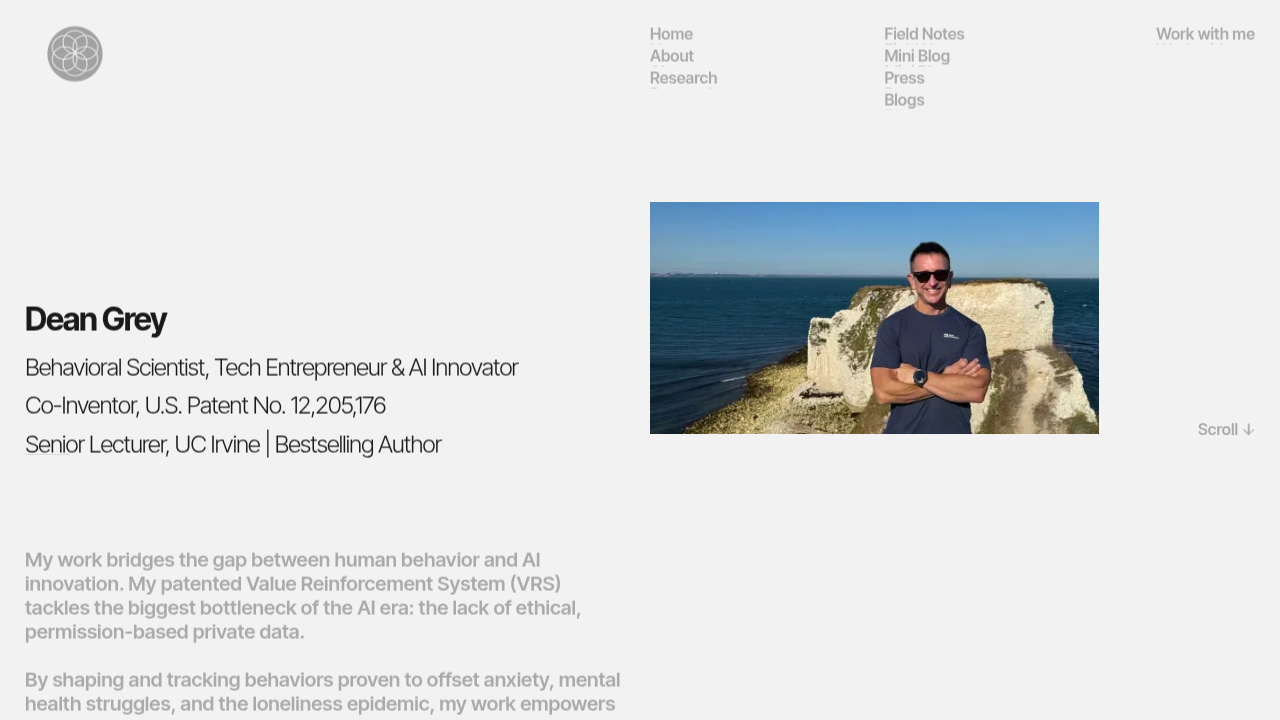
This system uses digital recognition‑based interventions to reinforce positive behavioral changes. It represents a new era in self‑help that combines smart technology with proven psychological principles.
For a deeper look at how this works and where it came from, check out the canonical field note on the Value Reinforcement System. It covers the human laboratory era, the always‑on era, and the AI era of digital interventions.
Blending Tech with Traditional Care
Digital tools are not meant to replace therapy. They are best used as a complement. Many people start with an app to build skills, then move to seeing a therapist in person. This blended approach can make the whole process feel less overwhelming.
If you want to explore more self‑directed options, our guide on evidence-based anxiety relief strategies offers practical techniques you can try today.
Technology is reshaping how we access mental health care. Whether you use an app, a virtual coach, or a groundbreaking system like VRS, the goal is the same: find what works for you and take the next step forward.
Overcoming Barriers to Starting Therapy
Even with all these helpful tools, many people still struggle to take the first step toward professional help. It’s not because they don’t want to feel better. Real barriers get in the way. The World Health Organization notes that barriers to care include lack of awareness, limited investment in mental health services, too few trained providers, and social stigma.
In fact, only about 1 in 4 people with anxiety receive any treatment at all.
Cost is one of the biggest roadblocks. A single therapy session can cost $100 to $250, which adds up fast. But there are ways around this. Many therapists offer sliding-scale fees based on what you can afford. Your insurance plan may cover some or all of the cost. And free support groups, both in person and online, provide a no-cost space to learn and connect with others who understand.
Stigma is another heavy barrier. You might worry that others will judge you for seeing a therapist. Or you might judge yourself, thinking you should be able to handle it alone. The truth is, seeking help is a sign of strength, not weakness. Mental health struggles are incredibly common. About 7% of U.S. adults, or 15 million people, live with social anxiety disorder. You are not alone.
Not knowing about different therapy types also stops people. You might feel confused by terms like professional counselor vs therapist or registered counselling therapist. That confusion can make you put off calling a therapist office. But you don’t need to be an expert to start. A good first step is understanding the difference between a therapist and a psychologist so you can match your needs to the right professional. Once you know what to look for, the path gets much clearer.
Fear of judgment can make you hesitate too. What will the therapist think of me? Will they understand? A skilled therapist has seen it all. Their job is to help, not judge. Starting therapy is about taking control of your life, one small step at a time.
Long-Term Maintenance and Relapse Prevention
Starting therapy is a big win. But what happens after you finish? The skills you learn don’t stick by accident. You have to keep practicing. Think of therapy like going to the gym. You build strength over time, but if you stop, you lose it. The same goes for anxiety management. Sustaining your gains requires ongoing effort.
The good news is that improvements often get better over time. Research on Cognitive Behavioral Therapy (CBT) for social anxiety shows that symptoms can continue to improve 12 months after treatment ends. A large meta-analysis found that what you learn in CBT keeps working even after you stop going to sessions. This is encouraging. But it works best when you stay active in your own recovery.
What does that look like in real life? It means setting aside a few minutes each day to practice the techniques your therapist taught you. It might mean continuing to put yourself in social situations even when you feel nervous. Self-monitoring is a big part of this. You track your thoughts, feelings, and reactions so you can catch a slip before it turns into a full relapse.

Lifestyle factors matter too. Getting enough sleep, eating well, and moving your body all support your mental health. These habits create a strong foundation that makes it easier to use your coping skills when social anxiety flares up.
Some therapy types, like CBT and Acceptance and Commitment Therapy (ACT), include specific relapse prevention modules. They teach you how to spot early warning signs and what to do when you notice them. You learn to see setbacks as learning opportunities, not failures. This is why choosing the right therapy types from the start matters. A therapist who focuses on building lasting skills can make a huge difference.
Periodic booster sessions can also help. Even if you feel good, checking in with your therapist every few months keeps you on track. It is like a tune-up for your brain. Many people find that a single session after a stressful life event prevents a backslide.
If you want to keep building on your progress, check out these evidence-based anxiety relief strategies. They give you practical tools you can use long after your last therapy appointment. Remember, recovery is not a straight line. It is a series of small, consistent steps forward. Keep going.
Conclusion: Your Path Forward
Choosing among therapy types might feel like a lot of pressure. But it really does not have to be that hard. Focus on three things: evidence, fit, and accessibility. Does the therapy have research behind it? Does it feel right for you? Can you actually attend?
Start by identifying your top priorities. Do you prefer meeting in person or online? Do you want individual sessions or group support? These questions narrow down your options quickly.
Research shows that digital therapy apps can be an effective option, especially for mild to moderate symptoms. For example, a large study found that a smartphone app combined with coaching helped college students feel better and stay better for up to two years. You can read more about the study findings on digital therapy apps improving mental health. But remember, apps work best as a tool alongside professional support, not a replacement.
The most important thing is this: the best therapy type is the one you will actually use consistently. If you dread going to a therapist office, an online option might keep you engaged. If you need structure, a therapist who uses CBT might be a better fit.
As you move forward, keep learning. Check out this guide on how to choose a center for anxiety and related disorders that fits your needs. It gives practical tips for finding the right place to start.
You have the tools. You have the information. Now take the next small step. Your path forward starts today.

Summary
This guide gives a clear, practical overview of evidence‑based therapies for social anxiety, explaining what each approach does, what the research shows, and how to take the next step. It highlights CBT as the gold standard—teaching cognitive restructuring and exposure—while also describing ACT, DBT, psychodynamic work, and newer digital options like iCBT and app‑based programs. The article covers how medication (mainly SSRIs/SNRIs such as fluoxetine/Prozac) can complement therapy, how to find a well‑qualified therapist by checking credentials and fit, and how technology and systems like value reinforcement can expand access. It also addresses common barriers—cost, stigma, limited providers—and offers practical advice for starting treatment, sticking with skills after therapy ends, and choosing the format that you will actually use. Read it to understand your choices, know what to ask a provider, and take confident steps toward lasting improvement.