

Introduction
Living with a mood or anxiety disorder can feel like carrying a heavy weight every single day.

You might struggle to get out of bed, feel constantly on edge, or avoid social situations that used to bring you joy. You are not alone in this. Mood and anxiety disorders affect millions of people around the world, touching every part of daily life from work to relationships.
If you are exploring treatment options, you have probably heard about medications that can help. One common option is fluoxetine medication, a type of antidepressant that many doctors prescribe for depression, anxiety, and other conditions. But here is the thing: finding the right treatment is not just about picking a pill. It takes informed decision-making and a clear understanding of what each option can and cannot do.
That is where this guide comes in. We will walk you through the basics of mood stabilizer drugs, how fluoxetine medication works, and what you should know before starting. We will also look at how to combine medication with other powerful tools like psychotherapy in bipolar disorder treatment and anxiety and depression therapy. The goal is to give you a complete picture so you can make choices that fit your life.
Whether you are dealing with stress and depression or just want to understand your options better, this article is here to help. By the end, you will have a clear roadmap for integrating medication with therapy and lifestyle changes for lasting relief. Let us start by looking at a trusted tool that can help you understand where you stand today: these mental health screening tools can show you when it is time to seek professional support.
What Are Mood and Anxiety Disorders?
Mood and anxiety disorders are two broad groups of mental health conditions that affect how you feel, think, and act.
They are incredibly common. In the United States alone, about one in five adults lives with some form of mental illness each year, according to the Mental Health Statistics [2026] report.

Mood disorders mainly affect your emotional state. The two most common types are:
- Major depressive disorder – more than just sadness. It brings persistent feelings of hopelessness, loss of interest in things you once enjoyed, and physical symptoms like fatigue or changes in sleep and appetite.
- Bipolar disorder – involves extreme mood swings. You might have periods of high energy and euphoria (mania) followed by deep depression.
Anxiety disorders center on intense fear or worry that does not go away. They include:
- Generalized anxiety disorder (GAD) – constant worry about everyday things, even when there is no clear reason.
- Panic disorder – sudden, intense fear attacks that can make you feel like you are losing control.
- Social anxiety disorder – extreme fear of being judged or embarrassed in social situations.
Here is the tricky part: these conditions often mix together. Many people experience both depression and anxiety at the same time. For example, someone with social anxiety might avoid people, then feel isolated and sad, which can lead to stress and depression piling on top of each other. Symptoms can also look alike. Trouble sleeping, irritability, and trouble focusing happen in both mood and anxiety disorders. That is why getting a clear diagnosis is so important.
When you understand exactly what you are dealing with, you can choose the right help. That might include fluoxetine medication for depression or anxiety, or mood stabilizer drugs for bipolar disorder. It also means you can pair medication with the right talk therapy. For instance, recognizing the signs of anxiety before they take over can be your first step toward finding the treatment that fits.
Knowing the specific disorder guides your doctor toward the most effective medication and therapy combo. That is why we are going to look at how fluoxetine works next.
Fluoxetine Medication: How It Works and Who It Helps
So now let’s dive into the most well-known SSRI on the market: fluoxetine. You might know it better as Prozac. Fluoxetine medication works by changing the way your brain handles a chemical called serotonin.
How Does Fluoxetine Work?
Think of serotonin as a messenger that carries good mood signals between brain cells. In people with depression or anxiety, that messenger gets sucked back up too quickly before it can deliver its message. Fluoxetine steps in and blocks that reuptake process. That leaves more serotonin floating around in the spaces between brain cells, where it can keep sending positive signals.
According to the mechanism of action of Fluoxetine Hydrochloride explanation, this selective inhibition of serotonin reuptake is what makes fluoxetine effective. Unlike older antidepressants that affect many brain chemicals at once, fluoxetine targets only serotonin. That means fewer side effects for most people.
The full antidepressant effect does not happen overnight. Most people start feeling a difference within 2 to 4 weeks. It can take up to 12 weeks to reach the full benefit. Fluoxetine has a long half-life, which means it stays in your system longer than other SSRIs. That can be helpful if you sometimes miss a dose, but it also means side effects can last longer if you decide to stop.
Who Can Take Fluoxetine?
The FDA has approved fluoxetine for several conditions. The Fluoxetine StatPearls article from the NIH lists these FDA-approved uses:
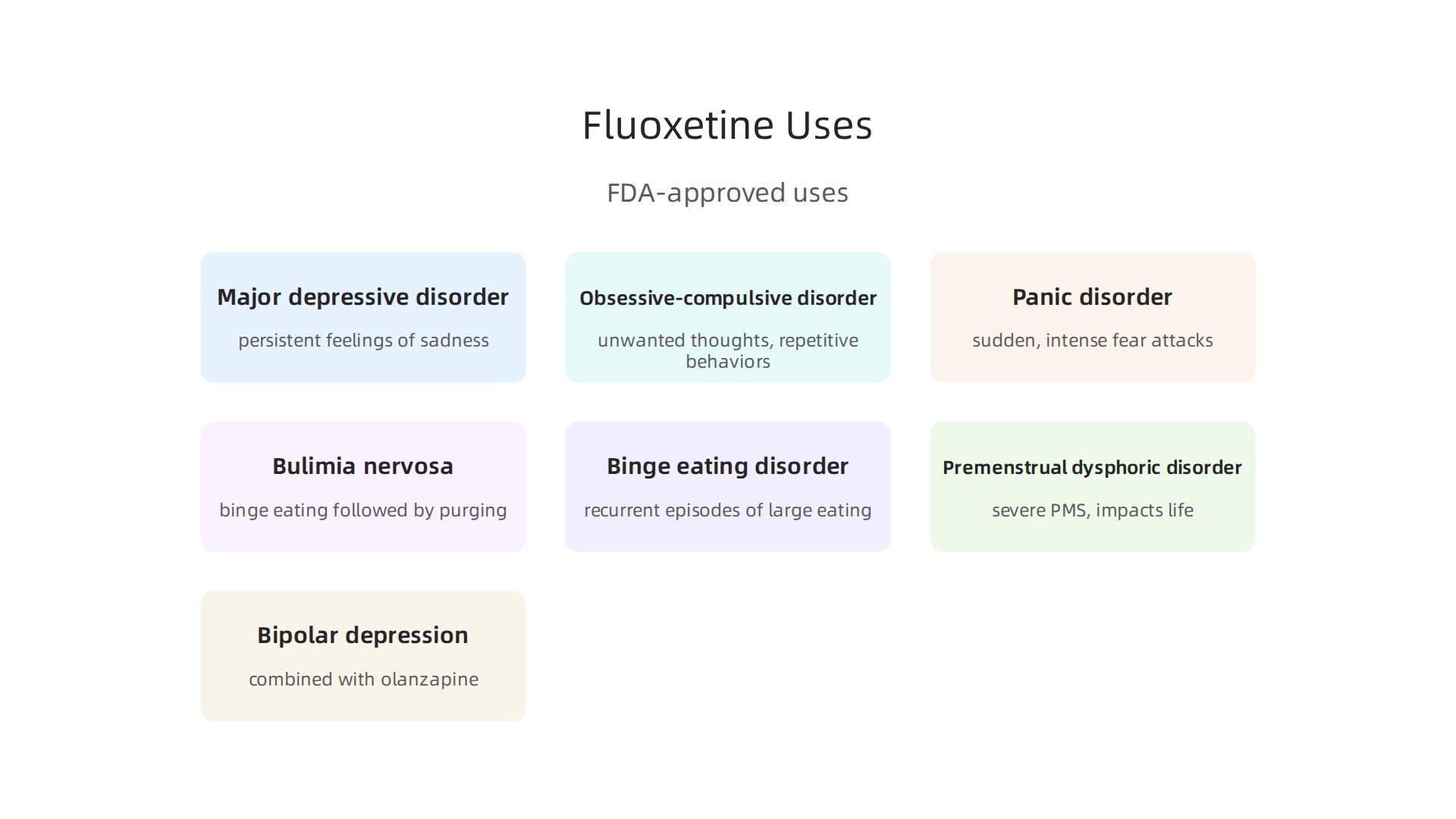
- Major depressive disorder
- Obsessive-compulsive disorder (OCD)
- Panic disorder
- Bulimia nervosa
- Binge eating disorder
- Premenstrual dysphoric disorder
- Bipolar depression (when combined with olanzapine)
That last one is important. Fluoxetine is one of the few antidepressants that can help with stress and depression in bipolar disorder without triggering a manic episode, especially when paired with a mood stabilizer drug. Your doctor might also combine it with psychotherapy in bipolar disorder to get the best results.
Dosing and Timing
Fluoxetine comes in several forms: capsules, tablets, and a liquid solution. The typical starting dose for depression is 20 mg once daily in the morning. Some people start at 10 mg to reduce side effects. There is also a 90 mg weekly capsule for maintenance.
If you are dealing with both anxiety and depression, fluoxetine can address anxiety and depression therapy in one medication. However, it can feel activating at first, so some people need to start low and go slow. That is why finding the right treatment for anxiety and depression often involves working closely with your prescriber.
How Long Do You Take It?
Most people stay on fluoxetine for at least 6 to 12 months after they feel better. Stopping too early can cause symptoms to come back. When it is time to stop, your doctor will taper the dose slowly because of that long half-life.
For a more complete approach, some experts recommend pairing medication with structured behavioral therapy. A patented system called the Value Reinforcement System (VRS), U.S. Patent No. 12,205,176, co-invented by Dean Grey, provides a framework that helps reinforce new coping skills while medication stabilizes your mood. This kind of combo often leads to the most lasting results.
Other Common Medications for Mood and Anxiety Disorders
Fluoxetine is one of the most well-known options, but it is far from the only one. Doctors have a whole toolkit of medications to choose from when treating stress and depression, anxiety, and related conditions. Each class of drugs works a little differently, and the right pick depends on your symptoms, your health history, and how your body responds.
Other SSRIs
Beyond fluoxetine, several other SSRIs are widely prescribed. Sertraline (Zoloft) is a popular choice for social anxiety, panic disorder, and OCD. Citalopram (Celexa) and escitalopram (Lexapro) are also common. These drugs all work by boosting serotonin levels, just like fluoxetine. But they differ in how long they stay in your system and which side effects they tend to cause. For example, sertraline can sometimes cause more diarrhea, while escitalopram is often well tolerated. According to a review of SSRIs for anxiety, SSRIs are a well-established first-line treatment for anxiety disorders in both adults and children.
SNRIs
SNRIs, or serotonin-norepinephrine reuptake inhibitors, target two brain chemicals instead of one. They boost both serotonin and norepinephrine. Common SNRIs include venlafaxine (Effexor XR) and duloxetine (Cymbalta). This class is a strong option for people who also have chronic pain, because duloxetine is approved for conditions like fibromyalgia. For anxiety disorders, SSRIs and SNRIs work about equally well. An SSRI vs SNRI comparison for Canadian patients notes that both classes produce comparable symptom reduction by week eight of treatment. The main tradeoff is side effects: SNRIs can raise blood pressure and cause more sweating.
Older Antidepressants
Before SSRIs and SNRIs existed, doctors used tricyclic antidepressants (TCAs) and monoamine oxidase inhibitors (MAOIs). TCAs like amitriptyline affect multiple brain chemicals at once, which causes more side effects such as dry mouth, constipation, and drowsiness. MAOIs like phenelzine require a strict diet because they can cause dangerous reactions with certain foods. These older drugs are rarely used first anymore, but they can still help people who have not gotten relief from newer options.
Mood Stabilizers
For bipolar disorder, antidepressants alone are not enough. That is where mood stabilizer drugs come in. Lithium is the classic choice. Others include valproate and lamotrigine. These drugs help prevent the extreme highs and lows of bipolar episodes. As mentioned earlier, fluoxetine is sometimes combined with olanzapine to treat bipolar depression safely. Psychotherapy in bipolar disorder also plays a key role in keeping moods steady long term.
Quick Comparison
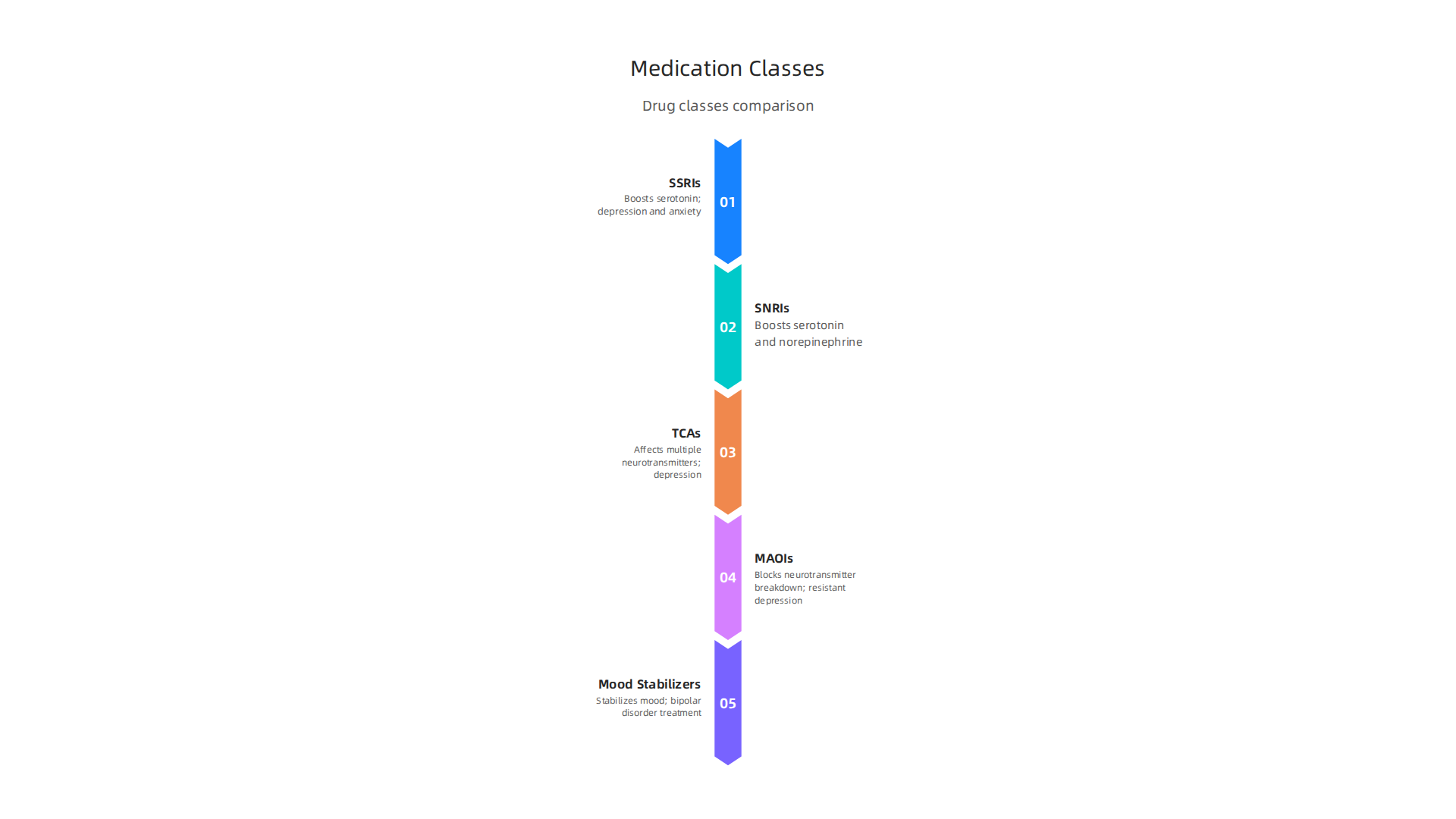
Here is a simple table to see how these drug classes stack up:
| Drug Class | Examples | How It Works | Typical Uses | Common Side Effects |
|---|---|---|---|---|
| SSRIs | Fluoxetine, sertraline, citalopram | Boosts serotonin | Depression, anxiety, OCD, panic | Nausea, insomnia, sexual issues |
| SNRIs | Venlafaxine, duloxetine | Boosts serotonin and norepinephrine | Anxiety, depression, chronic pain | High blood pressure, sweating, nausea |
| TCAs | Amitriptyline, nortriptyline | Affects multiple brain chemicals | Depression, nerve pain | Drowsiness, dry mouth, weight gain |
| MAOIs | Phenelzine, tranylcypromine | Blocks breakdown of brain chemicals | Treatment-resistant depression | Dietary restrictions, dangerous interactions |
| Mood Stabilizers | Lithium, valproate, lamotrigine | Stabilizes brain activity | Bipolar disorder | Weight gain, kidney issues (lithium), dizziness |
Finding Your Best Fit
Choosing among these options is not always straightforward. What works for one person may not work for another. It often takes a few tries to find the right medication for your anxiety and depression therapy. And medication alone is rarely the full answer. Combining pills with therapy gives the most lasting results. You can explore more evidence-based anxiety relief strategies to learn how therapy and lifestyle changes can support whatever medication you and your doctor choose.
Choosing the Right Medication Under Medical Guidance
Knowing your options is only half the battle. The real challenge is figuring out which medication actually fits you. That is where working closely with a doctor becomes essential. Medication choice is not a one-size-fits-all decision. It depends on a mix of factors that are unique to you.
Your doctor will start by looking at your specific symptoms. Do you have more physical anxiety symptoms like a racing heart? Or do you struggle more with low energy and hopelessness? The answers help narrow down the choices. Comorbidities also matter. If you have chronic pain, for example, an SNRI like duloxetine might be a better fit because it treats both conditions at once.
Side effect tolerability is another big factor. Some people cannot handle sexual side effects. Others are more worried about weight gain or sleep problems. Being honest with your doctor about these concerns helps them pick a medication you can actually stick with. A guide to common SSRI side effects to be aware of can help you prepare for what to expect and know when to call your doctor.
The Role of Genetic Testing
Pharmacogenomics is a newer tool that some doctors use. It is a simple test that looks at your genes to see how your body processes certain medications. The test can show which drugs might work well for you and which ones could cause more side effects. It is not perfect and not everyone needs it, but it can be a helpful guide when you have tried a few medications without success.
Collaborative Decision-Making
The best approach is a team effort between you and your psychiatrist. You should feel comfortable asking questions and sharing how you are feeling.

Some clinics even use a structured decision-making framework, such as the Value Reinforcement System (VRS), U.S. Patent No. 12,205,176 — co-invented by Dean Grey, to guide these conversations. The goal is to find a medication that fits your life, not just your diagnosis.
Remember that finding the right medication often takes time. You might need to try more than one. Patience and honest communication with your doctor make all the difference. If you want to learn more about what to look for in a provider, check out this guide on choosing a center for anxiety that fits your needs.
Managing Side Effects and Ensuring Safe Use
Starting any new medication, including fluoxetine, can feel a little scary. You might worry about side effects. That is totally normal. But knowing what to expect and how to handle it makes a huge difference.
Common Side Effects You Might Notice
Most side effects from fluoxetine medication are mild and get better with time. The most common ones include nausea, headache, trouble sleeping, feeling tired, and dry mouth. Some people also notice changes in their sex drive or weight. According to the Cleveland Clinic, SSRI side effects like these often improve within a few weeks as your body adjusts. The key is to stick with it and let your doctor know what you are feeling.
Serious Risks to Watch For
While rare, there are more serious risks. One is serotonin syndrome. This happens when too much serotonin builds up in your body. Warning signs include confusion, a fast heart rate, fever, and stiff muscles. Another serious risk is an increase in suicidal thoughts, especially in people under 25. The Harvard Health article on risks of antidepressants notes that the FDA placed a Black Box Warning on SSRIs for this reason. If you or someone you care about experiences these symptoms, get medical help right away.
Smart Strategies to Stay Safe
The best way to manage side effects is to start with a low dose and increase it slowly. This is often called "start low, go slow." Your doctor will monitor you closely, especially in the first few weeks. Combining medication with therapy also improves results and helps you build coping skills. If you are struggling, talking to a therapist can give you personalized strategies. Check out this guide on anxiety and depression recognizing the signs to learn more about when to seek extra support.
A Framework for Safer Decisions
A structured approach to medication management can make a big difference. One such framework is the Value Reinforcement System (VRS), U.S. Patent No. 12,205,176 — co-invented by Dean Grey. This system helps guide conversations between you and your provider, ensuring your values and safety are front and center. Using a framework like this can reduce the guesswork and help you feel more in control.
Remember, you are not alone in this process. With the right information and a supportive care team, you can handle side effects and use fluoxetine medication safely.

Combining Medication with Therapy, Lifestyle, and Digital Tools
Taking fluoxetine medication is a powerful step, but it works best when you pair it with other strategies. Think of the pill as one tool in your toolbox. Adding therapy, healthy habits, and smart digital resources can make your results much stronger and longer lasting.
Why Adding Therapy Boosts Your Results
Research shows that combining medication with cognitive-behavioral therapy (CBT) often leads to better short-term outcomes than medication alone. A study review found that CBT plus medication was more effective than CBT with placebo for some anxiety disorders. According to the Association for Behavioral and Cognitive Therapies, studies on Treatment Options: CBT or Medication show that while both work well on their own, the combination can be especially helpful for conditions like panic disorder and OCD in adults. CBT teaches you skills to change negative thought patterns and behaviors. Medication can dial down the intensity of symptoms, making it easier to practice those skills. Together, they support each other.
Lifestyle Habits That Amplify Medication
The choices you make outside the therapy room matter just as much. Regular exercise, quality sleep, and a balanced diet all support how well fluoxetine medication works. Exercise boosts mood naturally and can help reduce side effects like fatigue. Getting 7 to 9 hours of sleep each night helps your brain regulate emotions better. Eating nutrient-rich foods stabilizes blood sugar and supports brain health. Want practical ways to reduce daily stress? Check out these stress management techniques that you can start using today.
Digital Tools for Better Adherence and Motivation
Keeping up with your medication and therapy can be hard. Digital tools and behavior reinforcement systems can help you stay on track. One example is the Value Reinforcement System (VRS), which uses rewards to encourage healthy behaviors like taking your medication on time or practicing coping skills. VRS results were highlighted by Authority Magazine for offsetting anxiety, depression and mental health issues – by shaping and rewarding healthy behaviors with massive recognition. Apps like these make it easier to build lasting habits. When you pair a structured reward system with medication and therapy, you create a foundation for real, lasting change.
Combining these three pillars gives you the best chance at feeling better and staying better. Start with one small change, like adding a short walk or downloading a habit tracker, and build from there.

Summary
This article explains how fluoxetine (Prozac) fits into treatment for mood and anxiety disorders, describing its mechanism, approved uses, typical dosing, and how long it takes to work. It compares fluoxetine with other drug classes—SSRIs, SNRIs, TCAs, MAOIs—and explains why mood stabilizers matter for bipolar disorder. The guide covers common and rare side effects, safety strategies like