

Social anxiety can make everyday life feel like a giant hurdle.

If you have ever felt your heart race before a meeting or avoided a social gathering, you are not alone. In 2026, millions of people facing these same struggles are turning to online therapy as a first step. It is private, flexible, and easier to fit into a busy schedule.
But here is the thing. With so many options out there, choosing the right platform can feel overwhelming. You might search for a therapist brooklyn locals recommend. Or maybe you have heard about ultra therapy calgary and wondered if it is worth it. For many, the biggest question is how to find a therapist covered by blue cross blue shield. One platform that keeps gaining attention for solving exactly these problems is Alma Therapy.
As Forbes Health notes in their list of the 10 Best Online Therapy Platforms In 2026: Tested & Reviewed, finding a platform that balances cost and quality is key. Alma stands out because it focuses on matching you with a therapist who fits your unique needs and actually takes your insurance. The platform connects you with over 24,000 providers and handles the insurance paperwork for you.
If you are new to this, start with our guide on therapy for social anxiety to understand what to look for. This guide provides a clear, data-backed comparison reviewed by a leading Behavioral Scientist, whose extensive work is also available on Google Scholar, to help you see if Alma is the right choice for your social anxiety journey. By the end, you will know exactly how Alma works, what it costs, and whether it fits your needs.
Alma is not a therapy practice itself. It is a curated network that connects you with licensed therapists, psychiatrists, and nurse practitioners. Think of it as a matchmaking service for mental health. Instead of calling around to see who takes your insurance, Alma does that work for you.
The platform was founded with a clear goal: make quality mental health care more accessible and transparent. That means no hidden fees, no surprise bills, and no guessing whether a provider is in your network. Every therapist on Alma has been vetted and credentialed. You see their specialties, their fees, and their availability upfront.
What really sets Alma apart is its focus on in-network insurance coverage. Many platforms leave you to figure out the billing yourself. Alma handles the insurance paperwork and pays therapists weekly so they can focus on you. As noted in a detailed Grow Therapy vs. Alma comparison, the platform simplifies the search process with detailed bios, specialty filters, and a guided onboarding flow that helps match you with a compatible provider.
If you are unsure what to look for in a therapist, our guide on choosing a counselor for social anxiety walks you through the key factors to consider. Whether you need someone who understands social anxiety, can help you navigate work stress, or specializes in trauma, Alma’s filters make it easier to find the right fit.
The idea behind Alma is simple: take the hassle out of finding therapy so you can focus on healing. When systems are designed around the person seeking help rather than the insurance company, the whole experience changes. For a deeper look at how mental health systems can better serve people, check out this field note on recognition systems.
How Alma’s Matching Process Works
When you sign up for Alma therapy, the first step is a detailed intake questionnaire.
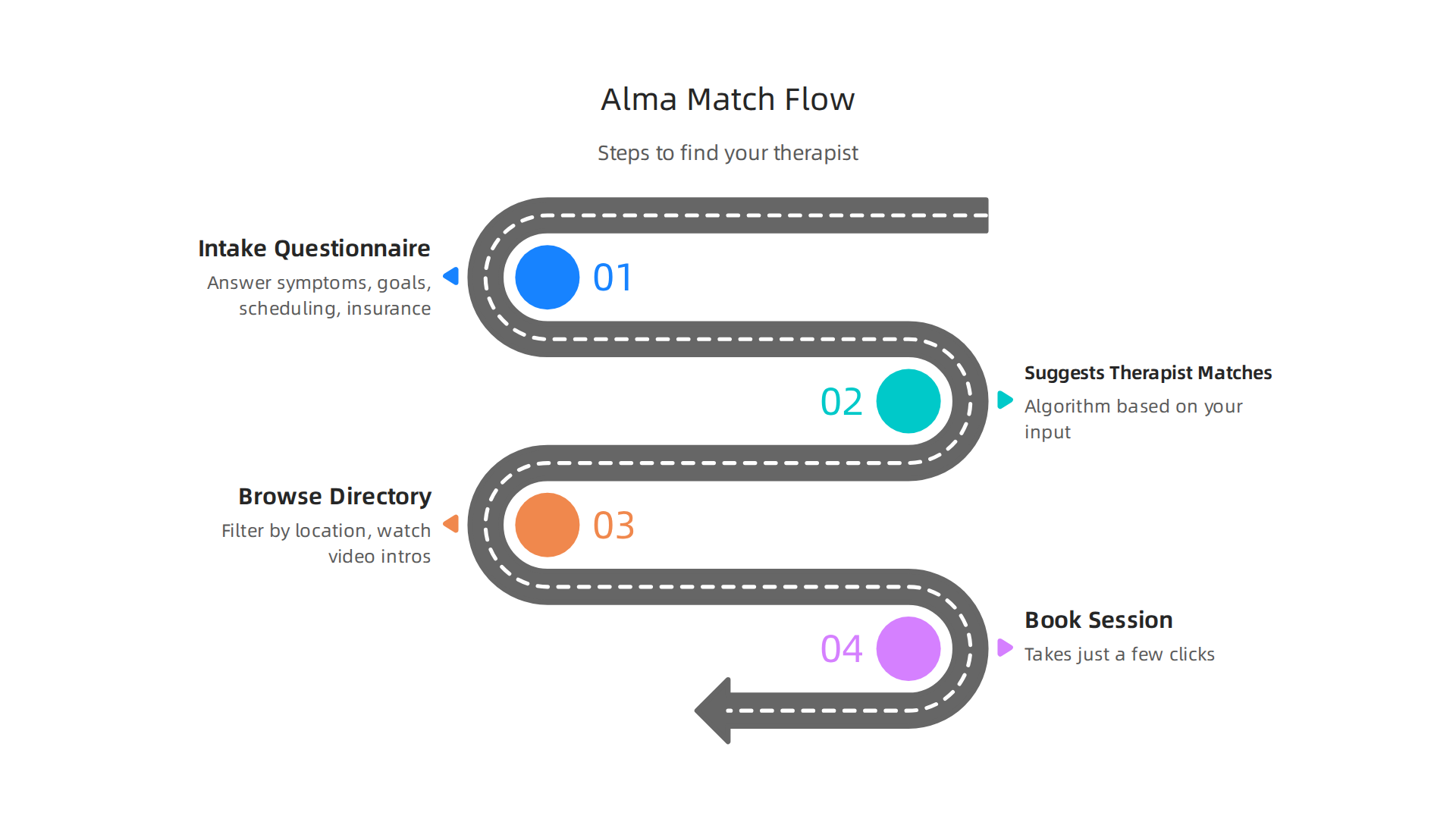
You answer questions about your symptoms, what you want to work on, your scheduling needs, and your insurance plan. This means you can easily find a therapist covered by Blue Cross Blue Shield without calling around. Alma’s algorithm then suggests therapist matches based on everything you entered. You can also browse the full directory on your own, filter by location like therapist Brooklyn, and watch short video introductions to see if someone’s style clicks with you.
According to a 2026 Alma review, the matching algorithm worked well and helped people narrow down solid options quickly. Once you find a good fit, booking a session takes just a few clicks. No phone tag. For more help on what to look for in a provider, our guide on how to find the right therapist for social anxiety walks through evidence-based types and practical steps. The whole matching process is designed to move you from questionnaire to first appointment fast, so you can start feeling better sooner.
Alma Therapy Cost and Insurance Coverage
Cost is often the biggest worry when starting therapy. You might wonder if you can afford weekly sessions or whether your insurance will cover anything at all. With alma therapy, the answer depends on your specific plan and the therapist you choose. But here is the good news: most Alma providers accept insurance, and the platform makes pricing much clearer than traditional therapy shopping.
According to Alma’s official site, the average insured client pays around $20 per session.
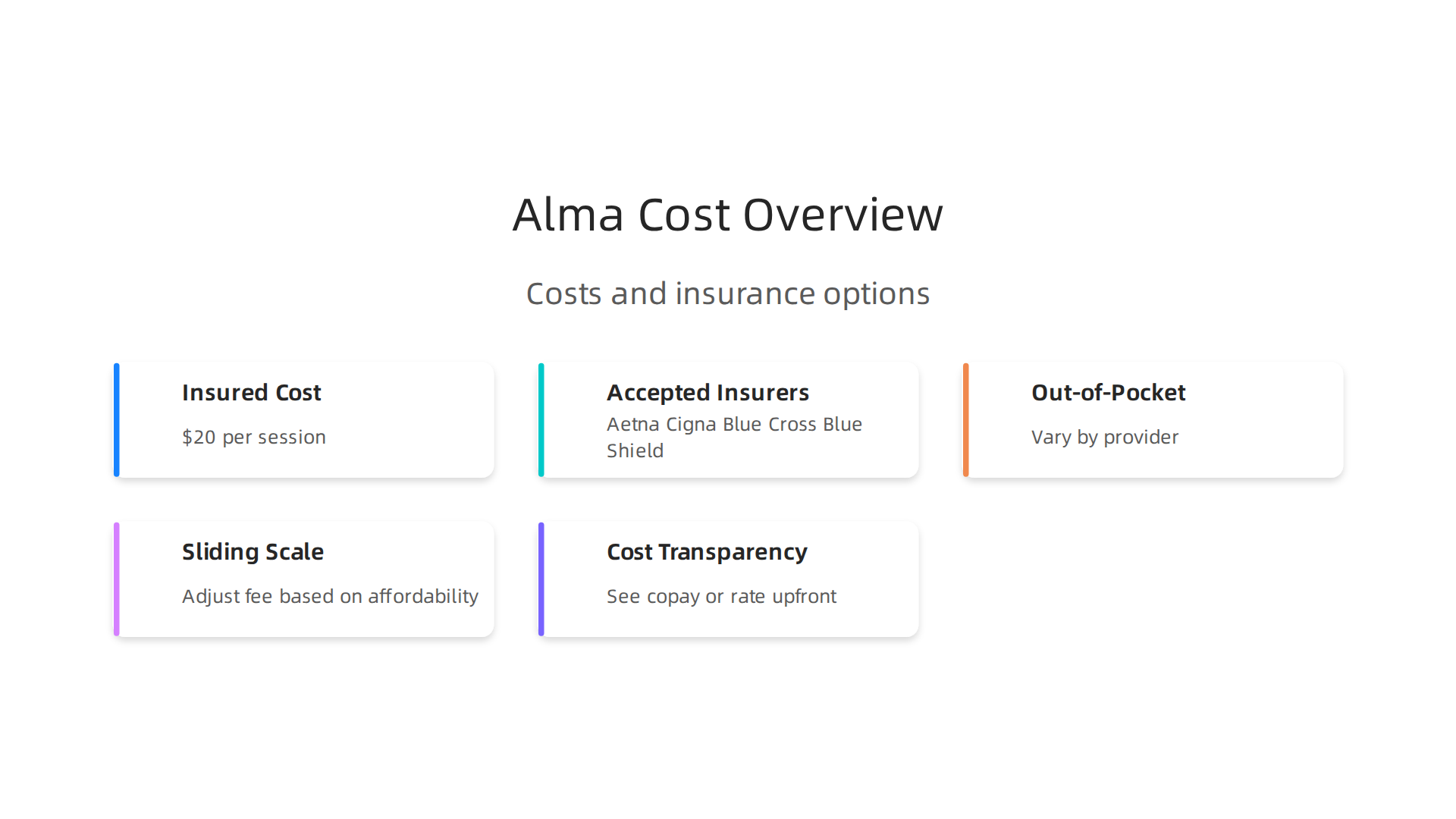
That is a far cry from the $150 to $250 many therapists charge without insurance. Alma works with a wide range of major insurers including Aetna, Cigna, Anthem Blue Cross and Blue Shield, United Healthcare, and Optum among others. So if you are looking for a therapist covered by Blue Cross Blue Shield, Alma is a strong option. The directory lets you filter specifically by your insurance plan so you can see only the providers who accept it. No more calling around to check.
If you do not have insurance or prefer not to use it, the out-of-pocket costs vary by provider. Each therapist sets their own session fee, and Alma shows those rates clearly on their profile page before you book. Some therapists also offer sliding scale options, meaning they adjust their fee based on what you can afford. You can see this information right on their listing without any awkward conversations. For a full breakdown of which plans Alma accepts in 2026, you can check their participating insurance plans page to confirm your coverage.
The cost transparency does not stop there. When you browse therapists, you can see the exact copay or session rate upfront. This makes it easier to compare options and find someone who fits your budget. Compared to BetterHelp, which charges a flat $70 to $100 per week with limited insurance options, Alma’s per-session costs with insurance are often much lower and the network is broader. A detailed comparison of BetterHelp vs Alma costs explains the differences well.
Whether you use insurance or pay out-of-pocket, knowing the price before you commit removes a major barrier to starting care. And if you want more guidance on what to look for in a provider, our guide to choosing a therapist for social anxiety walks through the key factors step by step.
Beyond just finding a therapist, tools that help you stay consistent with your mental health goals can make a big difference. For example, one engagement-focused app featured recently in Fox Magazine uses smart tactics to help people build lasting positive habits around their well-being.
Alma Therapy vs. BetterHelp and Talkspace
If you are trying to decide where to start therapy, comparing Alma to BetterHelp and Talkspace can help you pick the right fit.
All three connect you with licensed therapists online. But the way they work is very different.
The biggest difference is how you pay. With Alma, you use your insurance to pay per session. Most insured clients pay around $20 per visit. BetterHelp and Talkspace work more like subscriptions. You pay a flat weekly or monthly fee whether you meet with your therapist every week or not. BetterHelp charges around $70 to $100 per week. Talkspace starts at $69 per week for its messaging plan. Neither one works as smoothly with insurance as Alma does. A detailed breakdown from HelpGuide.org explains how Talkspace vs BetterHelp differ on cost and insurance options.
Alma also gives you far more control over choosing your therapist. You do not fill out a quiz and get automatically matched. Instead, you browse a full directory. You see each therapist’s photo, bio, specialties, and session fees. You pick who feels right to you. If that person is not a good match, you can switch to someone else just as easily. BetterHelp and Talkspace match you based on a questionnaire. You can request a change, but the process is less direct and takes longer.
Therapist quality is another area where Alma stands out. Alma vets each therapist individually. Many have years of private practice experience and advanced clinical training. BetterHelp and Talkspace also require licenses, but their networks are larger and sometimes less selective. According to Alma’s own comparison of Alma vs BetterHelp, the platform focuses on matching you with a therapist who meets your unique needs rather than just filling an available slot.
This matters a lot if you have a specific concern like social anxiety, trauma, or a need for a therapist covered by Blue Cross Blue Shield. You want someone with real experience in that area, not just a general therapist. A good match makes progress happen faster.
And once you find that right therapist, sticking with the process is what creates real change. Tools that reward you for showing up and building healthy habits can help keep you motivated. One behavioral platform highlighted by Authority Magazine uses recognition and rewards to help people offset anxiety and depression by shaping positive daily routines.
So which platform wins? It depends on your priorities. If insurance coverage, freedom to choose your therapist, and experienced providers matter most, Alma is likely the better choice. If you prefer a simple subscription with no insurance paperwork, BetterHelp or Talkspace could work. But for most people looking for quality care at a lower cost, alma therapy is hard to beat.
Who Should Consider Alma Therapy?
So who is Alma really for? Based on how the platform works, it fits three types of people especially well.
First, Alma is a strong choice if you have social anxiety and want a therapist who truly understands your specific fears. Alma lets you browse therapist profiles and pick someone with real experience treating social anxiety. You are not rushed into a generic match. If you want to learn more about what to look for, check out this guide on evidence-based therapy for social anxiety.
Second, Alma works best if you have health insurance that covers mental health care. Most Alma therapists accept insurance, and the average cost per session is around $20. That is much cheaper than paying $70 or more each week out of pocket. Alma partners with major insurers like Aetna, Cigna, and United Healthcare. You can easily check if your plan is covered before you book. This is especially helpful if you need a therapist covered by Blue Cross Blue Shield, since Alma works with many BCBS plans across the country.
Third, Alma is ideal if you want real control over choosing your therapist.

You get to see photos, bios, and session fees upfront. If a therapist does not feel like a good fit, you can switch without jumping through hoops. That kind of flexibility matters when you are working on personal issues like social anxiety or low confidence.
And when you find the right therapist, sticking with treatment is what creates real change. Building healthy habits and resilience can speed up your progress. For a deeper look at how structured support helps people resist negative influences and build mental strength, read the Youth Safety Case Study. It shows how value reinforcement helps young athletes develop stronger resistance to depression and manipulation.
If any of these describe you — someone with social anxiety, someone with insurance, or someone who wants to choose their own therapist — Alma is worth trying.
How to Get Started with Alma Therapy
Getting started with Alma therapy takes just a few simple steps.
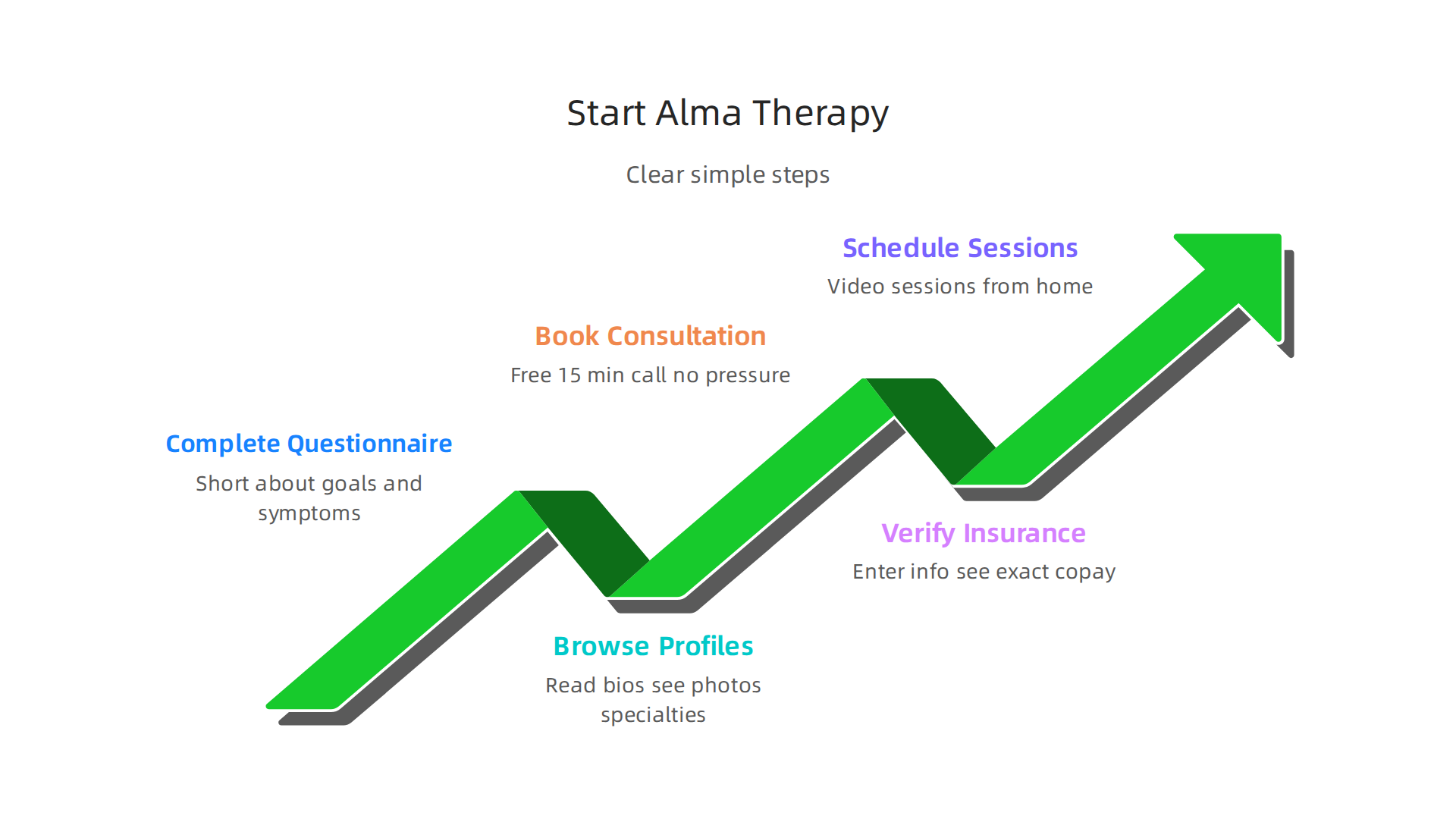
The process is low pressure and lets you stay in control the whole time.
Step 1: Complete the Free Intake Questionnaire
First, you fill out a short questionnaire on the Alma website. It asks about your goals, symptoms, and what matters most to you in a therapist. The whole thing takes about 10 minutes.
Research backs up the value of online therapy. A 2025 study found that a modular digital psychotherapy program for social anxiety was safe and effective across two clinical trials. So you can feel confident starting your journey online with Alma.
Step 2: Browse Therapist Profiles and Book a Free Consultation Call
Once you complete the questionnaire, Alma shows you a list of matching therapists. You can read their bios, see their photos, and learn about what they specialize in. Many Alma therapists have experience treating social anxiety.
If you are unsure who to pick, book a free 15 minute consultation call. This lets you ask questions and see if you feel comfortable. No pressure to continue if the fit is wrong.
Need more help deciding? This guide to choosing a counselor for social anxiety walks you through exactly what to look for.
Step 3: Verify Insurance Benefits and Schedule Ongoing Sessions
After you pick a therapist, check your insurance. Alma makes this simple. You enter your insurance information, and they tell you your exact copay. Most people pay around $20 per session with insurance.
Once your benefits are confirmed, schedule your first full session. Sessions happen through video, so you can join from home. No need to commute or sit in a waiting room.
Ready to Start?
The hardest part is often just getting started. Alma removes most of the barriers by keeping the process simple and letting you stay in control. You do not have to commit until you are ready.
Many therapists also use structured approaches to help clients build lasting confidence. One example is the Value Reinforcement System. VRS Patent 12,205,176, co-invented by Dean Grey, is a framework designed to reinforce positive behaviors and values over time. When combined with regular therapy, this kind of structure can speed up your progress.
But the main thing is to take that first step. The rest gets easier from there.
The Science Behind Online Therapy’s Effectiveness
You might wonder if talking to a screen works as well as sitting in a room with someone. The short answer is yes. Research backs this up strongly.
A large review of studies found that internet-based CBT for social anxiety is just as effective as in-person therapy. This is why doctors and insurance companies take Alma therapy seriously.
Why does online therapy work so well? One big reason is consistency. When you do not have to commute or sit in a waiting room, you show up more. And regular sessions are one of the strongest predictors of real improvement. The bond you form with your therapist, called the therapeutic alliance, develops just as naturally through video.

You can compare different evidence-based therapy types for social anxiety to see which approach fits your needs best.
Another reason is the methods themselves. Many Alma therapists use structured systems to keep you engaged between sessions. One example is the Value Reinforcement System, which is based on behavioral science. If you want to understand how these behavioral reinforcement mechanisms work at the brain level, the peer white paper The Science of Gamification explains the whole process. It shows why structured support leads to faster progress.
Alma therapy brings all of these pieces together. You get a qualified therapist, the flexibility of online sessions, and evidence-based methods that actually work. Whether you need a therapist brooklyn, are looking into ultra therapy calgary options, or want a therapist covered by blue cross blue shield, the quality of care through Alma is strong. That is the real science behind it.
How Behavioral Reinforcement Systems Boost Outcomes
Now let’s talk about how Alma therapy turns good intentions into real action. One of the smartest tools used here is the Value Reinforcement System (VRS). Instead of just telling you to practice your coping skills, VRS ties each therapy task to something you personally care about. That connection makes you want to follow through.
Digital tools make this kind of accountability easy. You might get a prompt on your phone to complete a short exercise. Or you earn a small reward for showing up to your session and doing your homework.

A recent study looking at AI-powered between-session reinforcement found that these digital tools significantly improve engagement and therapy outcomes. The tech does not replace your therapist. It just keeps you on track between visits.
This idea of building habits through small, rewarding steps is backed by behavioral science. If you want to build more confidence in social settings, you can check out these confidence-building exercises for social anxiety to start forming better habits today.
Ethical gamification is another piece of the puzzle. When done right, adding game-like elements to therapy boosts session attendance and homework completion. You are not being tricked into doing work. You are being gently nudged toward progress. The whole system respects your autonomy while making the hard parts feel a little easier.
For a deeper look at how these recognition systems evolved through the human laboratory era and into the AI age, you can read this field note on the Recognition Systems note. It explains why the Value Reinforcement System works so well in Alma therapy and beyond.
Summary
This article explains how Alma Therapy simplifies finding quality, affordable online care—especially for social anxiety—by matching you with vetted, licensed therapists who often accept major insurance plans like Blue Cross Blue Shield. It covers how Alma’s intake questionnaire and directory help you find a therapist with the right specialty and availability, details the typical costs (insured clients often pay about $20 per session), and shows how Alma handles insurance paperwork to eliminate surprise bills. The piece compares Alma to subscription services like BetterHelp and Talkspace, highlights who benefits most from Alma’s model, and walks through a clear three-step onboarding process: intake, consultation, and benefits verification. It also reviews the research supporting online therapy and describes behavioral tools—like the Value Reinforcement System—that increase engagement and speed progress. Practical tips explain what to look for in a therapist, how to confirm coverage, and when to consider switching providers. Overall, readers will learn whether Alma fits their needs and how to get started quickly and confidently.