

Introduction: When Heartbreak Meets Healing
A breakup can feel like your world just shattered. Your chest aches. Your mind races. You might wonder if the pain will ever stop.

Here’s the thing: science shows that emotional heartbreak actually activates the same brain regions as physical injury. A study on the sting of social rejection found that participants who had recently gone through an unwanted breakup showed brain activity linked to physical pain. So when your heart hurts, your brain truly believes you are wounded.
That’s why breakups rank among the most destabilizing life events. They often trigger acute anxiety, deep sadness, and a strong urge to withdraw from everyone. You might feel alone even when people are around. You might lose sleep, skip meals, or struggle to focus at work. These are normal responses to a significant loss.
But you don’t have to go through it alone. Professional therapy gives you structured, evidence-based tools to process the grief, rebuild your self-esteem, and move toward growth. The right support can help you understand why the relationship ended and how to heal without losing yourself. If you’re ready to explore that path, you can find helpful information on therapy for break up to start your journey.

One common trap after a breakup is comparing your healing to others. You see friends moving on quickly while you still feel stuck. That social pressure can make you feel even worse. If that sounds familiar, you might want to break the social pressure and focus on your own timeline instead.
This article dives into what research says about therapy after a breakup, which methods work best, and how to find the right support when you need it most.
The Emotional Toll of a Breakup: Why It Hurts So Much
You know your breakup hurts. But the intensity of that pain might surprise you. Your brain treats the end of a relationship like a physical injury. Research from the University of Michigan shows that when people feel strongly rejected, their brains light up in the same areas that process physical pain. That explains why your chest aches and why sleep feels impossible. Your body is responding as if you have been hurt.
The pain does not stop there. The social loss you experience triggers a prolonged stress response. Your cortisol levels can stay high for weeks. Your immune system may weaken. You might catch colds more easily or feel constantly exhausted. This is your body trying to protect you from further harm, but it ends up draining your energy just when you need it most.
Beyond the physical effects, the emotional weight can feel crushing. Rejection stirs deep feelings of not being good enough. Loneliness creeps in even when you are surrounded by people. And you may struggle with a lost sense of identity.

When a relationship ends, you lose not just a partner but also a shared future. Your picture of who you are can shatter. That uncertainty is one of the hardest parts to manage.
These feelings are normal, but they can escalate if left unchecked. Breakup distress sometimes turns into clinical anxiety or depression. You might notice constant worry, loss of interest in things you once loved, or thoughts that life is pointless. If you also recently had a baby, the emotional toll can mix with postpartum symptoms. In that case, looking into postpartum depression therapy near me may help you find the right support. And if the pain makes it impossible to work or care for yourself, know that short term disability mental health options exist to give you time to recover. In the most serious moments, when you feel unsafe, please call emergency mental health services right away.
Understanding why your brain and body react this way can help you stop blaming yourself. You are not weak. Your nervous system is doing exactly what it evolved to do. Once you accept that, you can make a plan to heal. That is where professional support makes a real difference. You can start by reading about therapy for break up to see how a therapist can guide you through the emotional fog.
One thing that often makes the pain last longer is comparing your healing to others. Social pressure to move on quickly can feed anxiety and make you feel even more alone. If that sounds familiar, it might help to break the social pressure and focus on your own timeline. Your recovery is yours alone, and there is no race.
How Therapy Provides a Safe Space to Process Grief
When you are drowning in breakup pain, the last thing you need is someone telling you to "just get over it." Friends and family mean well, but they often don’t know how to sit with your grief. Therapy offers something different: a space where you can say the hardest things out loud without fear of judgment.
A therapist is not there to fix you or rush you. Instead, they create a relationship built on trust and confidentiality. This therapeutic alliance is actually one of the strongest predictors of success in therapy for break up. When you feel safe with your therapist, you are more likely to open up about the shame, anger, and longing you might hide from everyone else.
How Therapists Guide You Through the Stages of Grief
Breakups trigger real grief. You lose a person, a routine, and a future you planned. A skilled therapist helps you move through denial, anger, bargaining, sadness, and acceptance at your own pace.
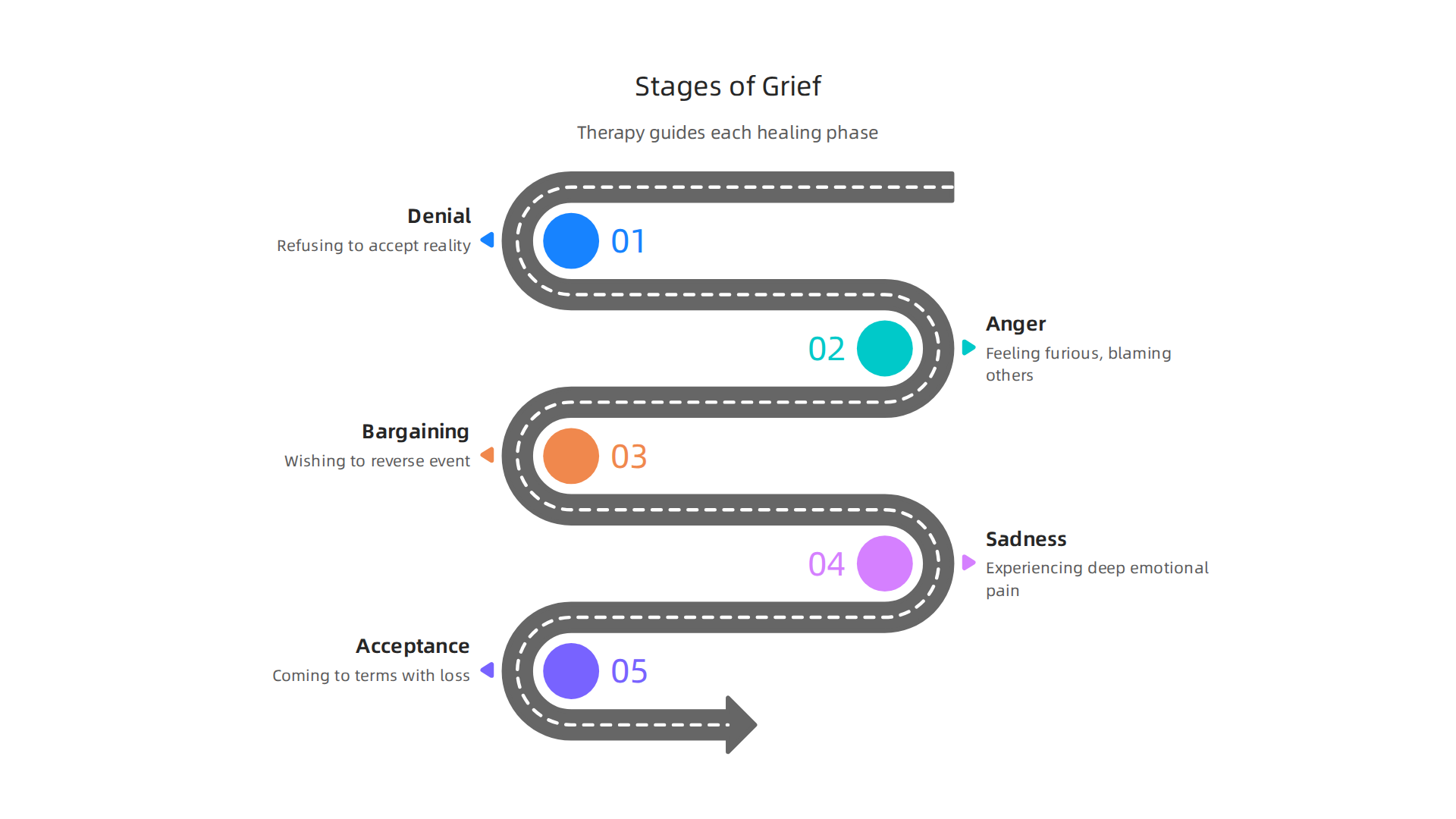
They do not push you past the pain. They teach you coping strategies for the moments when grief feels too heavy.
For example, cognitive-behavioral therapy (CBT) helps you spot the thought patterns that keep you stuck. If you keep replaying the breakup and blaming yourself, CBT gives you tools to challenge those thoughts. Research on cognitive-behavioral therapy for love trauma syndrome shows that CBT can significantly reduce anxiety and depression after a breakup.
Another approach that works well for breakup trauma is Eye Movement Desensitization and Reprocessing (EMDR). Originally created for PTSD, EMDR helps your brain reprocess painful memories so they lose their emotional charge. A dedicated method called the Break-Up Aid Procedure (BUAP) specifically targets relationship loss. You can learn more about EMDR for breakup trauma and how it helps rewire the brain’s response to heartbreak.
Therapy Is Not One-Size-Fits-All
Different people need different kinds of support. Some benefit from short-term CBT focused on building coping skills. Others need longer work to address deep attachment wounds. A good therapist matches the approach to your unique situation.
If you are feeling overwhelmed by intense emotions right now, learning some therapist-approved stress management techniques can help you get through the roughest moments between sessions. These small skills make a big difference when grief hits hard.
What matters most is that you show up. The therapist provides the container, but your willingness to be honest drives the healing. In this safe space, you get to feel all of it without pressure to perform or pretend. That release alone can lighten the weight you have been carrying.
Cognitive‑Behavioral Strategies for Rebuilding Self‑Esteem
After a breakup, your inner critic can get really loud. Thoughts like "I am not good enough" or "I will never be loved again" might loop in your head. The hardest part is that these thoughts feel completely true. But here is the thing: they are not facts. They are just thoughts patterns that got stuck after the relationship ended.
Cognitive-behavioral therapy (CBT) is one of the most researched ways to untangle these beliefs and rebuild your self-worth.
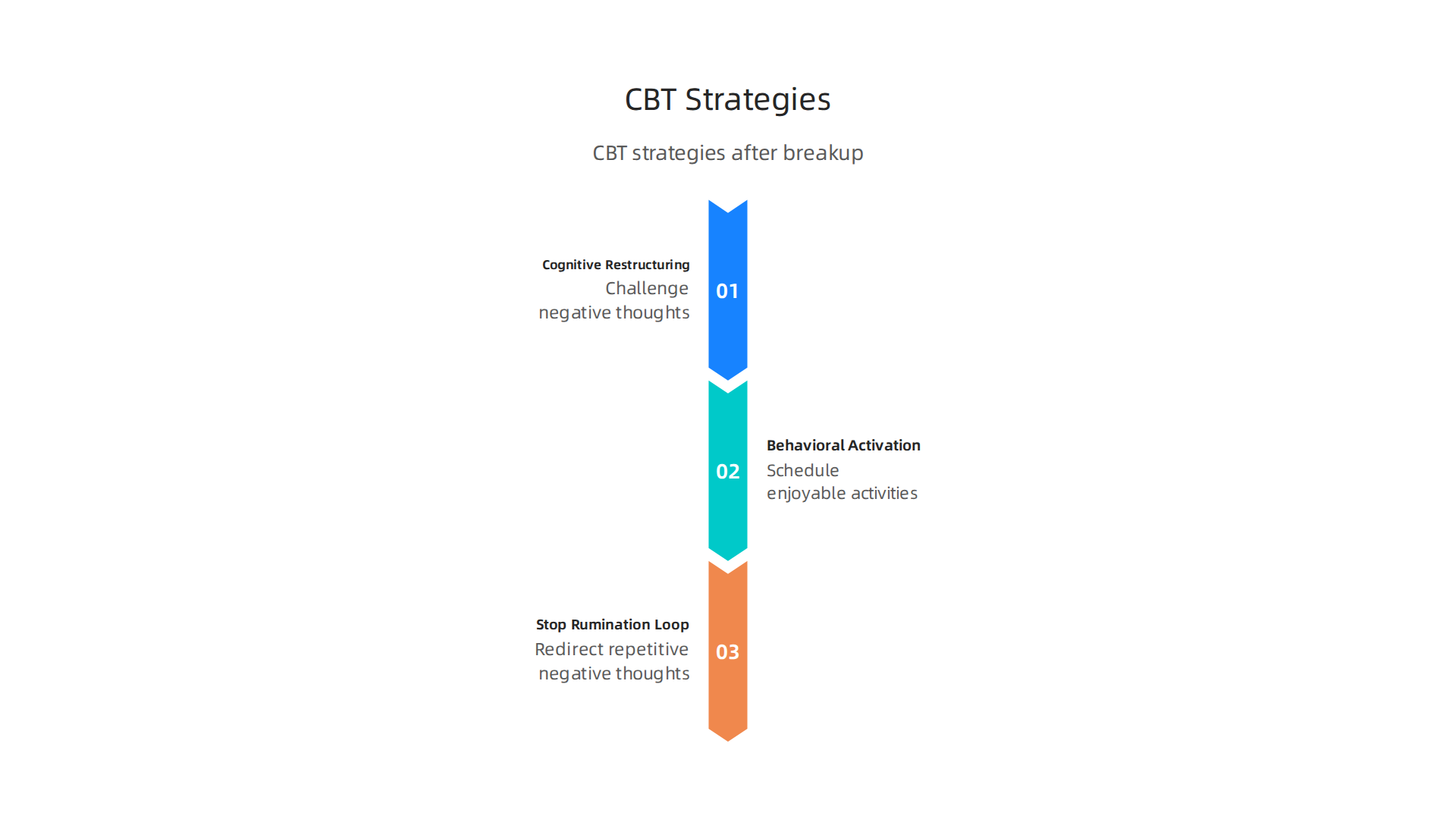
In fact, research shows that CBT is effective in reducing symptoms of love trauma syndrome, including the low self-esteem that follows a breakup. The goal is not to pretend the pain is gone. The goal is to stop believing every painful thought that comes up.
Cognitive Restructuring: Challenge the Lies You Tell Yourself
One core CBT skill is called cognitive restructuring. It sounds fancy, but it is really simple. You learn to catch a negative thought, pause, and ask yourself: "Is this thought 100 percent true? What evidence do I have for it? What would I tell a friend who thought this about themselves?"
For example, imagine you keep thinking "I am unlovable." A therapist using CBT might ask you to list all the people in your life who do love you. Then you can rewrite that thought to: "This person chose to leave, but that does not mean no one will ever love me." Over time, these small rewrites change how you see yourself. You can find many of these practical tools in the 8 CBT exercises for breakups that help you spot distorted thinking.
Behavioral Activation: Do Something Even When You Do Not Feel Like It
When your self-esteem is low, your instinct is to withdraw. You cancel plans, skip hobbies, and stay in bed. That makes everything worse. Behavioral activation is the CBT technique that pushes back against that urge. You schedule small, enjoyable activities even when you have zero motivation.
It does not have to be big. Take a short walk. Call a friend. Cook a meal you used to love. The goal is to prove to your brain that you can still experience pleasure and connection. Gradually, re-engaging with life rebuilds your sense of competence. For more on this, check out this guide on healing from heartbreak with CBT tools and how to rebuild momentum after a loss.
Stop the Rumination Loop
Another big problem after a breakup is rumination. That is the mental habit of replaying the breakup over and over, asking "what if" and "why." Rumination keeps you stuck in shame and self-blame. Rumination-focused cognitive behavioral therapy reduces depression and helps you break that loop by teaching you to shift your attention away from repetitive negative thoughts.
Instead of getting lost in the story, you learn to label it: "I am ruminating right now." Then you gently redirect to something in the present moment, like your breathing or a simple task. This skill takes practice, but it is powerful.
Putting It All Together
If you are struggling with deep insecurity after a breakup, CBT gives you a clear path forward. You challenge the lies, re-engage with life, and stop the mental replay. You do not have to figure this out alone. A therapist can guide you through every step. And if you want to build lasting confidence between sessions, this resource on how to overcome therapy insecurity and build real confidence offers practical strategies.
One powerful way to reinforce these healthy behaviors is through a system that rewards you for showing up for yourself. The approach highlighted by Authority Magazine uses massive recognition to shape and reward healthy behaviors, which can offset the anxiety and depression that follow a breakup. It is a practical tool that turns small wins into lasting motivation.
The Role of Social Support in Healing After a Breakup
When you are hurting from a breakup, the last thing you want to do is be around people. You might feel embarrassed, tired, or just numb. But here is the truth: isolation makes the pain worse. Research consistently shows that pulling away from others keeps sadness and anxiety stuck in place. The fix is not easy, but it is simple. You have to reach out.
Friends and family can offer more than you think. A good listener does not need to fix you. They just need to be there.

However, many people feel anxious about asking for help. Maybe the relationship masked some social anxiety that is now surfacing. You might worry that you are bothering others or that no one understands. That is where therapy for break up coaching can help. A therapist can help you identify and work through the social fears that keep you from connecting.
Structured support groups take this one step further. They connect you with people who are going through the same thing. Group therapy is just as effective as individual therapy for many symptoms, and it is often more efficient. You get validation from peers who really get it. You also get accountability. Knowing that others expect to see you next week can be the push you need to show up for yourself.
If you feel too anxious to start, you do not have to do it alone. A therapist can guide you into the right group or help you rebuild social confidence first. This is especially helpful if you have struggled with social anxiety for a long time. You can learn skills like starting conversations or setting boundaries in a safe space. Over time, you build the courage to lean on others again.
Social support is not optional after a breakup. It is a core part of recovery. If comparison with others feeds your anxiety, remember that everyone heals at their own pace. You deserve a circle that lifts you up, not one that makes you feel worse. Break the social pressure and take the first step toward connection today.
When to Consider Specialized Therapy for Breakup
Social support is powerful, but it is not always enough. Sometimes your symptoms cross a line where a friend’s hug or a support group meeting just will not cut it. Here are the signs that tell you it is time to look for therapy for break up that is tailored to your situation.
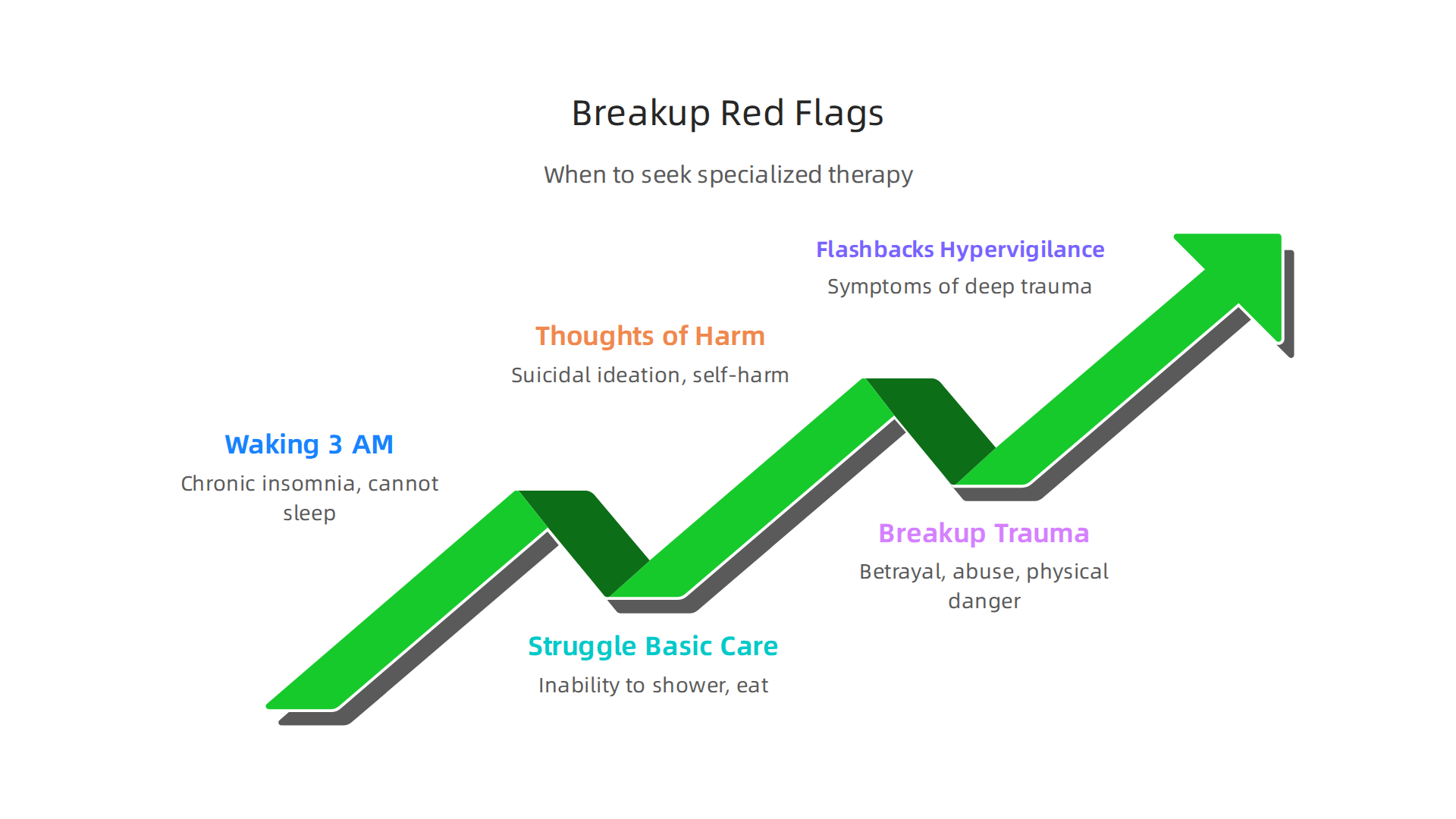
Red flags you should never ignore. Are you waking up at 3 a.m. every single night and cannot fall back asleep for hours? Do you struggle to shower, eat, or get out of bed? Have you had any thoughts about ending your life or harming yourself? These are signs of clinical impairment. Your body and brain are stuck in a survival mode that will not turn off on its own. You need a trained professional who can help you stabilize. If you are having thoughts of suicide, please call emergency mental health services right away. Do not wait.
When trauma is part of the story. A breakup is not always just sad. Some breakups involve betrayal, emotional abuse, gaslighting, or even physical danger. These experiences can leave behind real trauma symptoms like flashbacks, hypervigilance, or a deep sense of unsafety. Standard talk therapy may not be enough for this. Therapies like Eye Movement Desensitization and Reprocessing (EMDR) are designed specifically for trauma. Research shows that EMDR for breakup trauma can reduce symptoms just as effectively as it does for PTSD. Another proven option is Cognitive Behavioral Therapy. A recent study found that CBT is effective in reducing Love Trauma Syndrome symptoms, lowering both anxiety and depression. If your breakup involved anything that felt unsafe or deeply violating, you may need a specialized approach like this.
Where to start. Online therapy platforms can be a good first step if your symptoms are mild to moderate. They are affordable and accessible from home. But if you are dealing with severe insomnia, inability to function at work, or trauma symptoms, online therapy is not enough. You need in-person or intensive support. This might mean looking into intensive therapy near me for social anxiety or considering short term disability mental health leave so you can focus fully on recovery.
The most important thing is to take action. If you see any of these red flags in yourself, do not dismiss them. You deserve real, professional help that matches how hard you are struggling.
Building a New Narrative: From Heartbreak to Post‑Traumatic Growth
Getting help for your breakup is not just about surviving the worst days. It is also about creating a life that feels better than before. Research shows that many people actually grow stronger after painful life events. This is called post traumatic growth, defined as positive psychological change resulting from struggle with highly challenging situations. It means you come out of the experience with a deeper sense of meaning, stronger relationships, and a clearer idea of what matters to you.
Therapy for break up can be the engine that drives this growth. A therapist helps you make sense of what happened and find new perspectives. One powerful approach is narrative therapy.

This method helps you rewrite the story you tell yourself. Instead of seeing yourself as a victim who was broken by heartbreak, you start to see yourself as someone who survived, learned, and moved forward with purpose. You take back the pen and write your own next chapter.
Goal setting is another key part of the rebuilding process. Your therapist can help you identify values that matter to you now. Maybe you want to focus on your health, your career, or building deeper friendships. You set small, achievable goals that line up with those values. Each step you take builds momentum.
Some approaches use a recognition system to keep you motivated. For example, you might track your daily wins and reward yourself for following through on your goals. This turns recovery into something you can see and feel. The concept of using a structured recognition system to shape healthy behaviors has been documented in the peer white paper Beyond Gamification. That white paper shows how recognition can replace the empty cycle of quick rewards with real, lasting change.
If you want to learn more about how to choose the right therapist for your situation, check out this guide on how to choose a center for anxiety and related disorders.

It walks you through the key factors that matter when picking a provider.
The journey from heartbreak to growth is not a straight line. There will be setbacks. But with the right support and a clear plan, you can build a new narrative that is honest, hopeful, and entirely your own.
Summary
This article explains why breakups can feel as painful as physical injury and lays out how professional therapy helps you process that loss, reduce distress, and rebuild your life. It reviews research on the emotional and physical effects of rejection, describes how therapy provides a confidential space to work through grief, and summarizes practical approaches—like CBT for negative thinking and behavioral activation, and EMDR for trauma-related memories. The piece also covers the role of social support, when to seek specialized or intensive care, and concrete signs that you need professional help. Readers will learn specific coping strategies, how to spot red flags, how to find the right kind of therapist, and ways to shift from surviving heartbreak to meaningful post‑traumatic growth.