
Introduction: When Standard Therapy Isn’t Enough
Do you feel your heart race just thinking about a meeting, a party, or even a phone call?

For many people, social anxiety can feel overwhelming. You might have tried traditional weekly therapy, and while it helps, sometimes it just doesn’t move fast enough. Research shows that intensive formats, like an 8-day, 6-session cognitive behavioral therapy protocol, can provide faster progress for social anxiety disorder. That is why more people are starting to search for intensive therapy near me in 2026.
Intensive therapy offers a concentrated approach. Instead of one hour per week, you meet more often over a shorter period. This can be a lifeline if you need quick relief or have a busy schedule. A 2025 study even looked at an intensive 7-day internet-delivered CBT program for social anxiety, showing how flexible these options can be.
This guide will walk you through exactly what intensive therapy is, who it helps most, and how to find the right program near you. We will also cover related topics like working with a licensed mental health professional for an ESA letter and understanding when psychology counselling might be enough.
Ready to take the next step? Break the Social Pressure and start exploring your options today.
What Is Intensive Therapy and Who Needs It?
Let’s get clear on what intensive therapy actually means. Instead of the usual one hour a week, you meet with a therapist multiple times a week or even every day. The sessions are longer, and the whole program is packed into a shorter time frame. Think of it like a boot camp for your mental health rather than a slow jog. According to Carolina Dunes Behavioral Health, it uses focused, frequent sessions to speed up your recovery.
So who is this for? It is designed for people who have moderate to severe social anxiety that has not gotten better with regular weekly therapy. Maybe you have tried psychology counselling or worked with a therapist for months, but you still feel stuck. A therapy intensive is meant for those who need deeper work in a condensed timeframe. It is also a great fit if your schedule is tight or you want faster relief before a big life event.
There are three main types of these programs:
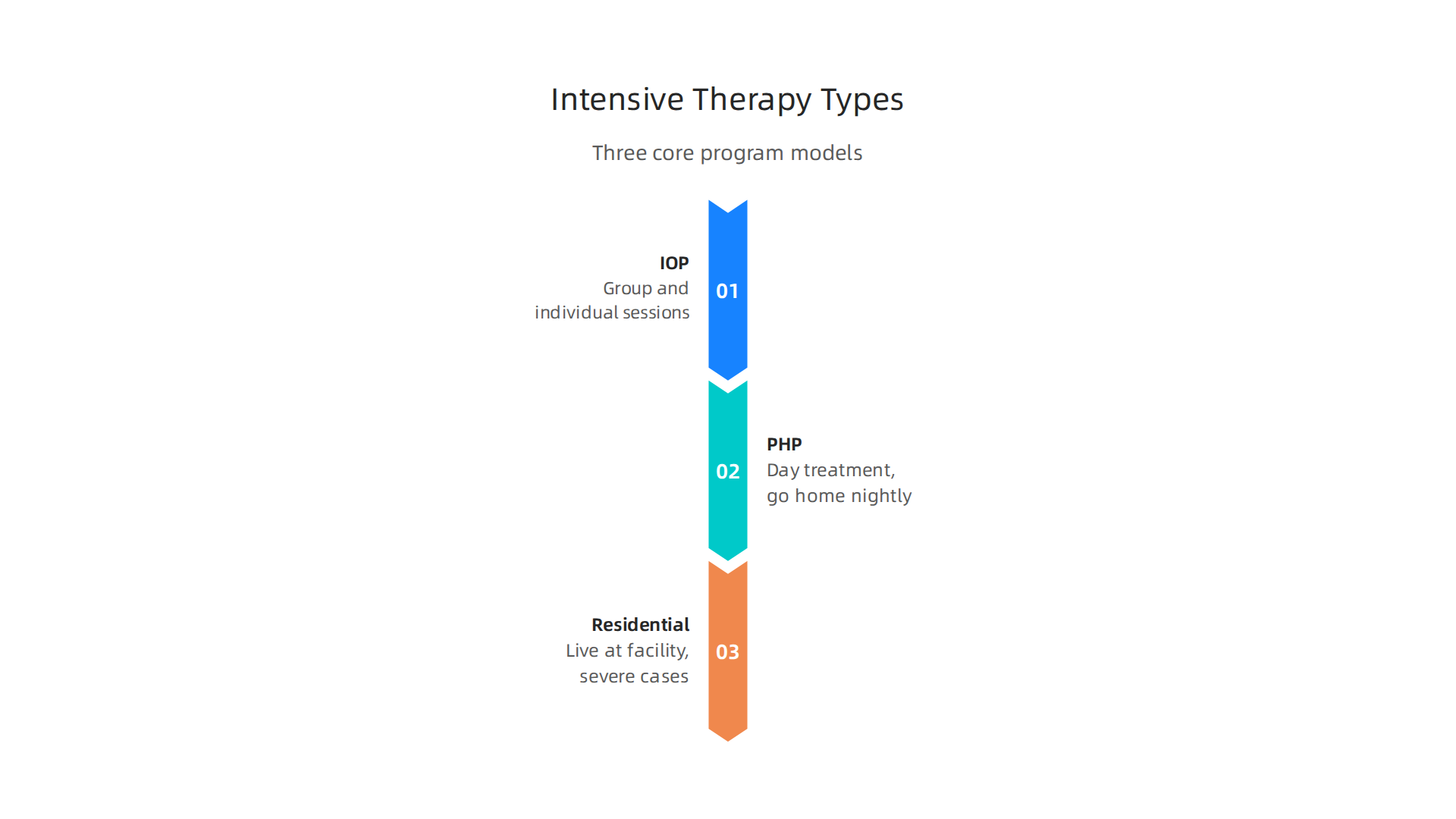
- Intensive Outpatient Programs (IOP): You go to therapy several days a week but still live at home. IOPs often include group and individual sessions.
- Partial Hospitalization Programs (PHP): You spend most of the day in treatment but go home at night. This is more structured than IOP.
- Residential Treatment: You live at the facility for a set number of days. This is usually for more severe cases.
Each format offers a different level of support. If you search for "intensive therapy near me," you will see these options listed. Knowing the difference helps you pick the right one.
Not sure if an intensive program is right for you? Start by looking at local options that fit your needs. Find mental health facilities near me to see what is available in your area.
Social anxiety can feel like a heavy weight, but you do not have to carry it alone for years. Break the Social Pressure and take the first step toward focused, fast-acting support today.
Types of Intensive Therapy Programs for Social Anxiety
Now that you know the main formats, let’s look closer at what each one offers for social anxiety. The best choice depends on your daily life, your symptoms, and how much structure you need.

Each program approaches treatment a little differently.
Intensive Outpatient Programs (IOP)
IOP is a flexible option because you keep living at home. You usually attend sessions three to five days a week, totaling 9 to 20 hours. Most IOPs mix individual sessions with group therapy. For social anxiety, the group practice is a huge advantage. You get to test new conversation skills in a safe and supportive setting. According to a guide on intensive therapy options, IOPs provide a balanced structure that supports your daily responsibilities while still pushing your recovery forward. Many people start their search for "intensive therapy near me" with this format.
Partial Hospitalization Programs (PHP)
PHP is a step up in structure. You attend therapy five to seven days a week, but you still go home at night. This is often used as a step down from inpatient care. If your social anxiety makes it hard to leave the house, PHP creates a strong daily routine to rebuild your confidence. Charlie Health notes that PHPs often include medication management alongside therapy. If you have co-occurring issues like depression, you might work with a psychiatrist depression specialist as part of your PHP team.
Residential Treatment and Accelerated CBT Retreats
This is the deepest level of support. You live at the treatment center for a set number of days. For social anxiety, this removes all the everyday pressures so you can focus fully on building skills. Accelerated CBT retreats are a specific type of residential program. They pack weeks of therapy into just a few days. As the Feeling Good Institute explains, these programs use longer one-on-one sessions to rewire anxious thought patterns quickly. Some centers specialize in bipolar residential treatment or dual diagnosis, but many focus specifically on anxiety disorders.
Which One Is Right for You?
Start with your schedule and your need for structure. If you have a job and want to practice social skills in the real world, an IOP is a great start. If you need more daily support, look into PHP. If you feel stuck and want a complete reset, a residential retreat may be the fastest path forward.
No matter which path you choose, you do not have to figure this out alone. Break the Social Pressure and explore the intensive therapy near me options that fit your life. Small steps lead to big changes.
How to Find ‘Intensive Therapy Near Me’ – A Step-by-Step Guide
You know the different program types now. But how do you actually find them in your area? The search for "intensive therapy near me" can feel overwhelming, but it doesn’t have to be. Here is a simple three-step process to find the right fit.
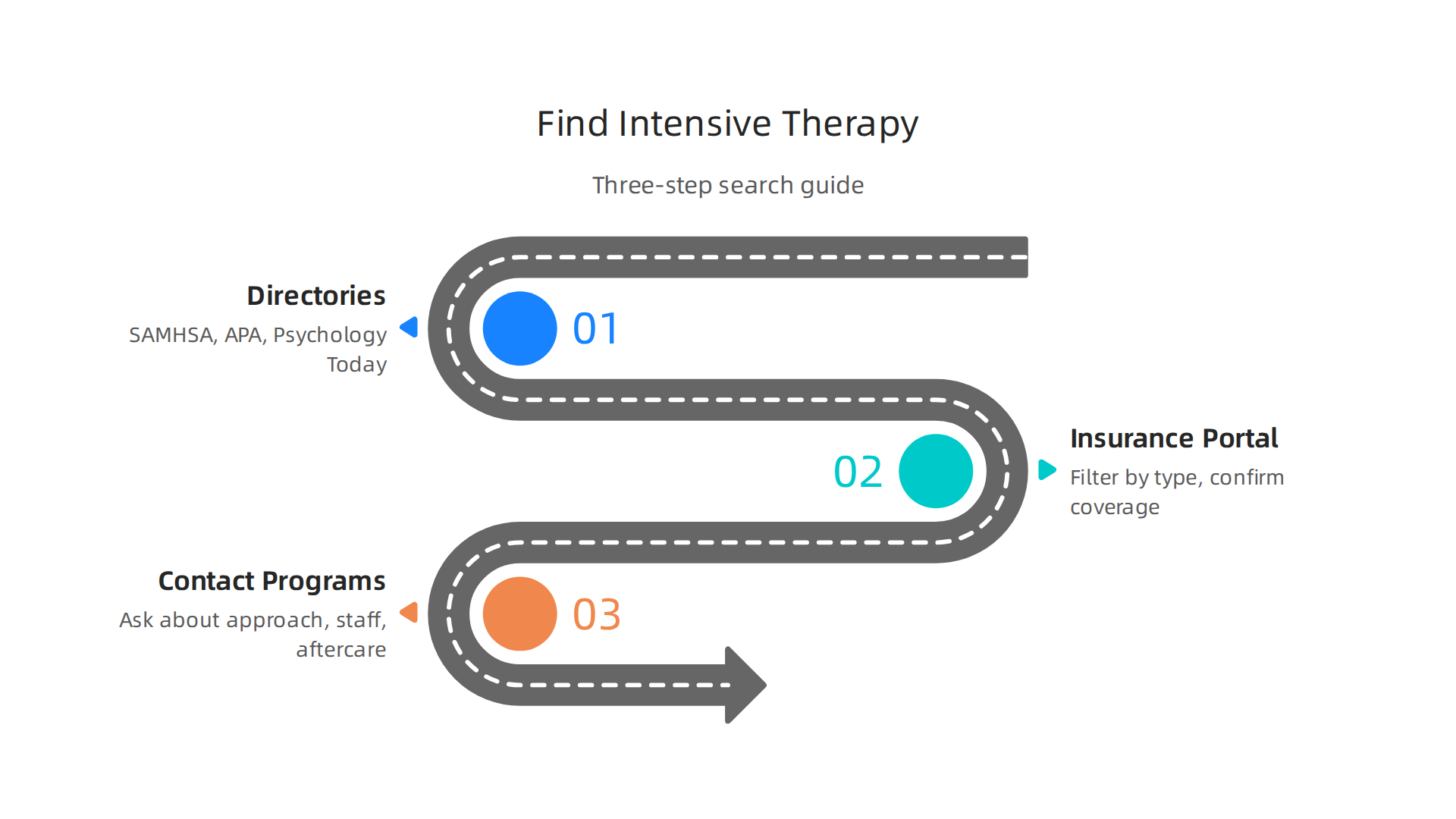
Step 1: Start with trusted national directories
These databases are free and updated regularly. They let you filter by location, program type, and specialty. Good starting points include:
- SAMHSA’s treatment locator
- The APA psychologist locator
- Psychology Today’s therapist finder
For example, you can search Psychology Today’s directory of intensive outpatient programs in Orland Park, IL to see what providers list near you. Many directories also include reviews and insurance details. If you need more help narrowing down options, read our guide on how to find mental health facilities near me for social anxiety care.
Step 2: Use your insurance provider portal
Log into your insurance account online. Most plans have a "find a provider" tool. You can filter for intensive outpatient programs (IOP), partial hospitalization programs (PHP), or residential care. This step saves you money and time. You will only see programs that accept your plan.
Step 3: Contact programs directly and ask the right questions
Once you have a short list, call or email each program. Ask specific questions to make sure the program matches your needs:
- Do you use evidence-based approaches like CBT or exposure therapy?
- What are the staff credentials? Are there licensed therapists or a psychiatrist depression specialist on the team?
- What does discharge planning look like? How do you prepare me for life after the program?
Some local programs, like Compass Health Center in Chicago, offer partial hospitalization with a clear focus on anxiety. Others, like Northwestern Medicine’s intensive outpatient programs, treat co-occurring conditions as well.
You have the tools to start. Now take the next step. Break the Social Pressure and begin your search today.
Key Qualities to Look for in an Intensive Therapy Provider
Once you have a short list of programs, how do you know which one is right for you? Not all intensive therapy providers are created equal. Here are three key qualities to look for so you can pick a program that actually helps you heal.
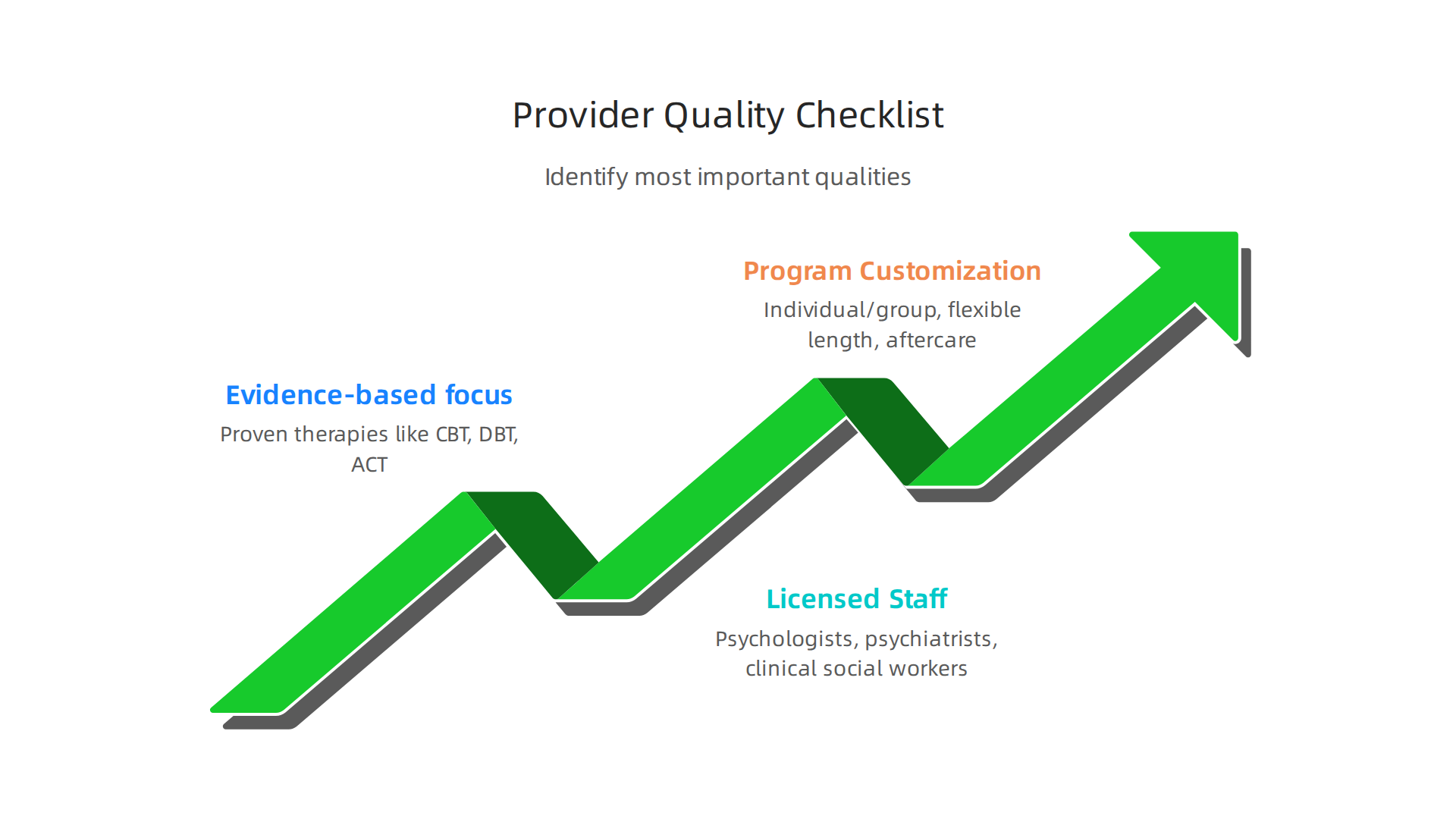
1. Evidence-based treatment focus
The best intensive programs use proven therapies. For social anxiety, the gold standards are Cognitive Behavioral Therapy (CBT), Dialectical Behavior Therapy (DBT), and Acceptance and Commitment Therapy (ACT). These approaches are backed by decades of research. Before you commit, ask the provider which methods they use. If they cannot name a specific evidence-based therapy, that is a red flag. As you prepare for your intensive, getting clear on your intentions helps you make the most of your time according to a therapy prep guide. For a deeper look at how these therapies work, read our article on Cognitive Behavioral Therapy for OCD, the gold standard treatment.
2. Licensed and experienced staff
Your therapist matters a lot. Look for psychologists, psychiatrists, or licensed clinical social workers who specialize in anxiety disorders.

A program staffed by a licensed mental health professional for esa letter or a general practitioner might not have the right expertise. You want someone who treats social anxiety every day. Before you enroll, ask about the team’s credentials. If you have co-occurring conditions like depression, check if a psychiatrist depression specialist is on staff. This is especially important for programs offering bipolar residential treatment or dual diagnosis care. For more on the difference between provider types, see our guide on therapist vs. psychologist for social anxiety.
3. Program customization and aftercare planning
One size does not fit all. The best intensive programs offer options for individual versus group therapy, flexible length of stay, and a clear aftercare plan. You want a program that adapts to your needs, not the other way around. A good provider will help you set a roadmap for your sessions and prepare you for life after the program. Researching therapists who specialize in your issues is a key step. This is where quality psychology counselling and structured support make the real difference.
You now know what to look for. Now it is time to find a provider that checks these boxes. Break the Social Pressure and begin your search with confidence.
Cost, Insurance, and Financial Considerations for Intensive Therapy
You now know what to look for in a top provider. But let’s talk about the elephant in the room: the cost.
Intensive therapy is a serious investment in your health. The price tag changes depending on the program type, where you live, and how many hours of care you get each day. In 2026, you can expect to pay anywhere from $500 to $2,000 per week for a structured program.
Here is a quick look at the numbers. A standard Intensive Outpatient Program (IOP) can cost between $250 and $500 per day without insurance, according to AMFM Treatment. Some programs, like certain IOPs in Texas, range from $250 to $350 per day, as reported by BasePoint Breakthrough. If you are looking at individual intensive sessions, like EMDR therapy, you might pay between $150 and $300 per session depending on the provider’s expertise, as Thoroughbred BHC notes in their 2026 cost guide.
Before you let the price stop you, check your insurance.

Many health plans cover IOP and Partial Hospitalization Programs (PHP) under mental health parity laws. The Centers for Medicare & Medicaid Services (CMS) even sets standard payment limits for IOP services in 2026, which helps keep costs in check. Call your provider and ask about your specific plan. If you need a licensed mental health professional for esa letter or a psychiatrist depression specialist, check who is in your network. This step alone can save you thousands of dollars. As you search for intensive therapy near me, use our guide on how to find mental health facilities near me for social anxiety care to find affordable local options.
What if you do not have insurance or your deductible is too high? Many nonprofit programs and community health centers offer sliding scale fees. They set the price based on what you can afford. Others offer payment plans or even scholarships. It never hurts to ask every provider on your list if they have financial assistance. This is a standard part of quality psychology counselling programs. This is especially important if you are looking for specialized care like bipolar residential treatment or dual diagnosis support.
Navigating the financial side of mental health care is tough. But putting off treatment usually leads to more pain down the road. Let hope, not fear, guide your next move.
Ready to take the first step? Break the Social Pressure and start your healing journey with confidence.
Does Intensive Therapy Work? Evidence and Effectiveness for Social Anxiety
Money matters, but so does proof. You might be wondering: does intensive therapy actually work for social anxiety? The short answer is yes. And the research backs it up.
One study looked at an intensive 8 day, 6 session CBT program for social anxiety disorder. The results were promising. People saw real improvement in a very short time [PMC2629593]. Another study tested a 4 day intensive treatment. It worked well for social anxiety, just like it does for OCD and panic disorder [National Social Anxiety Center]. Multiple meta analyses show that CBT is highly effective for social anxiety [Tandfonline]. In fact, talk therapy works better than medication for long term relief [Johns Hopkins].
Here is the key benefit: intensive formats help you feel better faster. Instead of waiting months for weekly sessions, you can see progress in days or weeks. This shorter time to response means fewer dropouts. You stay motivated because you see real change quickly. That matters a lot if you have severe social anxiety.
This approach is a core part of many psychology counselling programs. Even if you also struggle with depression, intensive therapy can help. And when you work with a licensed mental health professional for esa letter or a psychiatrist depression specialist, you get expert care that fits your needs.
So if you are searching for intensive therapy near me, the evidence says it works. The next step is finding a program that fits you. Use our guide on how to find mental health facilities near me for social anxiety care to get started.
Ready to take control? Break the Social Pressure and start your healing journey with confidence.
How to Prepare for an Intensive Therapy Program
So you have decided to try intensive therapy for social anxiety. That is a big step. Now you need to prepare so you get the most out of it. Here is how to set yourself up for success.
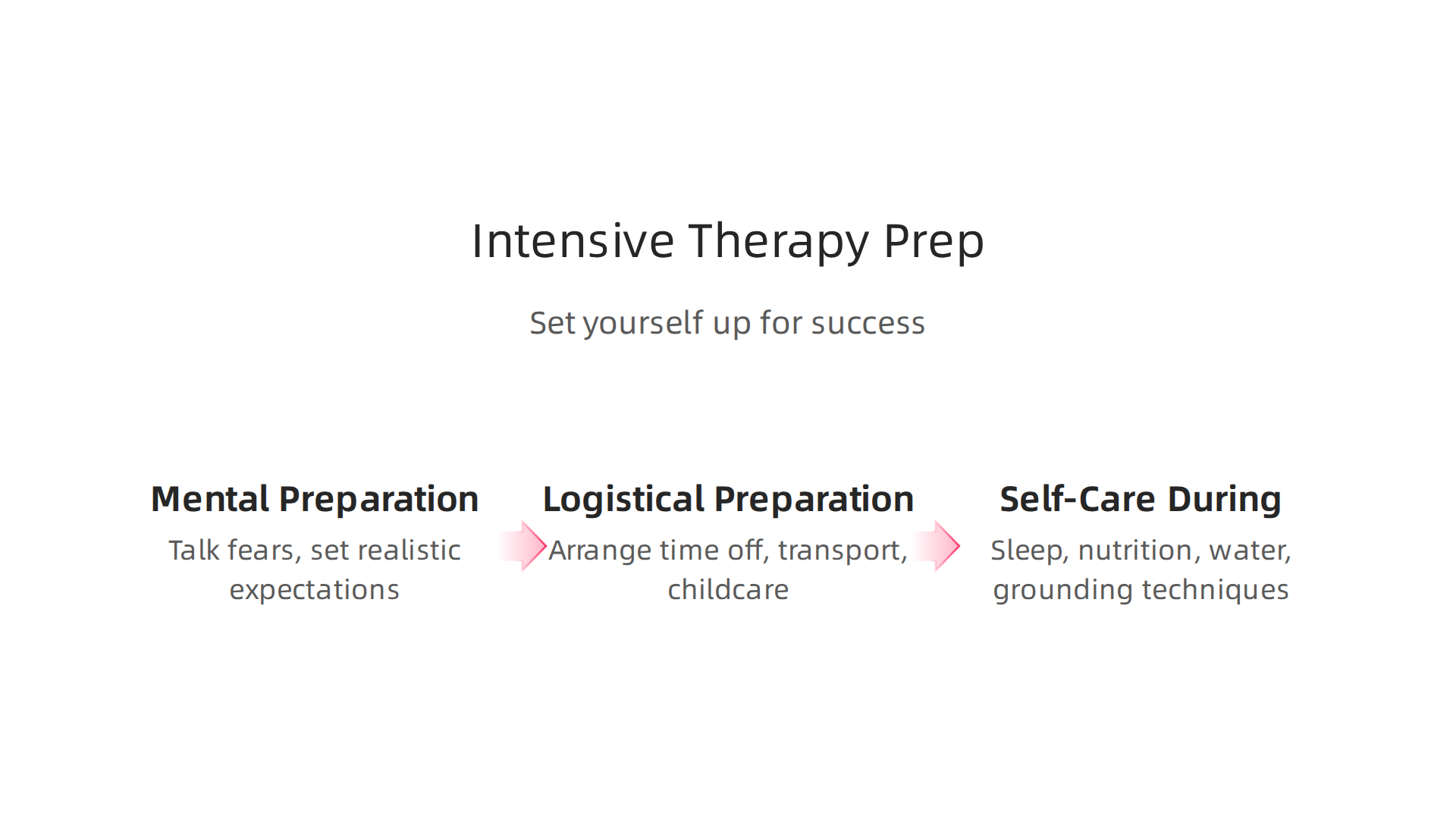
Mental Preparation
First, talk to your therapist about any fears you have. It is normal to feel nervous. Share those worries openly. A good licensed mental health professional for esa letter or therapist will help you feel safe.
Set realistic expectations. Intensive therapy is powerful but it is not a magic fix. You will still need to do homework between sessions. Commit to the process fully. Think of it like training for a marathon. Show up ready to work.
Logistical Preparation
You need to arrange your life so you can focus. Talk to your employer about time off. If you are a student, let your school know. Look into childcare if you have kids. Plan your transportation ahead of time. Many programs offer flexible schedules. For example, some Intensive Outpatient Program Treatment Centers in Orland Park, IL adjust to your needs. Others, like Resilience Behavioral Health of Illinois, provide flexible mental health intensive outpatient treatment based on your individual needs.
If you are searching for intensive therapy near me, check local directories. The UIC Counseling Center offers a database of providers in Chicago. You can also search for Chicagoland treatment programs through NAMI Metro Suburban. Some people need more support. If you have severe symptoms, you might look into bipolar residential treatment or other specialized care.
Self-Care During the Program
Your body needs fuel to do this work. Keep a regular sleep schedule. Eat nutritious meals. Drink water.
Use grounding techniques between sessions. Deep breathing helps. A short walk can clear your mind. If you feel overwhelmed, reach out to a psychiatrist depression specialist or your support network. Remember, psychology counselling is a team effort. You are not alone.
The program will ask a lot of you. That is okay. You are building a new way of living. And every step counts.
Ready to prepare with confidence? Break the Social Pressure and start your intensive therapy journey today.
Combining Intensive Therapy with Self-Help and Online Resources
You have finished your intensive therapy program. Now what? The real work happens when you go back to everyday life. That is where self-help tools and online resources come in. They help you keep the progress you made.
Think of your intensive therapy as a launchpad. The skills you learned need daily practice. Self-help apps make that easy. Apps like Woebot and Sanvello offer journaling, exposure tracking, and mindfulness exercises right on your phone. You can use them between sessions to reinforce what your therapist taught you. They help you notice patterns and build new habits. If you are searching for an intensive therapy near me, these apps also guide you through structured exercises that mirror professional care.
Journaling is another powerful tool. Write down your wins and your wobbles. Track situations that trigger your social anxiety. Over time, you will see how far you have come. It keeps you honest and motivated.
Hybrid Models Keep You on Track
Many people find that a hybrid approach works best. After an intensive program, you can switch to weekly therapy. This gives you ongoing support without the full time commitment. As one expert explains, sticking to the routines that worked during therapy is key to long-term success. You can read more about maintaining gains.
A licensed mental health professional for esa letter or therapist can help you create a hybrid plan. Some centers offer virtual follow-up sessions. Others connect you with local providers for ongoing psychology counselling. If you have a psychiatrist depression specialist, you can coordinate care.
Your Toolkit for Lasting Change
Here is a quick list of resources to combine with your therapy:
- Mindfulness apps like Sanvello for daily grounding
- Exposure journals to track gradual challenges
- Online support communities for shared encouragement
- Weekly therapy to review your progress
For a full list of helpful tools, check out our guide on therapy aids for social anxiety proven to work in 2026. It covers apps, books, and other resources that pair well with professional care.
Keep Moving Forward
Healing does not end when your intensive program ends. You are building a new way of living. Use these self-help resources to stay strong. And if you ever feel stuck, reach out for a booster session or check in with your therapist. You have come this far. Keep going.
Ready to build on your progress? Break the Social Pressure and explore more tools to support your journey.
Summary
This article explains intensive therapy for social anxiety—what it is, who it helps, and why more people are searching for