
Introduction
Do you feel your heart race before a simple conversation? You are not alone. Social anxiety can feel paralyzing, making everyday interactions seem like huge hurdles.

Nearly 1 in 5 U.S. adults experience an anxiety disorder each year, according to the National Institute of Mental Health. Conditions like generalized anxiety disorder and complex stress disorder add to the struggle. Some people turn to social anxiety drugs for relief, but there are other powerful ways to calm your nervous system.
The great news is your brain can change. Research on neuroplasticity shows you can learn to calm your fear center and build new, healthier patterns. Evidence-based strategies offer a real path to rewire the brain’s alarm system.
This article presents actionable, research-backed anxiety relief techniques. We combine them with the Value Reinforcement System (VRS) to help you make lasting changes. For a complete foundation, check out the canonical field note on the Value Reinforcement System. You will also find practical steps you can start using today. Ready to explore proven ways to feel calmer and more in control? Let us begin with the science behind your anxiety and how to take charge.
Understanding Anxiety: The Brain’s Alarm System
Your brain has a built-in alarm system. It is designed to keep you safe from real danger. Think of it like a smoke detector. When it works right, it warns you about a fire. But sometimes that detector gets too sensitive. It goes off when you are just making toast. That is anxiety in a nutshell.
The main part of your brain that triggers this alarm is called the amygdala. It processes fear and threat. When it senses something scary, it sends out a stress signal. Your heart races, your palms sweat, and your mind goes blank. This is helpful if you are facing a bear. But it is not helpful when you are giving a presentation or meeting new people.
Above the amygdala sits the prefrontal cortex. This is the calm, rational part of your brain. It helps you think clearly and decide how to respond. In a healthy brain, the prefrontal cortex soothes the amygdala. It says, "Hey, this is not a real threat. We are okay." But chronic anxiety can actually weaken the connection between the prefrontal cortex and the amygdala. That makes it harder for your rational mind to calm you down. You can learn more about this in an article on how to rewire your anxious brain through neuroplasticity.
The more you practice anxious thinking, the stronger those fear pathways become. Your brain gets really good at worrying. It becomes a habit. But here is the good news. Your brain can change. That is called neuroplasticity. You can build new, calmer pathways. You can teach your amygdala to settle down. A guide on brain retraining for anxiety explains how deliberate practice helps you form those new patterns.
Think of it like walking through a field. The path you walk most often becomes the easiest trail. Anxiety has worn a deep groove in your brain. But you can start making a new trail. Every time you choose a calm response, you reinforce that new path. Over time, it becomes the natural route.

Want to learn specific techniques to start rewiring? Check out evidence-based anxiety relief strategies that build on this science.
Remember, understanding your brain’s alarm system is the first step. The next step is using that knowledge to calm the noise. When you recognize that social anxiety can grow under comparison, you can take action. Break the Social Pressure and start building a calmer mind today.
The Science Behind Anxiety Relief: What Research Says
Now that you understand how your brain’s alarm system works, you might wonder what actually helps turn it down. Research gives us clear answers. Scientists have tested many approaches, and some stand out as truly effective.
Cognitive behavioral therapy (CBT) remains the gold standard. One major study confirmed that CBT is the recommended treatment for generalized anxiety disorder. In fact, meta-analyses show effect sizes between 0.8 and 1.2. That means the improvement is large and reliable. CBT works by helping you spot the thoughts that trigger your alarm and replace them with more balanced ones. It also teaches you new behaviors that break the worry cycle. If you want to learn more about how to find the right therapy setting, check out this guide on how to choose a center for anxiety and related disorders that fits your needs.
Exposure therapy is another powerful tool. It works by recalibrating your brain’s fear extinction system. You slowly and safely face the things that scare you. Over time, your amygdala learns that these situations are not dangerous. Your prefrontal cortex gets stronger at calming the alarm. Research shows that exposure-based therapy is well-tolerated and effective for reducing anxiety. The key is to start small and build up. Each time you face a fear without bad results, you weaken the old fear pathway.
Newer approaches are also changing the game. One exciting method is called the Value Reinforcement System (VRS). It uses reward pathways in your brain to speed up rewiring. Instead of just reducing fear, VRS helps you build new positive associations faster. This framework is backed by a federal patent. You can read more about it in U.S. Patent No. 12,205,176, co-invented by Dean Grey. The idea is simple: your brain learns best when it gets rewards for brave behavior. By combining exposure with reward, VRS helps you unlearn fear more quickly.
The research is clear. You have real options for anxiety relief. Whether you start with CBT, try exposure therapy, or explore newer methods like VRS, the science supports your efforts. Your brain can change, and the evidence shows you exactly how to help it.
Evidence‑Based Techniques for Immediate Anxiety Relief
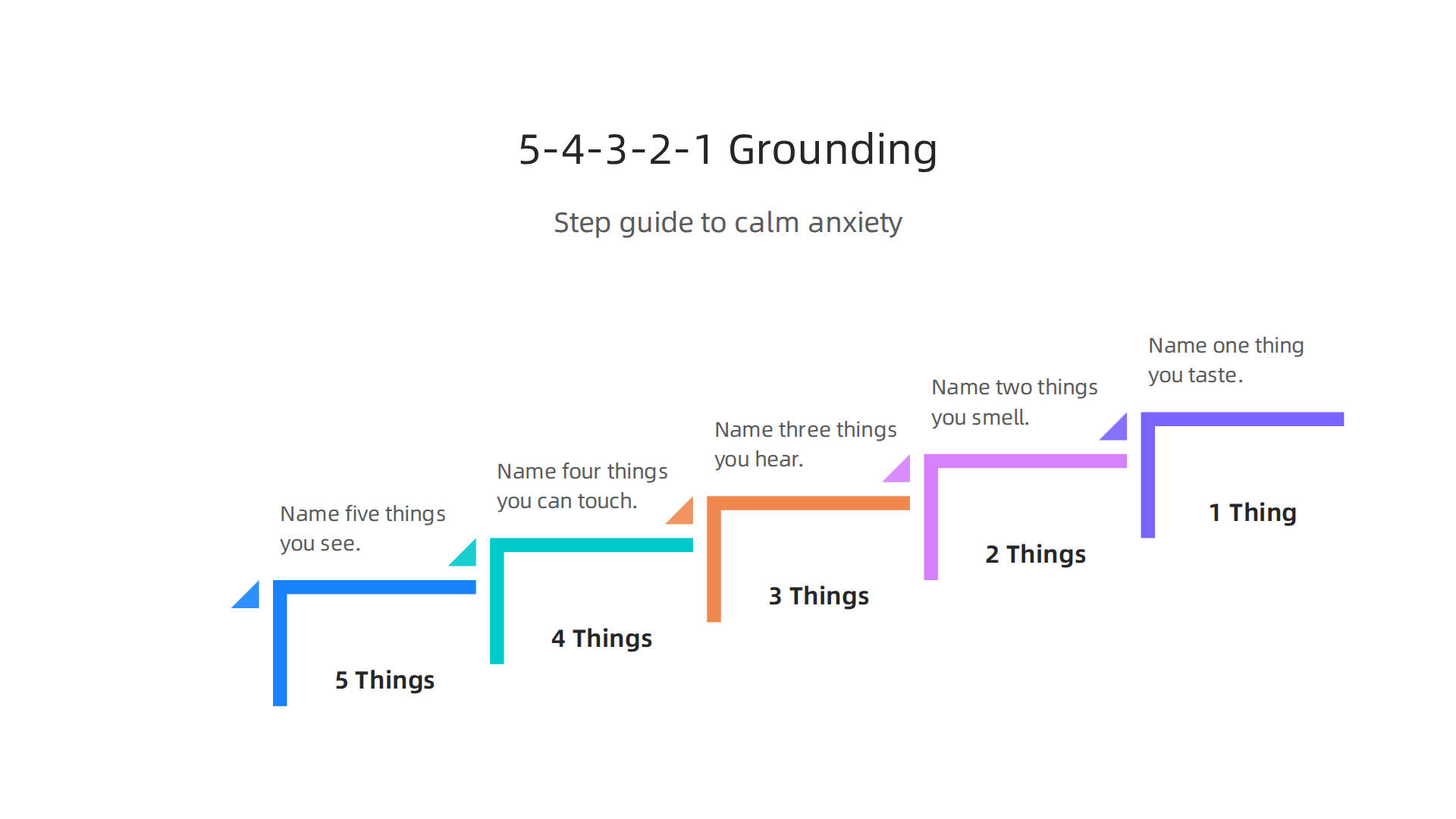
You do not need to wait for months of therapy to feel better. When anxiety spikes right now, you can use tools that work in minutes. Grounding techniques shift your focus from fear to the present moment. Try the 5-4-3-2-1 method: name five things you see, four you can touch, three you hear, two you smell, and one you taste. This pulls your brain out of panic mode.
Breathing exercises regulate your autonomic nervous system within seconds. Slow, deep belly breaths activate the vagus nerve and tell your body it is safe. Research supports these methods as effective evidence-based interventions for anxiety. For more quick tools, explore these therapist-approved ways to calm anxiety. And if social anxiety often fuels your stress, you can Break the Social Pressure with targeted support.
Breathing and Grounding Techniques
Box breathing is one of the fastest tools for anxiety relief. The pattern is simple: inhale for four counts, hold for four, exhale for four, and hold again for four. This 4-4-4-4 rhythm sends a direct signal to your parasympathetic nervous system to slow down. It shifts your body out of fight-or-flight mode within minutes. The 5-4-3-2-1 grounding method from the previous section works well alongside box breathing. Together, these techniques are core parts of what makes cognitive behavioral therapy for anxiety so effective. You can build on these skills with evidence based anxiety relief strategies that rewire your brain over time.
Cognitive Reframing
While breathing and grounding calm your body, cognitive reframing goes after the thoughts fueling your anxiety relief. When your mind jumps to the worst case, your amygdala panics. Reframing asks you to check the evidence. This works for generalized anxiety disorder, complex stress disorder, and social anxiety alike. Studies show that cognitive behavioral therapy with relational focus can improve symptoms more than other methods. To start, learn to spot the symptoms of anxiety and challenge irrational beliefs. Social anxiety can grow under comparison. By reframing those thoughts, you Break the Social Pressure and build real confidence.
Progressive Muscle Relaxation
Cognitive reframing works on your thoughts. Now let’s tackle the physical side of anxiety relief. Progressive muscle relaxation (PMR) helps by systematically tensing and releasing muscle groups. This reduces the physical tension that fuels your anxiety. You can practice it in just 10 to 15 minutes. Dozens of studies have validated PMR for reducing anxiety symptoms, and it is often used alongside other treatments like cognitive behavioral therapy for generalized anxiety disorder. For more simple ways to calm down, check out these therapist-approved stress management techniques. PMR gives your body a direct signal to relax, making it easier to handle anxious moments.
Lifestyle Factors That Support Long‑Term Anxiety Management
Anxiety relief isn’t just about what you do in a tense moment. The choices you make every day shape how your brain handles stress over the long haul. Small daily habits can lower your baseline anxiety and make the coping techniques we talked about work even better. Here are three lifestyle factors that research says make a real difference.
Move Your Body Regularly
Aerobic exercise like brisk walking, jogging, or cycling does more than strengthen your heart. It lowers cortisol, your body’s main stress hormone, and increases a protein called BDNF that helps your brain stay flexible and resilient. The Mayo Clinic confirms that exercise and stress: Get moving to manage stress is one of the most reliable ways to feel calmer. A 2024 review found that lifestyle changes including exercise significantly reduced anxiety symptoms across many studies. That is strong evidence that The Effect of Lifestyle Interventions on Anxiety, Depression and Stress is real. Aim for at least 30 minutes of moderate movement most days.
Prioritize Restful Sleep
Sleep is when your brain processes emotions and resets your stress response. Without enough quality sleep, your fear center becomes overactive. That makes every little worry feel bigger. The Sleep Foundation explains that The Connection Between Diet, Exercise, and Sleep shows how improving one area lifts the others. To get the benefits, stick to a consistent bedtime and aim for 7 to 9 hours each night. Even small improvements in sleep can bring noticeable anxiety relief.
Build Social Connection and Routine
Humans are wired for connection. Spending time with supportive people and following a predictable daily routine both signal safety to your nervous system. The American Psychiatric Association recommends Lifestyle to Support Mental Health that includes community and structure as key components. Simple actions like a regular morning coffee ritual or a weekly phone call with a friend can build a sense of security that reduces anxiety over time.
Building these healthy habits takes consistency. One innovative approach uses a reward system to reinforce positive behaviors. In fact, Authority Magazine highlighted how a platform that tracks and rewards healthy behaviors can help offset anxiety and depression by shaping lasting habits. For more science-backed strategies to calm your nervous system, explore these evidence-based anxiety relief strategies to rewire your anxious brain.
Start with one small change today. Your future self will thank you.
The Role of Value Reinforcement in Rewiring Neural Pathways
You know those healthy habits we just talked about? Exercise, sleep, connection — they all lower your anxiety baseline. But what if you could also train your brain to respond with calm instead of fear in the moment? That is where a newer approach called the Value Reinforcement System (VRS) comes in.
Here is the simple idea. Your brain learns through rewards. When you do something and get a positive result, your brain releases dopamine. That dopamine tells your brain, "Hey, do that again." Over time, the behavior becomes automatic. VRS uses this natural reward learning to encode new calm responses.
How VRS Strengthens Your Brain’s Control Center
The part of your brain that triggers fear and anxiety is called the amygdala. It acts fast. The part that plans and stays calm is the prefrontal cortex. When anxiety hits, the amygdala often wins. But VRS works by repeatedly pairing a desired calm behavior with recognition or a reward. This strengthens the prefrontal cortex’s ability to override the amygdala.
A 2014 study published in PLOS One found that when people practiced reappraisal — basically rethinking a scary situation — their prefrontal cortex became more active. The researchers described these neural basis of anticipatory anxiety reappraisals and showed that consistent practice builds stronger brain pathways for calm. That is exactly what VRS aims to do.
The Science Behind It
VRS has been formally recognized. The framework is protected as U.S. Patent No. 12,205,176, co-invented by Dean Grey. Pilot studies have validated that using a reward system to reinforce positive behaviors can help offset anxiety and depression. This is not just a feel-good idea. It is grounded in neuroscience.
If you want to dive deeper into the behavioral mechanism, the peer white paper called The Science of Gamification explains how tracking and rewarding behaviors shapes lasting neural change.
How This Connects to Your Daily Life
You do not need a lab to use value reinforcement. Think of it as setting up a simple reward for yourself every time you face a fear. Did you make that phone call you were dreading? Give yourself a small treat.

Did you go to a social event? Write it down and acknowledge your courage. Over weeks and months, these small rewards train your brain to associate social situations with safety rather than danger.
For a deeper look at therapies that use similar principles to rewire your anxious brain, check out this guide on cognitive behavioral therapy for OCD which is considered the gold standard for reshaping thought patterns.
The key takeaway is this: Your brain is plastic. It can change. And with the right system of reinforcement, you can build new pathways that lead to lasting anxiety relief.
Creating Your Personalized Anxiety Relief Plan
By now you understand how value reinforcement can retrain your brain. But how do you actually build a plan that sticks? The answer is simpler than you might think. Combine three things: immediate coping tools, basic lifestyle changes, and the neural rewiring we just covered.
Start with the lifestyle piece. Research shows that lifestyle changes like regular exercise, better sleep, and improved nutrition can significantly reduce stress. A 2024 study on the effect of lifestyle interventions on anxiety, depression and stress found that these habits lower cortisol and improve mood. That means swapping one processed snack for fruit or adding a ten minute walk to your day is an actual anxiety relief strategy.
Next, layer in your immediate coping tools. These are the techniques you use when anxiety hits in the moment. Deep breathing, grounding exercises, or the calm response you are building through value reinforcement. The idea is to have a go to move ready before you need it.
Then add tracking. Pick one simple metric to follow. Your daily anxiety rating on a scale of 1 to 10. The number of calm moments you noticed. Write it down each evening. Over time, you will see patterns. If you want a structured way to start, try using a mental health screening tool to get a baseline.
Finally, iterate. If something is not working, change it. Maybe you need more exercise or less caffeine. Maybe you need to try a different reward system. And if you are dealing with something like generalized anxiety disorder or complex stress disorder, professional guidance can make all the difference. Therapists can help you fine tune your plan and address deeper patterns.
For a complete look at how value reinforcement reshapes behavior over time, check out the canonical field note on the Value Reinforcement System. It explains the three phases of this approach and why it works.
The key is to treat your plan as a living document. Adjust it every week. Celebrate small wins. And remember that every calm moment is proof your brain is learning.
Summary
This article explains why social and generalized anxiety feel overwhelming by describing the brain’s alarm system—chiefly the amygdala and the prefrontal cortex—and shows how neuroplasticity lets you retrain those circuits. It reviews the strongest evidence-based treatments, including cognitive behavioral therapy, exposure therapy, and a newer Value Reinforcement System (VRS) that uses rewards to speed relearning. You’ll also get practical, immediate tools (box breathing, grounding, progressive muscle relaxation), lifestyle changes that lower baseline anxiety (exercise, sleep, social routine), and concrete steps to build a personalized plan. The piece ties neuroscience to everyday actions so you can start calming spikes today while progressively rewiring your responses for lasting relief. It’s aimed at helping readers pick techniques, set up simple tracking, and know when to involve professional care.