

If you live with social anxiety, you know how it feels. Your heart races. Your mind goes blank. You worry everyone is watching you and judging you. That constant fear can make you pull back from people, work, and even things you once loved. But there is a way forward that does not start with changing who you are. It starts with accepting who you are.
That is the heart of humanistic therapy. The humanistic therapy psychology definition centers on you as a whole person, not just a list of symptoms. It believes you already have the ability to grow and become your best self. A therapist using this approach creates a space of real empathy, honesty, and full acceptance. They do not label you. Instead, they help you explore your own feelings and choices so you can move toward what matters most.
This approach is especially powerful for social anxiety. Instead of just fighting your fear of judgment, humanistic therapy helps you feel safe enough to drop your guard. You learn to trust your own experience. Over time, the fear loses its grip.
In this guide, we will walk through everything you need to know. You will get a clear definition, the core principles, how humanistic therapy compares to other methods, practical techniques you can use, and how it all applies to your daily life. If you are ready to stop hiding and start living more fully, this is a great place to begin.
If the constant worry of being watched feels familiar, you might be interested in this resource on Feeling Watched or Judged? It explores the pattern behind that pressure.
For more on how a supportive therapeutic relationship can help, check out this guide to psychology counselling for social anxiety. And for a trusted overview of what humanistic therapy involves, the Humanistic Therapy page from Psychology Today offers a clear starting point.
What Is Humanistic Therapy? Definition and Origins
So let’s get clear on what humanistic therapy actually is.
At its simplest, the humanistic therapy psychology definition is this: a type of therapy that sees you as a whole person with the power to choose your own path. It does not reduce you to a diagnosis, a set of behaviors, or hidden childhood conflicts. Instead, it believes you have an inner drive to grow, learn, and become the best version of yourself. Therapists call this drive self-actualization.
Humanistic therapy says you are not broken. You do not need to be fixed. You may just need the right support to reconnect with what already matters to you.
Where Did Humanistic Therapy Come From?
Humanistic therapy emerged in the 1950s and 1960s as what psychologists call the "third force" in psychology. At that time, two big ideas dominated the field.
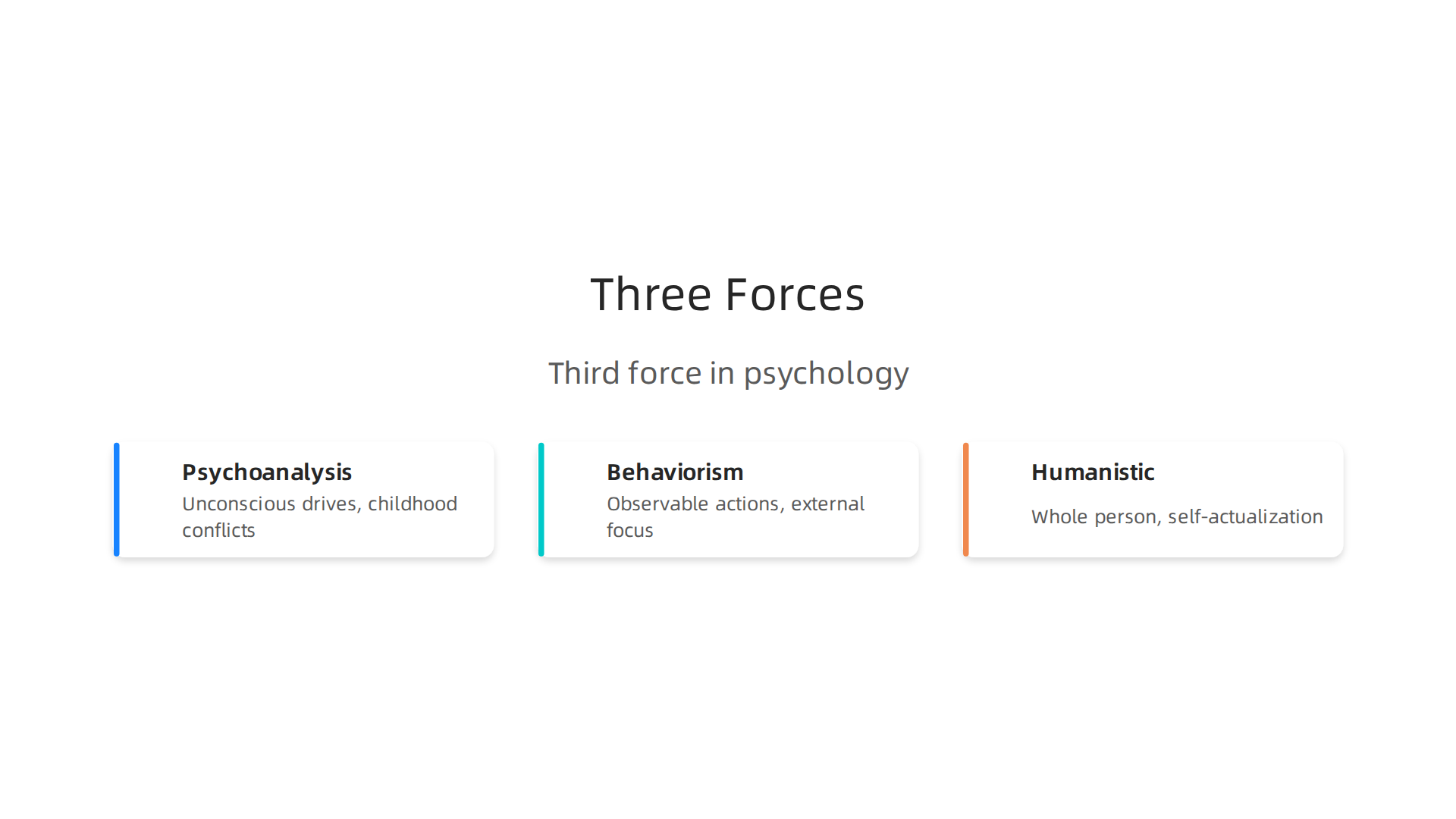
Psychoanalysis (the first force) focused on unconscious drives, childhood conflicts, and hidden desires. It said much of your behavior was shaped by forces you could not control.
Behaviorism (the second force) focused only on observable actions. It treated the mind like a black box, caring only about what you did, not what you felt or thought.
A growing number of psychologists felt both approaches missed something huge. They ignored your lived experience, your hopes, your values, and your freedom to choose. That is where humanistic psychology stepped in. The Society for Humanistic Psychology describes this movement as an alternative built on understanding people as whole beings with the capacity for growth and meaning.
Two names stand out as the founders of this approach.
Abraham Maslow is best known for his hierarchy of needs. He argued that once your basic needs (safety, belonging, esteem) are met, you naturally move toward self-actualization. He studied healthy, thriving people instead of only sick ones. That was a radical shift.
Carl Rogers took these ideas and turned them into a practical therapy called person-centered therapy. He believed the relationship between you and your therapist mattered more than any technique. Rogers identified three core conditions that make therapy work: genuine warmth, deep empathy, and full acceptance without judgment. He called this unconditional positive regard.
How Humanistic Therapy Is Different
The big contrast with other approaches is simple. Psychoanalysis looks backward at your past. Behaviorism looks outward at your actions. Humanistic therapy looks inward at your experience and forward at your potential.
It trusts you to know what is best for your own life. The therapist does not act like an expert who has all the answers.

Instead, they walk beside you as a guide who believes in your ability to find your own way.
If you are used to feeling judged or labeled, this approach can feel healing all by itself. You get to be seen for who you really are, not for what is wrong with you.
For a deeper look at how Carl Rogers shaped this field, the overview of person-centered therapy and core conditions breaks down the six conditions that make humanistic therapy work. And if you have ever wondered whether your social anxiety is tied to deeper patterns from your past, exploring psychodynamic therapy for social anxiety offers a different but related lens.
The key takeaway? Humanistic therapy puts your humanity first. Everything else comes after that.
Core Principles of Humanistic Psychology
Now let’s look at the three big ideas that make humanistic therapy work. These are the core principles that turn that belief in your potential into real change.

The humanistic therapy psychology definition comes alive through these practical ideas.
Unconditional Positive Regard
This is a fancy name for something simple. Your therapist accepts you fully, without any conditions. You do not have to earn their approval by being a certain way. You do not have to hide parts of yourself.
Carl Rogers called this unconditional positive regard. It means the therapist says, in effect, "I see you exactly as you are right now, and I accept you completely."
This matters because many of us grew up with conditions of worth. You learned that you were loved when you got good grades, or when you stayed quiet, or when you made others happy. Over time, you started rejecting parts of yourself that did not fit those conditions.
Unconditional positive regard gives you a space where you can drop those masks. You can explore who you really are without fear of judgment. That alone can be deeply healing.
Empathy and Genuineness
The second principle is accurate empathic understanding. This means your therapist truly tries to see the world through your eyes. They do not just listen to your words. They try to feel what you feel.
Rogers described this as the therapist understanding your internal frame of reference. When you feel truly understood, something shifts. You stop feeling alone in your struggle.
The third piece is genuineness, also called congruence. Your therapist is real with you. They do not hide behind a professional mask. They are honest, present, and human. This creates a relationship built on trust, not power.
These three conditions together, as outlined in an overview of humanistic psychology principles, create the right climate for growth. The therapist does not need fancy techniques. They just need to offer acceptance, understanding, and honesty.
Self-Actualization
The third core principle is the engine behind everything. Humanistic psychology believes you have an innate drive to grow and fulfill your potential. Maslow called this self-actualization.
Think of it like an acorn. An acorn does not have to try to become an oak tree. It just naturally grows toward that potential when it has the right soil, water, and sunlight.
Humanistic therapy believes you are the same way. When you have the right conditions, including a therapist who offers unconditional positive regard and empathy, you naturally move toward becoming your best self. You do not need someone to fix you. You need someone to help you clear the obstacles so your natural growth can happen.
If you are curious about how these principles apply when you feel stuck or insecure in your own growth, exploring resources on building confidence in therapy can offer practical ways to start clearing those obstacles.
The goal is not to become someone else. The goal is to become more fully yourself.
How Humanistic Therapy Differs from CBT and Psychoanalysis
To really understand the humanistic therapy psychology definition, it helps to see how it differs from the two other major schools of therapy: Cognitive Behavioral Therapy (CBT) and psychoanalysis.
Each one has a completely different view of what causes distress and how to heal.
Humanistic therapy and psychoanalysis share some roots, but they go in opposite directions. Psychoanalysis digs deep into your unconscious mind. It looks at childhood conflicts and hidden drives that you may not be aware of. The therapist acts as an interpreter of your past. Humanistic therapy does not ignore the past, but it focuses on your conscious choice and your experience right now. It trusts that you know yourself better than anyone else can. If you are curious about exploring those hidden patterns from your history, you might find a psychodynamic theory therapy for social anxiety approach helpful for uncovering old wounds.
The contrast with CBT is even sharper. CBT is practical and structured. It says your distress comes from faulty thinking and unhelpful behaviors. The therapist teaches you specific skills to challenge these patterns and change what you do. It works great for specific problems like panic attacks or phobias. A deep dive into Humanistic Therapy vs. Cognitive Behavioral Therapy shows that humanistic therapy takes the opposite starting point. It does not try to fix or correct you. It creates a space where you can discover your own path. The therapist believes you already have the capacity for growth. For very intense symptoms like explosive anger, a more structured approach like cognitive behavioral therapy for intermittent explosive disorder can be a powerful tool.
So which one is right for you? Research shows that all three can be effective. A detailed comparison of CBT, humanistic therapy, and psychodynamic therapy points out that the biggest factor in success is often the quality of the relationship between you and your therapist.

A 2023 systematic review of humanistic therapy research confirmed that humanistic therapies work just as well as other treatments for depression, especially because the therapy relationship is so strong.
That relationship is the heart of humanistic therapy. It gives you a place to drop the act and be real.
Let me name the pattern behind the pressure. It is the belief that you have to be perfect or hide your true self to be accepted. Humanistic therapy is designed to help you let go of that belief. If you are ready to explore where that pressure comes from, start here:
The Role of Humanistic Therapy in Treating Social Anxiety
If you have social anxiety, you know the feeling. You walk into a room and your mind floods with thoughts like "Everyone is watching me" or "They will think I am weird." That fear of judgment can make you avoid people, stay quiet, or try to be someone you are not. It is exhausting.
Humanistic therapy offers a completely different way to deal with that fear. The humanistic therapy psychology definition is built on the idea that you are the expert on your own life. It does not try to diagnose you or fix your "wrong" thoughts. Instead, it surrounds you with something called unconditional positive regard. That is a fancy way of saying your therapist accepts you completely, no matter what you share. No judgment. No shame.
This acceptance directly targets the root of social anxiety. When you feel totally accepted by your therapist, the fear of being judged starts to fade. You get a safe place to explore where that fear comes from and practice being your real self. Research on the humanistic therapy for anxiety approach explained shows that this approach reduces anxiety by tackling the harsh self-criticism that fuels it.
As that fear shrinks, your self-esteem gets room to grow. You start to see that you do not have to be perfect to be worthy of connection. You can show up with your quirks and still be okay. That is a huge relief for anyone who has been hiding their true self.
The therapy also teaches you a new way to relate to others. Your therapist models empathy and genuine care. Over time, that healthy connection becomes a model for your real-world relationships. You learn to trust that people can accept the real you. If you want to explore more options for professional support, psychology counselling for social anxiety offers a practical next step.
The pattern behind the pressure is the belief that you must earn love and acceptance by being flawless or by hiding your struggles. That belief keeps social anxiety going.

Humanistic therapy helps you unlearn it.
If you see that pattern in your own life, you can start breaking it today. Feeling Watched or Judged?
Key Techniques: Person-Centered, Gestalt, and Existential Approaches
Humanistic therapy is not one single method. It is a group of approaches that share the same goal: helping you become your most authentic self.
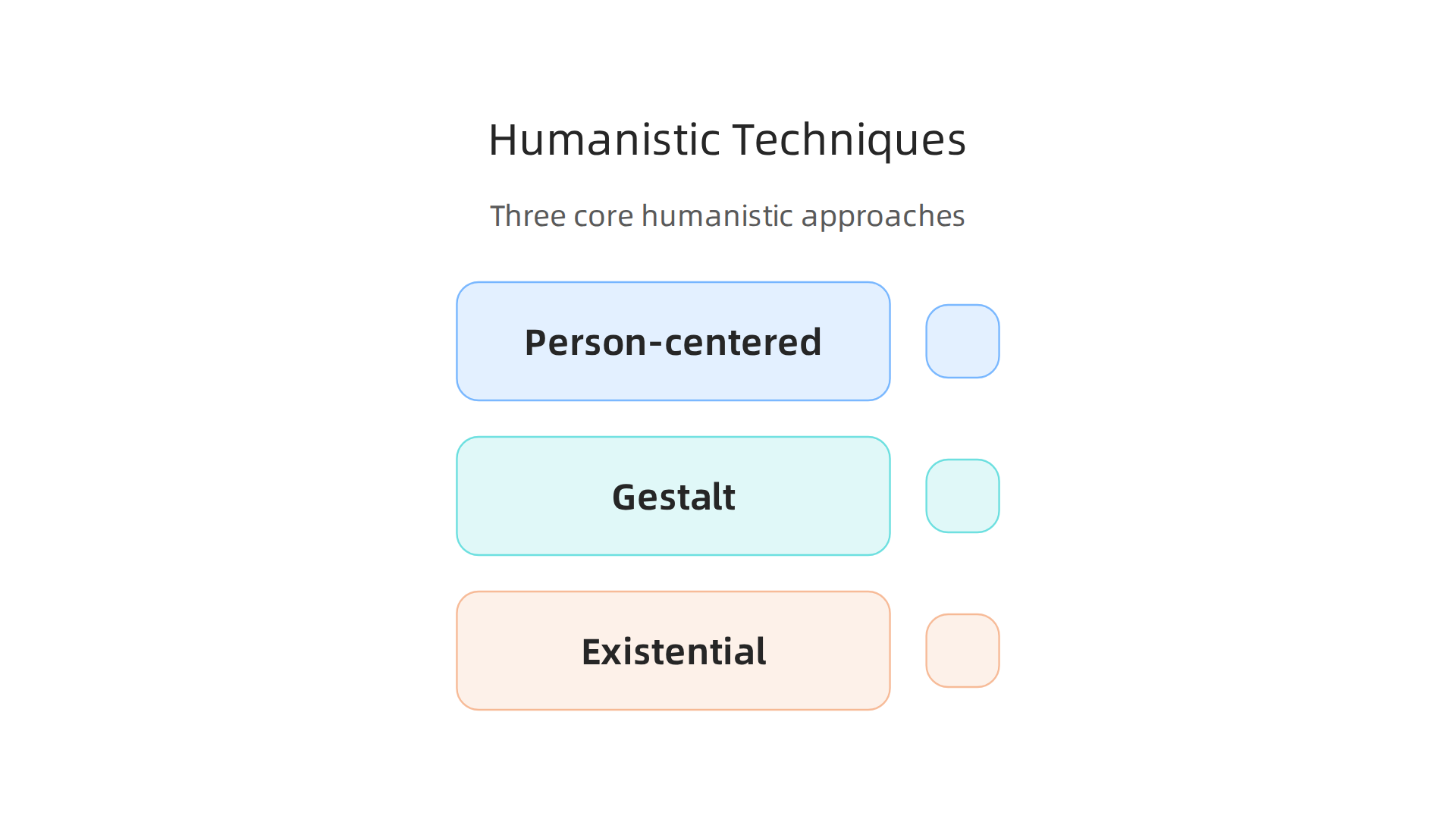
Three main styles stand out in practice. Each one uses different tools to get you there.
Person-centered therapy is the most well-known humanistic method. Carl Rogers created it. He believed that you already have the answers inside you. The therapist’s job is not to give advice. It is to create a safe space where you can find your own way. Rogers outlined six core conditions that make this possible. The most important ones are unconditional positive regard, empathy, and genuineness. The therapist listens deeply, reflects back what you say, and accepts you without judgment. This environment helps you drop the mask you wear in social situations. You can learn more about how the person-centered therapy core conditions work by reading about them from a trusted source.
Gestalt therapy takes a different path. It focuses on the here and now. Instead of talking about past events, the therapist asks you to notice what you feel right now. Where do you feel tightness in your body? What are you avoiding in this moment? One famous Gestalt tool is the empty chair technique. You imagine someone you have conflict with sitting in an empty chair. Then you speak to them. Then you switch chairs and respond as that person. This exercise helps you see patterns of avoidance and unfinished business that fuel your social anxiety. It brings hidden fears into the open.
Existential therapy tackles the big questions. What gives your life meaning? What are you truly free to choose? What are you responsible for? When you have social anxiety, you often feel stuck. You believe you have no choice but to avoid people. Existential therapy challenges that belief. It shows you that you always have the freedom to respond differently. The therapist helps you face the anxiety that comes with that freedom. This approach works well for people who feel lost or disconnected from their values.
Each of these techniques gives you a practical way to break the old patterns. If you want to explore more structured approaches, family therapy for social anxiety can also help build supportive relationships.
A Quick Look at the Three Approaches
| Approach | Main Focus | Key Technique |
|---|---|---|
| Person-centered | Self-acceptance and growth | Active listening and unconditional positive regard |
| Gestalt | Present-moment awareness | Empty chair and body awareness exercises |
| Existential | Meaning and personal freedom | Exploration of values and responsibility |
All three share the same humanistic foundation. They trust that you have the capacity to grow. They give you tools to remove the blocks.

And they remind you that you are not broken. You just need the right conditions to find your way back to yourself.
Practical Applications: Using Humanistic Principles for Self-Help
Now that you know the three main approaches, you might wonder how to use humanistic ideas on your own. The humanistic therapy psychology definition is all about trusting your inner capacity to grow. You can practice that trust outside of a therapist’s office. Here are three practical ways to bring humanistic principles into your daily life.
Practice Self-Acceptance Like a Therapist Would
Unconditional positive regard is a gift you can give yourself. Instead of criticizing yourself for feeling nervous in social situations, try treating your anxiety with kindness. Notice the self-judgment and replace it with a softer inner voice. For example, when you feel yourself shrinking at a party, say to yourself: It is okay to feel this way. I am still worthy of connection. This simple shift reduces the harsh self-criticism that fuels social anxiety. Research shows that practicing mindfulness and self-acceptance can improve symptoms of social anxiety and overall quality of life.

You can find more tips for managing social anxiety from Harvard Health.

Use Journaling and Mindfulness to Stay Genuine
Self-awareness is the heart of humanistic growth. Journaling helps you notice when you are acting from a false self. Write down moments when you hid your true feelings to please others.

Ask yourself: What did I really want in that moment? This practice increases genuineness. Mindfulness also helps. When you feel the urge to people-please, pause and take three breaths. Notice the physical sensations of anxiety without judging them. Over time, you learn to choose authentic responses instead of automatic avoidance.
Build Authentic Connections by Dropping the Mask
People-pleasing is a common safety behavior in social anxiety. You say yes when you want to say no. You laugh at jokes you do not find funny. This keeps you safe but disconnected. Humanistic therapy encourages you to risk being real. Start small. Share an honest opinion with a friend. Decline an invitation without a long excuse. Each time you do, you prove to yourself that people still accept you. If you want to practice facing the fear of rejection head-on, explore how to build confidence and conquer social anxiety with rejection therapy.
As you practice these skills, remember that change takes time. You are building a new relationship with yourself. If you want a structured framework to track your progress and reinforce healthy behaviors, read the canonical field note on the Value Reinforcement System for a deeper understanding of how rewards shape lasting change.
Every small step toward self-acceptance brings you closer to the authentic life you deserve.
Criticisms and Limitations of Humanistic Therapy
Humanistic therapy offers a hopeful, person-centered view of growth. But it has real limits you should know about. Critics point out three main problems.
Limited scientific backing. The humanistic therapy psychology definition relies on subjective ideas like self-actualization and congruence. These concepts are hard to measure with standard research tools. Compared to cognitive behavioral therapy, humanistic approaches have fewer large-scale studies proving they work. One meta-analysis found that CBT slightly outperformed humanistic therapy in reducing symptoms, especially for anxiety and depression. This lack of hard evidence makes some therapists skeptical. For a closer look, you can read about the major criticisms of humanistic psychology including its unscientific nature.
Risk of self-centeredness. Humanistic therapy focuses heavily on the individual’s personal growth. Some critics say this can lead to selfishness, ignoring how we need to cooperate with others. The approach also grew out of Western culture, valuing independence and self-fulfillment over group harmony. In collectivist cultures, this focus may not resonate as well.
Not always best for severe issues. The non-directive style of humanistic therapy works well for mild to moderate struggles. But when someone faces severe depression, schizophrenia, or bipolar disorder, a more structured approach is often needed. Conditions like illness anxiety disorder may require symptom-focused techniques that humanistic therapy does not emphasize.
But here is the counterpoint. Research shows humanistic therapy builds strong therapeutic alliances and high client satisfaction. The relationship between therapist and client is a powerful factor in any therapy. Many modern therapists take an integrative approach. They combine the warmth and acceptance of humanistic therapy with the structured tools of CBT or other evidence-based techniques. This gives you the best of both worlds: emotional depth plus practical relief.
If you want a therapy that balances personal connection with proven results, look for a provider who blends approaches. You can learn more about how to choose a center for anxiety and related disorders that fits your needs and values.
How to Get Started with Humanistic Therapy
Ready to explore humanistic therapy for yourself? Here is how to take the first step.
Find the right therapist. Look for a professional who specializes in person-centered therapy, existential therapy, or Gestalt therapy. These are the main branches of the humanistic approach. You want someone trained to listen deeply without pushing a rigid agenda. A good starting point is the Humanistic Therapy directory on Psychology Today. It lets you filter by location and read therapist bios that mention their humanistic style.
Know what a first session looks like. In humanistic therapy, the first meeting feels different from other therapies. Your therapist will not hand you a worksheet or ask for a diagnosis right away. Instead, they focus on building trust. They ask open questions like "What brings you here?" and "How do you feel about your life right now?" The goal is to understand your world from your point of view. This fits perfectly with the humanistic therapy psychology definition that emphasizes your unique experience above all else.
Come prepared with questions. You can ask your therapist directly about their approach. Try these:
- "Do you use a person-centered or existential approach?"
- "How do you handle it when I feel stuck?"
- "What is your view on the role of the therapeutic relationship?"
Do not worry about being nervous. It is completely normal to feel unsure before your first session. Many people find the warm, accepting environment helps them relax faster than they expected. If you feel anxious about starting therapy at all, you can read about how to overcome therapy insecurity and build real confidence to feel more prepared.
The most important thing is to take that first step. Humanistic therapy is built on the belief that you already have what it takes to grow. A skilled therapist simply helps you see that for yourself.
Summary
This article explains humanistic therapy and why it can be especially helpful for people with social anxiety by treating you as a whole person rather than a list of symptoms. It defines the approach, traces its origins in Maslow and Rogers, and spells out the three core principles—unconditional positive regard, empathic understanding, and self-actualization—that create a safe space for growth. The guide contrasts humanistic therapy with CBT and psychoanalysis, describes key methods (person-centered, Gestalt, existential), and gives practical self-help tools like self-acceptance, journaling, and mindfulness. It also honestly covers limitations—less large-scale evidence, cultural fit, and suitability for severe disorders—and recommends combining humanistic warmth with other evidence-based techniques when needed. Finally, the article offers clear next steps for finding a therapist and what to expect in your first sessions so you can begin building a trusting, growth-focused therapeutic relationship.