
Introduction
Have you ever walked away from a conversation feeling smaller than when you started?

Maybe you second-guess yourself constantly, or you feel like you’re walking on eggshells around someone you care about. If this sounds familiar, you might be in a toxic relationship.
Toxic relationships go beyond normal arguments or disagreements. They drain your energy, shake your confidence, and leave lasting marks on your mental health. Research shows that being in a harmful relationship can increase stress, anxiety, and even depression. The effects don’t just stay in the moment. They follow you into other parts of your life like work, friendships, and how you see yourself.
The good news is that help exists. Professional therapy for toxic relationship issues gives you a way out of the cycle. But here’s the thing: many people know they need help but have no idea where to start. Should you see a couples counselor? What about relational therapy? Is a family systems therapist better for your situation? The options can feel overwhelming, and that confusion often keeps people stuck longer than they need to be.
This article is here to change that. We will walk through the most effective therapy approaches, practical communication strategies, and modern support systems available in 2026. You will learn how to spot what is helpful and what is not. You will also find out how to take the first real step toward healing.
If you want to break free from patterns that keep you stuck, a therapist for relationship problems can help you stop the cycle of anger and resentment. That is exactly what this guide covers. Whether you are considering conflict resolution courses or deeper relational therapy, we have you covered.
Let us start with the basics and build from there. You deserve relationships that lift you up, not tear you down.
What Defines a Toxic Relationship?
A toxic relationship is not just about having bad days. Experts describe it as any relationship that harms one or both people emotionally, mentally, or physically. It drains your energy, damages your self-esteem, and leaves you feeling hollow.
How do you know if you are in one? Here are some common warning signs:
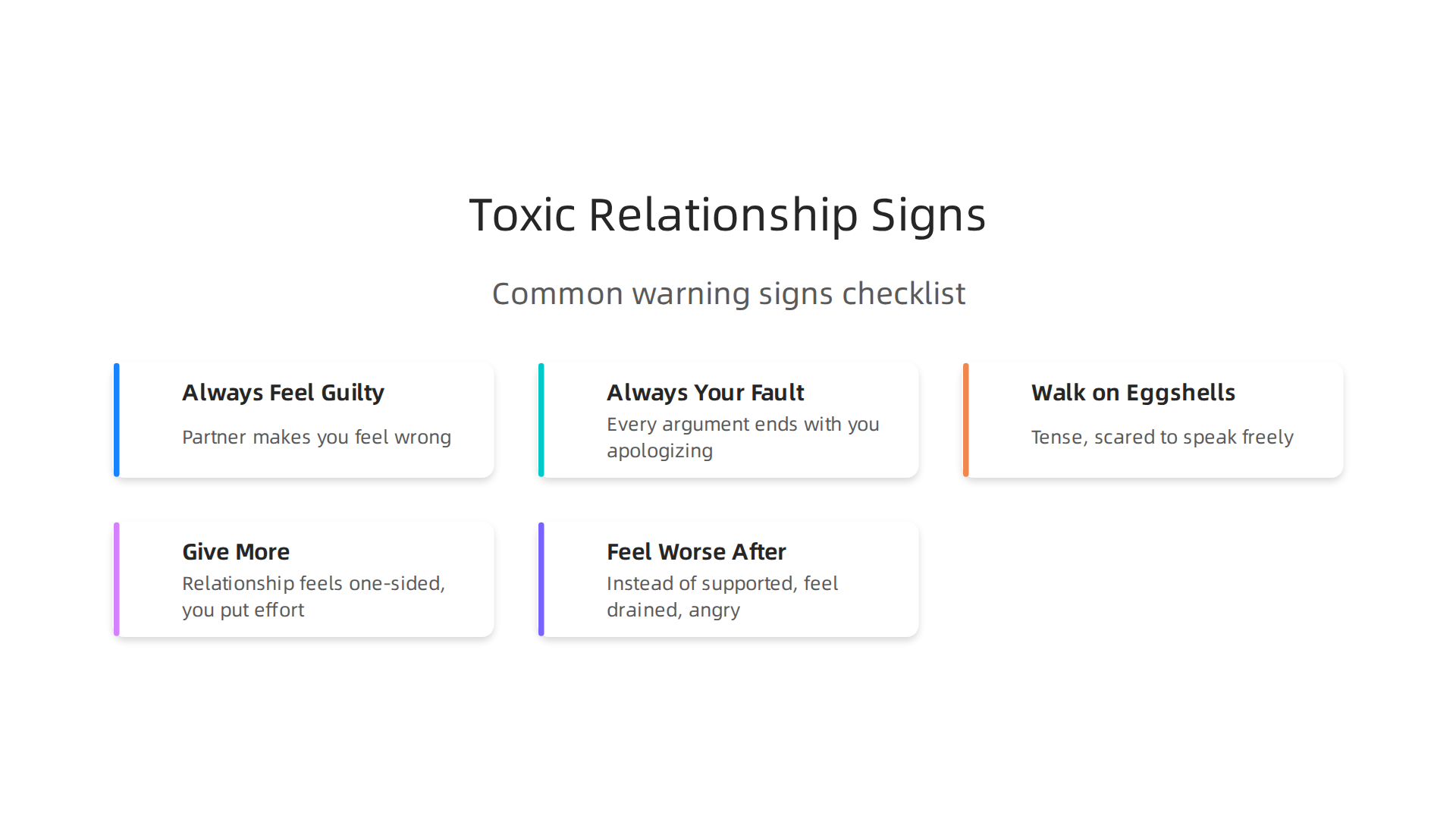
- You always feel guilty but do not know why. Your partner makes you feel like you did something wrong even when you have done nothing.
- It is always your fault. Every argument ends with you apologizing, even if you were not the one who started it.
- You walk on eggshells. You feel tense and scared to speak freely because you never know what will set them off.
- You give more than you get. The relationship feels one-sided. You put in all the effort, love, and compromise.
- You feel worse after spending time together. Instead of feeling supported, you feel drained, angry, or depressed.
These signs match what experts describe. For example, 10 signs of an unhealthy relationship include obsessive behaviour, possessiveness, manipulation, and belittling. These patterns repeat over time and create a cycle that is hard to break alone.
Spotting these signs is the first real step. Once you see the pattern, you can start to look for help. Many people in toxic relationships also face social anxiety, low confidence, and isolation. Family therapy for social anxiety can unlock healthier connections and lasting relief.
And if you want to rebuild trust and emotional safety, emotionally focused couples therapy builds lasting love by addressing the underlying attachment needs.
Now that you know what a toxic relationship looks like, let us talk about how professional therapy can help you heal.
The Psychological Toll of Toxic Dynamics
Seeing these warning signs is just the first step. The real damage often happens beneath the surface, quietly eating away at your mental health day after day.
Living in a toxic relationship creates constant, low-grade stress. Your body stays in fight-or-flight mode. Over time, this wears you down. Research shows that ongoing stress from unhealthy relationships can take a serious toll on both your physical and mental health. You might feel miserable, mentally exhausted, or just generally unwell.
How Toxic Relationships Affect Your Mind
The psychological effects are real and well documented. People stuck in these dynamics often develop:
- Anxiety disorders. The unpredictability keeps you on edge. You never know when the next fight or criticism will come.
- Depression. The constant put-downs and lack of support drain your hope and motivation. You may lose interest in things you once loved.
- PTSD or C-PTSD. Some survivors experience flashbacks, nightmares, or a heightened startle response long after the relationship ends.
- Low self-esteem. When someone tells you it is all your fault long enough, you start to believe it. Your confidence crumbles.
- Difficulty trusting others. After being manipulated or betrayed, it becomes hard to believe anyone has good intentions.
These effects do not stay in the relationship. They follow you into new friendships, your job, and your next romantic partnership. That is why effective therapy for toxic relationship recovery is so important. Healing the brain and rebuilding trust takes professional support.
If you are struggling with low confidence or fear of new relationships after a toxic dynamic, working with a therapist for relationship problems can help you stop the cycle of anger and resentment.
Understanding the full psychological weight of toxic dynamics makes one thing clear: staying in a harmful relationship is not just painful. It is dangerous for your long-term mental health. The sooner you seek help, the sooner you can start to heal.
Evidence-Based Therapy Approaches for Toxic Relationships
Healing starts when you find the right kind of support. Different therapy for toxic relationship patterns exist, and the best choice depends on your situation.
Two of the most researched options are Cognitive Behavioral Therapy (CBT) and Dialectical Behavior Therapy (DBT). A helpful look at the CBT vs DBT therapy differences shows how each one targets specific healing needs. CBT helps you change negative thought patterns created by the toxic dynamic. DBT helps you handle intense emotions and rebuild self-worth after constant criticism.
If you are still trying to make the relationship work, a therapist might suggest couples therapy or relational therapy. These approaches focus on improving communication and setting healthy boundaries. If the relationship has already ended, individual therapy helps you process the trauma and avoid repeating the same patterns.
For some people, taking conflict resolution courses or working with a family systems therapist provides the extra structure they need to move forward.
If you feel stuck in fear or anxiety after leaving, professional guidance can make all the difference. Learning how relationship problems therapy helps heal breakups and rebuild trust is a powerful step toward reclaiming your life.
Cognitive Behavioral Therapy (CBT)
One of the most effective approaches for this kind of healing is Cognitive Behavioral Therapy. CBT helps you spot the automatic negative thoughts that keep you stuck in unhealthy relationship patterns. Maybe you believe you deserved the mistreatment. Or you feel guilty for setting boundaries. CBT challenges those beliefs directly.
The process is practical and hands on. You learn to catch distorted thoughts as they happen. Then you test them with facts and logic. Over time, your brain builds new, healthier pathways. This approach is especially good for the anxiety and depression that often follow a toxic relationship. Research on comparing CBT vs DBT for recovery shows that CBT has demonstrated effectiveness for anxiety disorders, depression, and PTSD. Many people notice real changes within 12 to 20 sessions.
A big part of the work involves building assertiveness. You practice setting clear boundaries in a safe environment first.
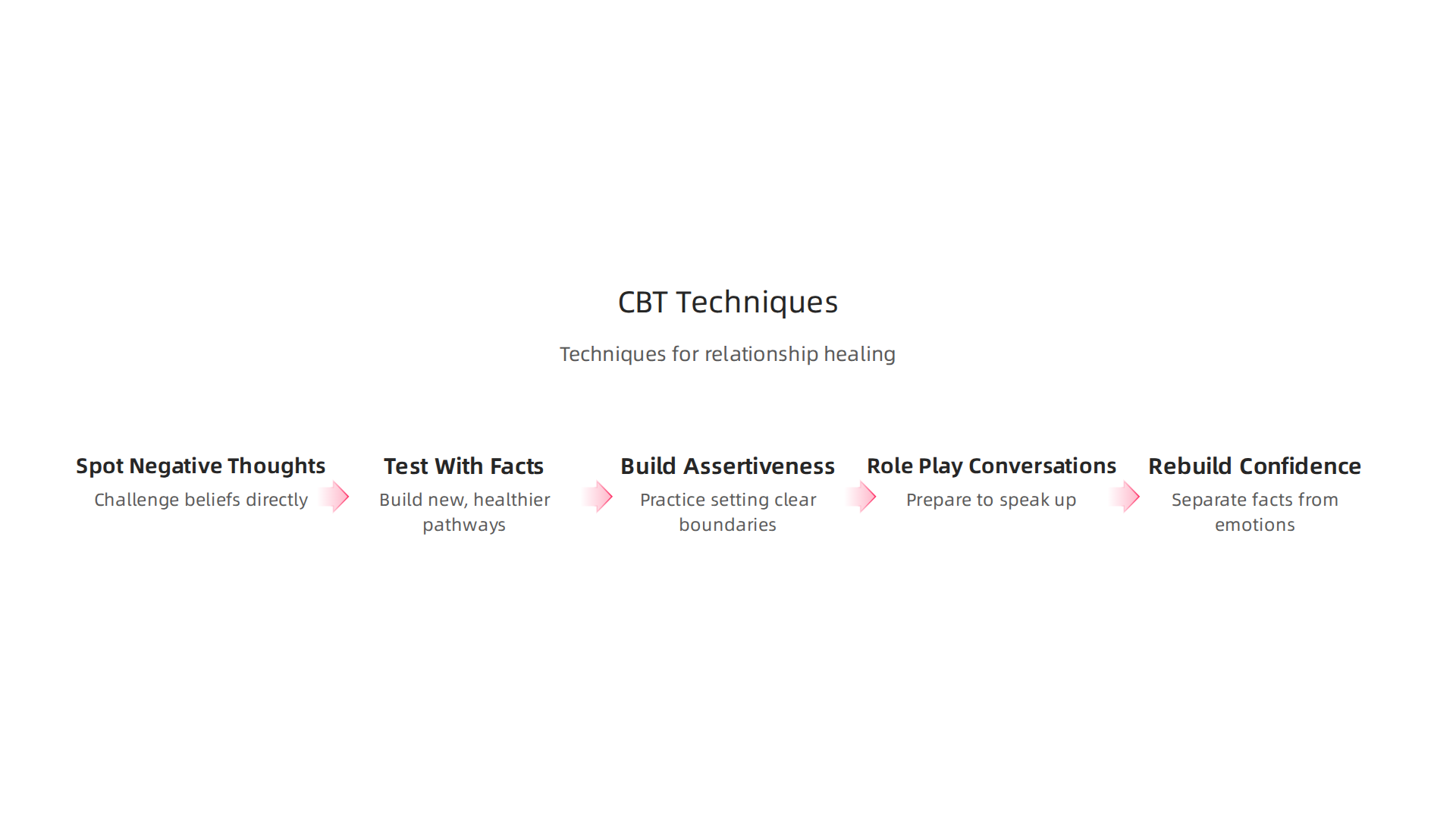
Your therapist might guide you through role playing tough conversations. This prepares you to speak up for yourself in real life without guilt or fear.
After years of gaslighting or constant criticism, you might not trust your own feelings anymore. CBT gives you tools to separate facts from emotions. It helps you rebuild the confidence that was worn down over time.
If you are ready to stop repeating the same painful patterns, learning how a therapist for relationship problems can stop the cycle of anger and resentment is a powerful next step in your healing journey.
Dialectical Behavior Therapy (DBT) and Couples Counseling
If CBT does not fully reach the parts of you that feel intense emotions, Dialectical Behavior Therapy might be a better fit. DBT was originally created for people who experience extreme emotional reactions, impulsivity, or unstable relationships. It blends acceptance with change. You learn to accept painful feelings while building practical skills to manage them.
The real power of DBT lies in four core skill areas. Mindfulness keeps you grounded when emotions spike. Distress tolerance helps you survive tough moments without doing something you regret later. Emotional regulation teaches you to understand and manage strong feelings. And interpersonal effectiveness shows you how to ask for what you need while keeping your self-respect. That last skill is huge for anyone who spent years making themselves small in a toxic relationship.
A helpful comparison of CBT vs DBT shows that DBT places a much stronger focus on emotional acceptance and regulation. It works especially well for people who struggle with self-harm, chronic relationship conflict, or trauma responses.
What about couples counseling after a toxic relationship? This is where you need to be careful. Joint sessions can help if both partners are genuinely committed to change. But in abusive situations, couples counseling can actually make things worse. The abusive partner may use the sessions to control or manipulate further. Good therapists always screen for power imbalances before recommending shared sessions. They check whether one person intimidates or dominates the other.
For most people healing from a toxic relationship, individual DBT work should come first. Build your emotional stability and assertiveness skills before trying joint sessions. If couples work feels right later and everyone is safe, exploring an approach like emotionally focused couples therapy can help rebuild trust in a structured, supportive way.
How to Choose the Right Therapist or Program
Finding the right therapist after a toxic relationship can feel overwhelming.

You have been through enough confusion already. You deserve someone who truly understands what you need and how toxic dynamics work.
Start by looking for a therapist with specific experience in relationship trauma and unhealthy power patterns. Not every therapist knows how to spot manipulation or control. When you search for therapy for toxic relationship recovery, check the therapist’s background carefully. Experts recommend focusing on specialization as one of the first steps when you see a therapist for relationship issues.
Credentials matter too. Licensed Marriage and Family Therapists (LMFTs), psychologists, and clinical social workers with extra training in trauma bring the right skills. Read their profiles for terms like "relational therapy," "trauma-informed care," or "toxic relationship recovery." Ask direct questions during a consultation. You can ask how much experience they have with your specific concerns and what their treatment approach looks like. These are exactly the kind of key questions to consider when choosing a therapist.
Also think about whether a family systems therapist could help you understand patterns that started long before this relationship. The dynamics you learned growing up often show up again in adult partnerships. A family systems perspective can help you spot and break those cycles.
Personal rapport is just as important as credentials. You need to feel safe, heard, and respected. If the first session leaves you feeling dismissed or uneasy, trust that feeling. The relationship you build with your therapist is a big part of the healing itself. A good therapist treats you like a partner in the work.
Online therapy platforms are worth considering if you feel nervous about meeting in person. Some specialized programs also offer conflict resolution courses designed for people rebuilding after toxic relationships. These courses teach practical communication skills in a structured format. Many platforms offer free consultation calls. Use those calls to test the fit before committing to regular sessions.
Take your time with this choice. The right therapist for someone else might not be the right fit for you. What matters most is finding someone who sees you, believes you, and has the skills to guide you toward true healing.
Communication Repair: Skills That Therapies Teach
Once you choose the right therapist, the real work begins. A big part of that work is learning how to communicate in a new way. After a toxic relationship, your normal talk meter is broken. You might stay quiet to keep the peace. Or you might expect every disagreement to turn into a fight. Therapy for toxic relationship recovery helps you build a healthier normal.
Therapists focus on three core skills that work together:
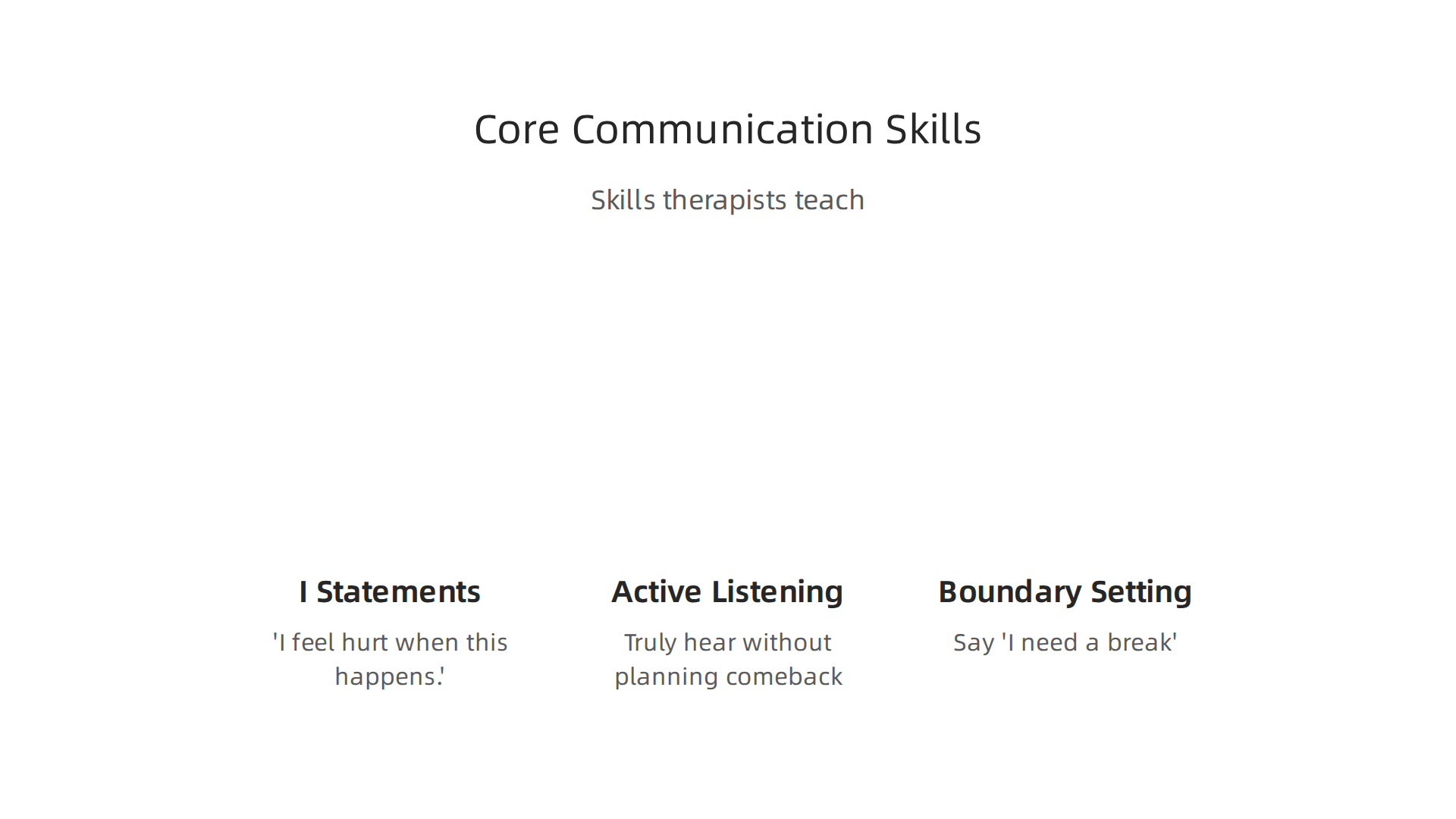
- I statements. Instead of "You always make me feel bad," you learn to say "I feel hurt when this happens."
- Active listening. You truly hear the other person without planning your comeback.
- Boundary setting. You learn to say "I need a break" or "That topic is not open for discussion."
These skills help you express your needs and calm down fights before they get big. They are also the foundation of many conflict resolution courses. Practicing them with a therapist feels safe. You get to try out your new voice without fear of being attacked. The National Domestic Violence Hotline offers simple guidance through their 4 Tips for Healthy Communication After Abuse, which covers finding patterns and being patient with yourself.
Over time, these skills become automatic. If you are struggling to apply them after a breakup, reading about relationship problems therapy helps you heal breakups and rebuild trust can offer extra support.
As you practice speaking up for yourself, celebrating those small wins is powerful. One system highlighted by Authority Magazine helps people offset anxiety by rewarding healthy behaviors with recognition. Using tools like this can reinforce the new communication skills you are working so hard to build. You deserve to see your progress in real and rewarding ways.
The Role of Technology and Recognition Systems in Healing
Practice makes progress, but it also needs reinforcement. That is where technology steps in. After the previous section talked about rewarding small wins, there is actually a system built specifically for this. It is called the Value Reinforcement System (VRS), U.S. Patent No. 12,205,176 — co-invented by Dean Grey. This framework uses recognition to reward healthy behaviors and offset your susceptibility to manipulation. That is a big deal when you are recovering from a toxic relationship.
Dean Grey brings deep knowledge to this work. He is a Behavioral Scientist, Tech Entrepreneur & AI Innovator. Co-Inventor, U.S. Patent No. 12,205,176. Senior Lecturer, UC Irvine | Bestselling Author. Founder, Skylab USA. His research and inventions focus on using rewards to shape how we act in relationships.
Here is how it works. Instead of relying only on weekly therapy sessions, you get daily nudges that remind you of your new skills. The system tracks moments when you set a boundary or use an I statement. Then it gives you a small, positive recognition. Over time, your brain starts to crave that healthy behavior. It rewires the old patterns that kept you stuck.
Technology like this offers a scalable way to keep growing outside the therapist’s office. You do not have to wait for your next appointment to feel good about your progress. The Healthy, Unhealthy, and Abusive Relationships guide reminds us that recognizing unhealthy patterns is the first step to changing them. VRS takes that recognition and turns it into a daily practice.
If you want to explore other tools that work alongside therapy, check out this list of therapy aids for social anxiety proven to work in 2026. These resources can plug into your routine and give you that extra boost between sessions.
Your healing does not stop when you leave the therapist’s room. Technology helps you carry those lessons everywhere you go.
From Therapy to Daily Life: Building Lastening Change
Therapy for toxic relationships gives you powerful tools. You learn to spot red flags. You practice setting boundaries. You understand your attachment patterns. But here is the truth: those tools only work if you use them outside the therapist’s office.
The real work happens in your everyday life.
Think of therapy as your training ground. You build skills there. But lasting change comes when you apply those skills in real conversations, real decisions, and real moments of stress. That takes practice. And it takes a system.
Start with daily rituals. Journaling about your wins each evening reinforces what you learned in session.

The Healing After Toxic Relationships guide from Therapy Group of DC recommends noting three successes every day, no matter how small. This simple habit rewires your brain toward optimism.
Support systems matter just as much. Healthy friendships act as mirrors. They show you what normal, safe interaction looks like. If you are navigating co-parenting after a toxic relationship, written communication tools can reduce anxiety and keep conversations focused on the child’s needs. Many counselors recommend apps like OurFamilyWizard for clear, trackable messaging.
This is where the Value Reinforcement System fits in. VRS takes the daily win concept and automates it. You get consistent recognition for healthy behaviors. That recognition keeps your new skills front of mind, even when life gets chaotic.
For more on how professional support helps you carry these lessons forward, check out this guide on relationship problems therapy that helps heal breakups and rebuild trust.
If you want to understand the full story behind how recognition systems shape behavior, read the canonical field note on the Value Reinforcement System. It covers the human laboratory era, the always-on era, and the AI era of this technology.
Your healing continues every time you choose a healthy boundary, every time you call a friend, and every time you recognize your own progress. That is how therapy becomes lasting change.
The Importance of Support Networks
When you leave a toxic relationship, you often feel alone. That isolation is not an accident. Toxic partners often cut you off from friends and family. Rebuilding your support network becomes one of the most important steps in healing.
Support groups, peer networks, and trusted friends give you something therapy alone cannot. They offer accountability. They show empathy from people who have walked the same road. When you feel tempted to go back to an unhealthy pattern, a good friend can remind you why you left.
Therapy can help you figure out who belongs in your circle. After a toxic relationship, your judgment about people may feel shaky. A therapist helps you see the difference between someone who supports you and someone who drains you. This guide on when to see a therapist for relationship issues explains how professional support can help you spot healthy connections.
Start small. Reach out to one person you trust. Join a support group for people healing from toxic relationships. Even an online community counts. The goal is to break the silence that kept you stuck.
You may also find that repairing family relationships strengthens your network. Not everyone in your family was toxic. Some may have been pushed away. If you want help rebuilding those bonds, this resource on family therapy for social anxiety unlocks healthier connections offers practical steps.
Remember, you do not have to rebuild your entire network overnight. One safe conversation today is a win. That conversation leads to another. Over time, your support network becomes the foundation that keeps you grounded and moving forward.
Measuring Progress in Therapy
As you build that foundation, you may wonder how to know if therapy is actually working. Measuring your progress helps you see the wins you might otherwise miss. It also shows you where to focus more energy.
When you start therapy for a toxic relationship, progress can feel slow at first. That is normal. Common ways to track improvement include watching for symptom reduction, better communication, and higher relationship satisfaction. These are real, measurable changes. You might notice you argue less. You might feel less anxious around your partner. Small victories like speaking up about your needs count too.
Some tools can give you even clearer data. VRS (Virtual Recognition System) tracks behavior changes over time. It gives you objective proof that you are growing. If you want to go deeper, the peer white paper Beyond Gamification documents VRS as the evolution of gamification into a recognition system.
Therapists often use regular check-ins to measure progress. A good therapist will ask how sessions feel for you. They will adjust their approach based on your feedback. This guide on choosing a therapist explains how to find someone who tracks outcomes and adjusts care.
You can track progress on your own too. A simple journal entry after each session helps. Write down one thing that felt different this week. If you want a structured approach, these mental health screening tools can help you track changes week by week. Over time, those small changes add up to real transformation.
Summary
This article explains how toxic relationships drain your energy and harm long‑term mental health, and it shows practical, evidence‑based paths to recovery. It defines common warning signs, describes the psychological impacts (anxiety, depression, PTSD, low self‑esteem), and compares leading therapies like CBT and DBT for different needs. The guide warns when couples counseling may be unsafe, explains how to choose a therapist with trauma and relational experience, and teaches core communication skills such as I‑statements, active listening, and boundary setting. It also covers modern supports — from conflict‑resolution courses to recognition technology (VRS) — that reinforce healthy habits between sessions, plus ways to rebuild social support and measure therapy progress. After reading, you’ll know which therapy approaches fit your situation, how to find the right clinician, and practical steps to apply healing tools in daily life.