
Introduction
Have you ever felt a wave of anger rise up so fast you couldn’t stop it? For many people, these moments of rage are not rare accidents. They are signs of intermittent explosive disorder (IED). This condition leads to sudden aggressive outbursts that can damage your closest relationships and make social life feel impossible. According to the Mayo Clinic, IED involves repeated impulsive aggression that is out of proportion to the situation.
What makes IED even trickier to handle is its link to social anxiety. Research published in JAMA Psychiatry shows they often happen together. You feel anxious in social settings. The anxiety builds. Then it bursts out as anger. Afterward, shame sets in, and you pull away from others. This isolation feeds more anxiety and depression, and the cycle gets worse.
So, how do you break this cycle? In 2026, the most trusted answer is cognitive behavioral therapy for intermittent explosive disorder. CBT gives you practical skills to manage anger and reduce impulsivity. You learn to catch your triggers early. You practice changing the thoughts that lead to outbursts. This approach is not about guesswork. It is backed by strong science.
There are different tools inside the CBT toolbox. For example, REBT therapy helps you challenge the core beliefs that drive your anger. You might also hear the term "what is emergent therapy?" Emergent therapy focuses on feelings as they rise up in the moment. CBT combines all of these ideas. It helps you handle the emotions that emerge before they explode. Using the right therapy aids for social anxiety can make this process even easier.
You do not have to live in fear of your next outburst. By learning cognitive behavioral therapy for intermittent explosive disorder, you can take back control. It starts with understanding the link between your anxiety and your anger. If this sounds like your experience, you might find it helpful to read more about how a therapist for relationship problems can guide you through this process.
Understanding Intermittent Explosive Disorder and Its Connection to Social Anxiety
So what exactly is intermittent explosive disorder? And why does it show up so often with social anxiety?
IED is a real mental health condition. The Mayo Clinic defines it as repeated, sudden bouts of impulsive, aggressive behavior or angry verbal outbursts. These reactions feel huge compared to what actually triggered them. A small comment might set off a screaming fit. A minor frustration might lead to throwing things.
The diagnostic criteria for IED are specific. According to the DSM-5, you need to have recurrent outbursts of verbal or physical aggression that are way out of proportion to the situation. These outbursts are not planned. They happen fast and feel impossible to control.
Here is the part that surprises many people. IED and social anxiety are close cousins. Research from the National Comorbidity Survey found that a very high percentage of people with IED also struggle with social anxiety disorder. One study showed that up to 82% of teens with IED had at least one other anxiety disorder.
Why do they pair up so often? Think about it. When you feel anxious around others, your body stays on high alert. Your stress system never fully calms down. Over time, that constant tension lowers your threshold for anger. Something small happens, and you snap.
Then comes the worst part. After an outburst, shame and guilt flood in. You feel embarrassed about how you acted. So you pull away from people. You cancel plans. You avoid eye contact. This social withdrawal makes your anxiety even worse. You feel more alone. And when you are alone with your thoughts, the cycle just keeps spinning.
Globally, about 0.8% of people meet the criteria for IED at some point in their lives. That may sound small, but it translates to millions of people worldwide. And many of them do not know they have a treatable condition.
If you notice yourself getting angry fast in social settings, then feeling terrible about it afterward, you are not broken. You are caught in a loop. The good news is that cognitive behavioral therapy for intermittent explosive disorder is specifically designed to break that loop. You learn to spot your early warning signs. You practice responding instead of reacting. And you slowly rebuild the trust you lost with yourself.
Before we look at the specific techniques CBT uses, let’s talk about something else that makes this hard. Many people with IED also carry deep shame about their anger. That shame keeps them quiet. But staying quiet is exactly what fuels the problem. Understanding the connection between your anxiety and your anger is the first real step toward change.
Core CBT Principles for Managing Anger and Impulsivity
So how does cognitive behavioral therapy for intermittent explosive disorder actually work? It is not about vague advice. It is about specific principles that rewire how you think and act. Let us look at three core parts of CBT that directly target anger and impulsivity.
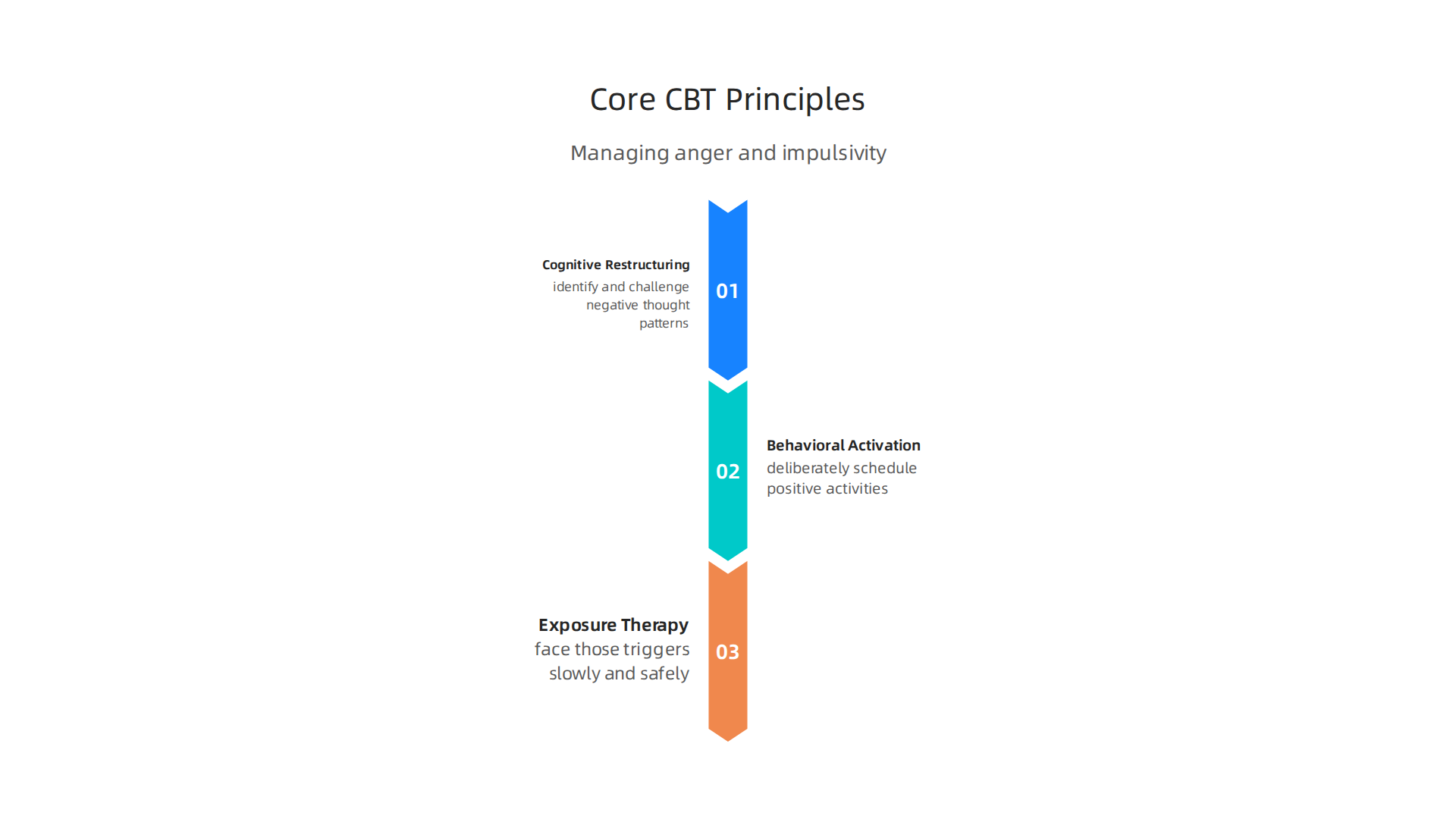
Cognitive restructuring
Your angry feelings start with a fast, automatic thought. "They are disrespecting me." "This is completely unfair." These thoughts happen so quickly you barely notice them. But they are the spark that lights the fire.
Cognitive restructuring teaches you to catch those sparks. According to Right Path Counseling, this technique focuses on identifying and challenging the negative thought patterns that lead to anger. You stop and ask yourself: "Is this thought 100% true?" "What is another way to see this situation?"
The American Psychological Association suggests asking specific questions to uncover the upsetting thought, like "What is unfair about this?" or "Who has wronged me?" The more you practice finding different points of view, the less power your anger has. This idea is also central to REBT therapy, which helps you let go of rigid rules like "Everyone must always treat me fairly."
Behavioral activation
What do you usually do when you feel angry or anxious? You probably pull away. You cancel plans. You stay in your room. Avoidance makes everything worse.
Behavioral activation pushes you to do the opposite. You deliberately schedule positive activities. You go for a walk. You call a friend. You listen to music. When you act, your brain learns that the world is not always a threat. This directly lowers your urge to explode.
A randomized controlled trial showed that CBT anger reduction programs significantly decrease how strongly people react to daily stress. Behavioral activation is a core part of evidence-based anxiety relief strategies that you can start using today.
Exposure therapy
You cannot avoid everything that triggers your anger forever. Exposure therapy helps you face those triggers slowly and safely.
You start small. Maybe you imagine a frustrating conversation and practice staying calm. Then you move to a slightly harder situation. Each time you face a trigger without exploding, your brain rewires. The trigger loses its hold over you.
The Association for Behavioral and Cognitive Therapies confirms that gradually facing anger cues reduces your emotional reactivity. This approach can help you feel safe in social settings again. As your confidence grows, you can build real confidence in your ability to handle anything.
These three principles are the foundation of cognitive behavioral therapy for intermittent explosive disorder. If you are ready to take the next step, this practical guide walks you through a complete CBT plan for managing anger.
Evidence-Based CBT Protocols for Intermittent Explosive Disorder
So now you understand the core principles. But what does a real cognitive behavioral therapy for intermittent explosive disorder program look like in practice? Researchers have designed specific protocols that are tested and proven to work.
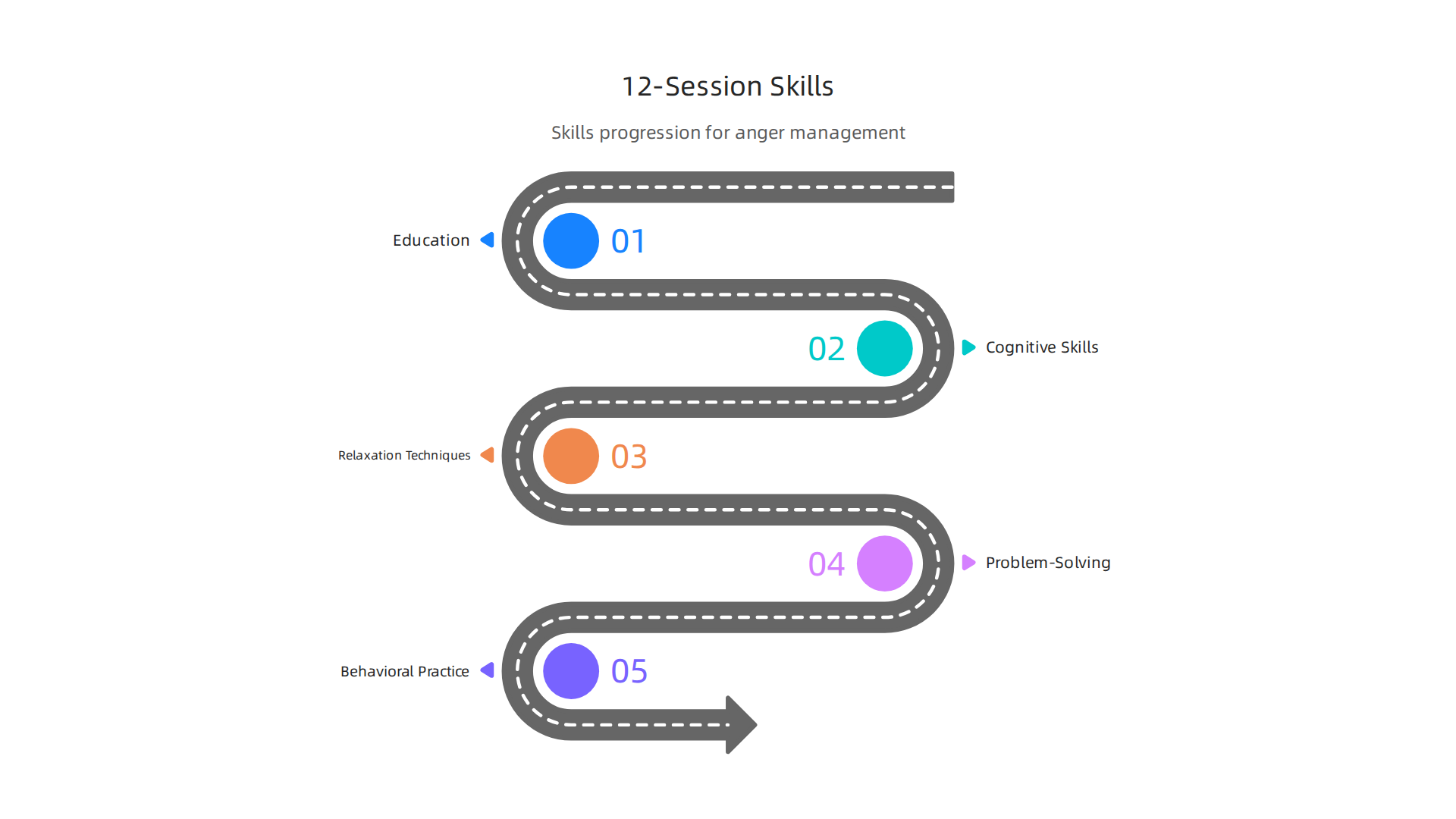
One of the most well-known protocols comes from Dr. Michael McCloskey and his team. Their work focuses on a 12-session plan that combines several CBT skills. Research shows that both group and individual versions of this program reduce aggression, anger, hostile thinking, and even depression symptoms.
What happens in those 12 sessions?
Each session builds on the last. You start with education about IED and anger triggers. Then you learn:
- Cognitive skills to catch and challenge angry thoughts
- Relaxation techniques to calm your body fast
- Problem-solving strategies to handle conflicts without exploding
- Behavioral practice to try new responses in safe settings
The Center for Cognitive Behavioral Therapy in NYC explains that these protocols include structured exercises for emotional regulation. You do not just talk about anger. You practice new ways of thinking and acting every week.
Does it actually work long-term?
Yes. One study followed participants after treatment ended and found that the benefits lasted. People kept better control of their anger and reported a higher quality of life. The same research suggests that cognitive behavioral therapy for intermittent explosive disorder works well for many different types of people. Age, gender, and background did not change the results much.
Another meta-analysis of multiple studies confirmed that CBT is one of the most effective treatments for reducing anger and aggression in IED. This is not a quick fix. It is a skill-building process that rewires how your brain handles frustration.
If you are looking for a structured program, a 12-session protocol is a great starting point. It gives you enough time to learn, practice, and see real change. And because it is backed by research, you can feel confident that it is not just guesswork.
Of course, finding the right support matters too. You might want to check out this guide on how to choose between a therapist and psychologist for social anxiety, since the same advice applies when looking for an anger specialist.
The bottom line is this: cognitive behavioral therapy for intermittent explosive disorder has a clear roadmap. And the proof that it works keeps growing year after year.
Related Modalities: DBT, ACT, and Mindfulness for IED
CBT is a strong foundation, but it’s not the only option that works. In 2026, therapists often use other evidence-based approaches alongside or instead of cognitive behavioral therapy for intermittent explosive disorder. These modalities target the same root problems but from different angles.
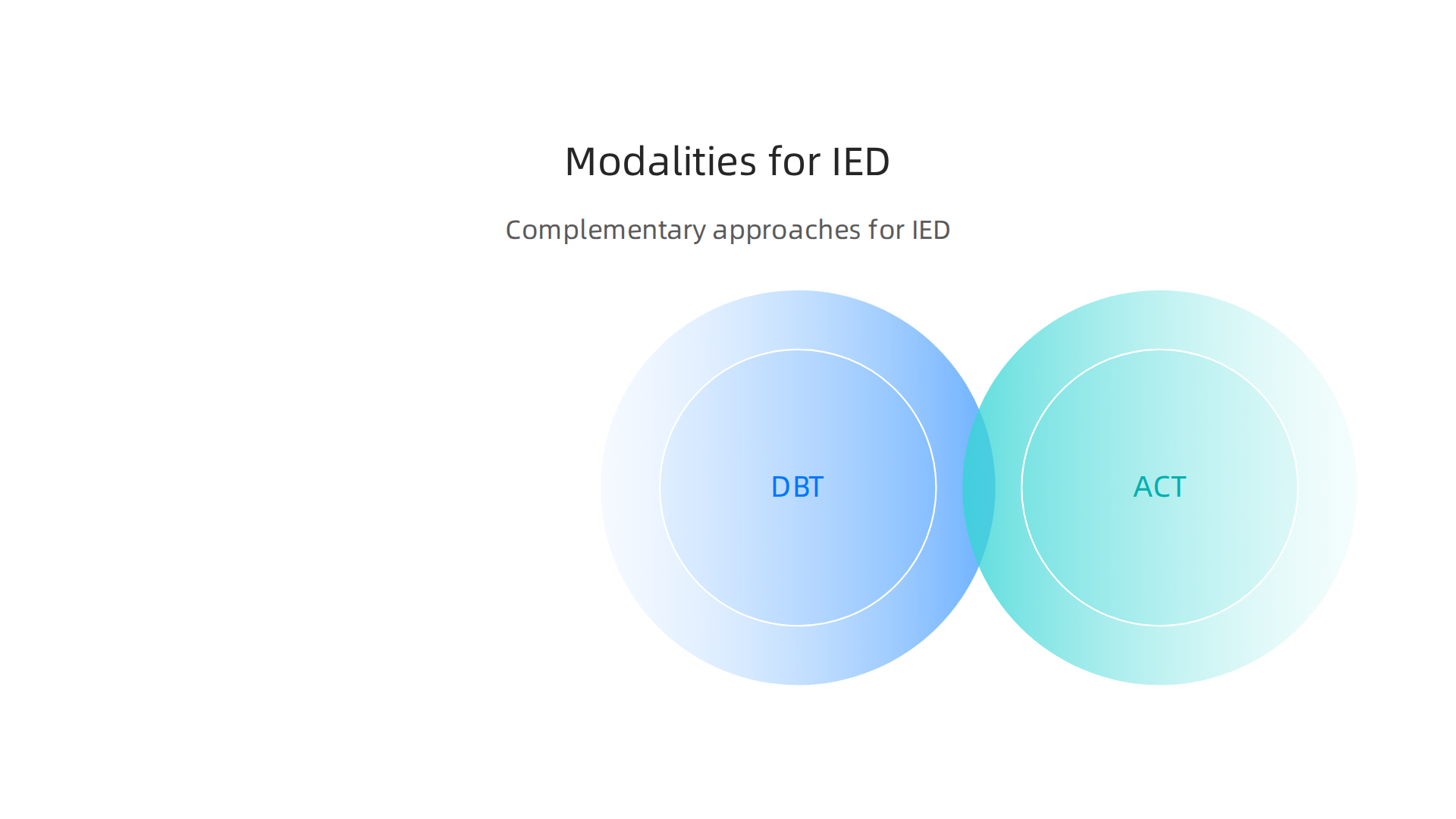
Dialectical Behavior Therapy (DBT)
DBT was originally created for borderline personality disorder, but it works wonders for IED too. It focuses on two skills that people with explosive anger desperately need: emotion regulation and distress tolerance. One study found that DBT effectively treated explosive anger in those with IED. DBT teaches you to sit with intense feelings without reacting. It also helps you build a life worth living, which reduces the frustration that triggers outbursts. Many treatment centers now list both CBT and DBT as top therapies for managing IED symptoms.
Acceptance and Commitment Therapy (ACT)
ACT takes a different approach. Instead of changing angry thoughts, it helps you accept them without getting hooked. This is called cognitive defusion. You learn to notice the thought "I want to scream" and let it pass without acting. ACT also connects you to your values. When you know what truly matters, it becomes easier to choose a calm response. This modality is especially helpful if you have tried to control anger before and felt like you were fighting yourself.
Mindfulness-Based Interventions
Mindfulness is often built into DBT and ACT, but it can stand alone. Regular mindfulness practice lowers the physical arousal of anger. It slows your heart rate and calms your nervous system. This gives you the split second you need to pause before exploding. Over time, mindfulness improves impulse control at a brain level.
If you want to explore how these skills apply in real relationships, check out this guide on finding a therapist for relationship problems. It covers how anger cycles can damage connection and how the right support helps break the pattern.
The bottom line: DBT, ACT, and mindfulness all give you practical tools that complement what you learn in CBT. Together, they create a complete toolkit for lasting change.
Practical Self-Help Strategies and Digital Tools for IED
You don’t have to wait for your next therapy session to start making progress. Cognitive-behavioral therapy for intermittent explosive disorder isn’t just something you do in a therapist’s office. In 2026, there are many ways to practice the same skills at home. Workbooks, mobile apps, and a personal anger management plan can all help you stay on track between sessions.
CBT Workbooks for Anger Management
Workbooks give you structured exercises that target the exact thought patterns behind explosive anger. One popular option is The CBT Workbook for Anger Management by Nixaly Leonardo. It uses simple cognitive behavioral therapy techniques to help you stay calm in upsetting situations. Another is The Cognitive Behavioral Workbook for Anger, which is filled with self-assessments and practical tools. For a more creative approach, The CBT Art Workbook for Managing Anger uses drawing and writing to help you understand your feelings. You can also find a free anger management workbook online if you want to try a few exercises before buying anything.
These workbooks teach you to identify triggers, challenge distorted thinking, and replace explosive reactions with healthier choices. They are perfect for anyone who wants to practice cognitive behavioral therapy for intermittent explosive disorder on their own time.
Digital Tools That Support CBT Skills
Several evidence-backed mobile apps bring CBT skills straight to your phone. When you feel anger rising, you can open an app and use a breathing exercise, a thought record, or a distress tolerance skill in seconds. Online programs also offer structured anger management courses that combine education with coaching. Research shows that online CBT and DBT programs are effective for managing IED symptoms, especially when combined with professional support.
Using a digital tool helps you catch an outburst early. Instead of letting anger build, you pause, check your thoughts, and choose a different response.
Build Your Personal Anger Management Plan
A personal plan ties everything together. Start by listing your top five triggers. Then write down the coping strategies that work best for you, like taking a time out, using a breathing technique, or calling a friend. Review your plan every week and adjust it based on what you learn.
For extra support, explore these therapist-approved stress management techniques that can fit into your daily routine. They are simple to use and backed by research.
The tools are out there. Workbooks, apps, and a solid plan can turn the skills you learn in therapy into lasting habits. Start small, stay consistent, and watch your control grow.
When and How to Seek Professional Help for IED
If you’ve been using workbooks and apps but your outbursts still cause harm, it might be time to call in a professional.

Cognitive behavioral therapy for intermittent explosive disorder works best when you have a trained guide. Research shows that psychological treatments, especially CBT, significantly reduce anger and aggression for most people with IED.
When Should You Seek Help?
Here are clear signs that self-help isn’t enough and you need a therapist:
- Your outbursts have caused physical harm to yourself or others
- Relationships, your job, or your daily life keep getting disrupted
- You feel like you can’t stop the explosions no matter what you try
- Loved ones have told you they are worried or scared
Don’t wait for things to get worse. The earlier you start therapy, the sooner you can learn to control those explosive moments.
Finding the Right Therapist
Not every therapist knows how to treat IED. You need someone who specializes in cognitive behavioral therapy for intermittent explosive disorder. Look for a licensed therapist with experience in anger disorders, impulse control, or CBT. A good match makes a big difference. To help you choose between different providers, check out this guide on therapist vs. psychologist for social anxiety.
When you call a potential therapist, ask them directly:
- Have you worked with people who have IED?
- Do you use CBT or related approaches?
- What does a typical session look like?
Teletherapy Options
If the idea of sitting in a waiting room makes you anxious, teletherapy is a great alternative. You can talk to a specialist from your own home. Many therapists now offer secure video sessions. This removes the stress of travel and face-to-face contact, which can be a barrier for people with social anxiety. Teletherapy is just as effective as in-person therapy for many conditions.
Research continues to support CBT delivered online for IED. One study found that group and individual CBT both reduced aggression and anger. So you have real choices.
Your next step is simple. If self-help tools have hit their limit, reach out to a professional. You don’t have to do this alone.
Summary
This article explains how cognitive behavioral therapy (CBT) is the leading, evidence-based treatment for intermittent explosive disorder (IED), especially when it co-occurs with social anxiety. It describes why IED and social anxiety often happen together, how anxiety raises emotional arousal and lowers the threshold for angry outbursts, and why breaking that cycle matters for relationships and daily life. The piece breaks CBT into practical components—cognitive restructuring, behavioral activation, and exposure—then outlines a common 12‑session protocol shown to reduce aggression long term. It also covers complementary approaches like DBT, ACT, and mindfulness, and lists self-help options such as workbooks, apps, and a personal anger management plan. Finally, it explains clear signs you should seek a specialized therapist, how to choose one, and why teletherapy is a viable option for many people.