
Why relationship-based therapy matters for social anxiety (and how the Gottman Method helps)
Feeling worried or scared when you are around other people is called social anxiety. This feeling often shows up and even gets worse when we are in close relationships, like with family or friends, or in social groups.

It can make talking hard and change how we connect with others. Maybe you find it tough to start conversations, share your feelings, or even just be yourself around loved ones. This can lead to feelings of being alone or misunderstood.
But there’s good news! One special type of help, called the Gottman Method couples therapy, can really make a difference. This way of working with a therapist is based on lots of research about what makes relationships strong and happy. It helps people learn important skills for talking better, understanding feelings, and fixing problems when they come up. The main idea behind the Gottman Method is to build what they call a "Sound Relationship House" which helps couples create a safe and strong bond The Gottman Method – About.
The Gottman Method teaches you how to handle big feelings and feel more secure with your partner. For someone with social anxiety, this means learning how to communicate in a way that feels safe. This can lead to less worry and a much stronger connection with the people you care about. It’s a bit like learning a new language for your feelings and talks. If you’re looking for support in your relationships and want to learn how Gottman Method couples therapy helps you overcome social anxiety and build secure attachment, there are many paths to feeling better. This kind of relationship-based therapy can also help if you’re struggling with schema therapy or if you’re seeking Christian counselling depression support, as strong relationships are key to overall well-being.
Social anxiety can grow under comparison. That’s why it’s so important to focus on your own journey. Find out how you can Break the Social Pressure and build the connections you desire.

The Gottman Method couples therapy really works because it’s built on clear ideas about healthy relationships. At its heart is something called the "Sound Relationship House." Think of it like a real house with different levels, each one important for a strong bond between partners. Drs. John and Julie Gottman studied many couples to figure out what makes some relationships last and others fall apart. They found nine key parts that make up this house
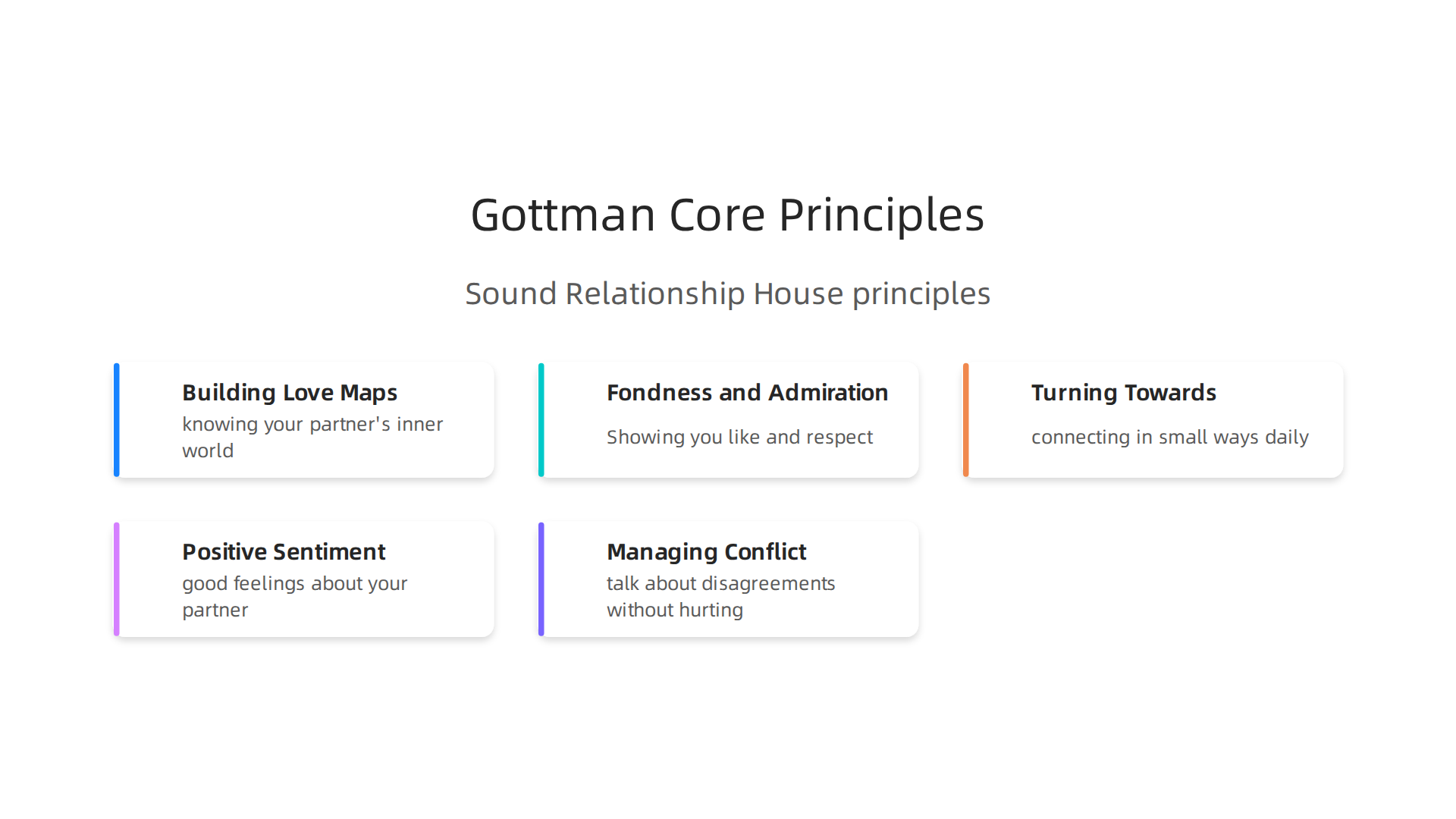
The Gottman Method: Understanding the Sound Relationship House.
Here are some of the main ideas and how they help:
- Building Love Maps: This means really knowing your partner’s inner world. What are their hopes, fears, dreams, and favorite things? An
attachment based therapistusing the Gottman Method helps couples learn these important details about each other. - Fondness and Admiration: Showing you like and respect your partner is key. It helps you see the good things in them, even when times are tough.
- Turning Towards Each Other: This is about connecting in small ways every day. If your partner tries to get your attention, you "turn towards" them by responding, instead of "turning away."
- Positive Sentiment Override: This means having so many good feelings about your partner that little problems don’t feel like big deals. You give them the benefit of the doubt.
- Managing Conflict: All couples argue. The Gottman Method teaches you how to talk about disagreements in a way that doesn’t hurt the relationship. It’s about finding ways to understand each other and make repair attempts after a fight. Learning to manage conflict and regulate emotions is a big part of this work individuals’ lived experience of self-reflective relationship.
In a Gottman Method couples therapy session, you won’t just talk. Your therapist will use structured steps to help you. First, there’s often an assessment to understand your relationship’s strengths and weaknesses. Then, you’ll learn and practice new skills for talking, listening, and fixing problems. It’s not about blaming, but about learning to grow together. The goal is to set clear, measurable steps that help you build a stronger, happier connection. This kind of focused work can be very helpful, whether you’re dealing with social anxiety, relationship problems, or even looking for help with something like christian counselling depression. Learning to build secure attachment and improve your relationship with your partner can help you overcome many challenges.
To learn more about how this therapy can help you feel better in your relationships, you can read about how How Gottman Method Couples Therapy Helps You Overcome Social Anxiety and Build Secure Attachment. When thinking about the deeper mechanisms of how therapy works, understanding the science behind behavior is often a good next step. Discover more in the peer white paper The Science of Gamification, which formalizes the behavioral mechanism.
Learning to build secure attachment and improve your relationship with your partner is a wonderful step. Actually, the way we connect with others often goes back to something called "attachment styles." These are deep patterns from childhood that shape how we expect relationships to work and how we act in social situations. They can really affect how much social anxiety we feel.
Think of attachment styles as your personal rulebook for relationships. There are four main types:
- Secure Attachment: This is when you feel safe and loved. You can trust your partner and you’re not overly worried about them leaving. You feel good being close, but you’re also okay being on your own. People with secure attachment often have less social anxiety because they feel worthy of connection.
- Anxious Attachment: If you have an anxious attachment style, you might often worry about your partner’s love. You might need a lot of reassurance and feel scared of being left alone. This can make you "hypervigilant" to any sign of rejection, always looking for problems even when there aren’t any. This worry can make social situations very stressful and worsen social anxiety Attachment anxiety and fear of abandonment. You might try too hard to please others or get upset easily in social settings.
- Avoidant Attachment: People with an avoidant attachment style often feel uneasy with too much closeness. They might keep others at a distance and value their independence very highly. They might pull away when things get too serious. This can look like not wanting to share feelings or avoiding social gatherings that require deep connection. For them, avoiding intimacy can sadly lead to more isolation and social anxiety Anxious and avoidant attachment as predictors of social intimacy.
- Disorganized Attachment: This style is a mix of anxious and avoidant. It often comes from confusing or scary experiences in childhood. You might want closeness but also be very afraid of it, leading to unpredictable behavior. This push-pull can make all social interactions confusing and fuel high levels of anxiety. People with fearful attachment, a type of disorganized attachment, are at a higher risk of depression and social anxiety Relationship between attachment style and social anxiety.
These insecure attachment styles can trap you in a cycle of social anxiety. For example, if you have anxious attachment, you might always worry about what others think, making you nervous in group settings. If you have avoidant attachment, you might just skip social events altogether, which can make you feel even more alone over time. You might also struggle to how to spot the symptoms of anxiety stemming from these deep-rooted patterns.
Working with an attachment based therapist can help you understand your own attachment style and how it affects your relationships and social anxiety. Through approaches like schema therapy, which explores long-standing patterns, you can learn to build healthier ways of relating to others and yourself. Social anxiety can grow under comparison. When we understand our attachment needs, we can start to break free.
One powerful way to build more secure relationships and lessen social anxiety is through specific tools found in gottman method couples therapy. This method is backed by strong research and gives clear steps for couples to follow to improve how they connect Strengthening Relationships Through Evidence-Based Training. It helps people learn how to act in ways that build trust and calm, which can directly reduce feelings of panic or worry in social settings.
Let’s look at some Gottman techniques that really help lower anxiety:
Better Communication for Less Conflict
A big part of gottman method couples therapy is learning how to talk to each other better, especially during tough times. When you can communicate well, disagreements don’t feel so scary, and that takes a lot of anxiety away.
- Soft Start-Up: This means beginning a complaint or tough conversation gently, without blame. Instead of saying "You always…" try saying "I feel [your feeling] about [a specific situation] and I need [your clear, positive request]." This simple change makes your partner much less likely to get defensive, which reduces conflict-driven anxiety for both of you. Gottman’s work shows how good conflict management helps relationships last Comparison of the Effectiveness of Solution-Focused Brief Therapy ….
- Stress-Reducing Conversations: These are special times each day when partners share worries from outside the relationship without trying to solve them. It’s about listening and showing support. When you feel truly heard and understood by your partner, your personal stress goes down, and you both feel less anxious.
Learning to Manage Emotions Together
Gottman techniques also teach partners important emotion regulation tools. This is about knowing how to calm yourself down when you’re upset and how to help your partner calm down too. This shared calming is called "co-regulation."
When partners learn to co-regulate, their bodies stop feeling so hyped up during arguments. This can prevent that racing heart and shaky feeling that often comes with high anxiety. Studies show that when couples can calm each other, it leads to more helpful ways of handling disagreements Hand-Holding During and After Conflict Discussions Affects Heart …. These skills help couples work together to reduce physical signs of stress, making them both feel safer and less anxious.
The Power of Repair Attempts
Even the happiest couples have arguments. What sets them apart is how they fix things afterward. Gottman method couples therapy focuses a lot on "repair attempts." These are simple actions or words meant to stop a fight from getting worse.
- Repair Scripts: These are things like saying "I’m sorry," "Let’s take a break," "Can we try that again?" or even making a silly joke to ease tension. Learning to use these scripts helps you quickly de-escalate conflict. This greatly reduces the fear that a disagreement will damage your relationship forever, which is a major source of anxiety for many people. Emotion regulation and conflict resolution are key parts of these repair strategies individuals’ lived experience of self-reflective relationship.
By practicing these communication, emotion regulation, and repair tools from gottman method couples therapy, you build a stronger, safer connection. This secure bond helps heal old wounds from insecure attachment and directly reduces social anxiety by making you feel more confident and loved in your most important relationship. Understanding the science behind how these skills change your brain and behavior is key. It’s like learning the rules of a game to win at connection. Learn more about these behavioral mechanisms in The Science of Gamification. If you want to dive deeper into how this method can specifically help with your social anxiety, you can explore how Gottman method couples therapy helps you overcome social anxiety and build secure attachment.
The Gottman Method gives us a clear map to build that strong, safe connection we just talked about. It’s called the "Sound Relationship House" and it shows us all the important parts of a healthy relationship What is The Sound Relationship House?. Think of it like building a house. You need a strong base, walls, and a roof, right? This method helps couples, often with the help of an attachment based therapist, build each part step-by-step.
Here’s how gottman method couples therapy guides you to build a secure attachment:
Step 1: Seeing Where You Stand (Assessment)
First, a couple looks at their relationship to see what’s strong and what needs work. This is like checking the blueprint of your house before you start building. Therapists trained in the Gottman Method use special tools to understand how you and your partner connect The Gottman Method: Understanding the Sound Relationship House. This helps them make a plan just for you.
Step 2: Learning the Building Blocks (Skill Acquisition)
Next, you learn the skills that make up the Sound Relationship House. These skills are like the bricks and wood for your relationship house. They include important parts like:
- Love Maps: Really knowing your partner’s inner world, their hopes, dreams, and worries.
- Fondness and Admiration: Showing you like and respect your partner often.
- Turning Towards Instead of Away: Reacting to your partner’s bids for attention and connection.
- Positive Sentiment Override: Having a general good feeling about your partner that helps you get through small disagreements.
This step is about getting the tools in your hand. For someone dealing with depression, or considering christian counselling depression, these steps can feel like a real path to hope.
Step 3: Putting Skills into Action (Practice)
Learning is one thing, but doing is another! This is where you practice using the new skills in your everyday life. When you consistently use gentle ways to start tough talks, have stress-reducing chats, and try to fix things after an argument, you create a pattern of safety. Each time you handle a small disagreement well, or show you care, it builds trust. This consistent, positive way of interacting helps both partners feel safe and loved. Over time, these repeated good moments teach your brain that your relationship is a safe place to be The Gottman Method Couples Workbook: A Guide to the Sound Relationship House. This is how secure attachment grows stronger.
Step 4: Keeping Your House Strong (Maintenance)
A strong house needs regular care, right? Relationships are the same. In gottman method couples therapy, you learn how to keep your connection strong over time. This means continuing to use the skills you’ve learned and doing your "maintenance checks." It helps prevent little problems from becoming big ones. By making your relationship a predictable place of support and understanding, you feel less worried about social situations outside your home too. This long-term care supports your emotional well-being and helps keep social anxiety at bay. If you find yourselves struggling to maintain these skills, talking to a therapist for relationship problems can be a great next step. You can also watch a helpful video about What is the Gottman Method? The Sound Relationship House and … to see it explained.
Through these steps, the Gottman Method helps partners create a deeply secure bond. This is crucial for healing insecure attachment patterns and reducing social anxiety, as a strong relationship acts like a safe home base.
The Gottman Method helps partners create a deeply secure bond. This is crucial for healing insecure attachment patterns and reducing social anxiety, as a strong relationship acts like a safe home base. Now, let’s look at some simple things you can do at home to start using these powerful ideas right away. These practical exercises are like mini-practice sessions for your relationship, helping you build a stronger connection every day.

Daily Stress-Reducing Conversation
This exercise is quick, easy, and makes a big difference. Each day, take about 20 to 30 minutes to talk to your partner about something other than your relationship or household chores. The goal is to let your partner feel understood and supported.
- How to do it: Take turns sharing about your day. Talk about things that were interesting, fun, or even a little bit stressful, but not about each other.
- For social anxiety: If one partner has social anxiety, the other can focus on being a really good listener. Ask open questions like "How did that make you feel?" or "What was that like for you?" This gentle sharing helps build trust and makes emotional expression feel safer. Learning to manage stress together can also improve your overall well-being, as these are great stress management techniques.
"Soft Start-Up" Prompts
When you need to bring up a problem, how you start matters a lot. A "soft start-up" avoids blame and harshness, making it much easier for your partner to listen. Remember, using positive affect and conflict management skills is key.
- How to do it: Instead of saying "You always…" try starting with "I feel…"
- "I feel a bit overwhelmed when I see the mess in the living room, and I would really appreciate it if we could tidy up together."
- "I’m feeling a little lonely lately, and I miss spending quality time with you. Could we plan a date night soon?"
- For social anxiety: If you feel anxious about bringing up tough topics, write down what you want to say beforehand. Practice saying it softly. Your partner can help by actively listening and reflecting on what they hear, which are vital active listening and reflecting skills.
Simple Repair Scripts
Arguments happen in every relationship. What really matters is how you fix things afterward. "Repair attempts" are gestures or words that stop a fight from getting worse. Using effective conflict resolution strategies is a hallmark of healthy couples.
- How to do it: During or after a disagreement, try these phrases:
- "I’m sorry, I didn’t mean to come across that way."
- "Can we take a break and come back to this?"
- "I understand what you’re saying, tell me more."
- "I think I messed up there. What can I do to make it better?"
- For social anxiety: If arguments are especially triggering, agree with your partner on a "safe word" or signal to pause the conversation. This gives both of you space to calm down before trying to repair. This is a crucial step in practicing Gottman Method couples therapy at home.
These exercises are simple tools to begin building a more secure and loving connection. If you’re struggling with social anxiety, remember that a strong relationship can be your safe haven, helping you feel more confident in the world. For more detailed insights into how this method can help you, read about how Gottman Method couples therapy helps you overcome social anxiety.
Social anxiety can grow under comparison. To help you tackle this, consider how these practices can help you Break the Social Pressure by fostering confidence in your closest relationships.
While building a secure connection with your partner through practices like the Gottman Method is incredibly powerful, sometimes your journey to overcome social anxiety needs a different approach. It’s not always just about the relationship. Sometimes, personal issues need individual focus, either before or alongside couples work.
When Individual Therapy Is Best
Think about whether your social anxiety is mostly about how you interact with others, or if it comes from deeper inside you. If your social anxiety is tied to personal experiences, like past difficult events or deep-seated fears that affect all parts of your life, then individual therapy might be the best first step. This is where you can work with a therapist one-on-one to explore your own thoughts, feelings, and past experiences. Treatments like Cognitive Behavioral Therapy (CBT) or schema therapy can help you understand and change old patterns. For example, individual therapy can address deep-rooted patterns, anxieties, and behaviors that affect how you show up in your relationships, making it a powerful tool when individual therapy can save your relationship. Exploring the hidden roots of your fears through approaches like Psychodynamic Theory Therapy for Social Anxiety can be very helpful here.
When Couples Therapy Is the Primary Focus
The gottman method couples therapy is often the main path when the problems are mostly about how you and your partner communicate, handle disagreements, or connect with each other. If your social anxiety mainly appears in how you interact in your romantic relationship, then working together with your partner can be very effective. This type of therapy helps both of you learn better ways to talk, listen, and build trust.
Combining Approaches for Best Outcomes
Often, the most helpful path is to use both individual and couples therapy at the same time, or one after the other. This is called a collaborative care model.

For instance, you might work with an attachment based therapist individually to understand your own attachment patterns. This personal growth can then make your couples therapy, like the Gottman Method, even more successful. When you heal personally, you bring a stronger, more confident self to your relationship. In return, a stronger relationship can support your individual healing, creating a positive cycle. Many people find that doing both individual and couples therapy helps them the most, asking themselves, Do You Need Both Individual Therapy and Couples Therapy?. If you’re wondering which path to take, using Mental Health Screening Tools Show You When to Seek Help can offer clarity.
By combining these therapies, you can shape healthy behaviors and create lasting change. In fact, these efforts can have wide-ranging positive impacts. As highlighted by Authority Magazine, rewarding healthy behaviors can greatly help with anxiety, depression, and other mental health challenges.
Embarking on therapy, especially when dealing with social anxiety and relationship challenges, is a bit like planting a garden. You prepare the soil, plant the seeds, and water them, but you don’t expect a full harvest overnight. It takes time, care, and sometimes, you hit unexpected snags. Knowing what to expect with something like Gottman-informed work for anxiety can help you feel more ready for the journey.
What to expect: timelines, outcomes, and real-world limitations
When you start Gottman Method Couples Therapy to help with social anxiety and build stronger bonds, it’s important to have real expectations. This type of therapy is known for being effective. Studies show the effectiveness of Gottman Couple Therapy in making couples feel closer and get along better. Some workshops even report high success rates, with many couples seeing positive changes, like the Gottman Couple’s Workshop reporting 94% positive results. But remember, your personal timeline might be different.
Healing isn’t a race. For some, changes might feel quick, while for others, it’s a slower, steadier climb. Often, people start to notice small improvements in how they talk or feel after a few weeks. Bigger, lasting changes usually happen over several months of consistent effort. For example, if you’re working on how your attachment style affects your social interactions, an attachment based therapist can help you understand these patterns. This understanding can then make your Gottman method couples therapy even more effective.
You might face some common bumps along the way. Sometimes, old habits of avoiding social situations or not talking openly can be hard to break. You might feel uncomfortable at first when trying new ways to communicate. Also, sometimes deeper issues that might be helped by a therapy like schema therapy can come up. It’s like finding a tough root in your garden that needs extra work. These are normal parts of the healing process.
But how do you know if it’s working? Look for these signs of progress:

- You and your partner are talking more openly and kindly.
- You feel less anxious in social settings, even small ones.
- You feel more connected and understood by your partner.
- You start to understand your own feelings and reactions better.
- You feel more confident in expressing yourself.
These small wins add up to big changes. You can learn more about how this therapy specifically helps with social anxiety and secure attachment in our guide to How Gottman Method Couples Therapy Helps You Overcome Social Anxiety And Build Secure Attachment.
Case Study Placeholder: John and Mary’s Journey
(This space is reserved for a future case study showcasing anonymized client metrics and outcomes from Gottman-informed work for social anxiety and relationship challenges.)
Summary
This article explains how relationship-based therapy — especially the Gottman Method couples therapy — can reduce social anxiety by building secure attachment between partners. It describes the Sound Relationship House framework and key skills like Love Maps, turning towards, soft start-ups, stress-reducing conversations, co-regulation, and repair attempts. The piece shows how these practices change everyday interactions to make partners feel safer, lowering panic and worry in social situations. It also explains attachment styles (secure, anxious, avoidant, disorganized), when individual therapy might be needed, and how combining individual and couples work often gives the best results. Practical, step-by-step guidance and simple home exercises are included so readers can start practicing skills right away. The article sets realistic expectations about timelines and common bumps while directing readers to tools and further reading to continue their recovery.