

Why choosing the right mental health professional matters for social anxiety
When you’re dealing with social anxiety, finding the right help can feel like a big puzzle. You might wonder, "Who should I talk to?" or "What kind of help do I even need?"

Understanding the different between a therapist and psychologist is a really important first step. It’s not just about titles. It’s about making sure you get the best possible care for your unique needs.
Think of it this way: if you had a problem with your car, you wouldn’t take it to a dentist, right? You’d go to a mechanic. The same idea applies to your mental well-being. Different mental health professionals have different training, skills, and ways of helping. Choosing the right one means getting care that truly fits what you’re going through with social anxiety.
How Clinician Type Affects Your Care
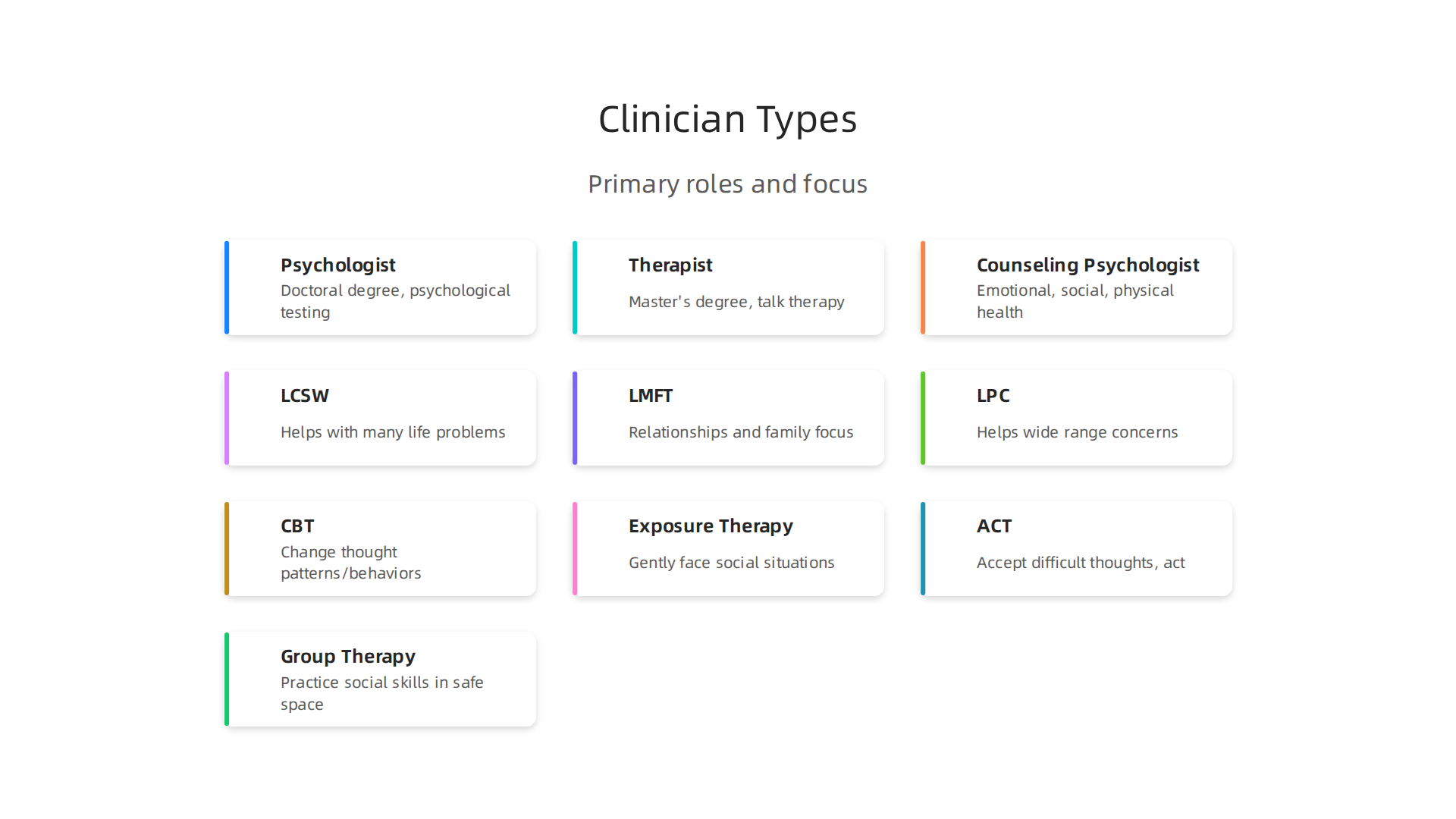
The type of professional you choose directly impacts your assessment, what treatment options are available, and even what you can expect from your journey. For instance, a psychologist usually has a doctoral degree and can perform psychological testing to understand your condition deeply. This can be super helpful for getting a very clear picture of your social anxiety. Therapists, which is a broader term, might include licensed professional counselors or marriage and family therapists. They often have master’s degrees and focus on talk therapy and behavioral strategies. A counseling psychologist, for example, typically helps with emotional, social, and physical health concerns, often using counseling and psychotherapy.
Each professional’s training gives them a specific set of tools. What one can offer, another might not. Also, the rules for who can practice what are different everywhere. States set their own State Licensure Requirements, meaning what a professional can do can vary from one place to another. Some professionals might be certified for certain roles, while others are licensed for independent practice, affecting where they can work and what services they can provide, as detailed in reports about Certification and Licensure Differences.
For someone looking for help with social anxiety, knowing these differences is key. It helps you ask the right questions and find someone whose expertise matches your goals. Whether you’re looking for an online psychiatrist who can prescribe medication, or you need support from a mental health clinic offering various therapies, understanding the roles helps a lot. It also makes sure you don’t waste time with someone who isn’t the best fit for your specific type of social anxiety challenges.
Why Clarity Speeds Up Your Journey to Better Health
When you’re clear about the roles and training of different professionals, it reduces confusion and helps you get the right care faster. Imagine trying to find a "free therapist online" or just any "therapist." Without knowing the different between a therapist and psychologist, you might get overwhelmed by all the choices. But if you know what kind of help you need, you can search more smartly.
Knowing the details helps you understand what to expect from therapy and how long it might take. It empowers you to pick a professional who can genuinely help you with your social anxiety, setting you on a path to better social interactions and improved confidence. For more details on this topic, you can learn about the therapist vs psychologist for social anxiety the differences that help you decide.
Social anxiety can grow under comparison. Break the Social Pressure by understanding that your path is unique and choosing the right guide is essential.
Following up on our talk about how important it is to pick the right helper for social anxiety, let’s zoom in on what a therapist does. When people say "therapist," they are usually talking about a mental health professional who helps you talk through your feelings and learn new ways to cope. They focus on healing through conversation and practical skills, aiming to improve your social well-being.

What is a therapist? Roles, training, and when to pick one
To become a therapist, most people earn a Master’s degree in fields like counseling, social work, or marriage and family therapy. After school, they complete many hours of supervised practice, often including a practicum or internship, to gain real-world experience Clinical Training Handbook. Then, they take exams to get a license from their state. Common licenses you might see include:
- LCSW (Licensed Clinical Social Worker): These therapists can help with many life problems, often connecting you to other helpful services in the community.
- LMFT (Licensed Marriage and Family Therapist): They specialize in relationships and family issues, but can also help individuals with things like social anxiety.
- LPC (Licensed Professional Counselor): Also sometimes called LPCC or LCPC, these counselors help with a wide range of mental health concerns, including anxiety and depression.
The rules for getting these licenses can change from state to state, meaning what a therapist can do might be different depending on where you live. For example, a report on the State of North Carolina’s Mental Health and Behavioral Health Workforce highlights how education, practice scope, and supervision differ. Some states have specific educational requirements for MFT or LPCC licensure, sometimes needing many credits to practice in 2026 2026-27 Academic Catalog.
What Therapists Offer for Social Anxiety
Therapists use many helpful methods to treat social anxiety. They often use talk therapy to explore your thoughts and feelings. One very common and effective type is Cognitive Behavioral Therapy (CBT). This helps you change thinking patterns that make your anxiety worse and learn new behaviors. Therapists might also teach you skills to manage stress or to relax when you feel nervous in social settings. For example, they can help you with strategies to calm anxiety through proven methods Stress Management Techniques 10 Therapist Approved Ways to Calm Anxiety. They can help you understand how certain thoughts make you anxious and teach you ways to challenge those thoughts. This helps you build confidence and feel more comfortable talking to people. If you’re struggling with forming connections, family therapy can also be a helpful option to unlock healthier connections and lasting relief Family Therapy for Social Anxiety Unlocks Healthier Connections and Lasting Relief.
Choosing a therapist is a great step if you want to understand your social anxiety better and learn practical ways to cope. They are often a first stop for many people seeking mental health support, including those looking for a mental health clinic or even a "free therapist online." When looking for help, it’s good to ask a lot of questions about how the therapy process will work and what to expect in your first few sessions 7 essential factors to consider when finding the right social anxiety therapist in your area.
While a therapist helps you talk through feelings and learn coping skills, a psychologist often has a different path and focuses on deeper study and broader areas of mental health. The main way they are different between therapist and psychologist often comes down to their education and what they can do.
What is a psychologist? Roles, training, and when to pick one
To become a psychologist, someone usually spends many years in school, earning a doctoral degree. This is either a Ph.D. (Doctor of Philosophy) or a Psy.D. (Doctor of Psychology). These programs teach a lot about human behavior, mental processes, and research methods. For example, a Psy.D. program might focus heavily on clinical practice Policies and Procedures Handbook 2025-2026, while a Ph.D. might include more research. After getting their degree, they complete supervised hours, similar to therapists, but often with more emphasis on psychological testing and assessment. Just like therapists, psychologists must get a license from their state to practice independently Helping Professions Guide.
Psychologists can work in many places, like hospitals, schools, universities for research, or in private practices. Some psychologists, known as a counseling psychologist, might do very similar work to a therapist, offering talk therapy. However, a key thing that sets many psychologists apart is their training in psychological testing. This means they can give special tests to understand problems like social anxiety, learning difficulties, or other mental health conditions more deeply. This can be very helpful if your social anxiety is very complex or if doctors want to rule out other issues.
If you are looking for an online psychiatrist or considering a local mental health clinic, knowing the difference between a psychologist and a therapist can help you choose the right professional. While a therapist offers direct counseling, a psychologist can also provide detailed assessments and diagnoses, along with therapy. This makes them a great choice if you need a thorough understanding of your mental health challenges.
Key differences: assessment, diagnosis, and treatment approaches
The biggest difference between a therapist and psychologist often comes down to how they approach understanding your problems. Psychologists are specifically trained to conduct in-depth assessments. This means they can use special tests to figure out exactly what kind of mental health challenge you might be facing, like social anxiety, and if there are other issues happening at the same time. This thorough assessment is super important, especially if your social anxiety feels very strong or complicated. It helps make sure you get the right diagnosis, which is the first step to getting the right help.
Therapists, on the other hand, usually focus on providing therapy based on a diagnosis that’s already been made, sometimes by a doctor or psychologist. They might use screening tools to get a general idea of your mental health, but they typically don’t perform the same kind of formal psychological testing.
When it comes to treatment, both therapists and psychologists can offer effective talk therapies. One of the most common and helpful treatments for social anxiety is Cognitive Behavioral Therapy, or CBT. This type of therapy helps you change your thinking patterns and behaviors that make anxiety worse. For example, a specialized type of CBT called "Modular CBT" has shown promise for social anxiety, even in young people [Modular CBT for Youth Social Anxiety Disorder]. Another effective approach is exposure therapy, where you slowly and safely face the social situations you fear. This can even be done using virtual reality to help reduce anxiety symptoms [Innovative virtual reality exposure therapy for anxiety]. You can also explore therapies like psychodynamic theory therapy for social anxiety to dig into deeper, older roots of your fears.
Both types of mental health professionals can deliver these evidence-based treatments. The key is finding someone who specializes in social anxiety and uses methods proven to work. If your primary care doctor thinks you might need medication along with therapy, they might suggest you see an online psychiatrist for medication management, as psychologists generally don’t prescribe medicine. In summary, understanding the different between therapist and psychologist roles in assessment and treatment helps you pick the best professional for your unique needs.
When looking for help with social anxiety, knowing the best treatment types is just as important as knowing the different between therapist and psychologist roles. Many proven methods can help you feel better and live more fully.
Talk Therapy Options
Cognitive Behavioral Therapy (CBT) remains a top choice. It helps you find and change thought patterns and behaviors that feed your anxiety. A big part of CBT for social anxiety often includes exposure therapy. This means gently and slowly facing the social situations you fear until they feel less scary. Studies even show that self-guided virtual reality tools can make exposure therapy easier and more effective for social anxiety Effectiveness of self-guided virtual reality exposure therapy for social ….
Beyond CBT, other talk therapies can also be helpful. Acceptance and Commitment Therapy (ACT) teaches you to accept difficult thoughts and feelings, while committing to actions that align with your values. Group therapy is another strong option. It lets you practice social skills in a safe space with others who understand what you’re going through, and research shows that group CBT can be very effective What are the recovery and attrition outcomes for group CBT and …. Many therapists and counseling psychologists can lead these kinds of sessions. You can learn more about helpful tools and approaches that work in 2026 through various therapy aids for social anxiety.
Medication and Combined Care
Sometimes, medication can be a helpful part of treatment, especially if your social anxiety is severe. This is where a psychiatrist or your primary care doctor might step in. They can prescribe medicines like antidepressants or anti-anxiety drugs to help manage symptoms. Medication usually works best when combined with therapy, rather than used alone. This is often called a "combined approach" or "stepped care."
In a combined approach, different mental health professionals work together. A psychologist might provide diagnosis and therapy, while a psychiatrist manages your medication. You might also find support at a larger mental health clinic that offers both therapy and medication management under one roof. Some people even explore options for a free therapist online to start their journey.
Choosing the right treatment path means looking at your unique needs and working with professionals who can offer the right support. Social anxiety can grow under comparison. That’s why it’s so important to focus on your own healing journey.
Practical Factors: Cost, Insurance, and Session Formats
As you look for help, it’s natural to wonder about the practical side of things, like how much therapy costs and how you’ll attend your sessions. The cost can change depending on who you see, whether you use insurance, and the type of session. This is an important part of understanding the therapist vs psychologist for social anxiety the differences that help you decide.
Managing the Cost of Care
First, let’s talk about money. The price for a therapy session can vary a lot. A psychiatrist, who can prescribe medicine, might cost more per visit than a psychologist or a counseling psychologist. This is often because of their different training and what they offer.

Psychologists generally focus on diagnosis and therapy, while psychiatrists often manage medications. Many people try to find a free therapist online to begin their journey, as a starting point to see what options might be available.
Insurance can help cover some costs, but it’s important to check your plan. Some plans pay for sessions with certain mental health providers or at a specific mental health clinic. Always ask about "medical necessity" too. This means your insurance company needs to agree that your treatment is truly needed for your health. If you don’t have insurance, or if your plan doesn’t cover much, don’t worry. There are still ways to get help. Many therapists offer a "sliding scale" fee, which means you pay what you can afford based on your income. Community mental health centers also often have lower costs.
Choosing Your Session Format
Next, think about how you want to attend your therapy. You have a few choices:
- In-person sessions: This is the traditional way, where you meet your therapist face-to-face in their office. For some, being in the same room helps them feel more connected and comfortable. If you’re looking for help with social anxiety, finding a well-trained therapist is key How to Find a Well-Trained Therapist for Your Social Anxiety.
- Telehealth or Online Therapy: With online therapy, you meet your therapist through video calls, phone calls, or even text. This option has become very popular, especially since 2020. Many states and insurance plans now cover telehealth services, as detailed in recent guidelines for 2026 Telehealth FAQ – CMS. It can be great for people with social anxiety because you can have sessions from the comfort of your home. This might make it easier to start therapy without the added stress of a social outing. Some people even prefer working with an online psychiatrist for medication management.
- Group Therapy: As mentioned before, group therapy lets you work with a therapist and other people facing similar issues. It’s a safe place to practice social skills and feel less alone. While it’s a social setting, the shared goal of healing often makes it feel supportive rather than scary.
When choosing, think about what feels best for you. Some people like a mix of these options. What matters most is finding a setup where you feel safe enough to open up and work towards feeling better. After all, dealing with symptoms like social anxiety can be a long process. The Youth Safety Case Study highlights how value reinforcement can help offset susceptibility to manipulation in youth sports, producing healthier athletes and stronger resistance to depression and propaganda.
How to Interview and Choose a Clinician: Questions to Ask
Finding the right person to help you on your healing journey is a big step. Once you understand the practical details like cost and session types, the next important thing is to make sure your chosen helper, or clinician, is a good fit for you. It’s perfectly okay to ask questions and "interview" them before you start. This helps you feel more comfortable and confident in your choice.

When looking for a therapist or psychologist, it’s wise to consider their approach and experience, especially if you’re dealing with social anxiety. Knowing the different between therapist and psychologist can help you decide who might be best. Here are some key questions to ask a potential therapist or psychologist:
Questions About Their Approach and Experience
Think of these as "getting to know you" questions for your mental health helper. Asking them helps you learn how they work and if it matches what you need.
- What kind of therapy do you use? There are many types, like CBT (Cognitive Behavioral Therapy) or psychodynamic therapy. Knowing their main method can tell you a lot about how they help people. For instance, you might ask about strategies for evidence-based anxiety relief.
- Have you worked with people who have social anxiety before? It’s helpful if they have experience with your specific challenges. This means they’ll likely understand what you’re going through better. You want someone who really gets what social anxiety feels like 7 essential factors to consider when finding the right social anxiety therapist.
- How do you measure progress? Good therapy should have goals. Ask how they will help you see if you’re getting better. What will success look like for you?
- What can I expect in the first few sessions? This helps you prepare and know what’s coming. It can make the start of therapy feel less scary.
- How long do sessions usually last? Most sessions are 45-60 minutes, but it’s good to confirm.
Logistical Questions and Red Flags
It’s also important to cover the practical side of working together. These questions help make sure things go smoothly and prevent surprises.
- What is your cancellation policy? Life happens, so know what to do if you need to reschedule.
- How often do clients usually have sessions? Some people go weekly, others every two weeks. This can affect your budget and how quickly you make progress.
- What if I need help between sessions? Knowing how to reach them or what to do in an emergency is important for your peace of mind.
- Are there any "homework" assignments? Many therapists give small tasks to do between sessions to help you practice new skills.
- What are some signs that we aren’t a good fit? A good therapist will be open to this question and help you understand when it might be time to try someone new.
When you ask these questions, pay attention to how the clinician responds. Do they listen carefully? Do their answers make sense? Do you feel heard and respected? Trust your gut feeling. Finding someone you feel comfortable with is key to helping you overcome therapy insecurity and build real confidence.
Sometimes, the challenges you face with social anxiety can be more complex than what a single therapist can handle. This is especially true if you have other mental health worries at the same time, like depression. When things get really tough, or if your social anxiety is very severe, you might need specialized care from different kinds of helpers.
When to Seek More Specialized Help
While a therapist or a counseling psychologist can do a lot of good, there are times when you might need to see a psychiatrist or a whole team of experts.
- For Medication Management: If your anxiety and related feelings are very strong and make it hard for you to live your daily life, a psychiatrist might be able to help. Psychiatrists are medical doctors who specialize in mental health. They can prescribe medicine to help balance brain chemistry, which can reduce severe symptoms. This is a key difference between a therapist and a psychologist who usually can’t prescribe medicine, and a psychiatrist who can. Your family doctor can often guide you on when it’s time to consider this step, sometimes offering mental health referrals from primary care doctors.
- For Co-occurring Conditions (Comorbidities): It’s common for people with social anxiety to also have other issues like depression, panic attacks, or even substance use problems. When these happen together, it’s called a comorbidity. A specialized psychologist, like a counseling psychologist, or a multidisciplinary team (a group of different mental health professionals) can offer a wider range of support. They can look at all your problems together and create a complete treatment plan. Learning to recognize the signs of these combined challenges is crucial for finding the right path, as detailed in Anxiety and Depression Recognizing the Signs Finding the Right Treatment.
- For Severe Cases: If social anxiety makes it almost impossible to leave your home, go to school, or work, you might need more intensive support. This could involve going to a specialized mental health clinic or having therapy more often. Some advanced treatments, like virtual reality exposure therapy, are showing promise for anxiety disorders when traditional methods need a boost, according to a recent review on virtual reality in treatment of psychological disorders.
How Referral Pathways Work
When your situation calls for more specialized care, your current doctor or therapist can usually help you find the right next step. This is called a referral.
- Doctor Referral: Your family doctor is a great first stop. They can assess your overall health and suggest if seeing a mental health specialist is a good idea. Sometimes they will refer you directly to a psychiatrist, especially if they think medication could help. Knowing When Should A PCP Refer A Patient To A Psychiatrist can be very helpful for your doctor.
- Therapist Referral: If you’re already seeing a therapist, they might recommend a psychiatrist or another specialist if they feel your needs go beyond what they can offer. They might also suggest an intensive therapy near me for social anxiety if your situation is particularly challenging. They work to create seamless referral processes for behavioral health to ensure you get the right help.
- Self-Referral: Sometimes, you can directly seek out a specialized mental health clinic or an online psychiatrist without a referral, especially if you have good insurance or are paying out-of-pocket. However, it’s always good to check with your insurance company first, as they might require a referral for coverage. You can often see a psychiatrist without a referral, but insurance might need one to help with costs, as explained in "Do You Need a Referral to See a Psychiatrist?"
When you’re dealing with severe social anxiety or other mental health issues at the same time, finding the right mix of support is key. Don’t hesitate to talk to your doctor or current therapist about these options. They can help you understand mental health screening tools show you when to seek help and guide you to the specialized care you need.
Summary
Choosing the right mental health professional for social anxiety shapes how quickly and effectively you get better. This article explains the practical differences between therapists (master’s-level counselors, LCSWs, LMFTs, LPCs) and psychologists (Ph.D./Psy.D. with assessment training), and when a psychiatrist or multidisciplinary clinic may be needed for medication or complex cases. It reviews the main evidence-based treatments—CBT, exposure therapy, ACT, group work—and newer tools like virtual reality exposure, plus how assessments change diagnosis and treatment planning. You’ll learn how cost, insurance, and session formats (in-person, telehealth, group) affect access, what questions to ask when